Artwork
The Rabbit Hunters
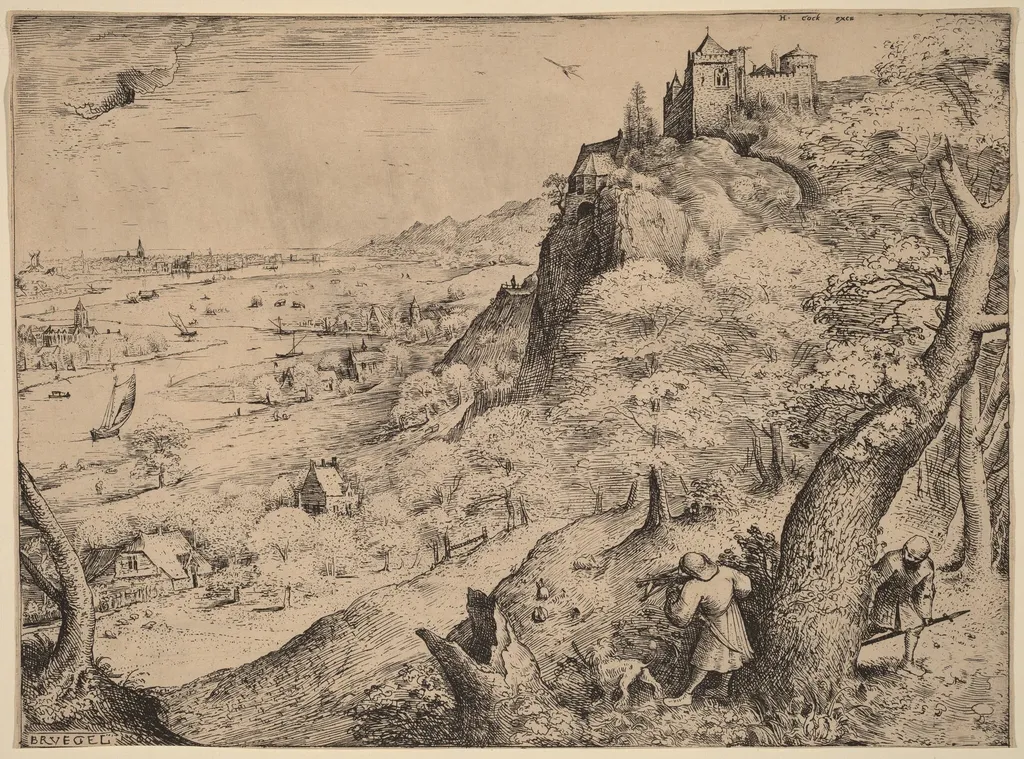
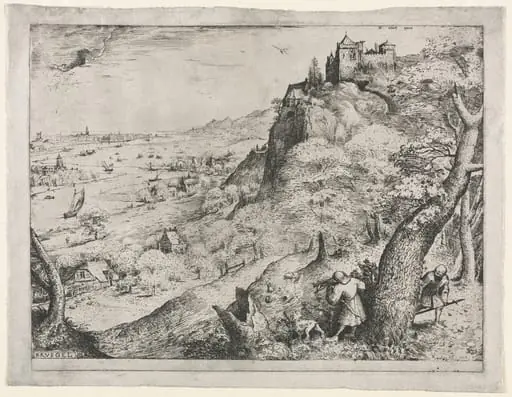
The Rabbit Hunters is an ink print by the Renaissance artist Pieter Bruegel the Elder. It dates from 1560 and is held in the collection of the National Gallery of Art.
About this work
Overview
Created in 1560, The Rabbit Hunters is an etching by Pieter Bruegel the Elder on laid paper. It depicts a group of rural laborers engaged in the pursuit of rabbits within a wooded landscape. The work belongs to a series of prints that capture everyday rural life, reflecting Bruegel’s interest in the rhythms and labors of the countryside rather than idealized or mythological subjects.
Subject & Meaning
The absence of grandeur or drama points to a quiet celebration of ordinary labor, consistent with Bruegel’s broader focus on peasant life.
The scene portrays hunters using spears and nets to corner rabbits among dense underbrush, suggesting a practical, subsistence-level activity rather than noble sport. The figures are shown in varied, naturalistic postures—crouching, reaching, pausing—emphasizing effort and coordination. The absence of grandeur or drama points to a quiet celebration of ordinary labor, consistent with Bruegel’s broader focus on peasant life.
Technique & Style
Bruegel employed fine, controlled lines to render the texture of foliage, bark, and clothing, creating depth through layered etching. The composition uses overlapping forms and diminishing scale to suggest spatial recession. Shading is achieved through hatching and cross-hatching, not washes, giving the image a crisp, linear quality typical of Northern Renaissance printmaking, while preserving the tactile feel of the natural environment.
History & Provenance
The print was produced during Bruegel’s active period in Antwerp, when he collaborated with publishers to disseminate his imagery through prints. Though no early ownership records are widely documented, the work entered major collections in the 18th and 19th centuries, often grouped with his other landscape and genre prints. Its survival in multiple impressions indicates moderate circulation among collectors of the time.
Context
In mid-16th-century Flanders, printmaking allowed artists to reach broader audiences beyond elite patrons. Bruegel’s focus on rural labor aligned with growing interest in secular, observational art amid religious upheaval. The Rabbit Hunters reflects a cultural shift toward depicting the natural world and common life with precision, distinct from religious iconography or aristocratic hunting scenes common elsewhere in Europe.
Legacy
The etching contributed to Bruegel’s reputation as a chronicler of peasant life, influencing later genre painters and printmakers who sought authenticity in everyday scenes. Its technical precision and unembellished subject matter helped establish etching as a serious medium for narrative and landscape, paving the way for 17th-century Dutch and Flemish print traditions that valued observation over idealization.
Artist & collection


 The Rabbit Hunt
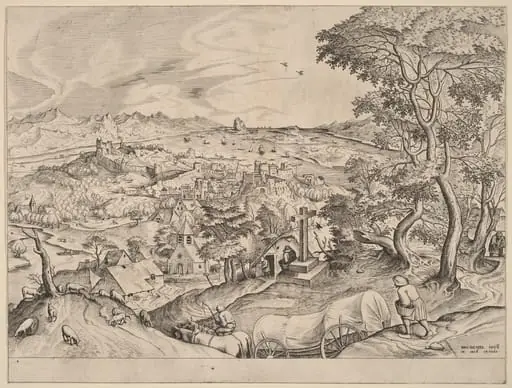 Plaustrum Belgicum (The Belgian Wagon)
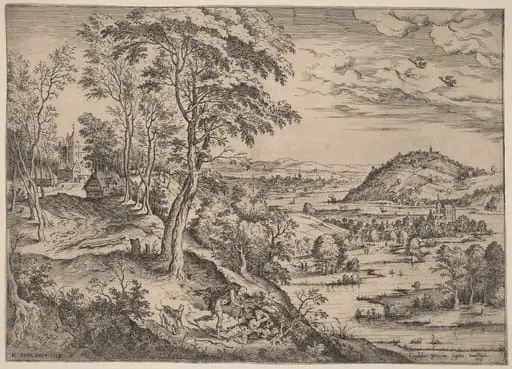 Cephalus and Procris
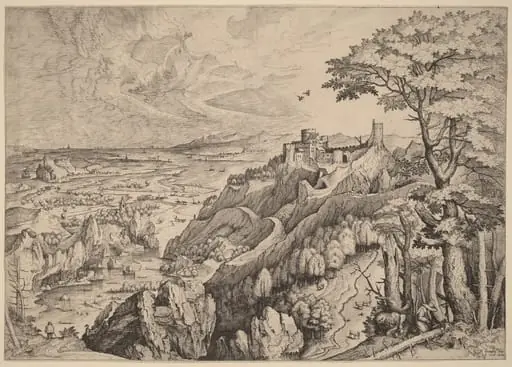 S. Hieronymus in Deserto (Saint Jerome in the Desert)
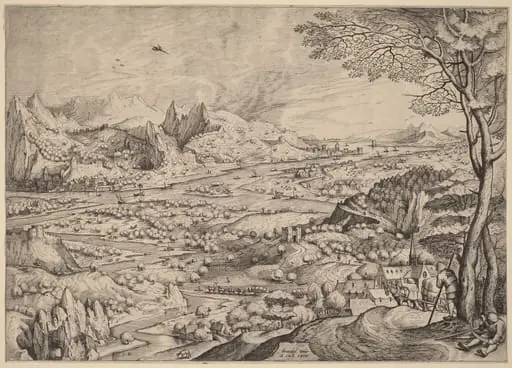 Solicitudo Rustica (Rustic Concerns)
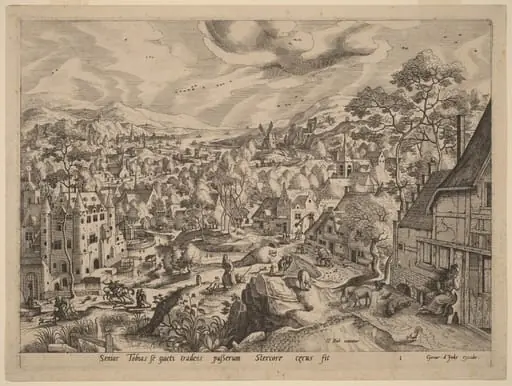 Bird Dropping Blinding Tobit
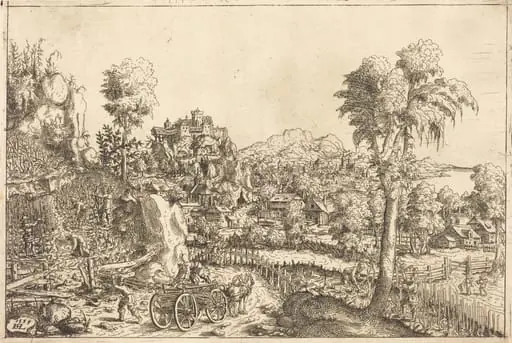 Landscape with a Vineyard
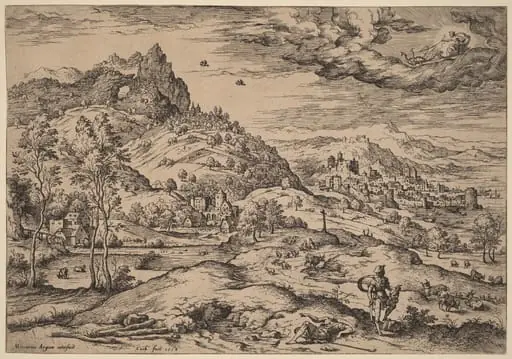 Mercury with the Head of Argus in His Hand
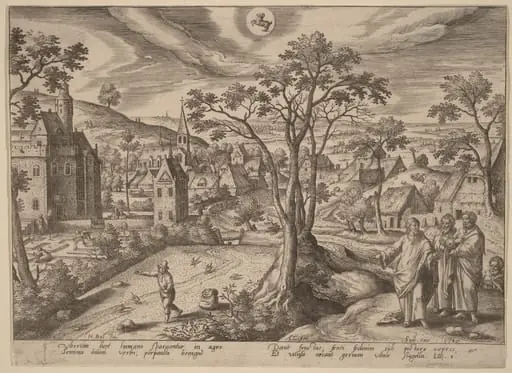 The Parable of the Sower
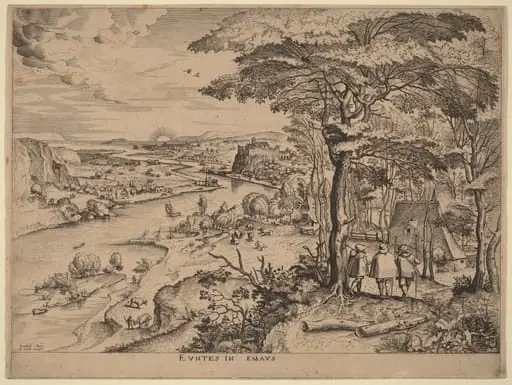 Euntes in Emaus (The Pilgrims to Emmaus)
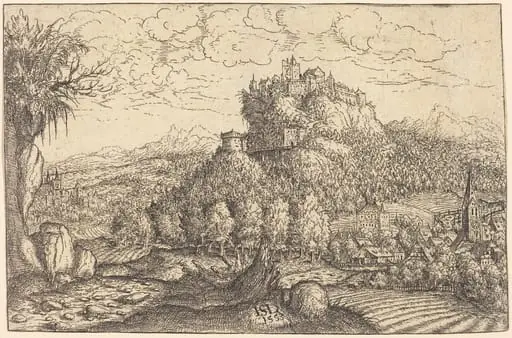 Landscape with a Castle in the Center
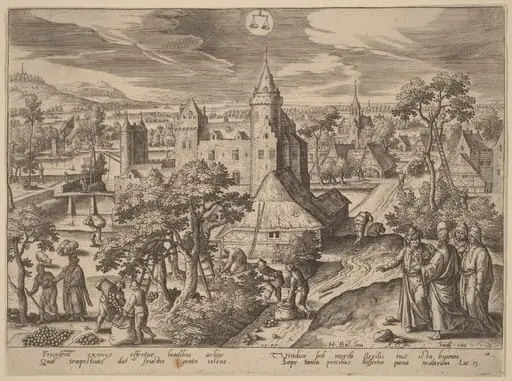 The Parable of the Barren Fig Tree