Artwork
Peasants and Cattle near a Farmhouse
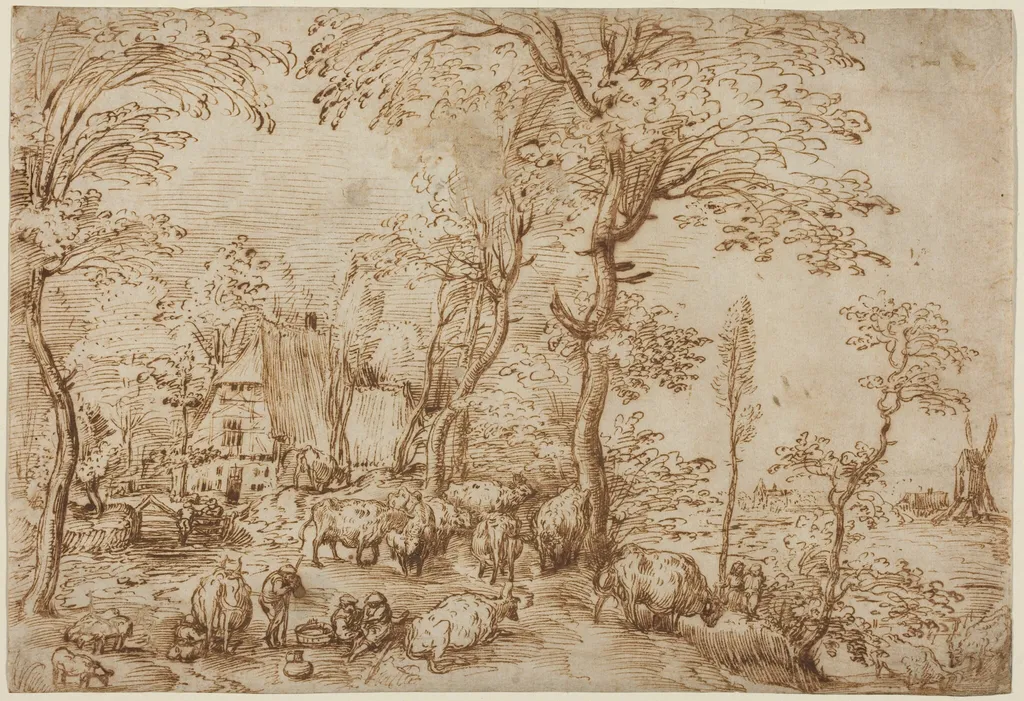
Peasants and Cattle near a Farmhouse is an ink drawing by the Renaissance artist Pieter Bruegel the Elder. It dates from 1554 and is held in the collection of the National Gallery of Art.
About this work
The artist used pen and brown ink on laid paper to create this work, which is a landscape.
The painting is called Peasants and Cattle near a Farmhouse.
It was made by Pieter Bruegel the Elder around 1553/1554.
The artist used pen and brown ink on laid paper to create this work, which is a landscape.
This piece is from the Renaissance movement, a time of great artistic change.
The fact that it's a drawing, not a painting, makes it interesting.
Check out the Renaissance for more information.
Overview
Peasants and Cattle near a Farmhouse is a drawing executed by Pieter Bruegel the Elder around 1553–1554. Rendered in pen and brown ink on laid paper, the work depicts a rural scene with figures and livestock positioned beside a modest farmhouse. As a product of the mid‑sixteenth century, it belongs to Bruegel’s early output and illustrates his interest in everyday life.
Technique & Style
The composition is realized with fine pen work and a limited brown ink palette, allowing subtle gradations of tone on the textured surface of laid paper. Bruegel’s handling of line creates a sense of depth and movement, while the restrained coloration reflects the drawing’s preparatory nature, typical of Renaissance drafts that emphasize observation over decorative finish.
Subject & Meaning
The image presents a bucolic tableau: peasants engaged in work, cattle grazing, and a farmhouse anchoring the landscape. By foregrounding ordinary laborers and animals, Bruegel underscores the centrality of agrarian life in the Low Countries, suggesting a visual record of social conditions rather than an idealized pastoral.
Context
Created during the Northern Renaissance, the drawing aligns with a period when artists increasingly turned to realistic depictions of daily existence. Bruegel’s focus on peasant activity reflects contemporary humanist interests in the dignity of common folk and the moral lessons often drawn from rural settings.
History & Provenance
The work is known from a single surviving sheet attributed to Bruegel’s hand, dated circa 1554. It has been catalogued among his early drawings and is held in a public collection, where it contributes to the broader understanding of his preparatory studies for larger painted compositions.
Own this work as a print
Artist & collection


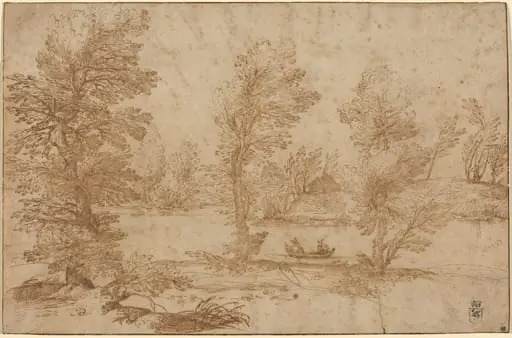 Woodland River with a Boat
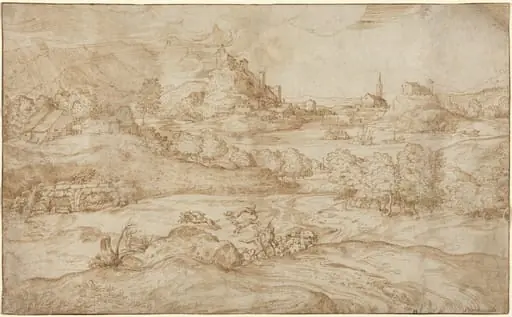 Landscape with Shepherds Driving Away a Wolf
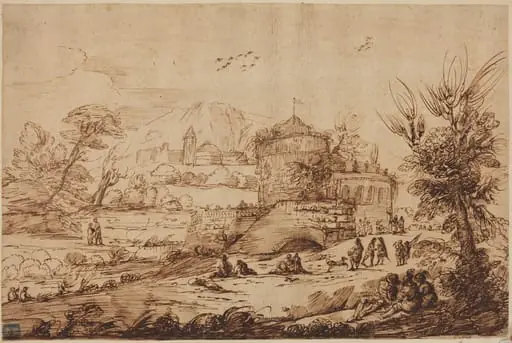 Landscape with Fortress and River
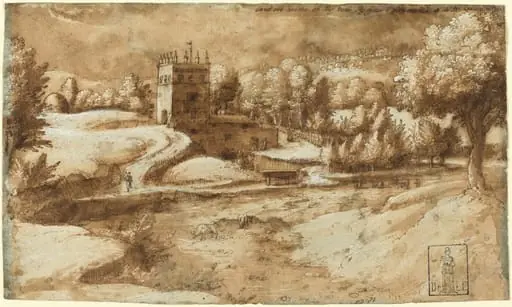 View near Rosora di Serra San Quirico
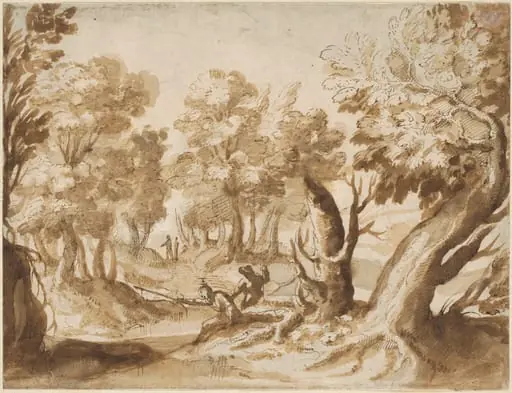 Two Figures Fishing in a Landscape
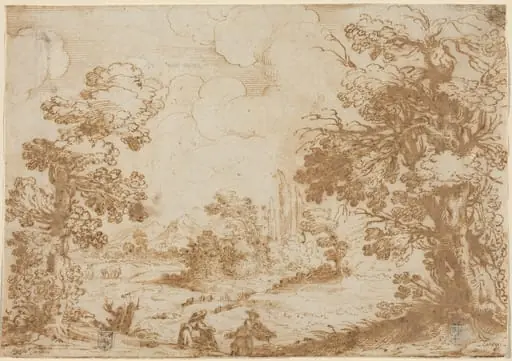 Landscape with Two Washerwomen
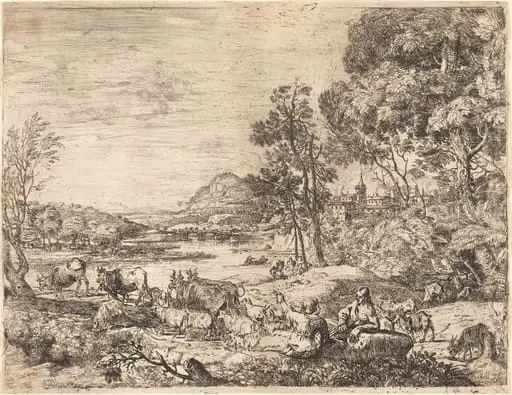 Shepherd and Shepherdess Conversing in a Landscape (Berger et bergère conversant)
 Pastoral Landscape with a Waterfall and a Temple
 Landscape with a River and Aqueduct
 River Landscape with Arched Rock
 Meadow with a Shepherd and Cows