Artwork
View of Constantinople from Pera
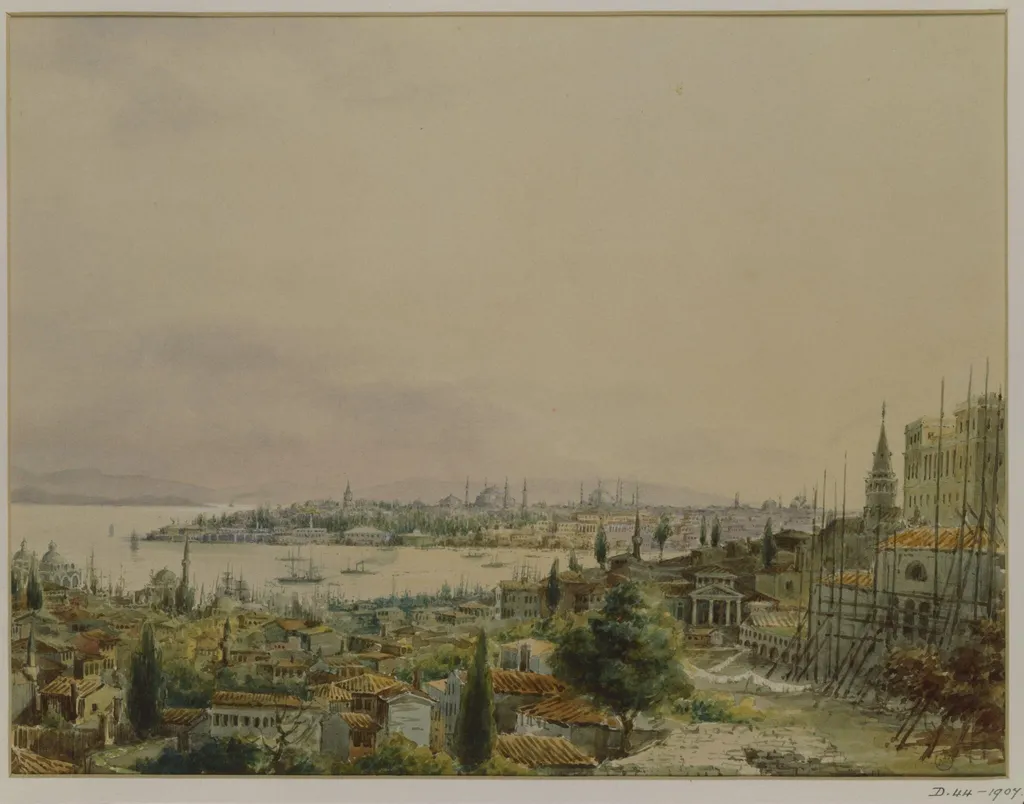
View of Constantinople from Pera is a watercolor work on paper by the Orientalist artist Aloysius Rosarius Amadeus Raymondus Andreas Preziosi. It dates from 1850 and is held in the collection of the Victoria and Albert Museum.
About this work
Overview
The composition emphasizes horizontal bands of land, water, and sky, with key landmarks arranged to suggest both spatial depth and cultural hierarchy.
This watercolour depicts Constantinople as seen from the Galata district, capturing the city’s layered topography and architectural diversity. The view spans the Golden Horn, linking the bustling European quarter of Pera with the imperial heart of Topkapi Palace on the opposite shore. The composition emphasizes horizontal bands of land, water, and sky, with key landmarks arranged to suggest both spatial depth and cultural hierarchy.
Subject & Meaning
The painting frames the city as a mosaic of power and daily life. The Ottoman imperial palace, perched on Saray Burnu, dominates the skyline not by scale but by its curated placement among gardens and hills. Below, the modest wooden structures of Pera contrast with the stone mosques and fire-tower of Galata, hinting at the coexistence of administrative authority and vernacular urbanism in the 19th-century metropolis.
Technique & Style
Executed in watercolour, the work employs translucent washes to render atmospheric perspective and subtle shifts in light. Buildings are rendered with precise but restrained linework, avoiding ornamental excess. The use of muted tones—soft blues, ochres, and greys—conveys the dry summer air and the hazy distance across the Golden Horn, reinforcing a documentary rather than romantic intent.
History & Provenance
The painting likely dates to the early to mid-19th century, a period when European travelers and diplomats frequently recorded Istanbul’s changing skyline. The presence of the Galata fire-tower and the still-standing mosques suggests the artist observed the city during a time of transition, before the full-scale modernization of the late Ottoman era. Its survival indicates it was preserved within private or institutional collections outside Turkey.
Context
At the time this view was made, Topkapi Palace had recently ceased to be the sultan’s primary residence, replaced by the European-style Dolmabahçe Palace. The continued visibility of Topkapi’s structures in the painting reflects their enduring symbolic weight, even as political power shifted. Meanwhile, the wooden buildings of Pera remained vulnerable to fire, a persistent threat that shaped urban development and surveillance practices.
Legacy
The watercolour serves as a visual record of Istanbul’s pre-modern urban fabric, preserving details of architecture and spatial relationships later altered by fire, demolition, or modernization. Its quiet precision offers a counterpoint to later, more dramatic depictions of the city, grounding historical understanding in the observed reality of a moment before rapid transformation.
Artist & collection
Artist
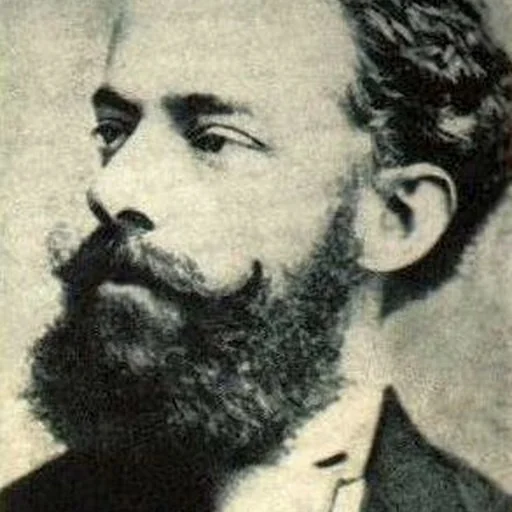
Aloysius Rosarius Amadeus Raymondus Andreas Preziosi
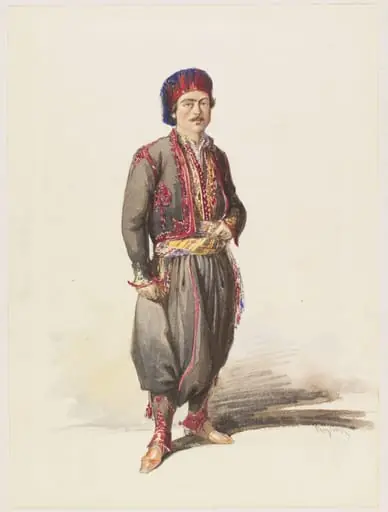
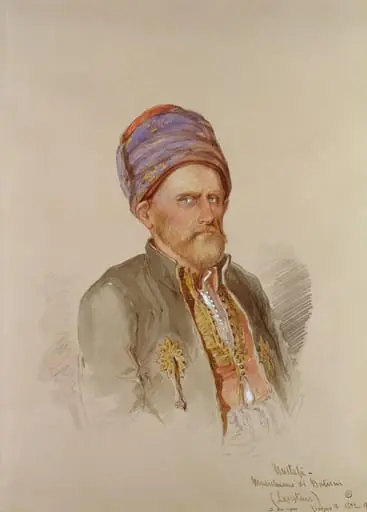
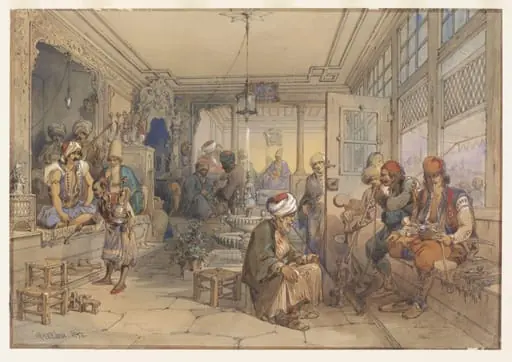
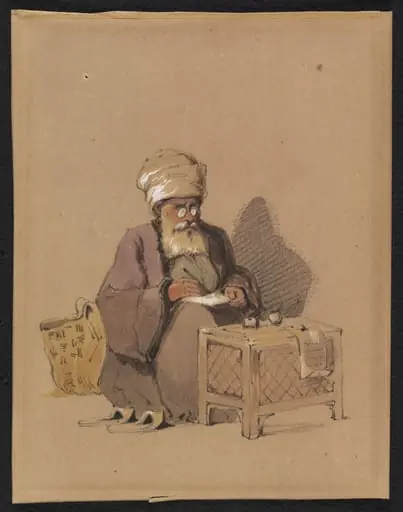
Amedeo Preziosi (2 December 1816 – 27 September 1882) was a Maltese painter and traveler known for his watercolours and prints of Constantinople, the Balkans, Ottoman Empire, and Romania.

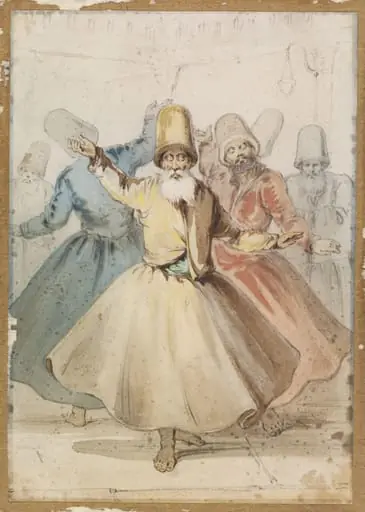
![Portrait of Trehem[?]Walid 'Abdullah, an Arab from Iraq, by Aloysius Rosarius Amadeus Raymondus Andreas Preziosi](https://artifactworldgallery.com/img/aloysius-rosarius-amadeus-raymondus-andreas-preziosi--portrait-of-trehem-walid-abdullah-an-arab-from-iraq--2476a3692d0929a5-w320.webp)
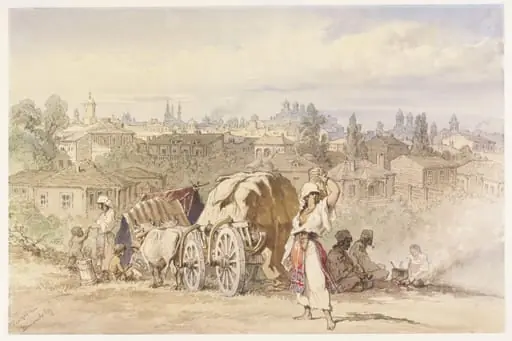
![A Seller of Milk-puddings [Mahallebi], by Aloysius Rosarius Amadeus Raymondus Andreas Preziosi](https://artifactworldgallery.com/img/aloysius-rosarius-amadeus-raymondus-andreas-preziosi--a-seller-of-milk-puddings-mahallebi--3da9fd2db017402d-w320.webp)
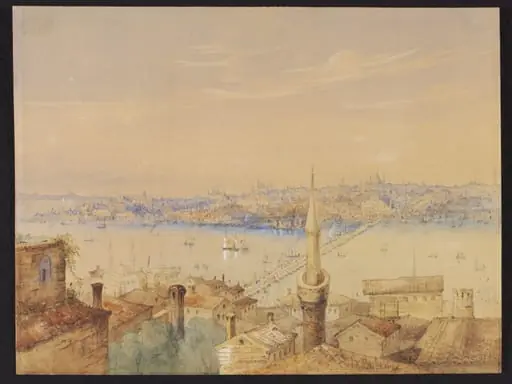 View of Constantinople from Pera across the Golden Horn
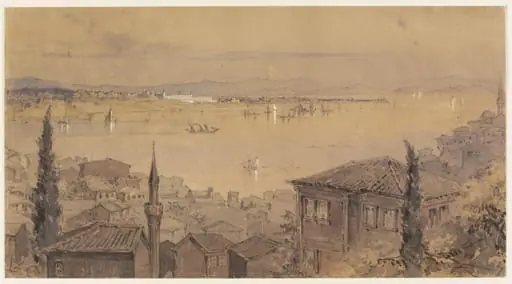 The Bosphorus, from Pera, looking towards Scutari
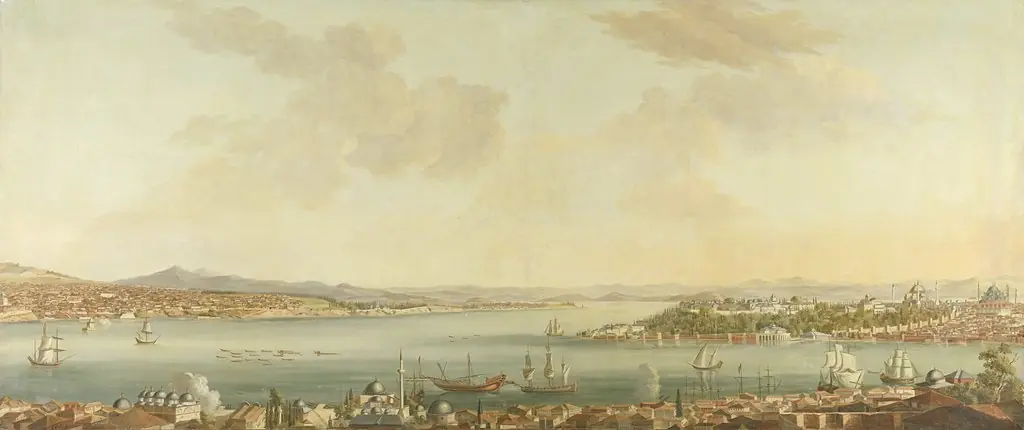 View of Constantinople (Istanbul) and the Seraglio from the Swedish Legation in Pera
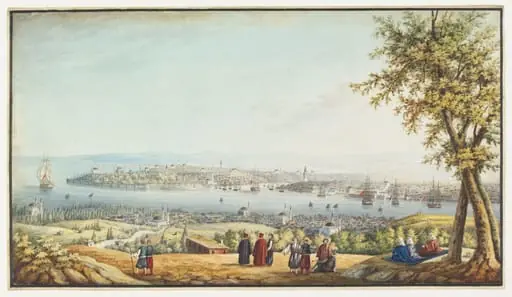 Constantinople and the Bosphorus from above Scutari
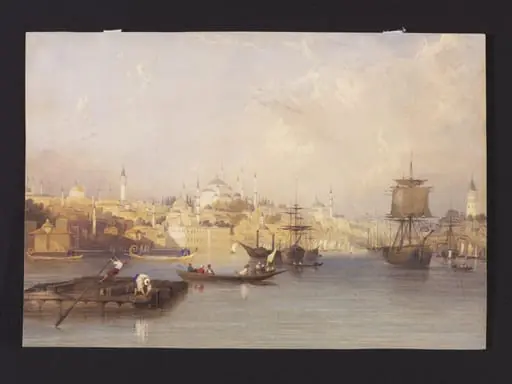 Constantinople. From the Entrance to the Golden Horn
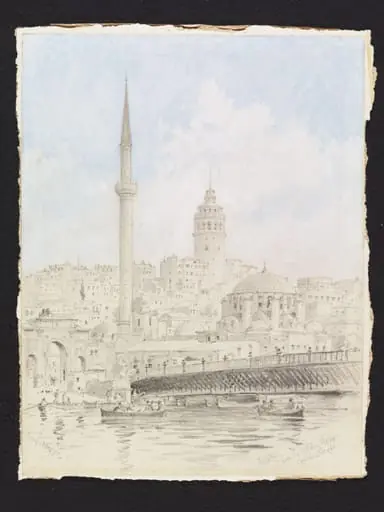 Galata. from The Golden Horn. Constantinople
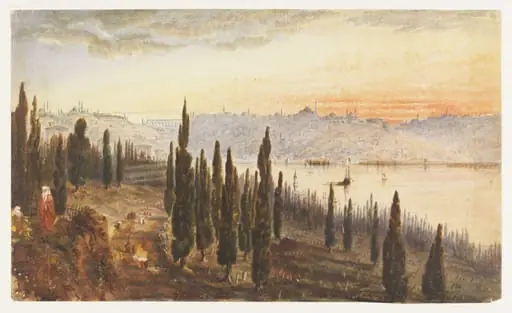 View of Constantinople from the cemetery at Pera
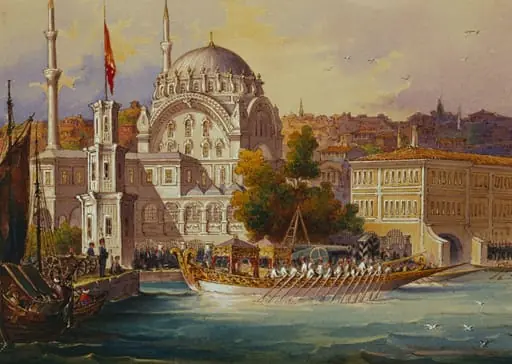 View of the Sultan's Barge in front of the Nusretiye Camii
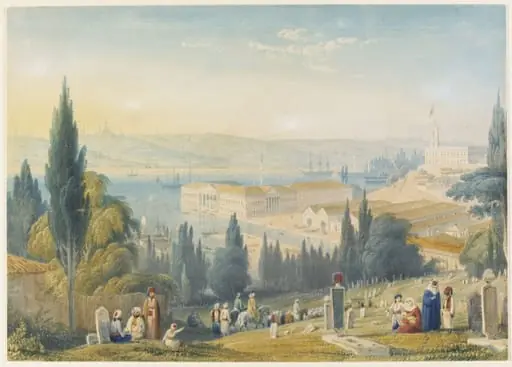 A view of the new Turkish Naval Buildings and Dockyards on the Golden Horn: Constantinople in the background
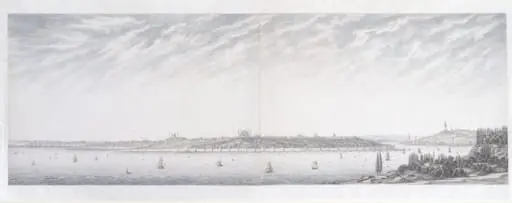 Constantinople from the Asian shore
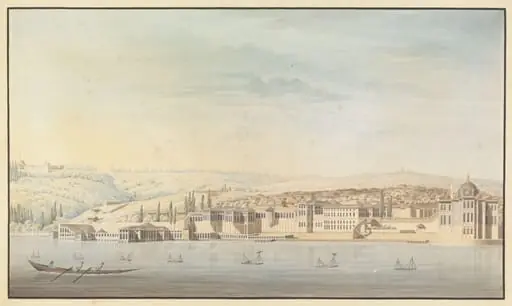 Former Dolmabahçe Palace and Mosque