Artwork
La Traversée (The Passage)
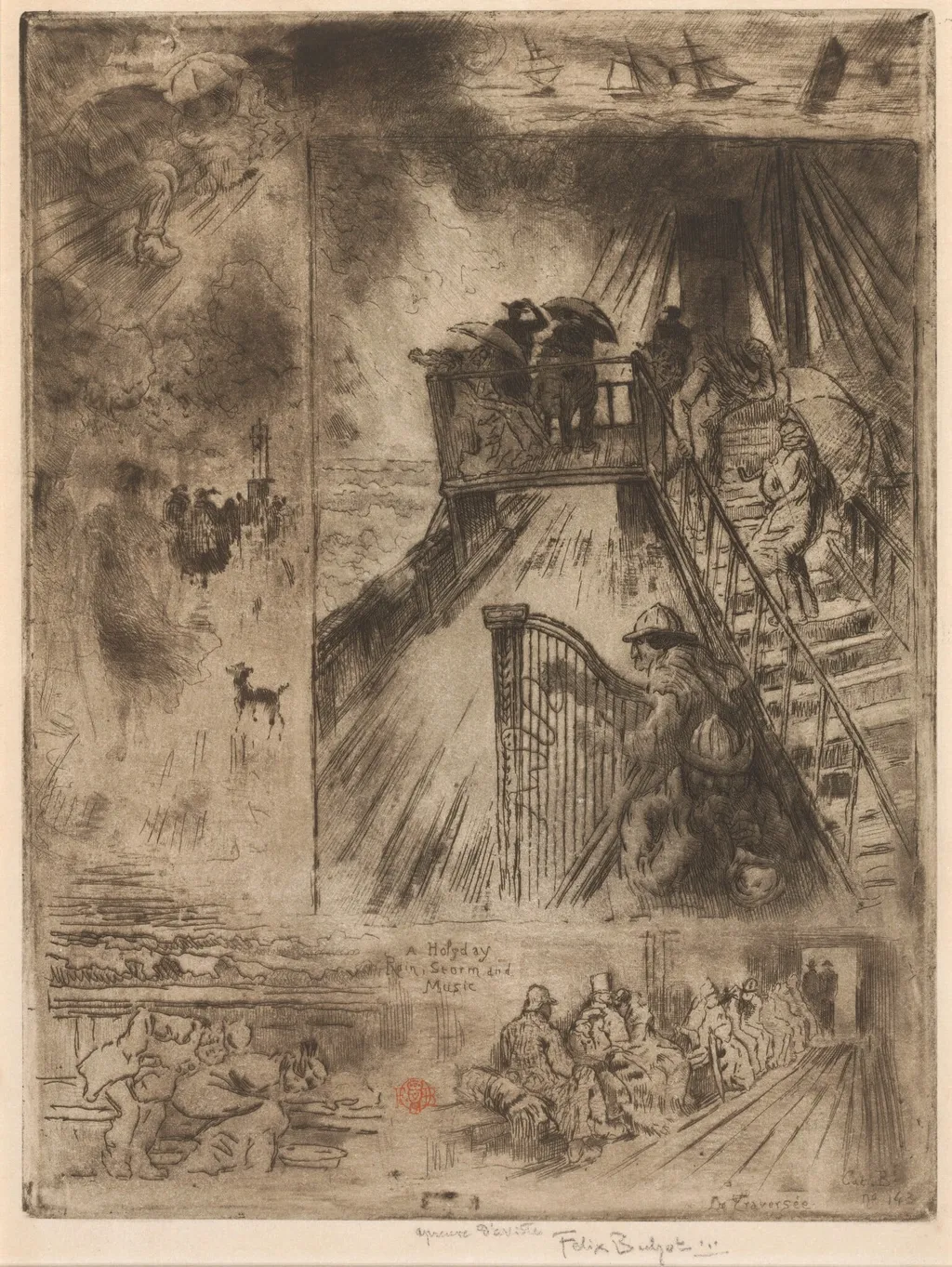
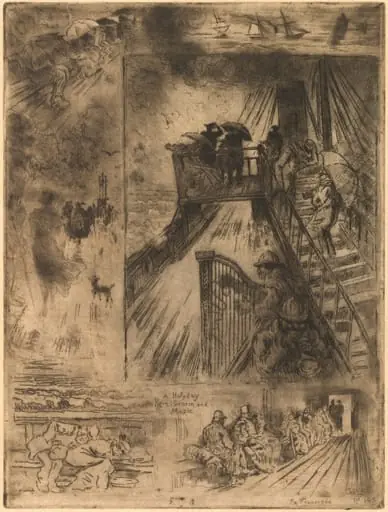
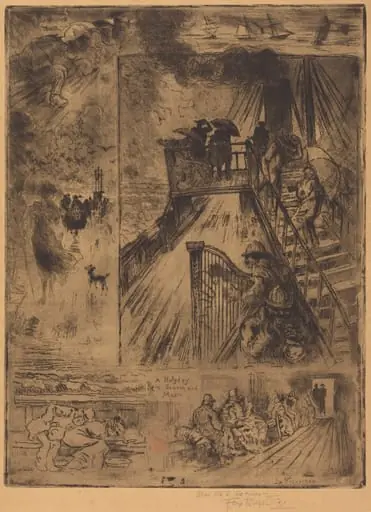
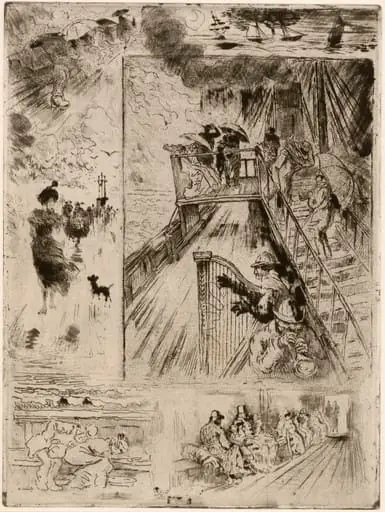
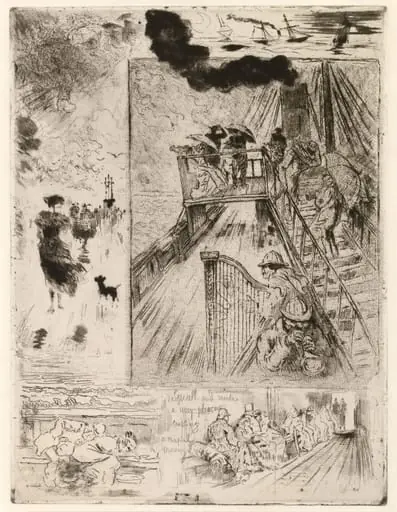
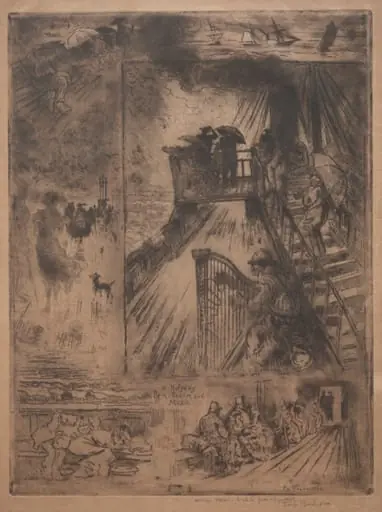
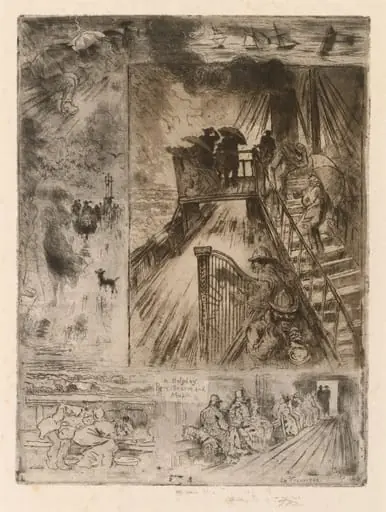
La Traversée (The Passage) is an ink print by the Impressionist artist Félix-Hilaire Buhot. It dates from 1882 and is held in the collection of the National Gallery of Art.
About this work
Overview
Rendered in a limited brown‑black palette, the work captures a nocturnal urban scene suffused with rain, illuminated by a solitary lamppost.
Félix‑Hilaire Buhot’s print *La Traversée* (The Passage), executed in 1882, combines etching, drypoint, roulette, aquatint and stop‑out techniques on laid paper. Rendered in a limited brown‑black palette, the work captures a nocturnal urban scene suffused with rain, illuminated by a solitary lamppost. The composition is densely populated, depicting figures scrambling on precarious balconies, a dog in motion, and a group gathered beneath an awning while music plays.
Subject & Meaning
The image portrays a bustling street during a storm, suggesting the challenges of navigating a city at night. A man clings to a lamppost for support, while others balance on a shaky balcony, emphasizing vulnerability amid chaos. The presence of an accordionist and listeners under the awning hints at communal resilience, using music to counterbalance the harsh weather and convey a fleeting moment of shared humanity.
Technique & Style
Buhot employs a layered printmaking process: etched lines define architecture, drypoint adds rich, velvety edges, and roulette‑produced textures suggest rain’s relentless fall. Aquatint creates tonal depth, while stop‑out areas preserve highlights, allowing the lamppost’s glow to emerge against the dark sky. The sharp, gestural lines convey movement, and the limited monochrome scheme heightens the atmospheric tension of the nocturnal setting.
History & Provenance
Created in 1882, *La Traversée* reflects Buhot’s mature period, during which he explored complex urban subjects through print. The work was likely produced in Paris, where the artist was active, and has since appeared in several collections of 19th‑century French prints, illustrating his contribution to the development of modern etching techniques.
Context
The late 19th century saw rapid urbanization and the rise of modern city life, themes that attracted many French printmakers. Buhot’s focus on a rainy night aligns with contemporary interests in atmospheric effects and the everyday experiences of city dwellers, echoing the realism and emerging impressionist sensibilities of his peers.
Artist & collection

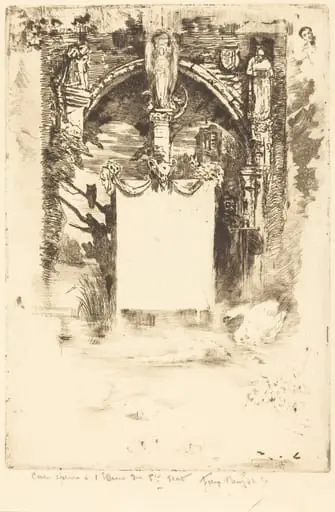 Ex-Libris pour "L'Ensorcelée" (Bookplate for "L'Ensorcelée")
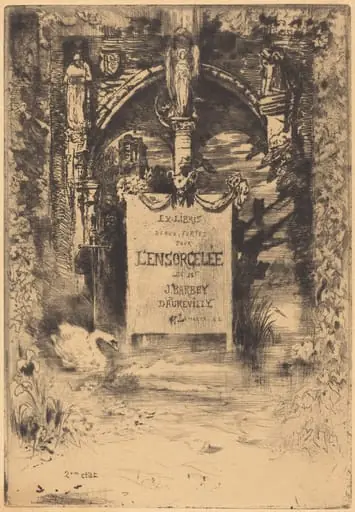 Ex-Libris pour "L'Ensorcelée" (Bookplate for "L'Ensorcelée")
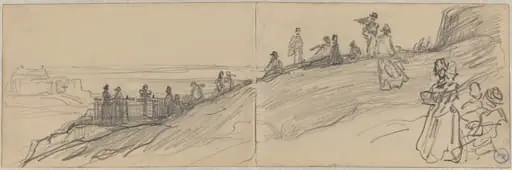 Figures on Top of a Hill, Overlooking the Sea
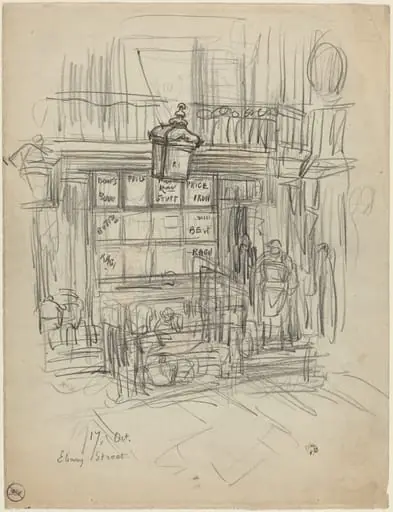 Ebury Street
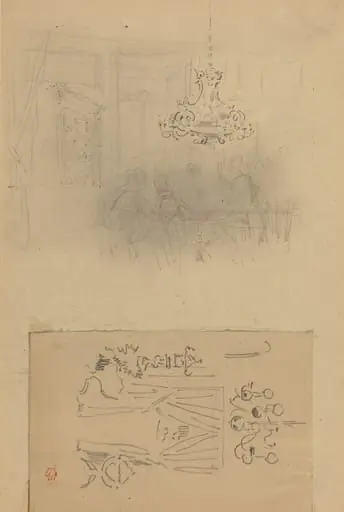 A Gathering in an Interior; A Curtained Doorway
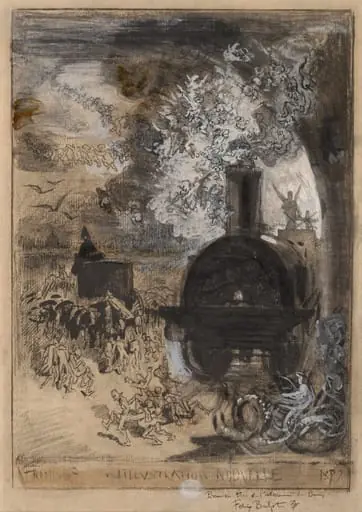 Frontispiece for L'Illustration Nouvelle: The Burial of the Burin
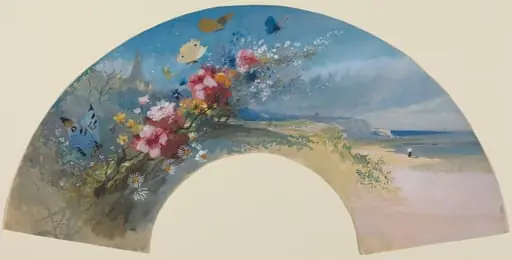 Fan with Wildflowers and Butterflies against the Norman Coast
![Gillingham Pier, London [verso], by Félix-Hilaire Buhot](https://artifactworldgallery.com/img/felix-hilaire-buhot--gillingham-pier-london-verso--641e03dd7de8217b-w320.webp) Gillingham Pier, London [verso]
Gillingham Pier, London [verso]