Artwork
The Passage
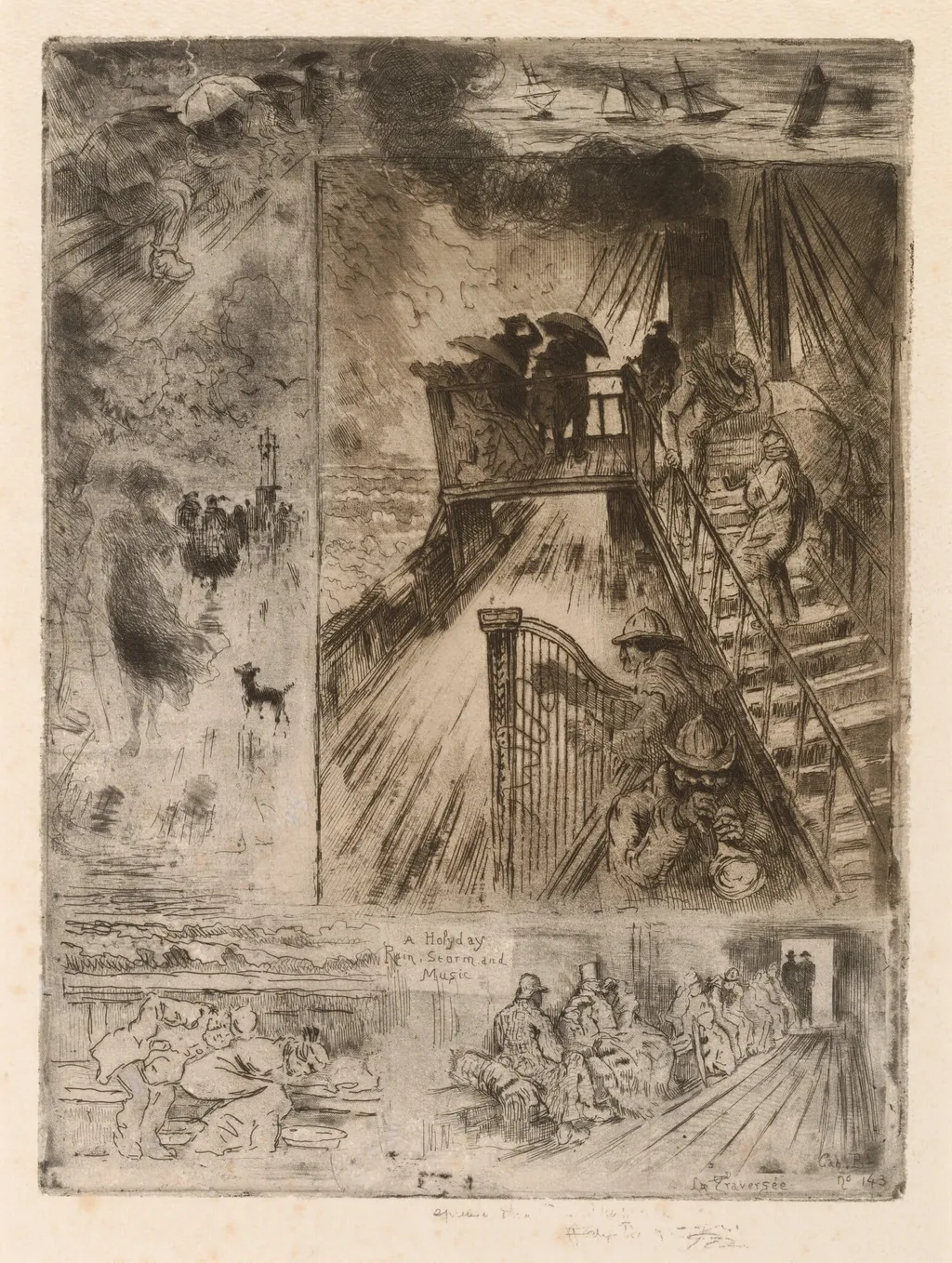
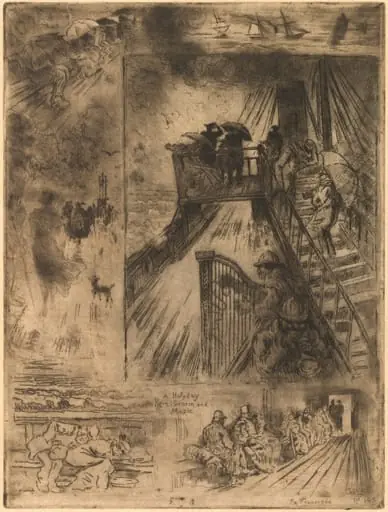
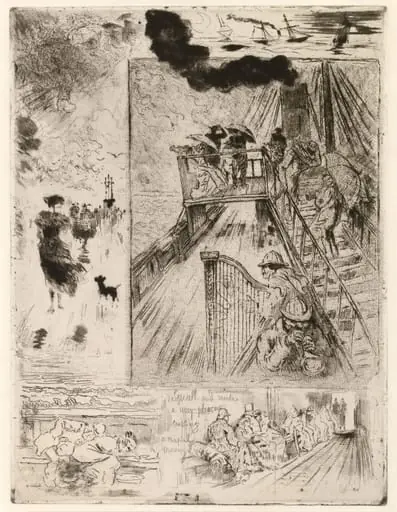
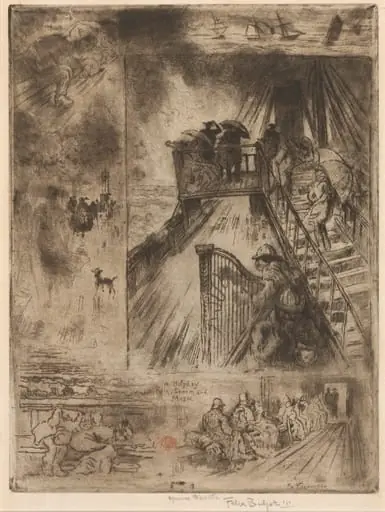
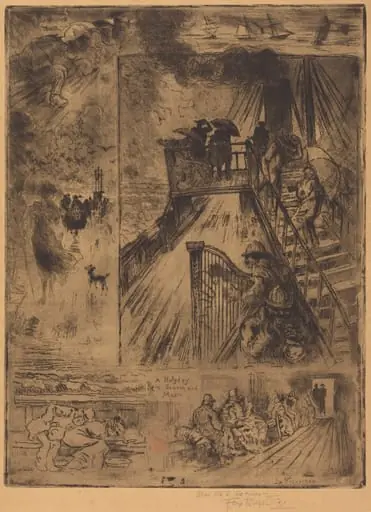
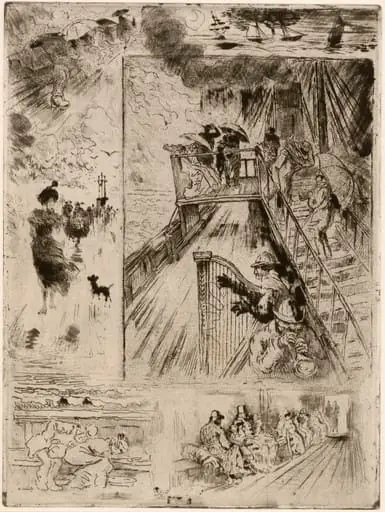
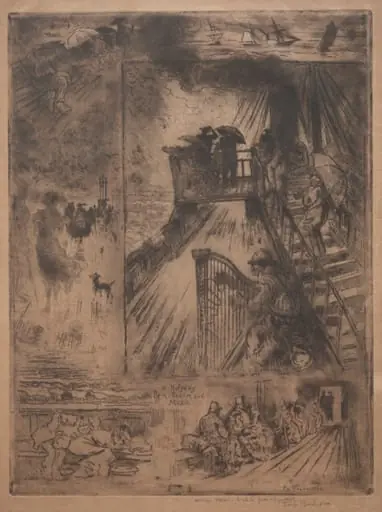
The Passage is an ink print by the Impressionist artist Félix-Hilaire Buhot. It dates from 1882 and is held in the collection of the National Gallery of Art.
About this work
Overview
Created in 1882 by Félix-Hilaire Buhot, The Passage is a multi-technique print combining etching, drypoint, roulette, aquatint, and soft-ground etching.
Created in 1882 by Félix-Hilaire Buhot, The Passage is a multi-technique print combining etching, drypoint, roulette, aquatint, and soft-ground etching. Rendered in brown ink on heavy wove paper, it captures a moment of urban life in Paris during rain. The margins feature additional black-ink scenes, extending the narrative beyond the central composition. The work reflects Buhot’s interest in everyday urban rhythms and atmospheric conditions.
Subject & Meaning
The scene depicts a rain-soaked Parisian street corner where pedestrians shelter beneath a canopy. A man on a ladder repairs a streetlamp, while others stand below, waiting. A horse-drawn carriage passes through puddles, and a dog moves independently through the frame. The title, The Passage, suggests transient movement and the quiet persistence of routine, emphasizing ordinary moments over dramatic events.
Technique & Style
Buhot employed a range of intaglio techniques to evoke texture and motion. Scratchy drypoint lines suggest wet surfaces and blurred figures, while aquatint creates soft gradations of rain and shadow. The soft-ground etching adds delicate tonal variations, and roulette dots mimic the texture of wet cobblestones. The loose, spontaneous marks resemble quick observational sketches, prioritizing mood over precision.
History & Provenance
The work was produced during Buhot’s most active period as a printmaker, when he focused on urban scenes of Paris. It was likely printed in a small edition, typical of his practice. The print remained within private collections in France through the late 19th and early 20th centuries before entering institutional holdings. No major public exhibitions are recorded at the time of its creation.
Context
In the 1880s, Paris was undergoing modernization, yet Buhot turned away from grand architecture to document the subtle, weather-worn corners of daily life. His prints responded to the rise of realism and the influence of Japanese woodcuts, which emphasized fleeting moments and asymmetrical composition. The Passage aligns with a broader interest among artists in capturing the emotional texture of the city.
Legacy
Buhot’s prints, including The Passage, are recognized for their empathetic portrayal of urban labor and transient life. Though not widely known outside specialist circles, his technical innovation in etching influenced later generations of printmakers interested in atmospheric effects and spontaneous mark-making. The work remains a quiet testament to the dignity of ordinary urban experience.
Artist & collection

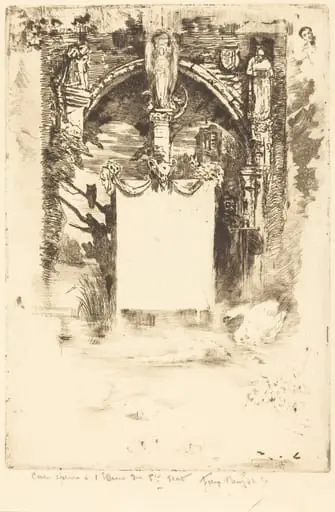 Ex-Libris pour "L'Ensorcelée" (Bookplate for "L'Ensorcelée")
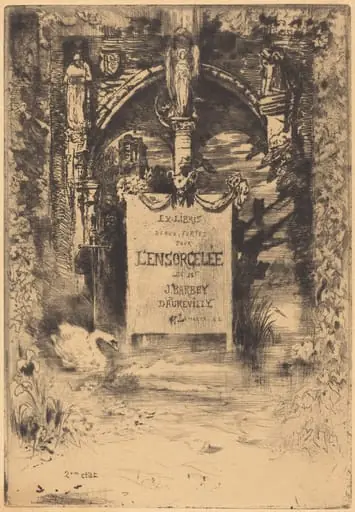 Ex-Libris pour "L'Ensorcelée" (Bookplate for "L'Ensorcelée")
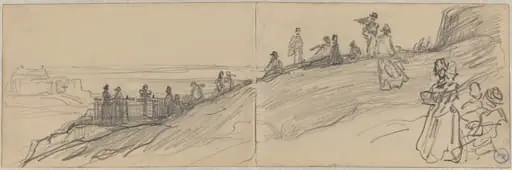 Figures on Top of a Hill, Overlooking the Sea
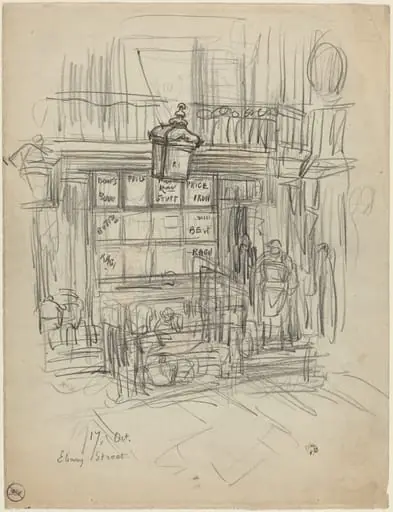 Ebury Street
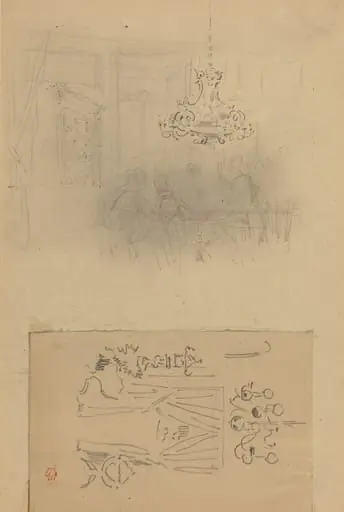 A Gathering in an Interior; A Curtained Doorway
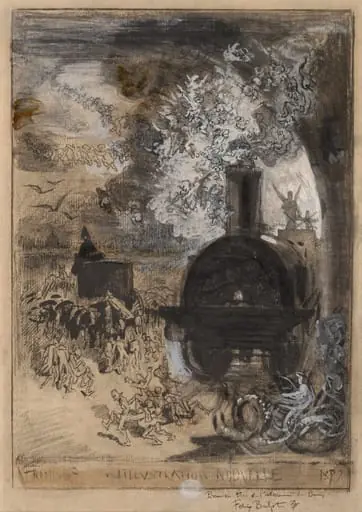 Frontispiece for L'Illustration Nouvelle: The Burial of the Burin
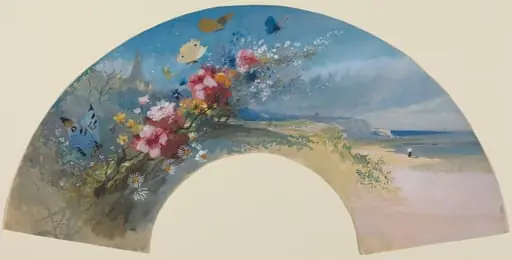 Fan with Wildflowers and Butterflies against the Norman Coast
![Gillingham Pier, London [verso], by Félix-Hilaire Buhot](https://artifactworldgallery.com/img/felix-hilaire-buhot--gillingham-pier-london-verso--641e03dd7de8217b-w320.webp) Gillingham Pier, London [verso]
Gillingham Pier, London [verso]