Artwork
The Crossing
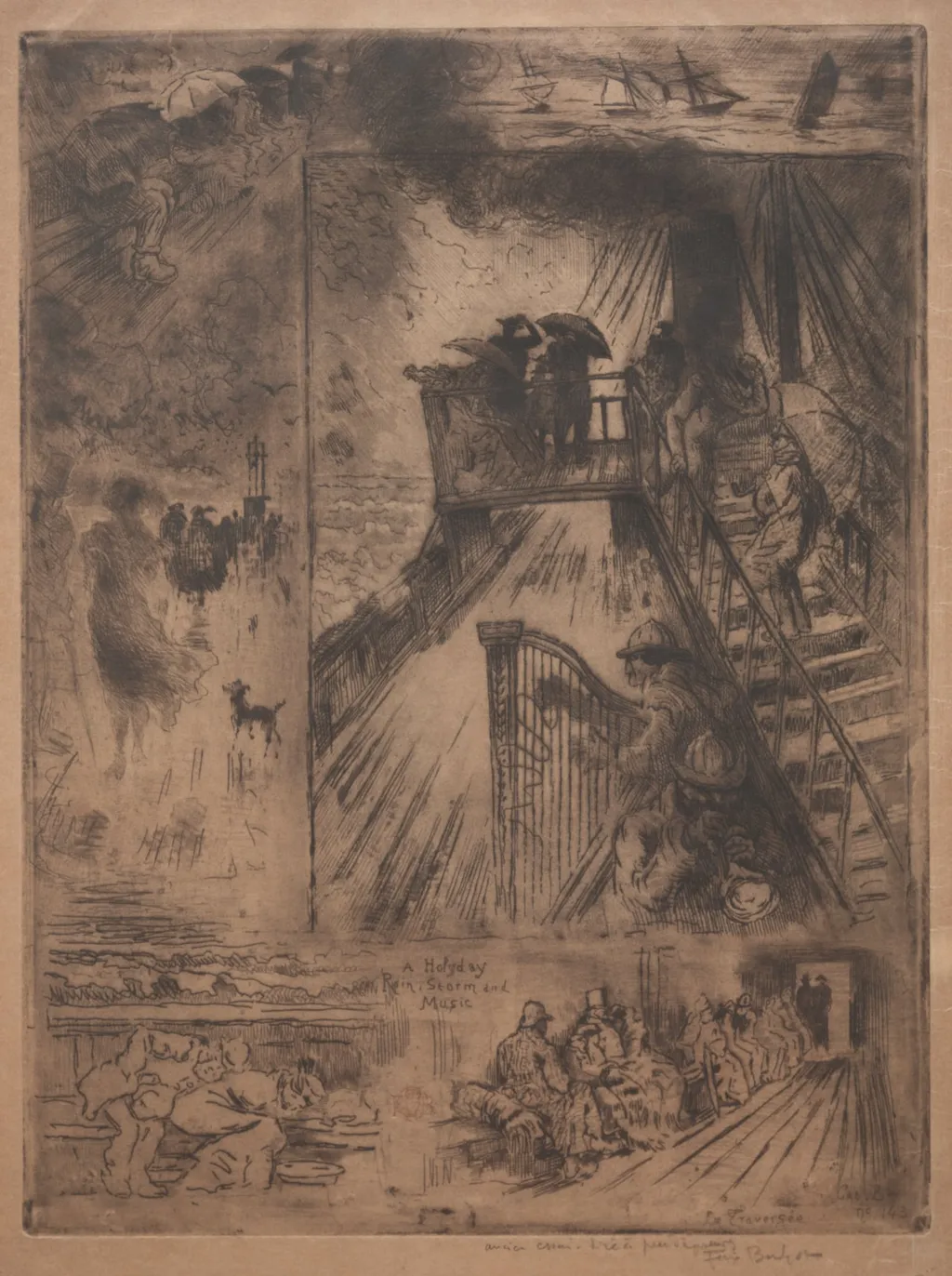
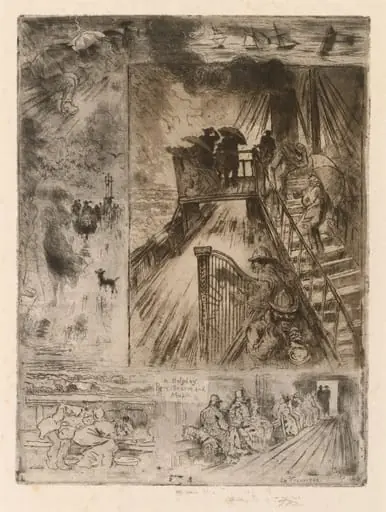
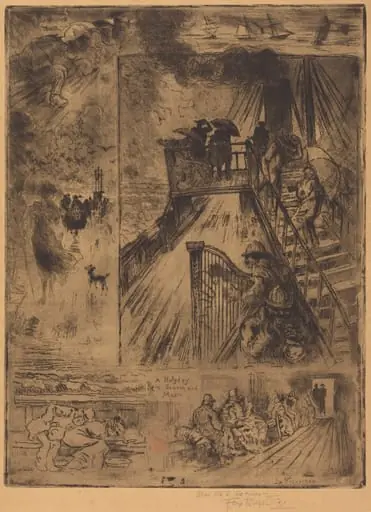
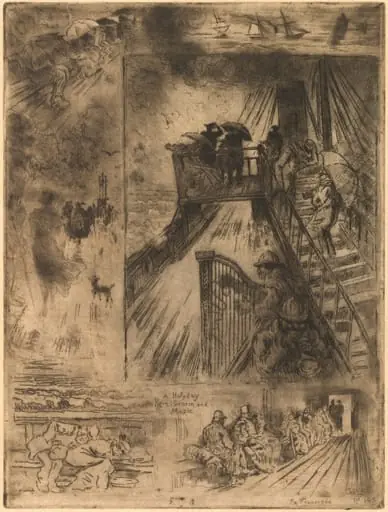
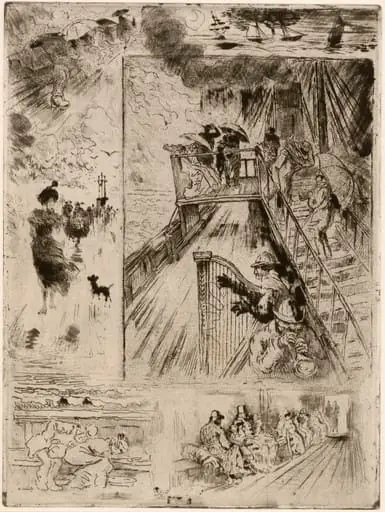
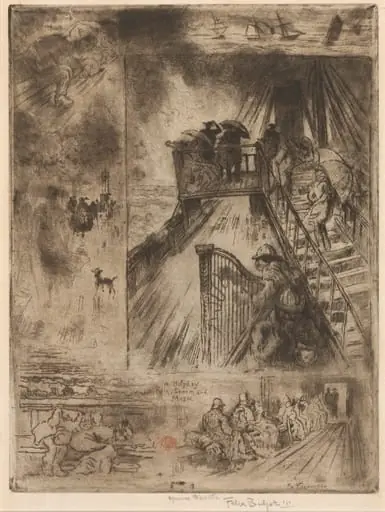
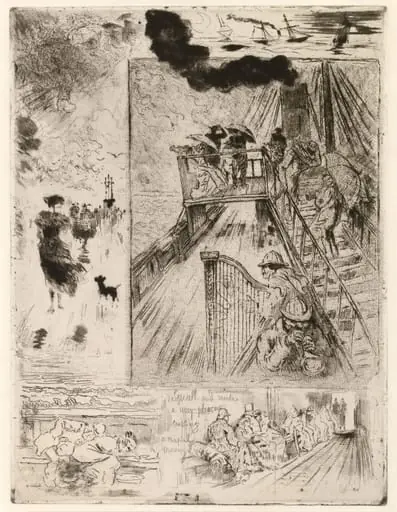
The Crossing is a print by the Impressionist artist Félix-Hilaire Buhot. It dates from 1880 and is held in the collection of the Cleveland Museum of Art.
About this work
You see a quiet scene of people crossing a street in France.
The painting has a lot of detail in the background, with buildings and trees. It also shows people going about their daily business, which gives us a glimpse into life in 19th century France.
Check out the technique of chiaroscuro to learn more about how artists use light and dark to create depth in their work.
Overview
The piece is part of the collection at The Cleveland Museum of Art, where it serves as a quiet record of late 19th-century French urbanity.
The Crossing is a print by Félix Hilaire Buhot, dated around 1880. It captures a modest urban moment in France, depicting pedestrians navigating a quiet street. Executed in etching and aquatint, the work reflects Buhot’s interest in everyday life and atmospheric detail. The piece is part of the collection at The Cleveland Museum of Art, where it serves as a quiet record of late 19th-century French urbanity.
Subject & Meaning
The scene portrays ordinary individuals crossing a city street—men in top hats, women in long skirts, a child holding a hand. No dramatic event occurs; the significance lies in the routine. Buhot presents urban life not as spectacle but as rhythm, emphasizing the quiet dignity of daily movement. The composition invites contemplation of social patterns and the anonymity of city dwellers.
Technique & Style
Buhot employed etching and aquatint to achieve subtle tonal gradations, enhancing the sense of depth and atmosphere. Fine lines define architectural details and foliage, while soft washes suggest shifting light and shadow. The restrained palette and textured surfaces reflect the influence of Japanese prints and the emerging interest in printmaking as an independent art form, distinct from painting.
History & Provenance
Created in the early 1880s, The Crossing emerged during Buhot’s most active period as a printmaker. He produced numerous urban scenes during this time, often published in journals or sold as individual plates. The work entered The Cleveland Museum of Art’s collection through established acquisition channels, likely in the 20th century, as part of a broader interest in French graphic art.
Context
In late 19th-century France, urbanization transformed Paris and other cities, inspiring artists to document changing social landscapes. Buhot, like Degas and Daumier, turned to printmaking to capture fleeting moments of modern life. His focus on pedestrian movement and architectural detail aligns with broader cultural interests in observation, realism, and the aesthetics of the everyday.
Legacy
The Crossing exemplifies Buhot’s contribution to the revival of etching as a medium for intimate, observational art. While not widely known outside specialist circles, his prints influenced later generations of printmakers interested in urban realism. The work remains a quiet testament to the value of ordinary scenes in documenting historical experience.
Artist & collection

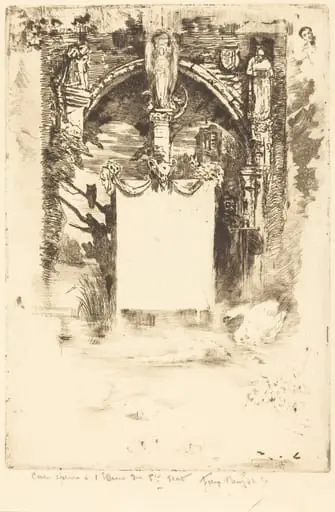 Ex-Libris pour "L'Ensorcelée" (Bookplate for "L'Ensorcelée")
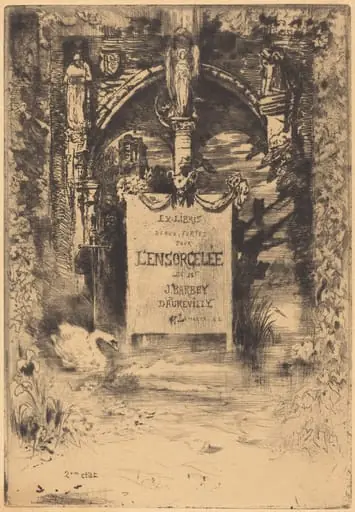 Ex-Libris pour "L'Ensorcelée" (Bookplate for "L'Ensorcelée")
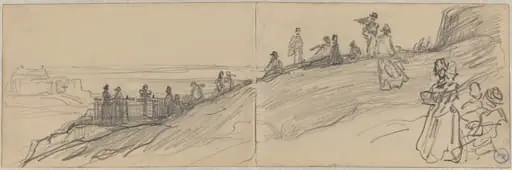 Figures on Top of a Hill, Overlooking the Sea
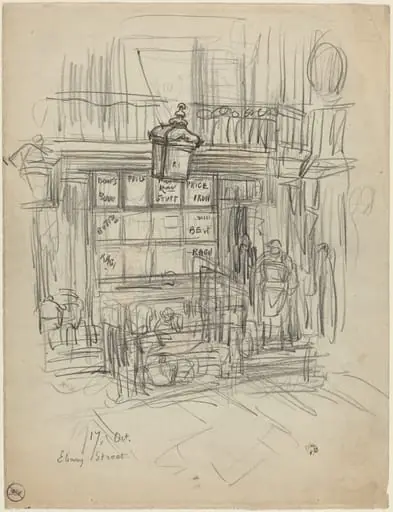 Ebury Street
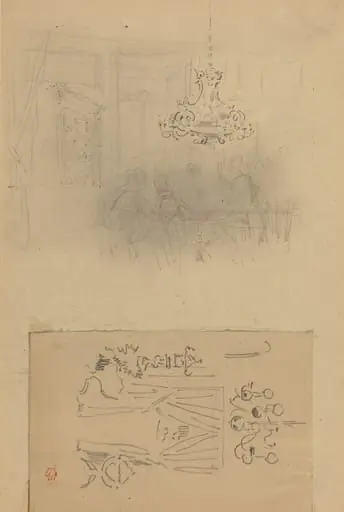 A Gathering in an Interior; A Curtained Doorway
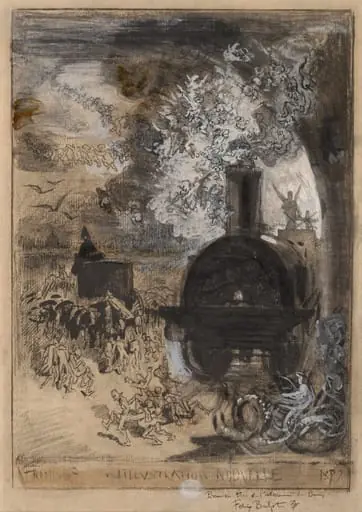 Frontispiece for L'Illustration Nouvelle: The Burial of the Burin
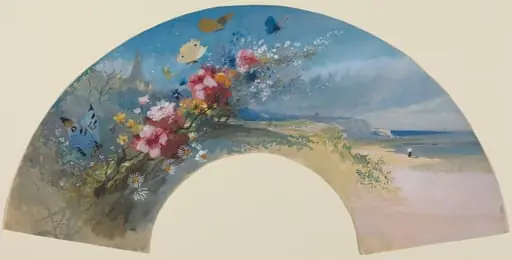 Fan with Wildflowers and Butterflies against the Norman Coast
![Gillingham Pier, London [verso], by Félix-Hilaire Buhot](https://artifactworldgallery.com/img/felix-hilaire-buhot--gillingham-pier-london-verso--641e03dd7de8217b-w320.webp) Gillingham Pier, London [verso]
Gillingham Pier, London [verso]