Artwork
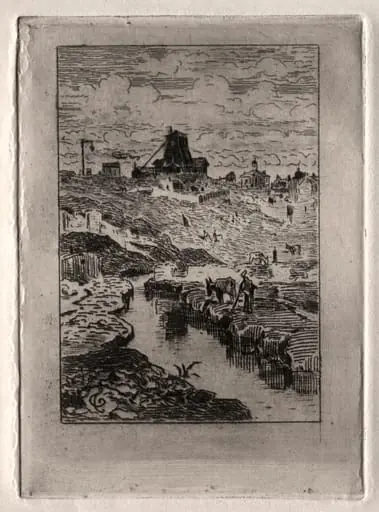
Le Puits de la Butte-aux-Cailles
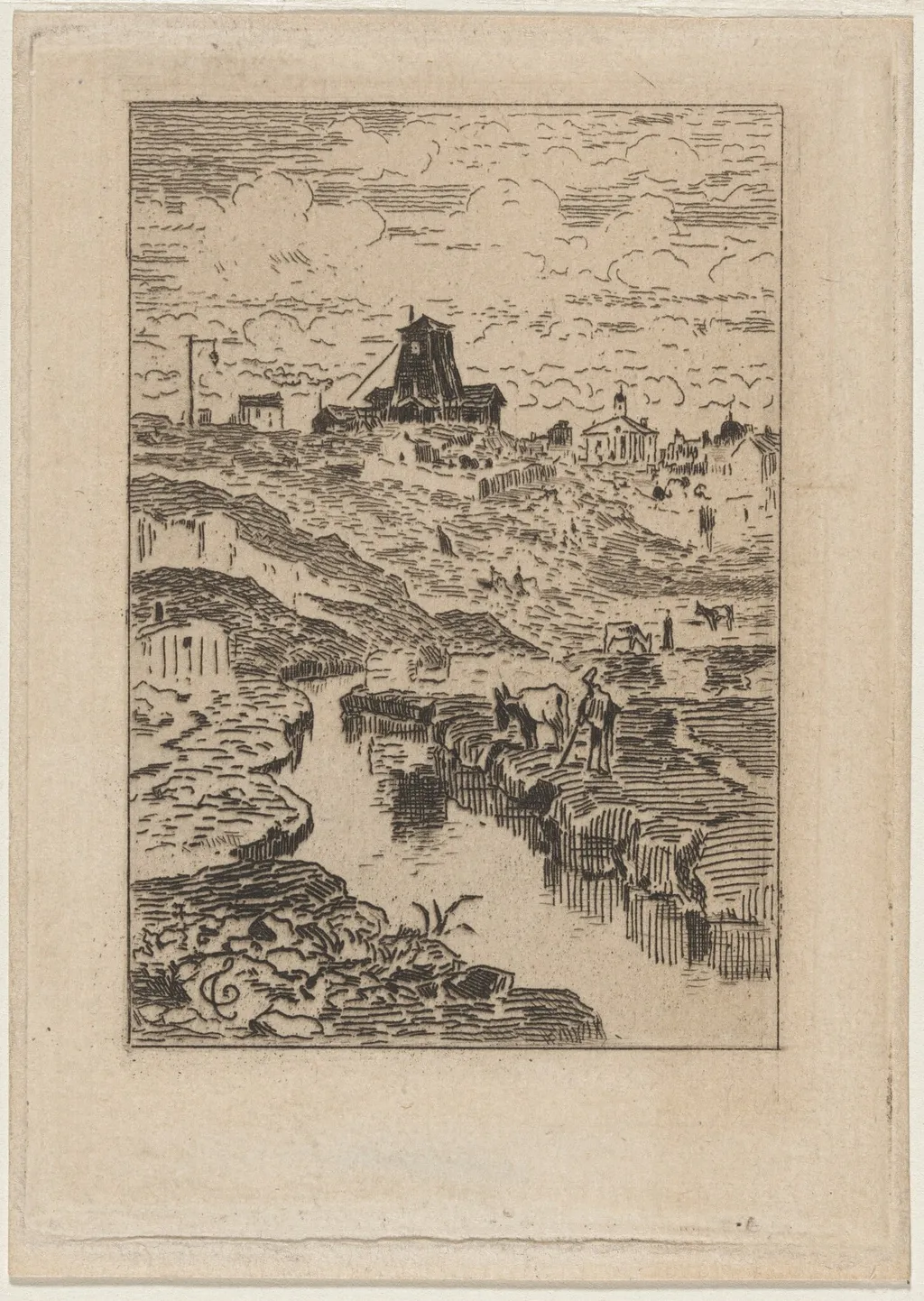
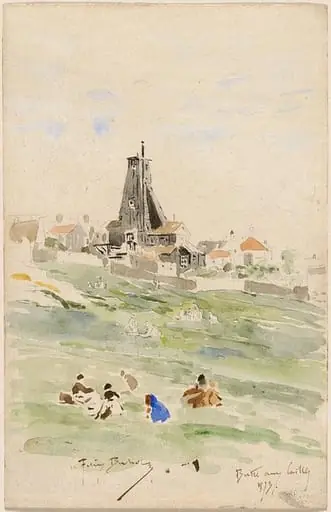
Le Puits de la Butte-aux-Cailles is an ink print by the Romanticist artist Félix-Hilaire Buhot. It dates from 1872 and is held in the collection of the National Gallery of Art.
About this work
Overview
Le Puits de la Butte-aux-Cailles, an 1872 etching on laid paper by Félix-Hilaire Buhot, depicts a serene village scene centered around a well, populated by a few figures, animals, and humble architecture, set against a subtly rendered sky.
Subject & Meaning
The print captures everyday rural life, emphasizing the quiet, natural ambiance of a village. The central well and winding path underscore the community's simple, earthy existence, reflecting the Romantic emphasis on nature and mundane life.
Technique & Style
Buhot employed fine etching lines to achieve detailed textures, imbuing the monochrome scene with depth. The technique, characteristic of the period, relies on acid-etched metal plates to produce intricate, high-contrast images.
History & Provenance
Created in 1872, the etching's provenance details are not specified here, though its style aligns with Buhot's known body of work from this time.
Context
This work aligns with the Romantic movement's focus on natural settings and everyday life, distinguishing it from more ornate or urban-centric art forms prevalent in other contemporary styles.
Legacy
While specific legacy details of 'Le Puits de la Butte-aux-Cailles' are not provided, it contributes to Buhot's broader contribution to the etching revival of the late 19th century, influencing subsequent generations in printmaking techniques and appreciation for quotidian scenes.
Artist & collection

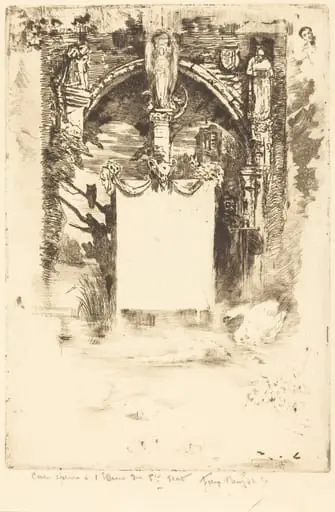 Ex-Libris pour "L'Ensorcelée" (Bookplate for "L'Ensorcelée")
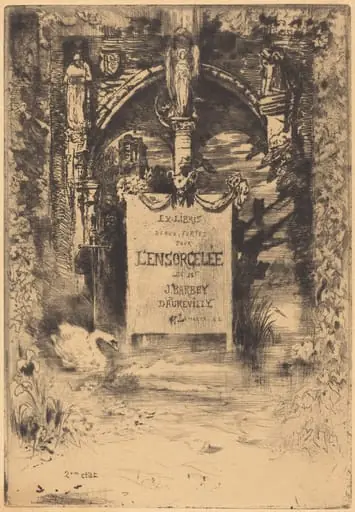 Ex-Libris pour "L'Ensorcelée" (Bookplate for "L'Ensorcelée")
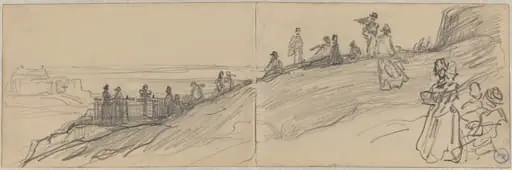 Figures on Top of a Hill, Overlooking the Sea
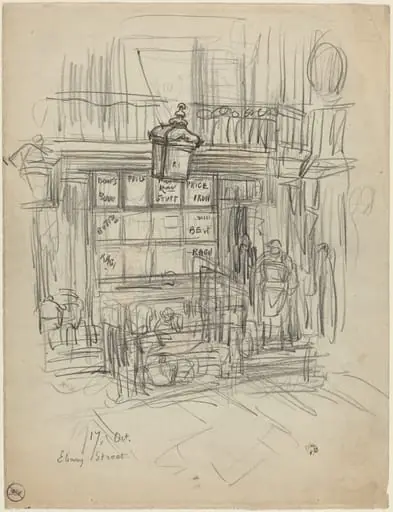 Ebury Street
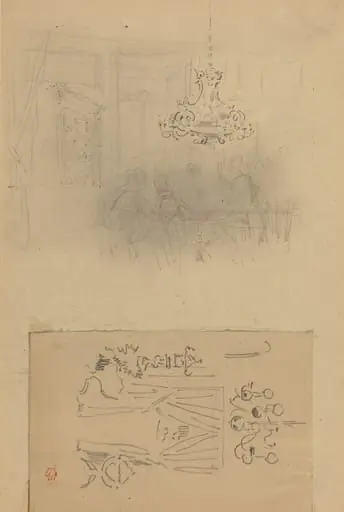 A Gathering in an Interior; A Curtained Doorway
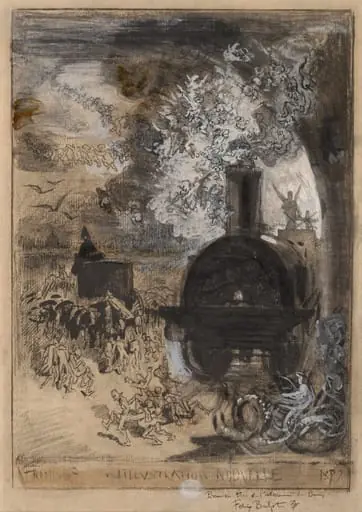 Frontispiece for L'Illustration Nouvelle: The Burial of the Burin
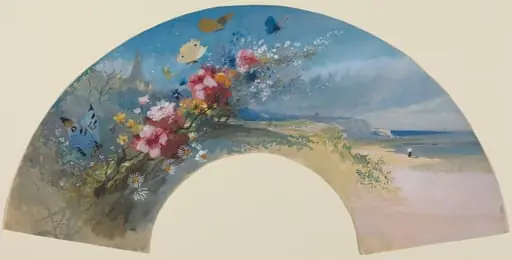 Fan with Wildflowers and Butterflies against the Norman Coast
![Gillingham Pier, London [verso], by Félix-Hilaire Buhot](https://artifactworldgallery.com/img/felix-hilaire-buhot--gillingham-pier-london-verso--641e03dd7de8217b-w320.webp) Gillingham Pier, London [verso]
Gillingham Pier, London [verso]
 The Well at the Hill of Cailles
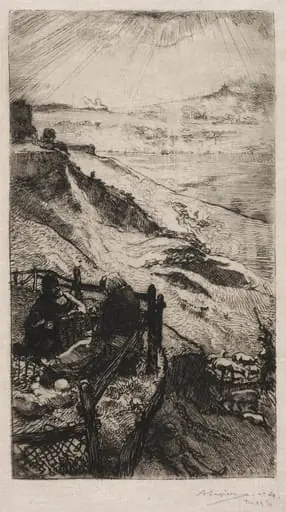 Carrirères d'Amérique pres Paris
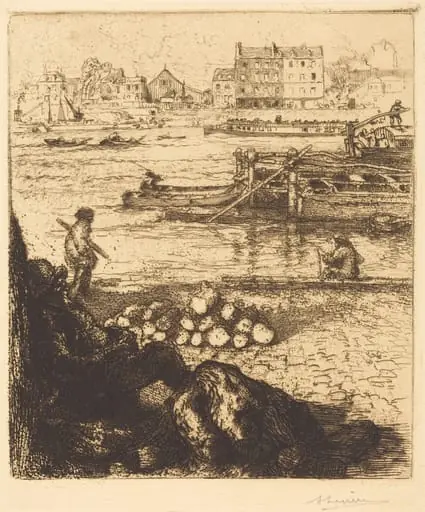 Dockman, Pier at La Gare (Le debardeur, quai de La Gare)
 Les Anes de Saint-Medard
 Village of Wimille, near Boulogne
 Angers - The House of the King of Poland (Angers - La maison du roi de Pologne)
 Le Débardeur: Quai de la Gare
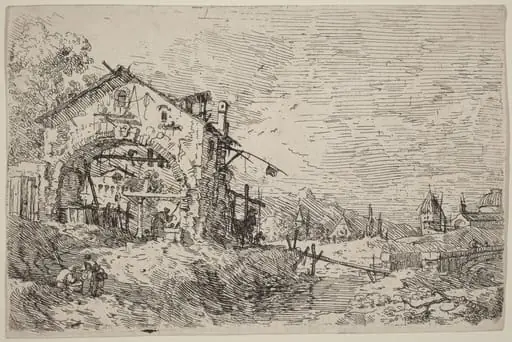 Landscape with a Woman at a Well
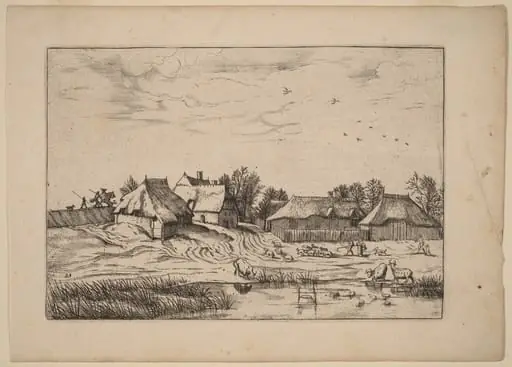 Farms
Farms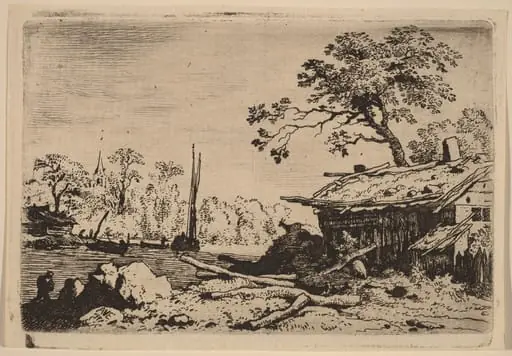 Ruinous Hut
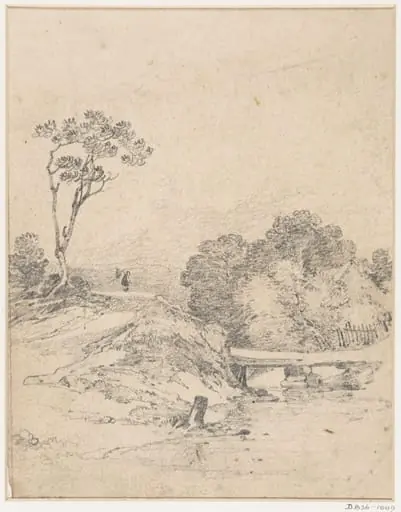 Landscape : a rustic bridge over a stream
 Butte aux Cailles