Artwork
Le Débardeur: Quai de la Gare
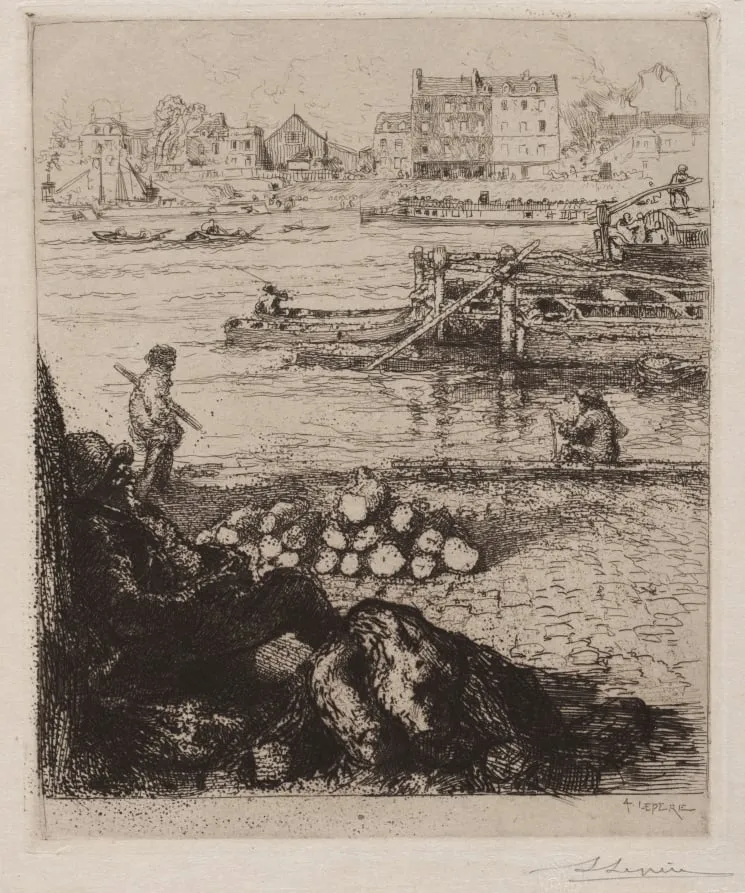
Le Débardeur: Quai de la Gare is a print by the Impressionist artist Auguste Lepère. It dates from 1894 and is held in the collection of the Cleveland Museum of Art.
About this work
Overview
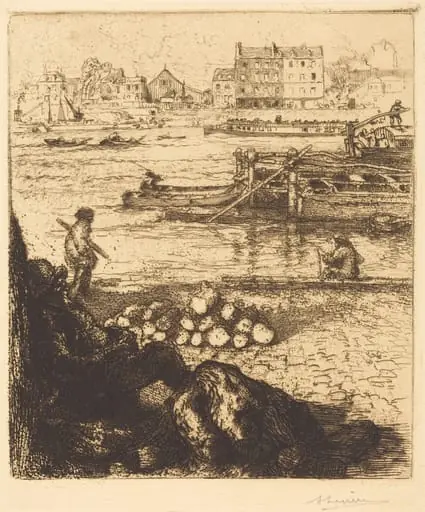
Le Débardeur: Quai de la Gare (1894) is a print by Auguste Louis Lepère, capturing a dynamic riverside scene of laborers, boats, and industrial activity at a dock, characterized by expressive lines and a focus on everyday life.
Subject & Meaning
The print depicts a bustling waterfront with a foreground figure holding a pole, a barge loaded with tree trunks, and workers unloading cargo. The scene emphasizes the mundane aspects of industrial labor and riverine activity, reflecting late 19th-century interests in documenting everyday life.
Technique & Style
Lepère employed quick, sketchy lines to convey movement and light, aligning with Impressionist principles. The work showcases his expertise in printmaking, particularly in the revival of wood engraving in Europe during this period.
History & Provenance
Created in 1894, the print exemplifies Lepère's role in the late 19th-century European revival of wood engraving, a medium through which he and others explored the intersection of art and everyday life.
Context
Le Débardeur: Quai de la Gare sits within the broader context of Impressionist and late 19th-century European art movements, which sought to capture modern life and industrial landscapes through innovative printmaking techniques.
Legacy
As part of Lepère's oeuvre, the print contributes to the enduring legacy of wood engraving's revival in Europe and the continued interest in depicting everyday, working-class life in art.
Artist & collection
Artist
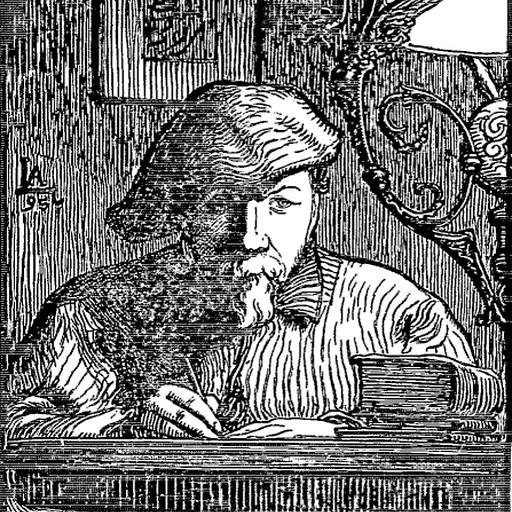
Louis-Auguste Lepère (30 November 1849 – 20 November 1918) was a French painter and etcher. Lepère is also considered a leader in the creative revival of wood engraving in Europe.

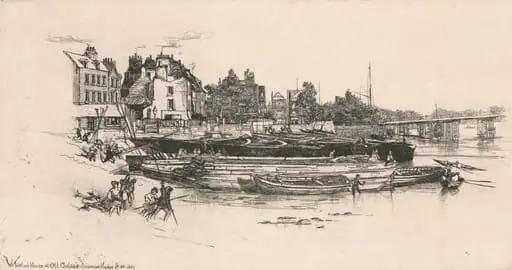 Whistler's House at Old Chelsea
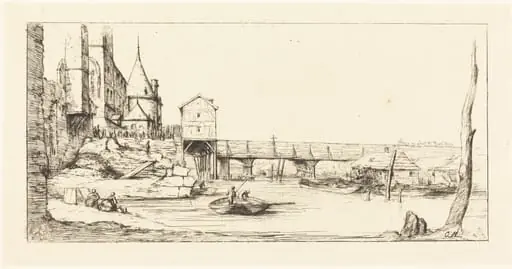 Passerelle du Pont-au-Change, Paris, après l'Incendie de 1621 (Footbridge Temporarily Replacing the Pont-au-Change, Paris, after the Fire of 1621)
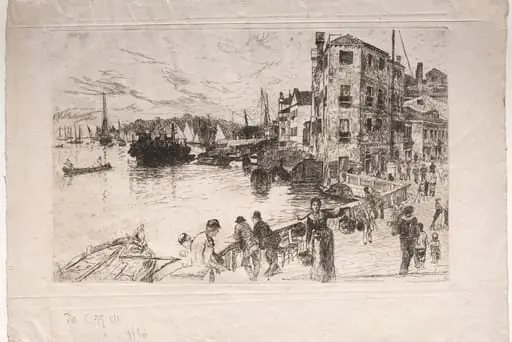 Castello Quarter, Riva
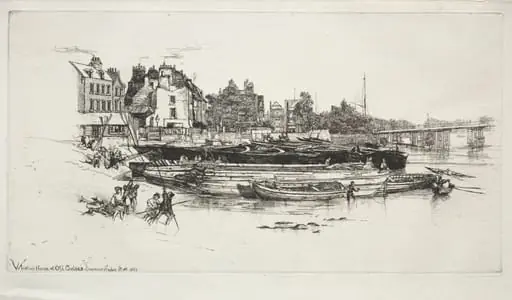 Whistler's House, Old Chelsea
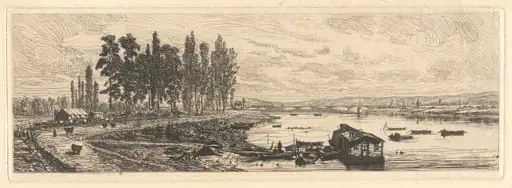 The Banks of the Seine at Bezons
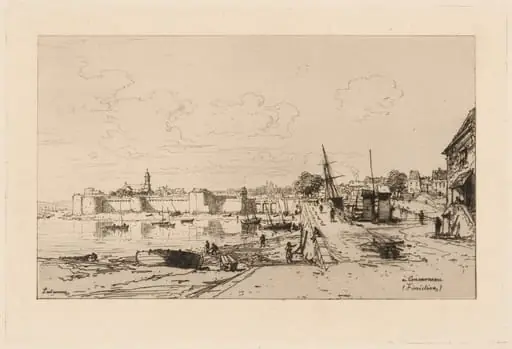 À Concarneau (Finistère)
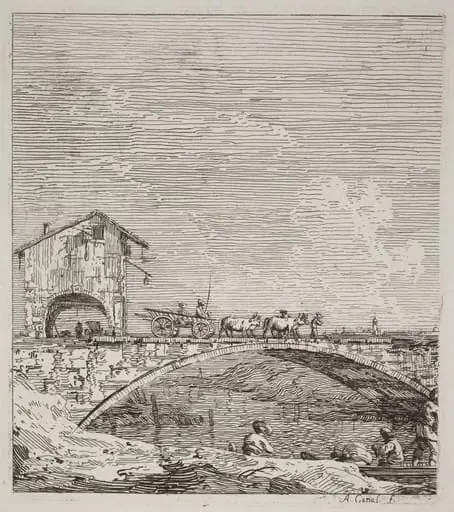 The Wagon Passing over a Bridge
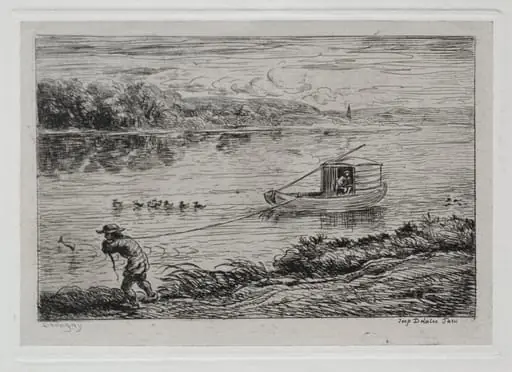 The Boat Trip: Cabin Boy Hauling the Tow-Rope or Hauling by Rope
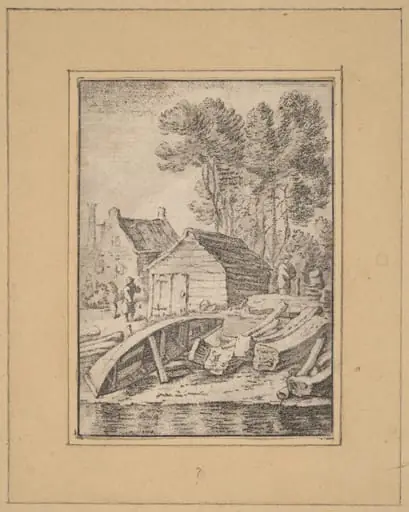 Shipyard
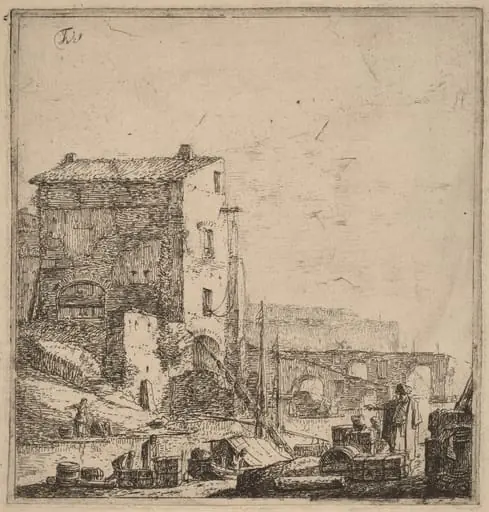 The Oriental Merchant
 Dockman, Pier at La Gare (Le debardeur, quai de La Gare)
 Old Chelsea (Old Chelsea Church)