Artwork
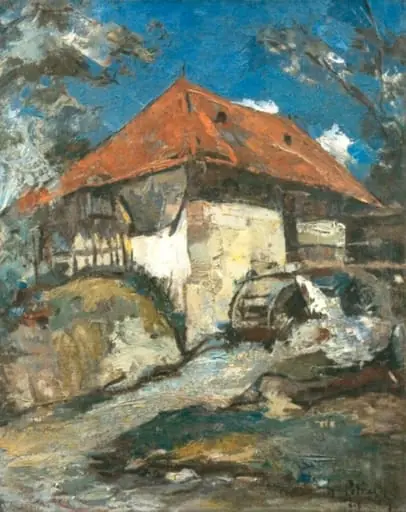
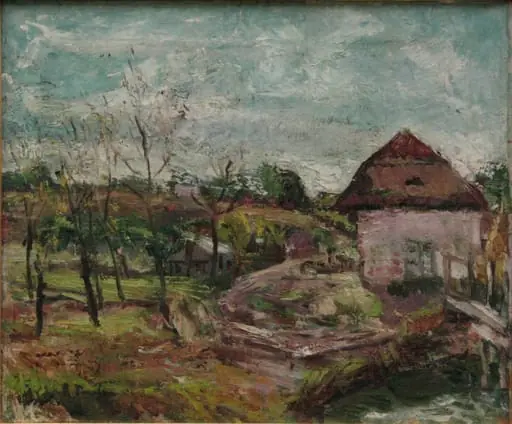
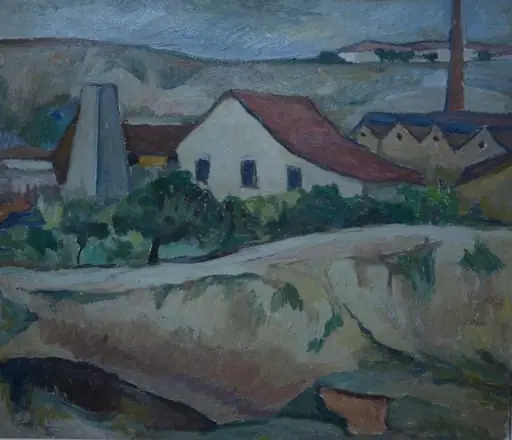
Moară roșie la Câmpulung
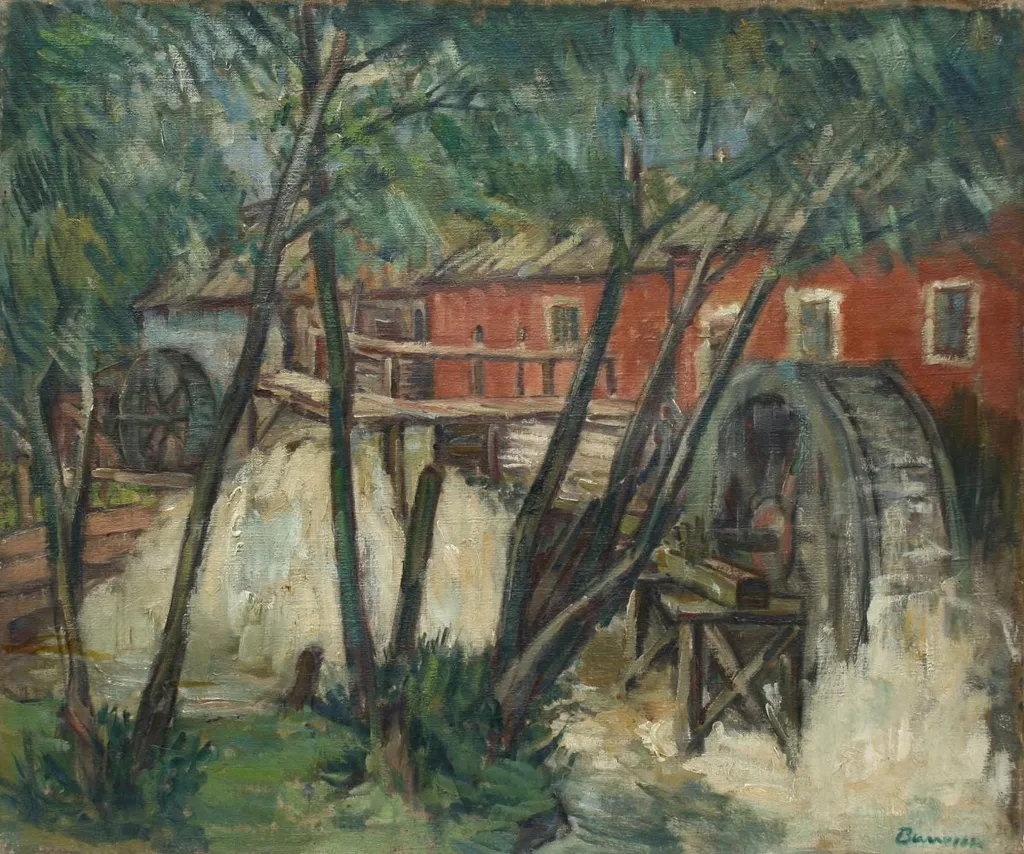
Moară roșie la Câmpulung is a print by Marius Bunescu. It dates from 1949 and is held in the collection of the Gavrilă Simion Eco-Museum Research Institute Tulcea - Art Museum.
About this work
Overview
Created circa 1949, *Moară roșie la Câmpulung / Peisaj cu râu* is a landscape painting by Romanian artist Marius Bunescu (1881–1971). The composition centers on a red‑hued mill situated beside a river, framed by stark, leafless trees and a damp, earthy foreground. The work reflects Bunescu’s sustained interest in depicting the Romanian countryside.
Subject & Meaning
The scene presents a solitary red mill with a prominent wooden water wheel, suggesting an operational, perhaps historic, water‑driven facility. The surrounding bare trees and muted palette convey a quiet, rural atmosphere, emphasizing the relationship between human industry and the natural environment of the Câmpulung region.
Technique & Style
Bunescu employs a loose brushwork that alternates between soft, blended washes and thick, impasto passages, especially in the foreground vegetation and the mill’s structure. This textural contrast creates a tactile surface, while the limited color range of greens, browns, and the striking red of the building generates a warm, earthy tonal harmony.
History & Provenance
Trained initially in Constanța and later at the Munich Academy, Bunescu later helped organize the National Museum of Art and directed the Anastase Simu Museum. The painting, produced in the post‑war period, entered the museum collection where it remains part of the institution’s representation of mid‑20th‑century Romanian landscape painting.
Artist & collection
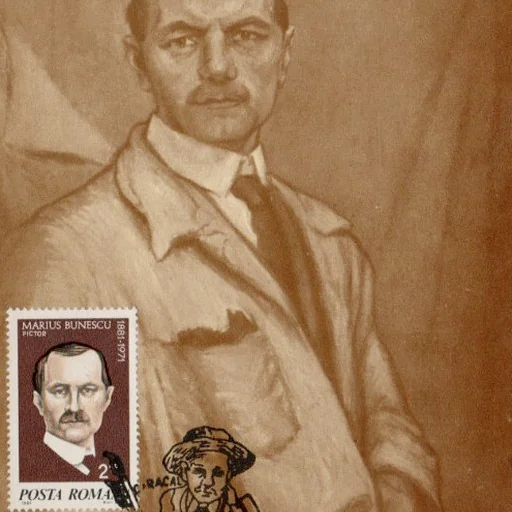
Artist
Marius Bunescu (15 May 1881 – 31 March 1971) was a Romanian painter, organizer of the National Museum of Art, and director of the Anastase Simu Museum.
Museum
Gavrilă Simion Eco-Museum Research Institute Tulcea - Art Museum
Continue through works from the same source collection.