Artwork
H Beard Print Collection
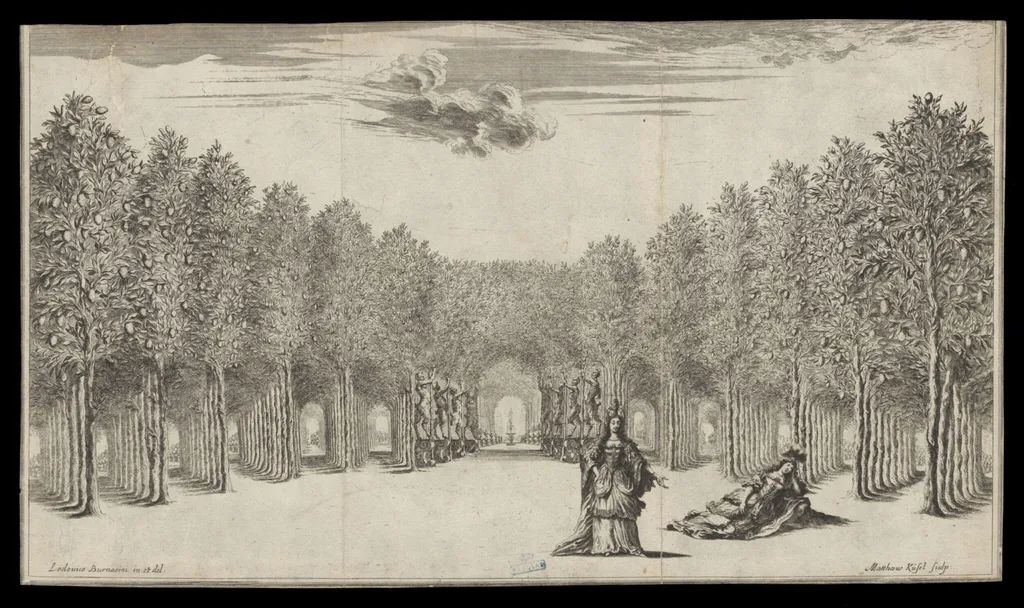
H Beard Print Collection is a print by the Baroque artist Lodovico Ottavio Burnacini. It dates from 1668 and is held in the collection of the Victoria and Albert Museum.
About this work
Overview
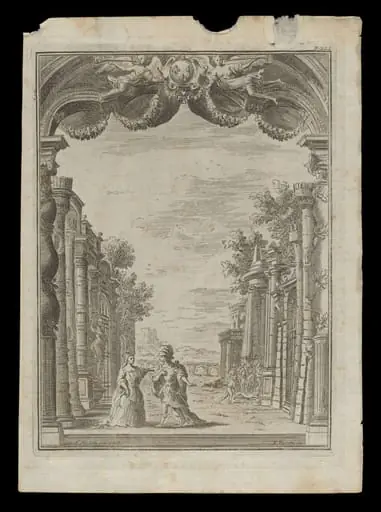
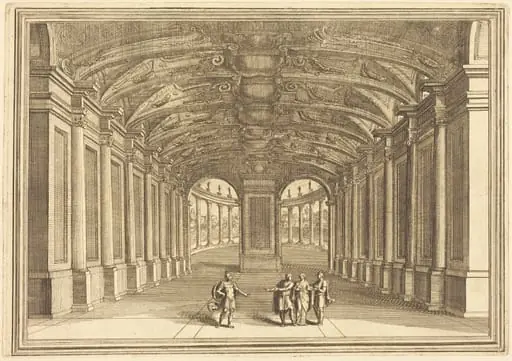
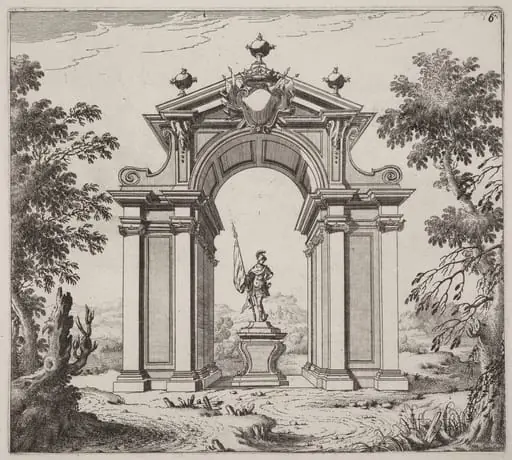
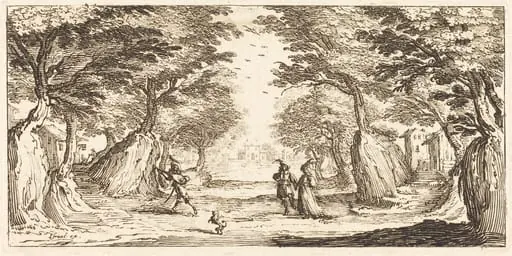
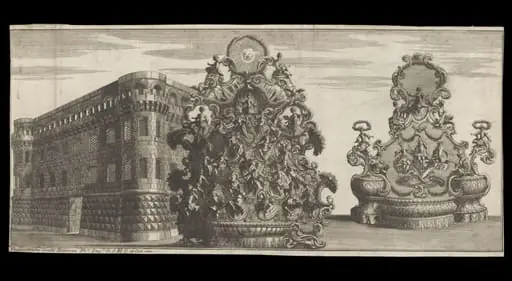
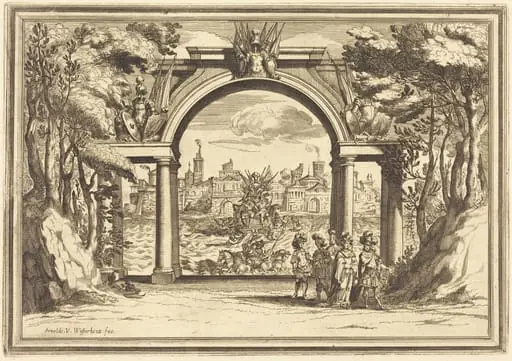
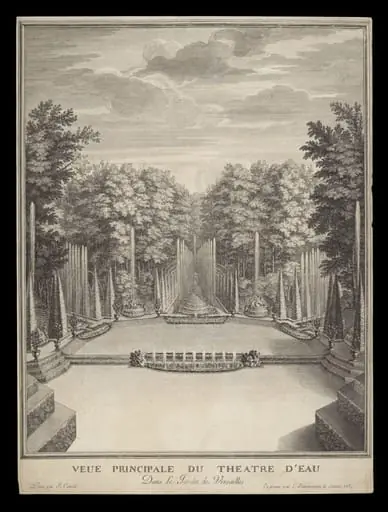
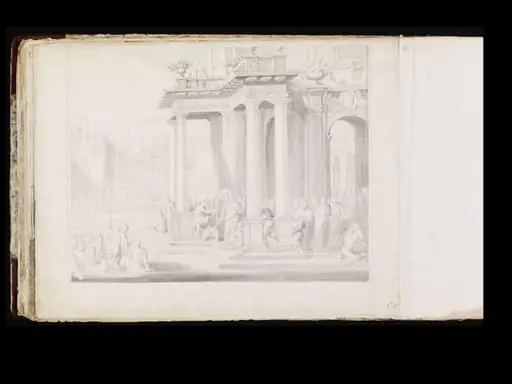
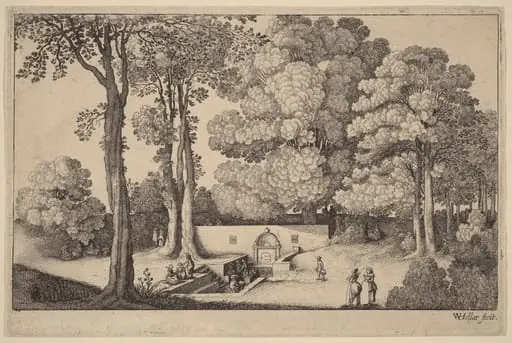
A printed scene from the 1681 opera Il Pomo d'Oro captures a moment from Act IV, Scene II, featuring the figures Filaura and Ennone within a cultivated orchard. The image serves as a visual record of a courtly performance, likely produced for distribution among aristocratic audiences or as a souvenir of the staged spectacle.
Subject & Meaning
Filaura and Ennone, characters from the mythological narrative of the opera, are shown in a tranquil garden setting. Their presence evokes themes of love, loss, and divine intervention tied to the golden apple myth. The orchard symbolizes both natural beauty and the fragile harmony of human emotion amid mythic consequence.
Technique & Style
The print employs fine line engraving to render delicate foliage, flowing drapery, and subtle facial expressions. Compositionally, the figures are framed by stylized trees and architectural elements, reflecting Baroque theatricality. The tonal range is restrained, emphasizing clarity of form over dramatic contrast.
History & Provenance
Created shortly after the premiere of Il Pomo d'Oro in Vienna, the print was likely commissioned by the Habsburg court or its associated artists. It entered the H. Beard collection in the 19th century, where it was preserved among other theatrical ephemera documenting European opera history.
Context
Il Pomo d'Oro was a lavish court opera composed for Emperor Leopold I, blending Italian libretto with Austrian musical traditions. Prints like this one helped extend the opera’s reach beyond the palace, reinforcing cultural prestige through visual reproduction during an era when live performance was inaccessible to most.
Legacy
This print remains a rare artifact of 17th-century Viennese court culture, illustrating how opera was documented and disseminated before the age of photography. It contributes to scholarly understanding of how mythological narratives were visually adapted for elite audiences in the Baroque period.
Artist & collection
Artist
Lodovico Burnacini worked in Vienna, designing all the sets and costumes for the Habsburg court’s operas.