Artwork
Landscape
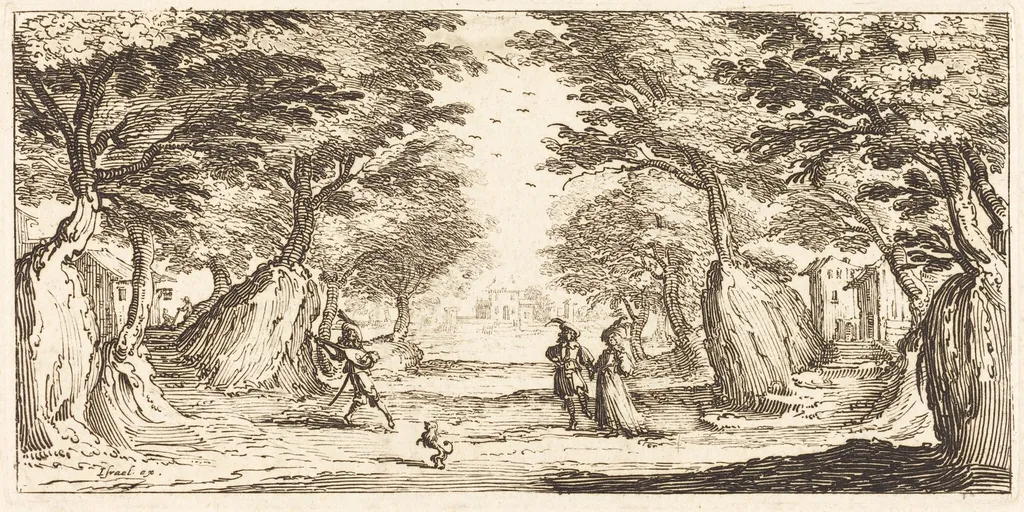
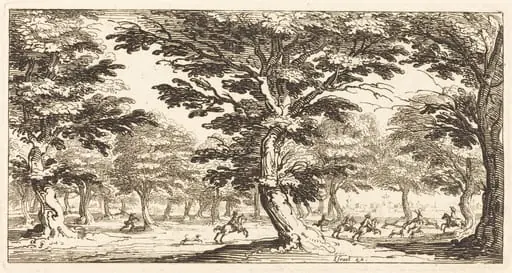
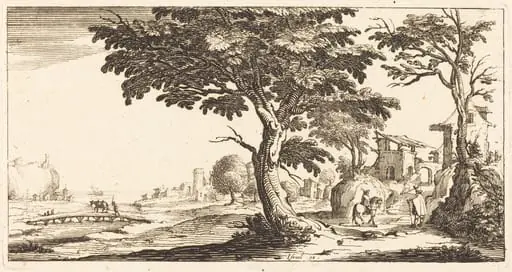
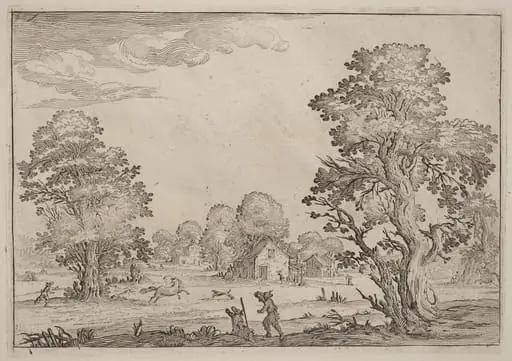
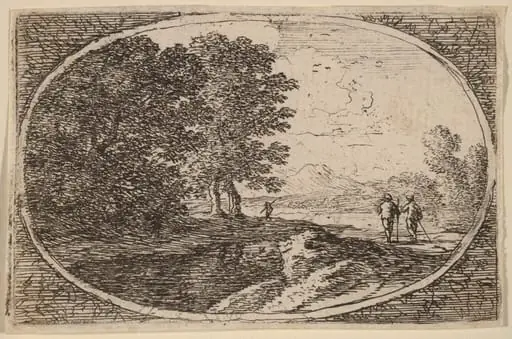
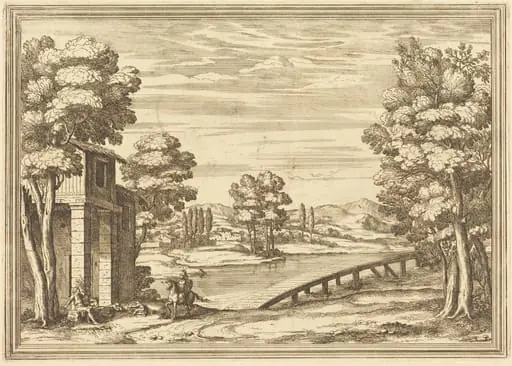
Landscape is an ink print by the Baroque artist French 17th Century. It dates from 1635 and is held in the collection of the National Gallery of Art.
About this work
Overview
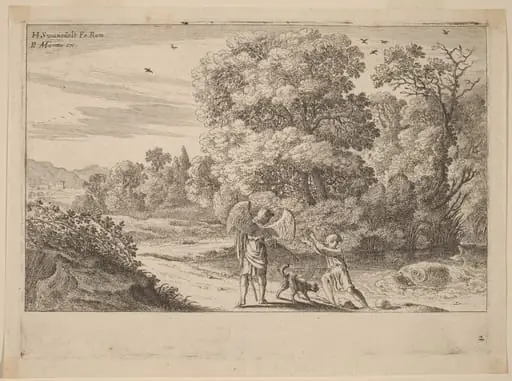
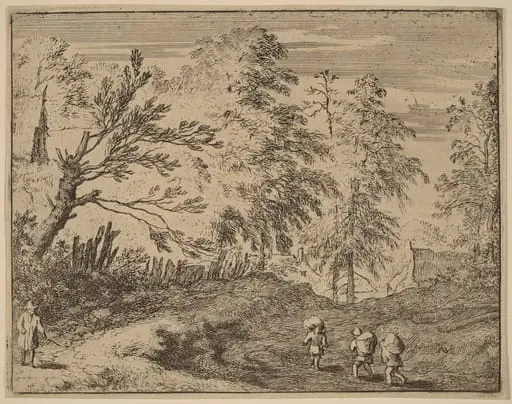
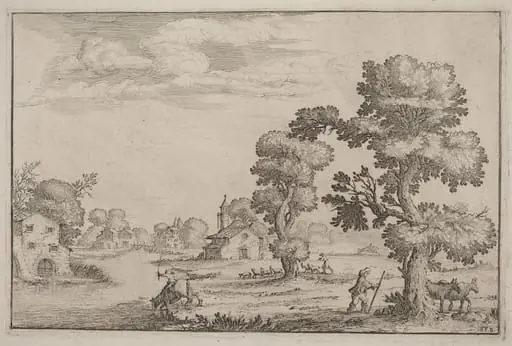
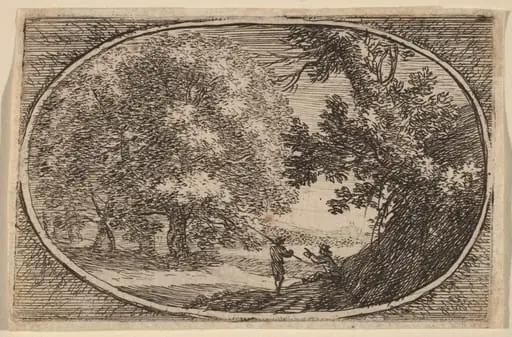
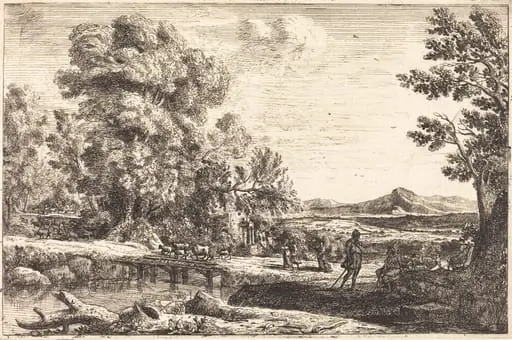
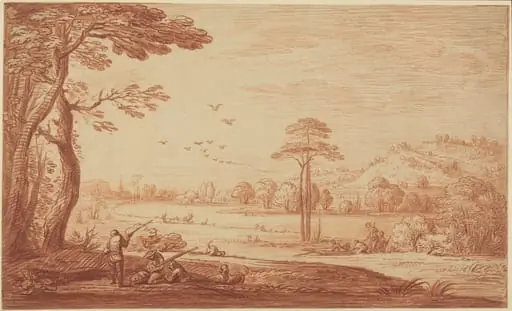
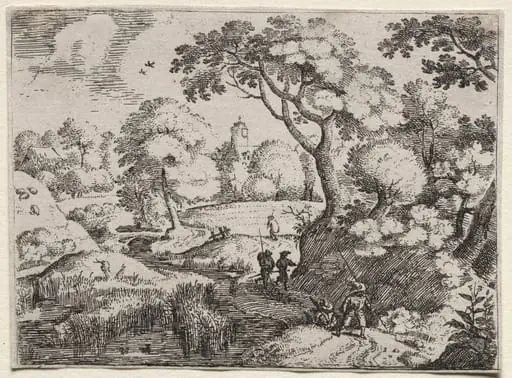
This black-and-white etching depicts a tranquil park landscape on laid paper. Two winding paths intersect beneath dense trees, with figures strolling and a small dog resting near water. The scene is quiet and unassuming, rendered entirely in fine linear strokes. The work belongs to the printmaking tradition, created by incising lines into a metal plate rather than applying pigment directly.
Subject & Meaning
The scene presents an ordinary moment in a public garden: solitary and paired walkers, a dog at rest, and distant architecture. There is no narrative climax or symbolic gesture; instead, the focus lies in the stillness and rhythm of daily life. The composition invites quiet contemplation, emphasizing harmony between people and the natural environment without overt commentary.
Technique & Style
Delicate cross-hatching and varied line weights capture textures—tree bark, water ripples, and foliage—creating depth without color.
The artist employed etching, using a needle to draw fine lines into a metal plate coated with wax. Acid bit the exposed lines, which were then inked and pressed onto paper. Delicate cross-hatching and varied line weights capture textures—tree bark, water ripples, and foliage—creating depth without color. The method favors precision and subtlety over bold contrast, typical of intimate 18th- or 19th-century topographical prints.
History & Provenance
The print’s origin is undocumented in available records, but its style and paper type suggest production between the late 1700s and early 1800s. It likely circulated as a standalone print or within a series of landscape views, common among amateur and professional printmakers of the period. No known collector or institutional ownership history is recorded.
Context
During the late 18th and early 19th centuries, etched landscapes were popular among middle-class audiences seeking accessible art. Public parks, newly designed as civic spaces, became frequent subjects. This print reflects a broader cultural interest in nature as a site of leisure and moral reflection, aligning with Romantic-era sensibilities that valued quiet observation over dramatic spectacle.
Legacy
While not attributed to a major artist, the work exemplifies the widespread practice of landscape etching as a medium for recording everyday environments. Its quiet realism contributed to a visual record of public spaces during a time of urban expansion. Such prints, though often overlooked, helped shape public perception of nature within the growing cityscape.
Artist & collection

Artist
Seventeenth-century French printmakers turned ink into story. Their tools were burin and acid, paper their stage. Look at the Beggar Woman with Rosary (1622), etched on laid paper, her hands folded around faith, or The…