Artwork
Canonbie, Dumfriesshire
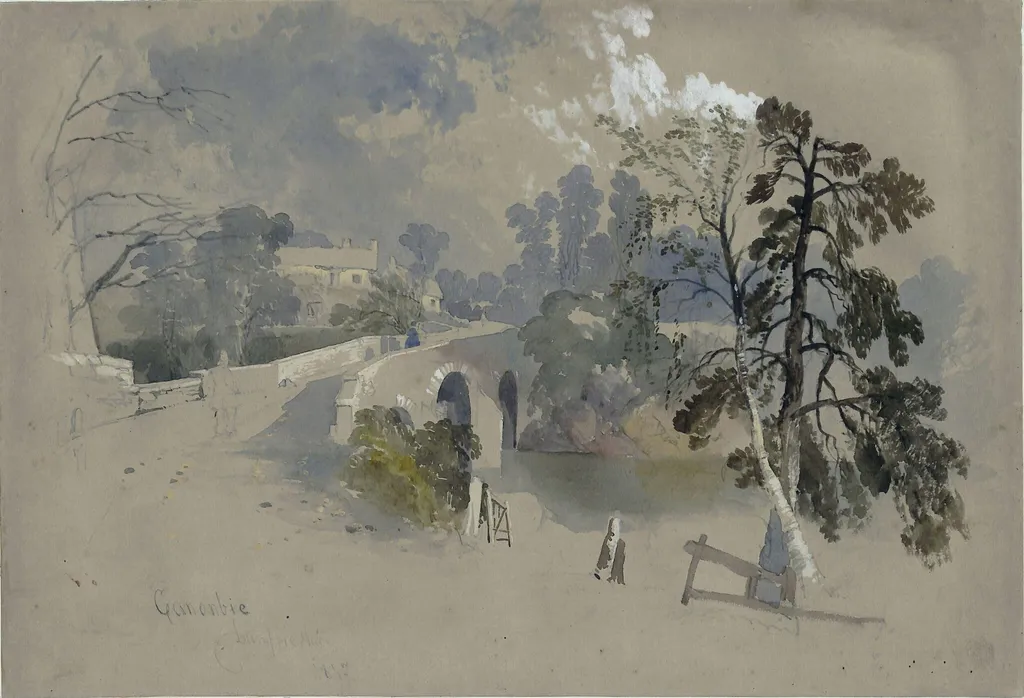
Canonbie, Dumfriesshire is a watercolor work on paper by the British Romanticist artist James Burrell Smith. It dates from 1847 and is held in the collection of the Victoria and Albert Museum.
About this work
Overview
Painted in 1847, this watercolour by James Burrell Smith depicts the rural Scottish village of Canonbie in Dumfriesshire. The work is signed with the location, affirming its topographical intent. Rendered in delicate washes, it captures a quiet moment in the landscape without dramatic emphasis, reflecting a quiet observational approach common among 19th-century British watercolourists.
Subject & Meaning
The composition avoids grandeur, instead valuing stillness and the subtle rhythms of everyday rural life, aligning with a contemplative view of the countryside.
The scene presents a modest country lane winding past a solitary white house, flanked by dense, dark trees. A bench, partially obscured by undergrowth, and a few figures walking along the path suggest quiet human presence without narrative. The composition avoids grandeur, instead valuing stillness and the subtle rhythms of everyday rural life, aligning with a contemplative view of the countryside.
Technique & Style
Smith employed loose, fluid brushwork to suggest form through tone rather than outline. Soft transitions between muted greens, blues, and greys create a hazy, atmospheric effect. The sky, lightly washed with cloud forms, and the absence of sharp edges reinforce a sense of gentle light and quiet weather, characteristic of watercolour’s capacity for ephemeral expression.
History & Provenance
The work is dated and inscribed by the artist, indicating it was likely made on-site during a period of increased interest in topographical watercolours. While its early ownership is undocumented, its preservation suggests it was retained within private collections, possibly by patrons or associates familiar with Smith’s regional subjects.
Context
Created during the later phase of British Romanticism, the painting reflects a shift from dramatic landscapes to intimate, everyday scenes. Smith’s focus on a modest Scottish village aligns with broader trends among watercolourists who documented local topography with quiet precision, often in response to growing interest in regional identity and rural life.
Legacy
Though not widely exhibited, Smith’s work contributes to the corpus of 19th-century British watercolour that valued observation over spectacle. Canonbie exemplifies how artists used the medium to record place with restraint, influencing later generations who sought to capture the subtleties of the natural world without idealization.
Own this work as a print
Artist & collection

Artist
James Burrell Smith was a watercolour and landscape artist. He was born in London. In 1843 he moved to Alnwick, Northumberland where he trained with Thomas Miles Richardson. He travelled around the UK and Europe. During…

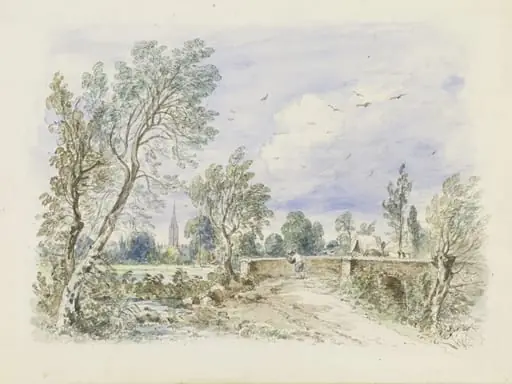 Milford Bridge, with a distant view of Salisbury
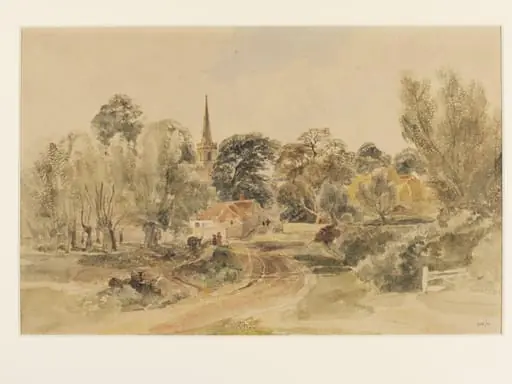 Wilsford, Lincolnshire
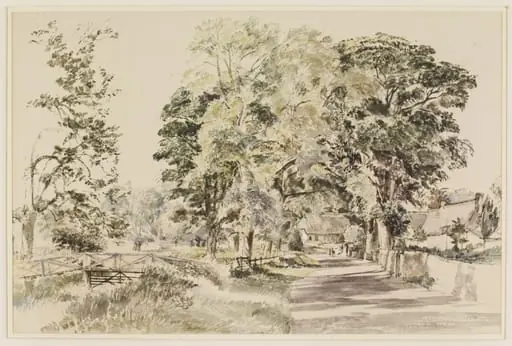 Dalham
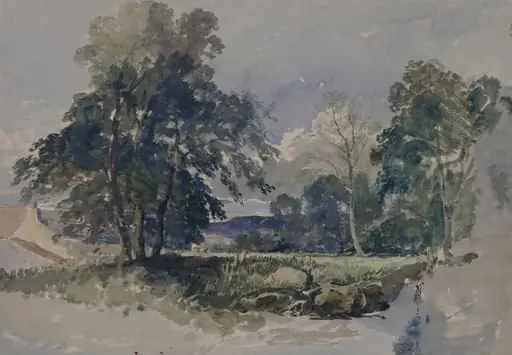 Woody Landscape with rocks and a cottage
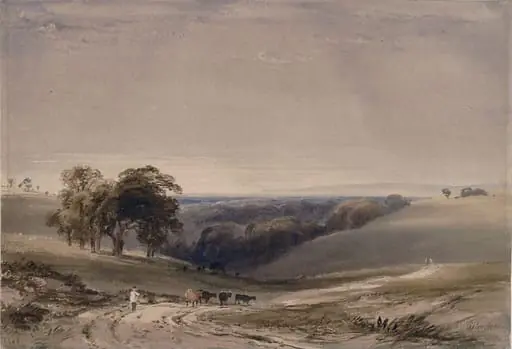 Ecclesbourne Glen
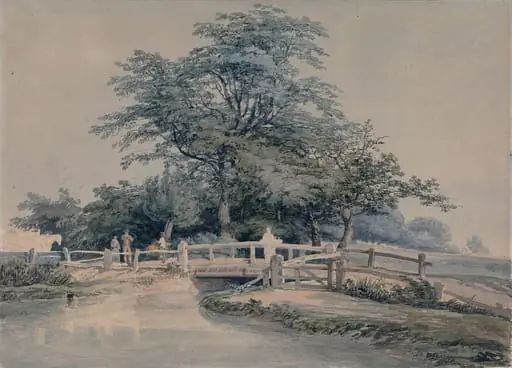 Landscape with trees, figures, bridge and stream
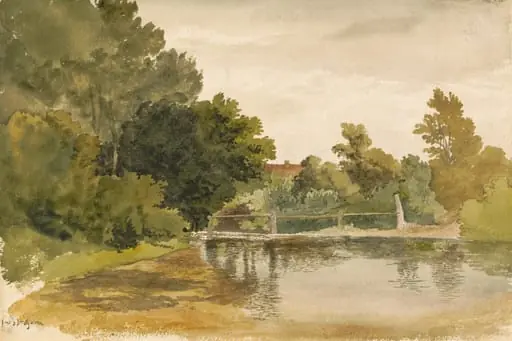 Reflections in a Wooded Pool
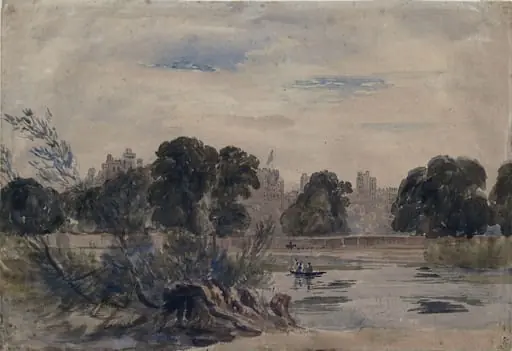 The River Thames and Windsor Castle
 A Road in Wales
 View near Little Bushey
 Salisbury Cathedral with trees
 View near Sandhurst