Artwork
Joseph of Arimathea Among the Rocks of Albion
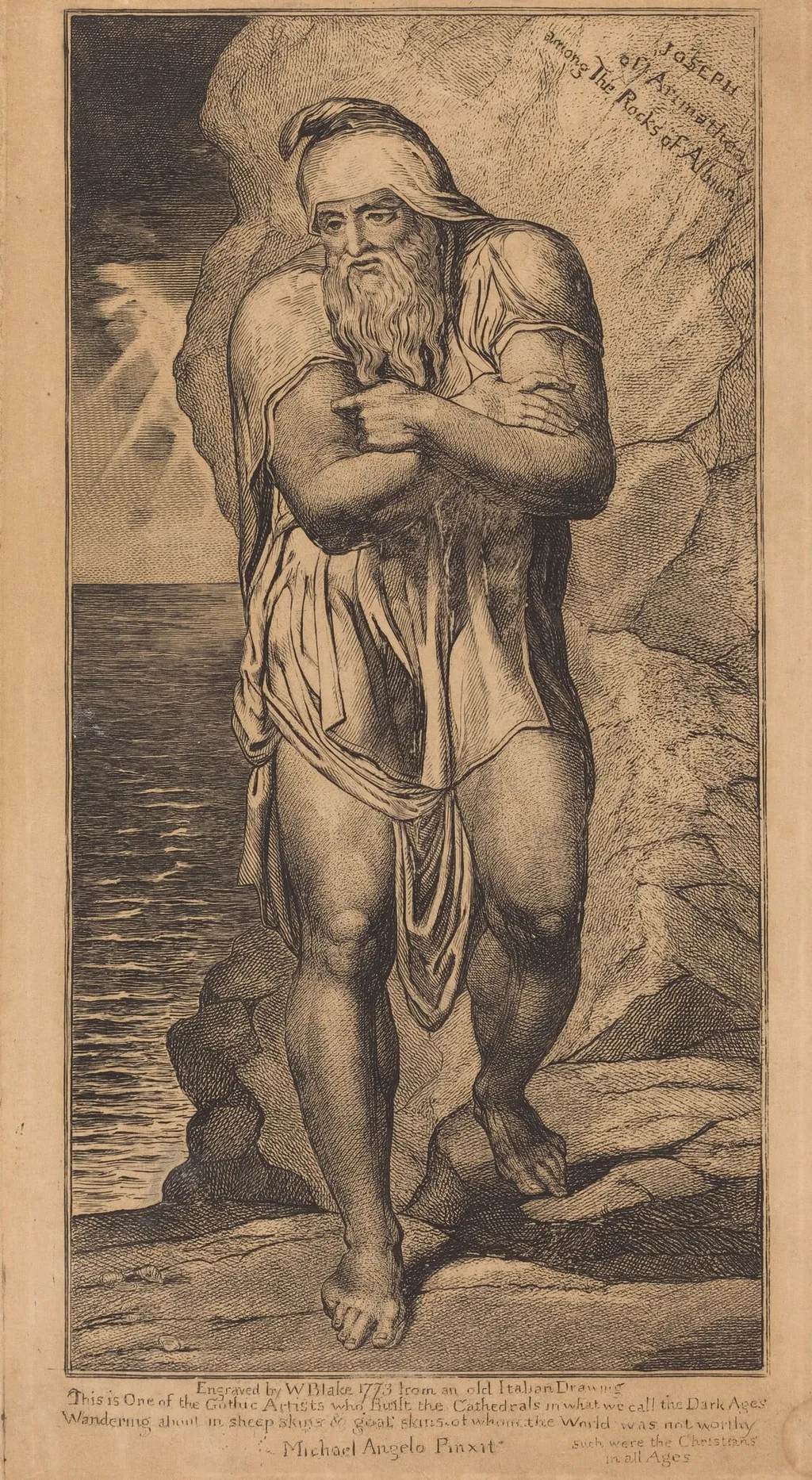
Joseph of Arimathea Among the Rocks of Albion is an ink print by the Romanticist artist William Blake. It dates from 1806 and is held in the collection of the National Gallery of Art.
About this work
Overview
Created around 1806, this engraving by William Blake depicts a solitary figure amid rugged terrain, part of his later visionary works.
Created around 1806, this engraving by William Blake depicts a solitary figure amid rugged terrain, part of his later visionary works. Blake, who worked primarily in London, combined poetry, painting, and printmaking to explore spiritual and symbolic themes. This piece reflects his mature style, where biblical figures are reimagined within personal mythologies. The technique relies on etching to produce fine, expressive lines that define form and atmosphere.
Subject & Meaning
The figure is identified by Blake as Joseph of Arimathea, a biblical figure associated with Christ’s burial. In this context, he appears not as a historical actor but as a wandering spiritual custodian, evoking themes of endurance and hidden sacredness. Blake linked him to the 'Gothic Artists' of medieval tradition, suggesting a lineage of visionary creators who preserved truth in isolated, untamed places. The scroll and clasped hand imply contemplation and the transmission of sacred knowledge.
Technique & Style
Blake executed the image using etching, a method that allowed him to draw directly onto copper with acid-resistant grounds, then incise fine, fluid lines. The resulting print features sharp contrasts and textured surfaces, enhancing the ruggedness of the landscape and the figure’s weathered form. His hand-drawn lines convey both precision and emotional intensity, characteristic of his rejection of mechanical reproduction in favor of artisanal, personal expression.
History & Provenance
The engraving emerged during Blake’s most introspective period, when he produced private illuminated works for a small circle of patrons. It was never part of a published series but likely made as a standalone piece, possibly for a collector or as a study. Its survival reflects its significance to Blake’s personal mythology, though it remained largely unseen outside his immediate circle until later scholarly interest revived its status.
Context
Blake created this work amid Britain’s industrial expansion and a growing interest in medievalism. He resisted Enlightenment rationalism, instead cultivating a symbolic language rooted in biblical narrative and Gothic aesthetics. His reimagining of Joseph as a wandering sage aligns with his broader critique of institutional religion and his belief in art as a conduit for divine imagination, separate from academic tradition.
Legacy
Though not widely exhibited in his lifetime, this engraving now contributes to understanding Blake’s unique synthesis of text, image, and spiritual allegory. Scholars recognize it as an example of his late-period iconography, where figures embody abstract ideals rather than historical roles. Its preservation in institutional collections underscores its role in redefining printmaking as a vehicle for personal, visionary expression.
Artist & collection
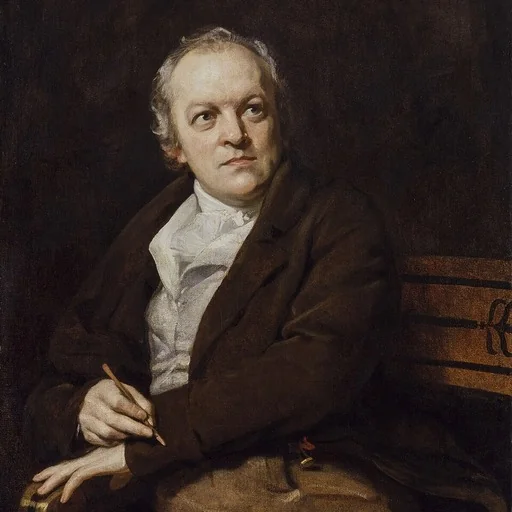
Artist
William Blake (28 November 1757 – 12 August 1827) was an English poet, painter and printmaker.

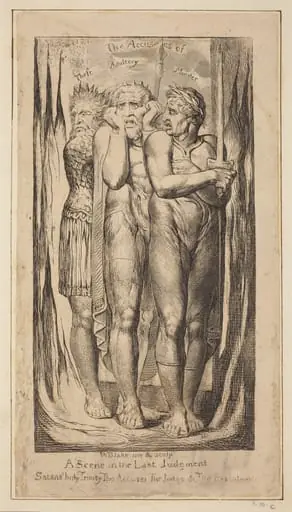 War (The Accusers of Theft, Adultery, Murder)
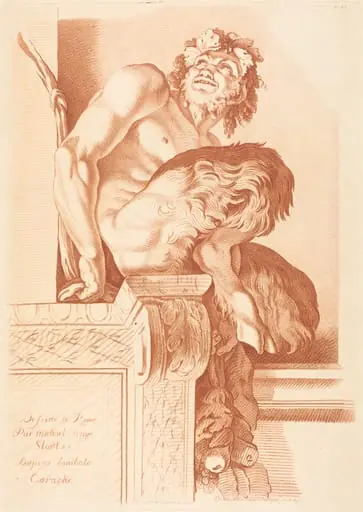 Satyr
Satyr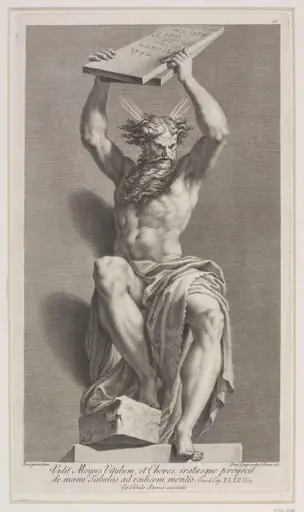 Moses with the Tables
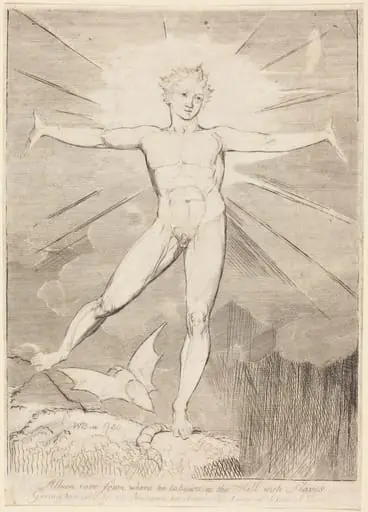 The Dance of Albion (Glad Day)
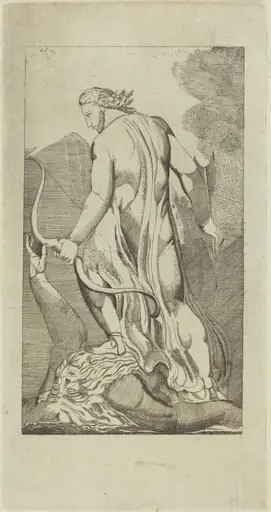 Christ Trampling Satan
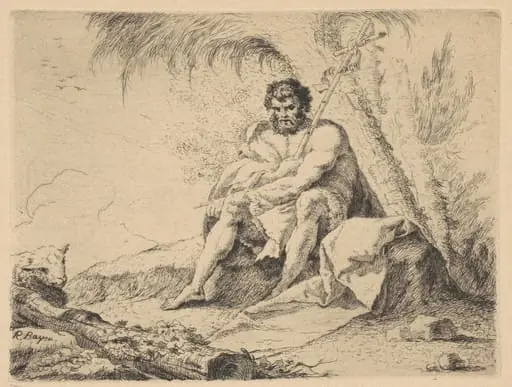 John the Baptist and the Lamb
 Oedipus (Oedipe)
 Blind Homer
 Apollo Belvedere
 Et vidi alium angelum fortem... (The Angel of the Apocalypse Appearing to Saint John)
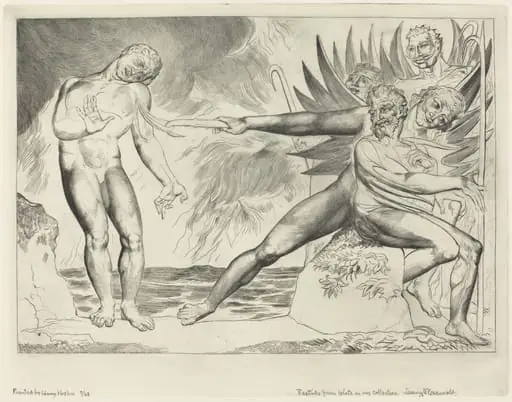 The Circle of the Corrupt Officials; The Devils Tormenting Ciampolo
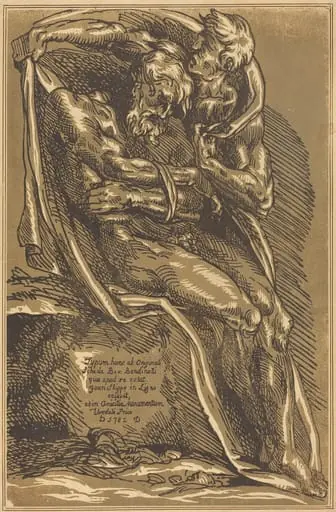 A Naked Man, Seated, with His Hands Tied