Artwork
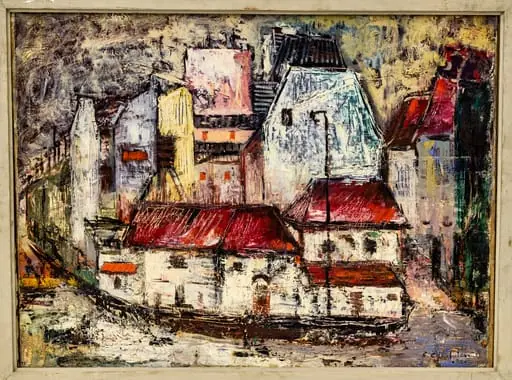
Peisaj urban
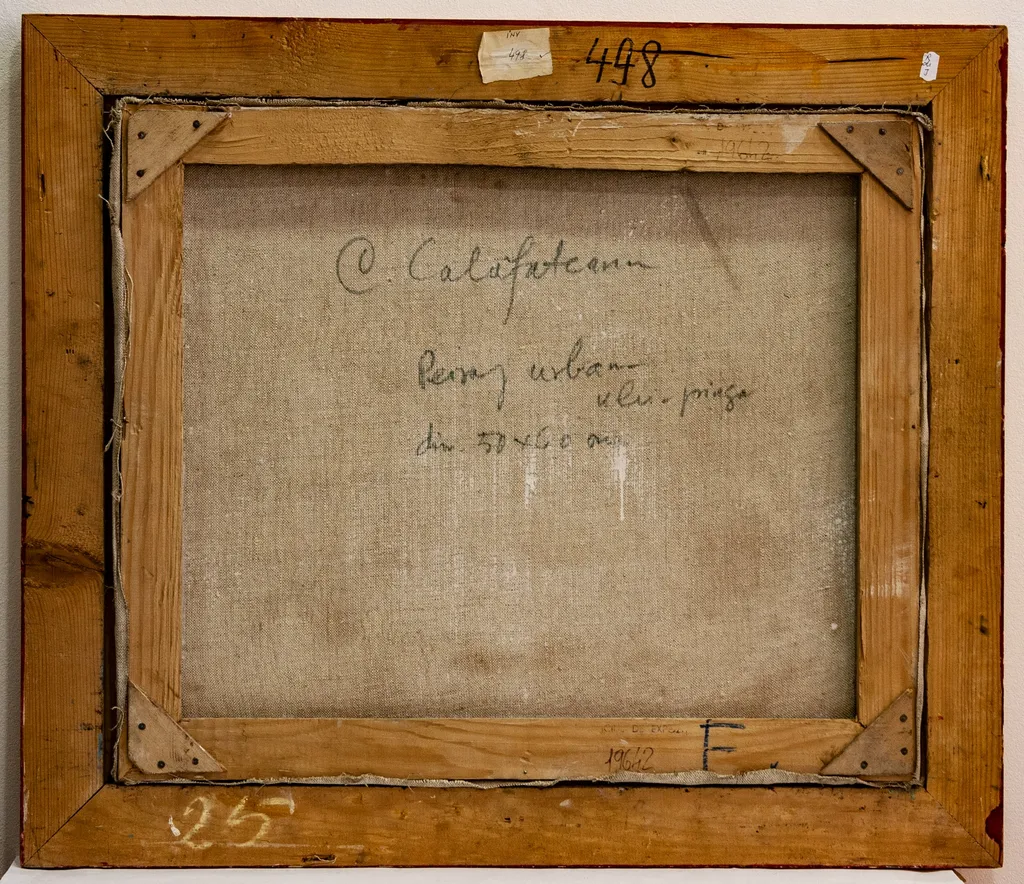
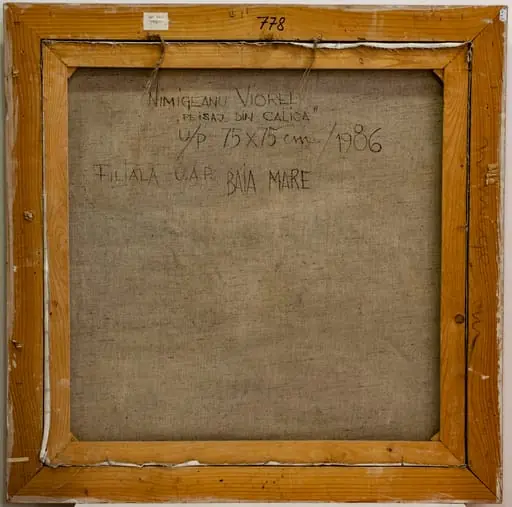
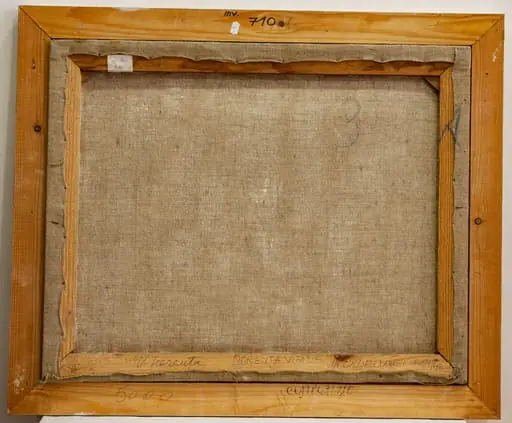
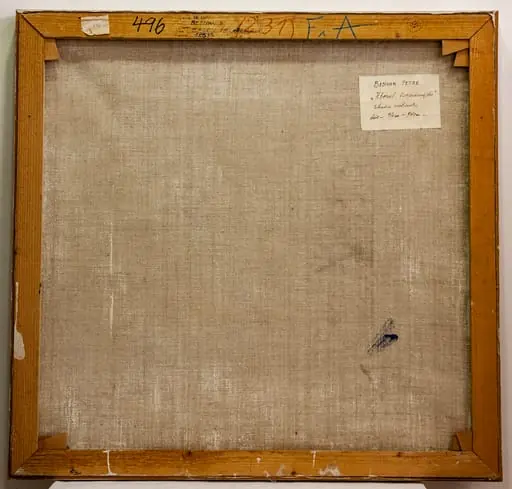
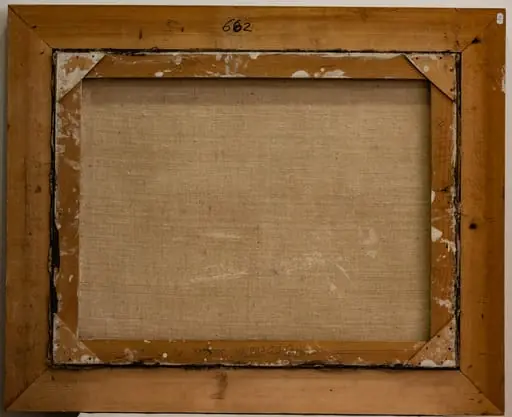
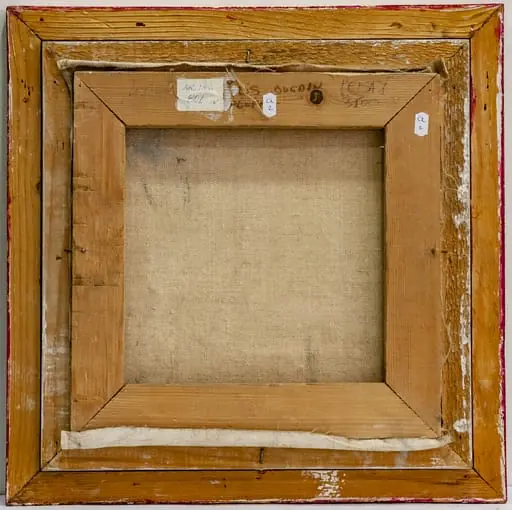
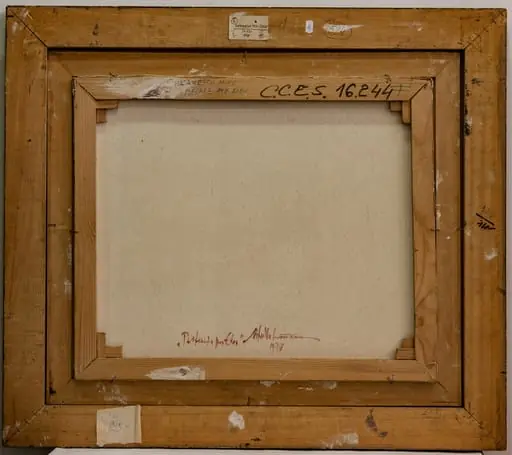
Peisaj urban is a print by Constantin Calafateanu. It is held in the collection of the Gavrila Simion Eco-Museum Research Institute Tulcea. An empty wooden frame holds a faded canvas, its surface bare except for a handwritten inscription.
About this work
Overview
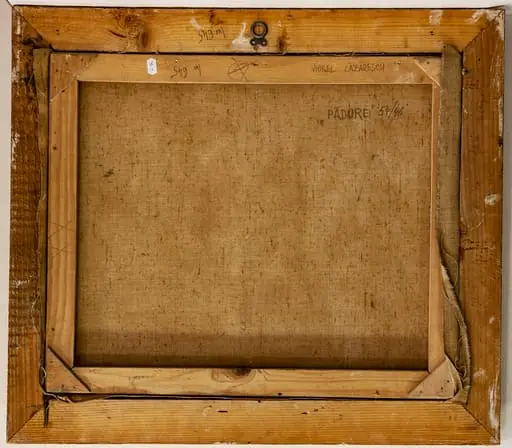
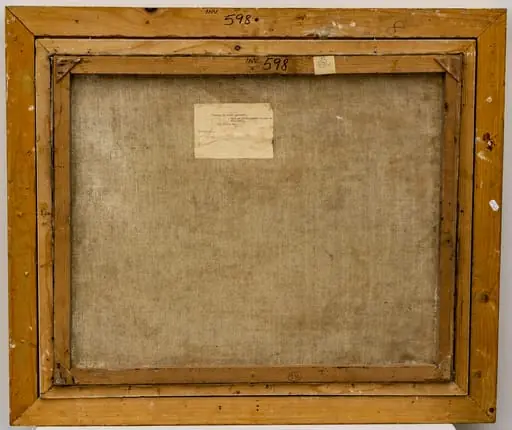
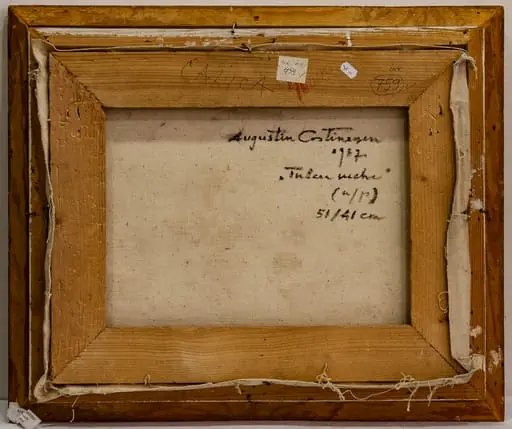
An empty wooden frame holds a faded canvas, its surface bare except for a handwritten inscription. The frame shows signs of age—worn edges, patched tape, and a faded label bearing a number and an ambiguous date, possibly 1961 or 19612. The title suggests a lost urban landscape, but the painted image is absent, leaving only the frame and script as physical traces of an unseen work.
Subject & Meaning
The inscription identifies the artist as C. Calafateanu and the intended subject as 'Peisaj urban'—an urban landscape. Without the painting, the work exists as a void, prompting questions about loss, erasure, or deliberate absence. The handwritten note, uneven and personal, contrasts with the institutional label, hinting at a private gesture within a public collection.
Technique & Style
No paint remains to assess technique, but the frame’s construction and repairs suggest modest, utilitarian craftsmanship. The canvas, stretched but stripped of pigment, reveals the material’s aging: brittleness, discoloration, and the imprint of former brushwork. The handwriting, unpolished and direct, implies the artist’s hand was close to the object, not mediated by formal presentation.
History & Provenance
The label’s number (448) and uncertain date (19612) may indicate a cataloging error or a misread year, perhaps 1961.
The label’s number (448) and uncertain date (19612) may indicate a cataloging error or a misread year, perhaps 1961. The frame’s repairs and faded markings suggest prolonged handling or storage. Its current association with the Museum of Ethnography implies it may have been collected as a cultural artifact rather than a traditional painting, possibly reflecting an unconventional or incomplete artistic practice.
Context
In mid-20th century Romania, artists often worked under material constraints, and artworks could be lost, destroyed, or abandoned. This frame may represent one such case—perhaps a work deemed unworthy of preservation, or a piece whose image was removed intentionally. Its survival as a frame, not a painting, speaks to the fragility of artistic records in uncertain times.
Legacy
The absence of the painting transforms the frame into a relic of omission. It invites reflection on what is lost to time, institutional oversight, or personal choice. Rather than signaling failure, it becomes a quiet monument to the impermanence of art, where the container outlasts the content, and meaning lingers in the space left behind.
Artist & collection
Artist
Constantin Calafateanu made prints and paintings of everyday places around Romania.
Museum
Gavrila Simion Eco-Museum Research Institute Tulcea
Continue through works from the same source collection.