Artwork
Dilapidated House
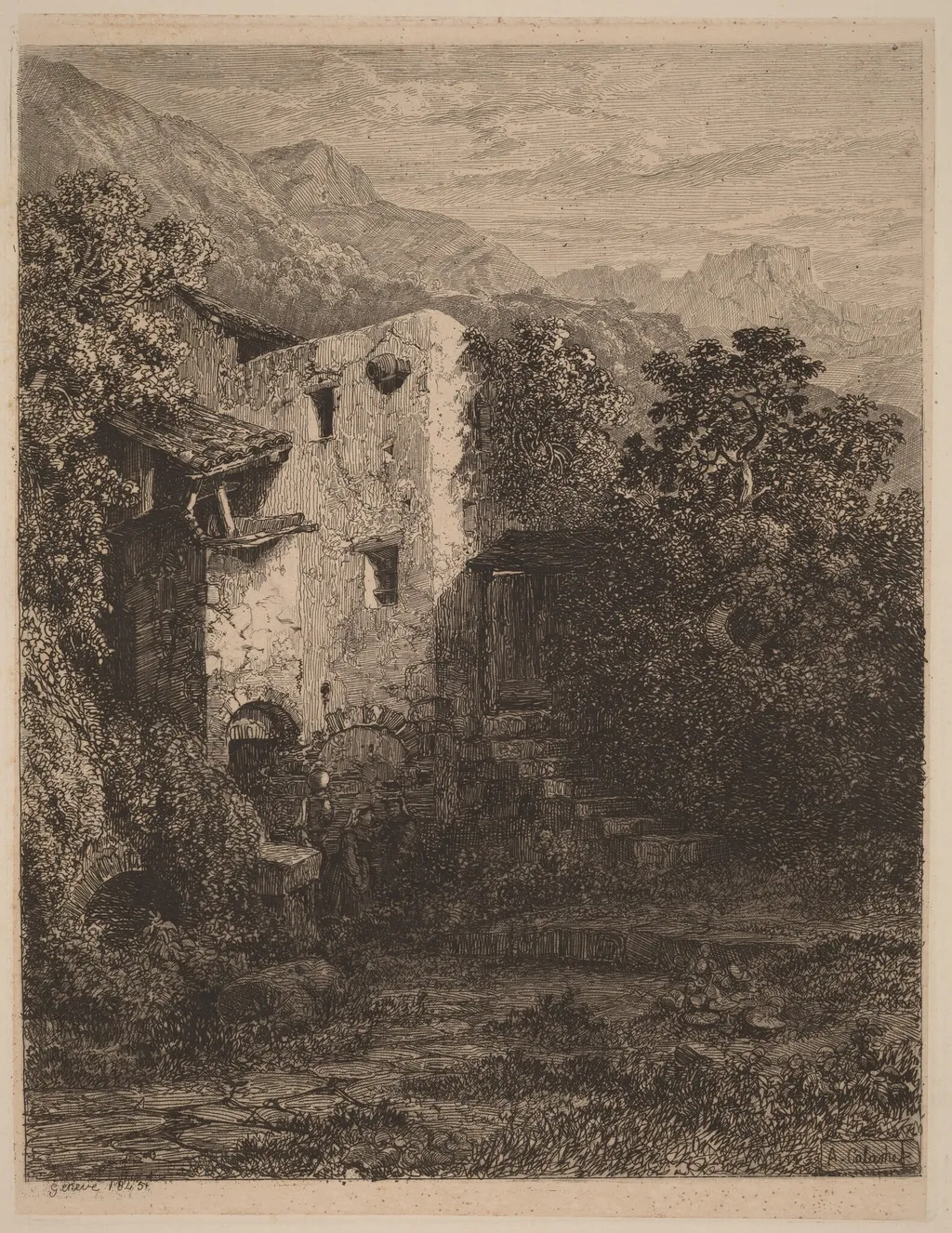
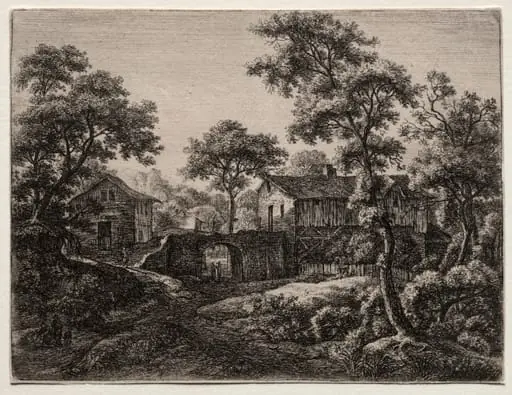
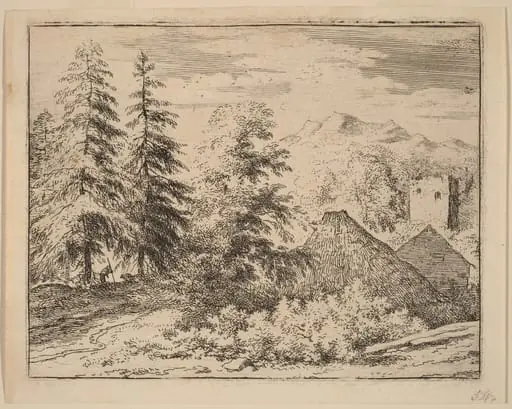
Dilapidated House is an ink print by the Romanticist artist Alexandre Calame. It dates from 1845 and is held in the collection of the National Gallery of Art.
About this work
Overview
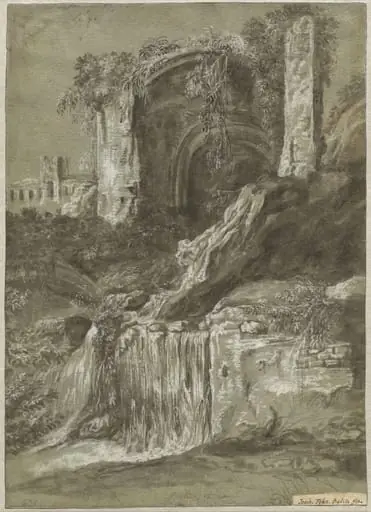
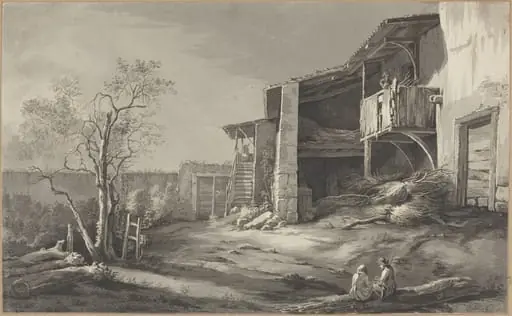
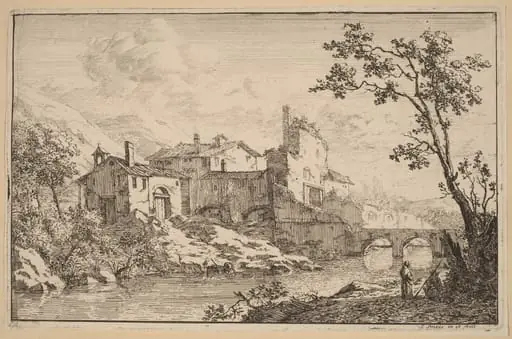
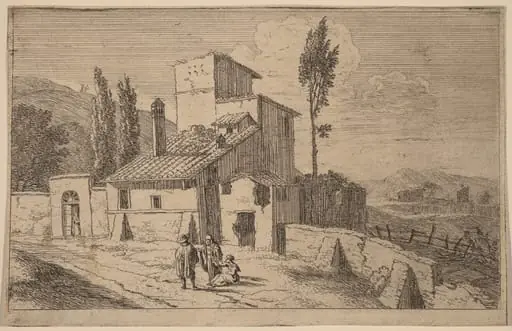
Created in 1845, Dilapidated House is an etching on chine collé by Swiss artist Alexandre Calame. The work captures a decaying structure engulfed by wild vegetation, rendered with meticulous line work that emphasizes texture and atmosphere. The technique allows for fine detail, transforming the ruin into a quiet, contemplative scene rather than a mere record of decay.
Subject & Meaning
The subject is a neglected rural dwelling, overtaken by nature—vines and thickets obscure its walls, windows, and doorway. Rather than conveying despair, the image suggests a quiet reconciliation between human construction and the natural world. The distant mountains and hazy sky reinforce a sense of time’s passage, framing the house as a relic absorbed into the landscape.
Technique & Style
Calame employed etching on chine collé, a method that layers thin paper onto a heavier support for greater detail. Fine, controlled lines define each leaf, stone, and crack, creating a tactile realism. The soft gradations in the background, achieved through subtle ink washes, contrast with the sharp textures of the foreground, enhancing depth and mood without overt dramatization.
History & Provenance
The print was produced during Calame’s early career, a period when he focused on Swiss landscapes and ruins. It likely originated from a series of topographical studies made during his travels in the Alps. While its early ownership is undocumented, it entered institutional collections in the late 19th century, reflecting growing interest in Romantic-era printmaking.
Context
In mid-19th-century Europe, Romanticism emphasized nature’s power and the sublime. Calame’s work aligns with this movement, portraying ruins not as failures but as harmonious elements within wild landscapes. His focus on quiet decay contrasted with grand historical narratives, offering instead a meditative view of time and impermanence.
Legacy
Dilapidated House exemplifies Calame’s contribution to landscape printmaking, influencing later artists interested in naturalistic detail and emotional restraint. Though not widely reproduced, the work remains a reference in studies of Romantic print techniques and the aestheticization of ruin in 19th-century art.
Artist & collection