Artwork
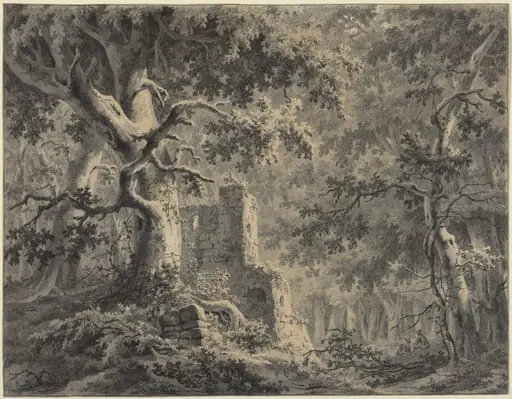
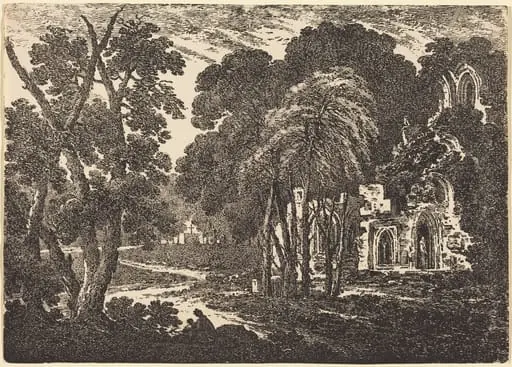
A Woodland Chapel at Evening
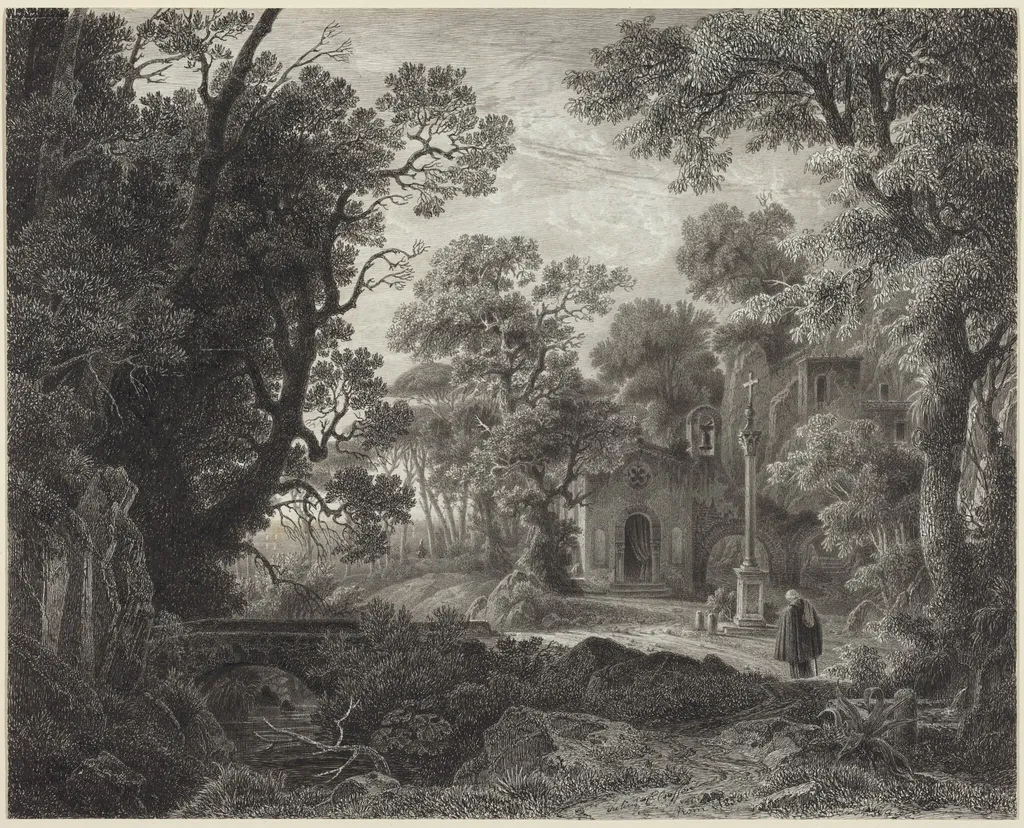
A Woodland Chapel at Evening is an ink drawing by the Impressionist artist Julius Albert Elsasser. It dates from 1859 and is held in the collection of the National Gallery of Art.
About this work
Overview
Executed in pen, gray and black ink, and wash on wove paper, it captures a moment of stillness within a natural setting.
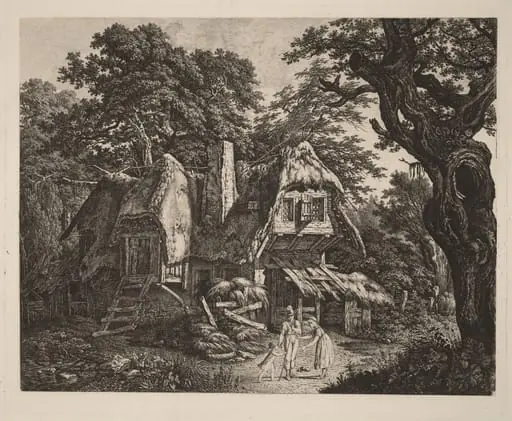
Created in 1859 by Julius Albert Elsasser, this drawing depicts a quiet woodland chapel at twilight. Executed in pen, gray and black ink, and wash on wove paper, it captures a moment of stillness within a natural setting. The composition centers on a modest stone chapel surrounded by dense trees, with a solitary figure near its entrance. The muted tonal range and delicate layering of ink suggest the fading light of evening.
Subject & Meaning
The scene presents a chapel embedded in nature, its presence neither imposing nor ornate, but integrated into the forest. A lone figure stands before it, looking upward—perhaps in contemplation or prayer—without clear narrative context. The absence of human activity beyond this single form emphasizes solitude and introspection, reinforcing the chapel’s role as a quiet sanctuary amid the woods.
Technique & Style
Elsasser employed fine pen lines and graded washes to model form and suggest atmosphere. Cross-hatching defines the texture of bark and stone, while soft washes create the hazy sky and the damp ground near the stream. The use of wove paper allowed for subtle ink absorption, enhancing the delicate transitions between light and shadow. The approach leans toward detailed observation rather than expressive brushwork, aligning with mid-century draftsmanship.
History & Provenance
The drawing was completed in 1859 during Elsasser’s active period in Germany, though its early ownership is undocumented. It remained in private collections until entering a public collection in the 20th century. No exhibition records from the 19th century are known, and its current location reflects later scholarly interest in lesser-known 19th-century German draftsmen.
Context
Elsasser worked in a period when landscape drawing was gaining recognition as an independent art form, separate from painting. While German Romanticism influenced his subject matter, his technique reflects a more restrained, observational approach common among academic draftsmen. Unlike the dramatic lighting of Romantic painters, his work favors quietude, aligning with contemporary interest in nature as a space for personal reflection.
Legacy
The drawing is not widely reproduced or studied, but it exemplifies the quiet precision of 19th-century German graphic art. It contributes to understanding how artists of the time used ink and wash to convey mood without color, bridging topographical detail and poetic atmosphere. Its preservation offers insight into the domestic and spiritual landscapes valued by middle-class collectors of the era.
Artist & collection