Artwork
Aesop's Fables
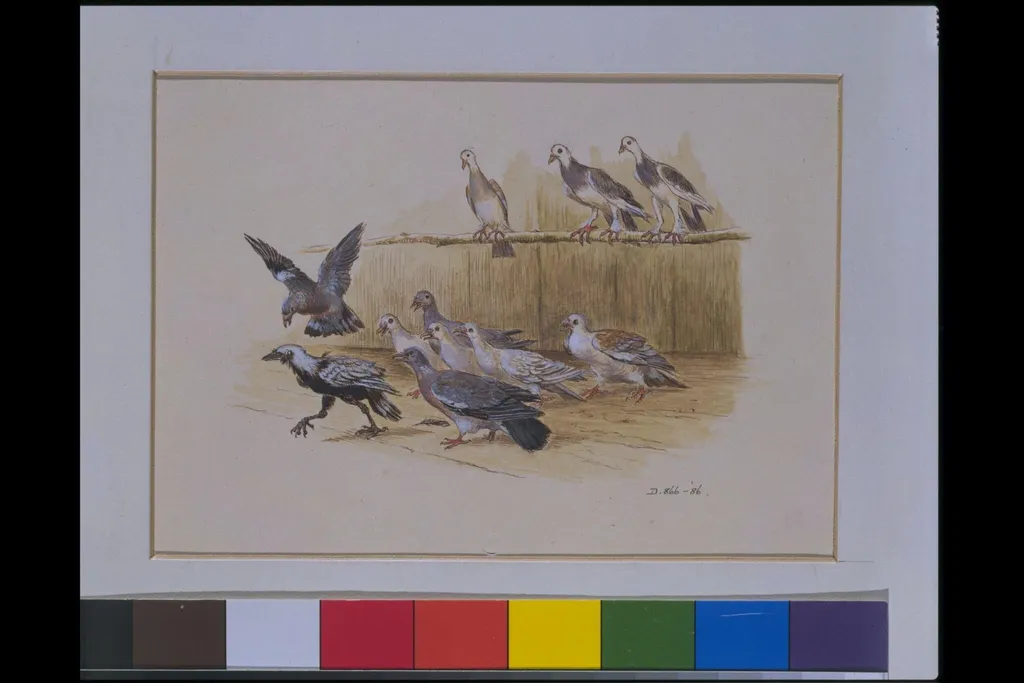
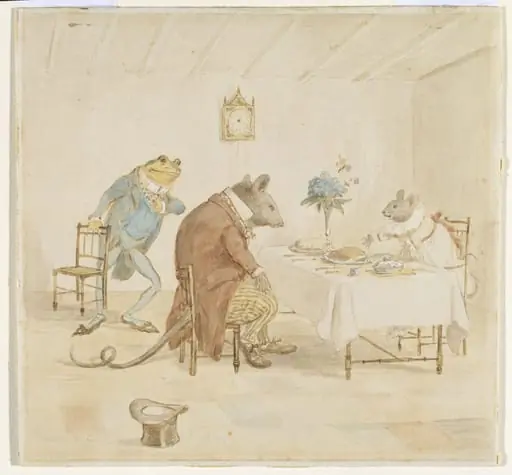
Aesop's Fables is a watercolor work on paper by the Impressionist artist Randolph Caldecott. It dates from 1883 and is held in the collection of the Victoria and Albert Museum.
About this work
Overview
The composition emphasizes natural movement and quiet observation, avoiding elaborate detail in favor of atmospheric simplicity.
Created in 1883, this watercolor illustration was produced by Randolph Caldecott as part of a series for Aesop’s Fables. It depicts a group of birds on a sandy expanse, rendered with delicate washes of pigment. The composition emphasizes natural movement and quiet observation, avoiding elaborate detail in favor of atmospheric simplicity. Caldecott’s use of watercolor allows for subtle transitions between tones, enhancing the sense of light and space.
Subject & Meaning
The scene portrays a moment of everyday avian life, with birds in varied postures—standing, walking, perched, and in flight. No narrative from a specific fable is overtly illustrated; instead, the image captures a universal sense of animal behavior. The focus on natural motion suggests an appreciation for wildlife’s quiet rhythms, aligning with Caldecott’s broader interest in observing animals with empathy and accuracy.
Technique & Style
Caldecott employed transparent watercolor washes to achieve soft, blended hues in browns, grays, and pale blues. Lines are fluid and unobtrusive, allowing color to define form rather than outline. The flying bird’s outstretched wings are rendered with loose, confident strokes, conveying motion without stiffness. The minimal background directs attention to the birds, reinforcing a sense of immediacy and intimacy with the subject.
History & Provenance
This work was made for a published edition of Aesop’s Fables, part of Caldecott’s influential series of illustrated children’s books in the early 1880s. It was produced during the height of his career as a book illustrator, shortly before his death in 1886. The illustration was printed alongside text and circulated widely, contributing to the popularity of illustrated fables in Victorian England.
Context
Caldecott’s illustrations emerged during a period of renewed interest in folk tales and natural history. His approach diverged from stiff, idealized depictions common in earlier children’s books, favoring observed realism and dynamic composition. This work reflects broader cultural shifts toward valuing childhood experience and the natural world, influenced by emerging scientific observation and Romantic sensibilities.
Legacy
Caldecott’s watercolors, including this one, helped redefine children’s book illustration by prioritizing expressive movement and emotional resonance over didacticism. His techniques influenced later illustrators and contributed to the establishment of the Caldecott Medal in his honor. The work remains a quiet example of how simplicity and keen observation can elevate visual storytelling.
Artist & collection
Artist
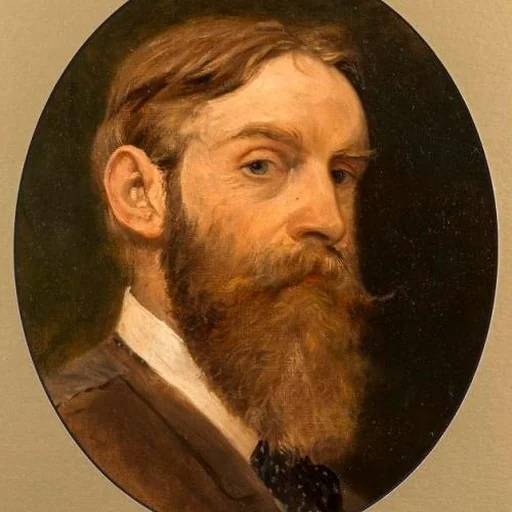
Randolph Caldecott ( KAWL-də-kot; 22 March 1846 – 12 February 1886) was a prolific British artist and illustrator who illustrated novels and accounts of foreign travel, made humorous drawings depicting hunting and…

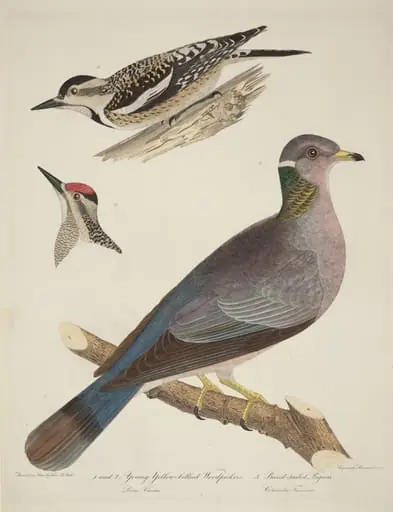 Young Yellow-bellied Woodpeckers and Band-tailed Pigeon
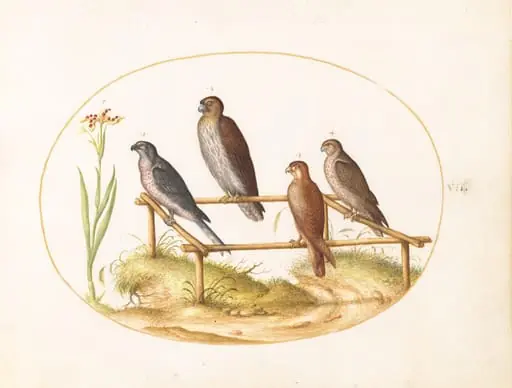 Plate 7: Four Birds of Prey on a Wooden Frame
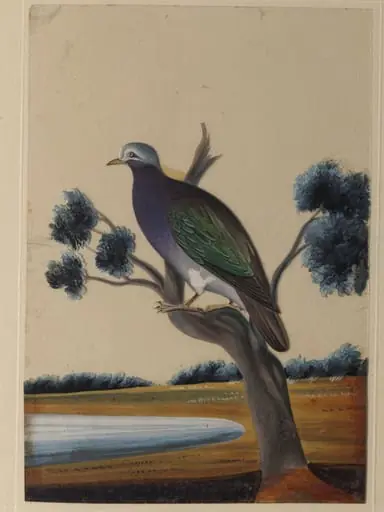 One of nine drawings of birds.
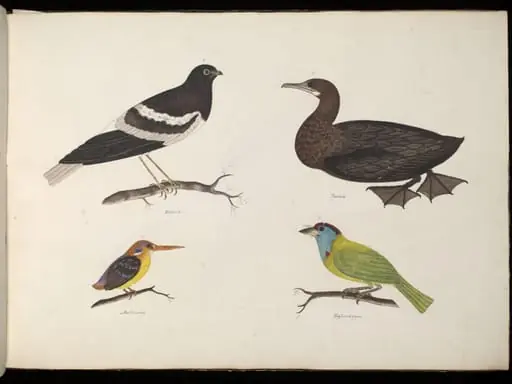 Four Birds
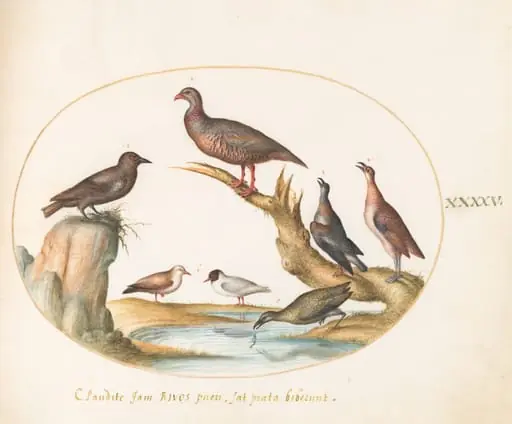 Plate 45: Spotted Nutcracker and Shore Birds
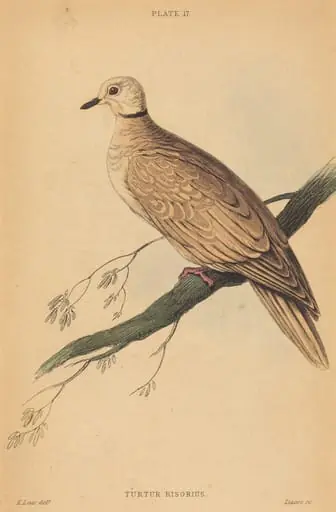 Turtur Risorius
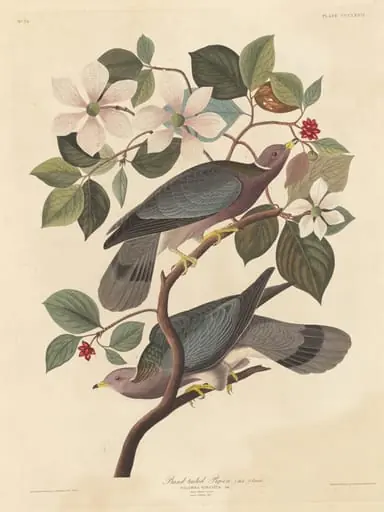 Band-tailed Pigeon
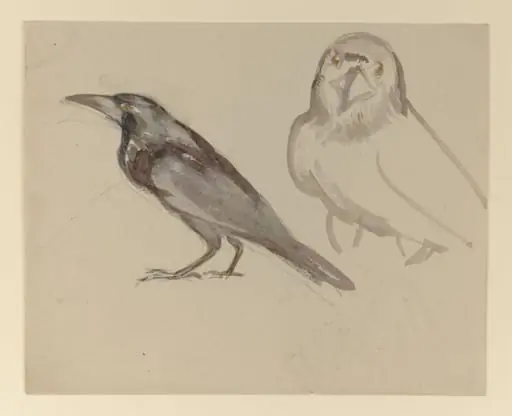 Untitled
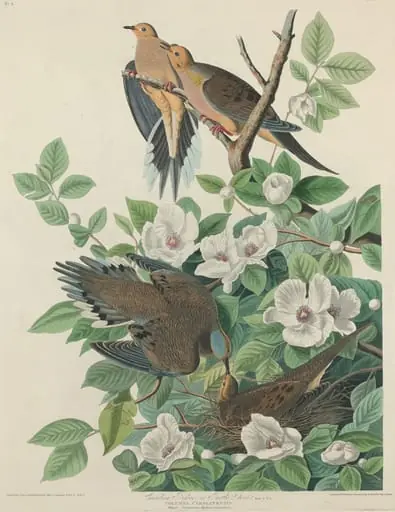 Carolina Pigeon or Turtle Dove
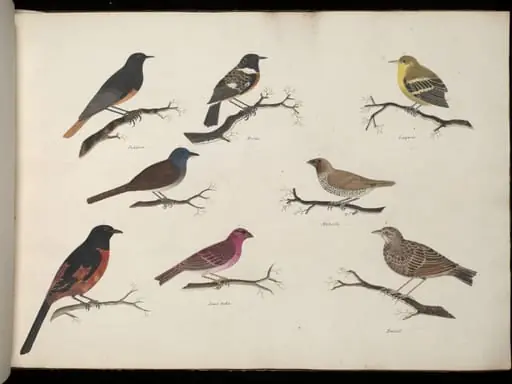 Eight birds
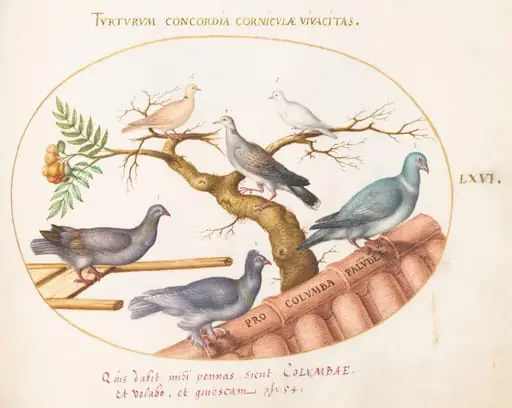 Plate 66: Doves and Pigeons
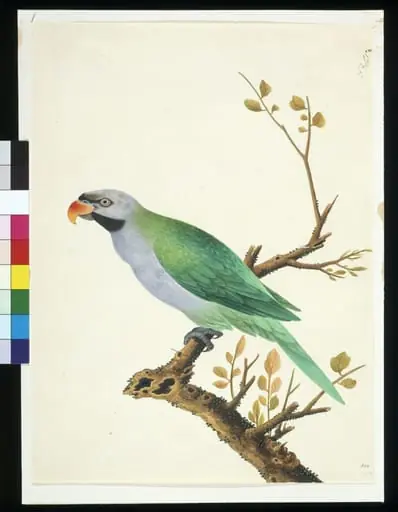 Derbyan Parakeet