Artwork
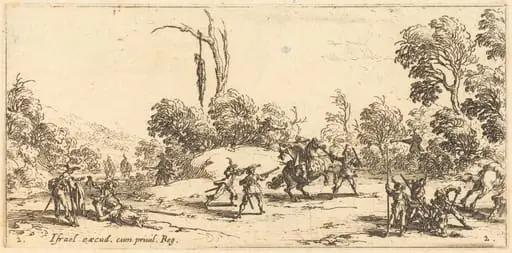
Attacking Travelers on the Highway
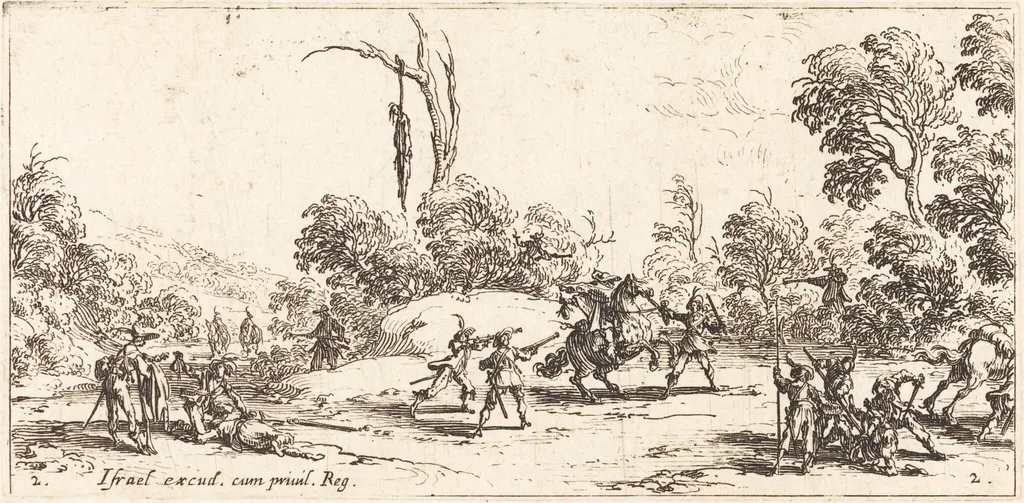
Attacking Travelers on the Highway is an ink print by the Baroque artist Jacques Callot. It dates from 1633 and is held in the collection of the National Gallery of Art.
About this work
Overview
Created around 1633, this etching by Jacques Callot captures a violent encounter on a rural road. Executed on laid paper, the work belongs to a large series of prints in which Callot examined the turbulence of early 17th-century life. His focus on marginalized figures and disorderly scenes reflects a documentary impulse, grounded in observation rather than idealization.
Subject & Meaning
The scene depicts a group of travelers ambushed by armed figures along a winding path. Bandits overwhelm weary pedestrians, their gestures and postures conveying sudden chaos. Callot does not romanticize the violence; instead, he presents it as a common hazard of travel, revealing the fragility of civilian life amid the era’s military instability and lawlessness.
Technique & Style
Callot employed fine-line etching to render intricate details: the folds of clothing, the texture of terrain, and the flickering light of torches. His precise control over the burin allowed for sharp contrasts between shadow and illumination, heightening the drama. The dense composition and varied line weight guide the viewer’s eye through the turmoil, enhancing the sense of immediacy.
History & Provenance
The print emerged during Callot’s mature period in Nancy, after years of working in Florence and Paris. It was likely produced as part of a larger sequence on military and social disorder, circulated among collectors and artists. Few original impressions survive, but its inclusion in later collections confirms its early recognition within printmaking circles.
Context
In the 1630s, the Thirty Years’ War disrupted travel across Europe, and mercenary bands preyed on roadsides. Callot’s etchings responded to this reality, documenting the human cost of prolonged conflict. Unlike allegorical or mythological subjects, his work treated contemporary suffering with unflinching directness, aligning with emerging trends in observational art.
Legacy
Callot’s detailed etchings influenced later artists in their treatment of social realism and narrative compression. His technical innovations in line and tone became foundational for printmakers seeking to convey complex scenes with clarity. Though not widely exhibited in his lifetime, his works gradually shaped the genre of documentary printmaking in Europe.
Artist & collection
Artist
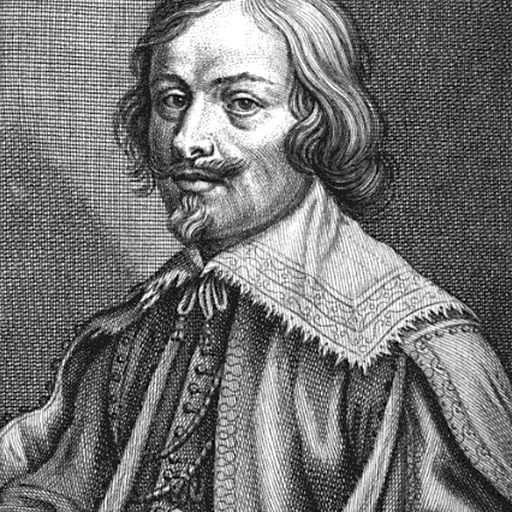
Jacques Callot was a baroque printmaker and draftsman from the Duchy of Lorraine.

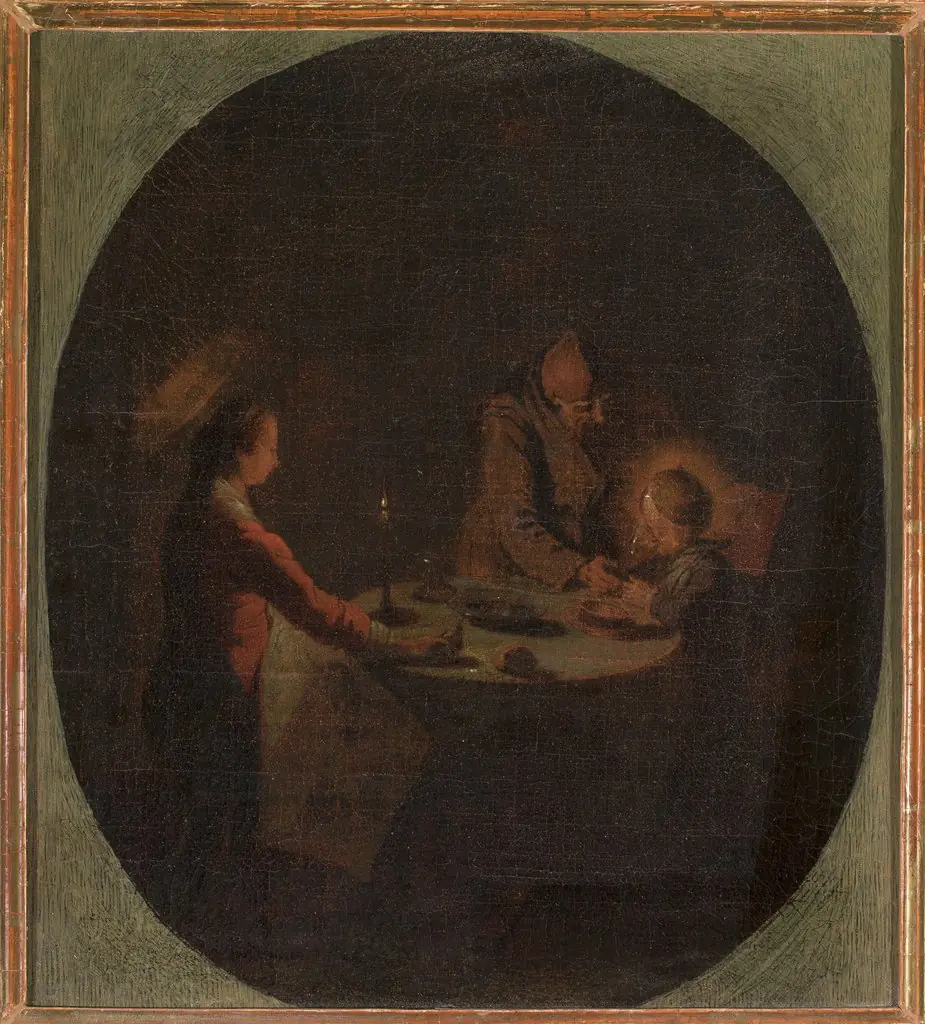 Holy Family at supper
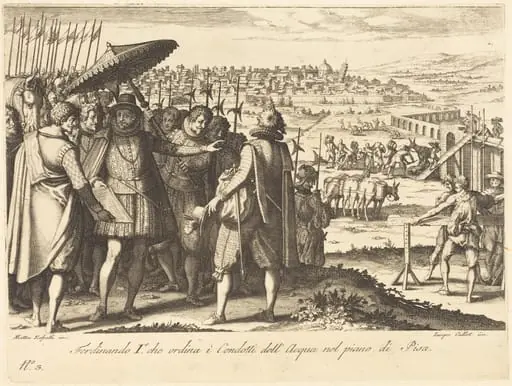 Restoration of the Aqueduct at Pisa
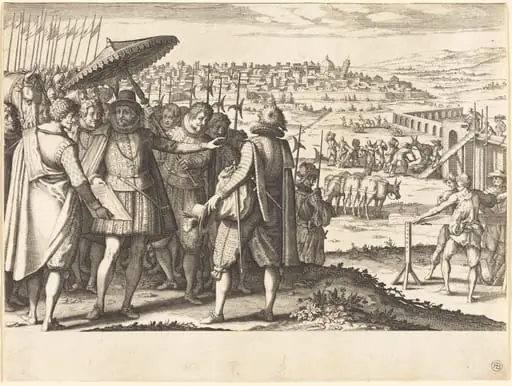 Restoration of the Aqueduct at Pisa
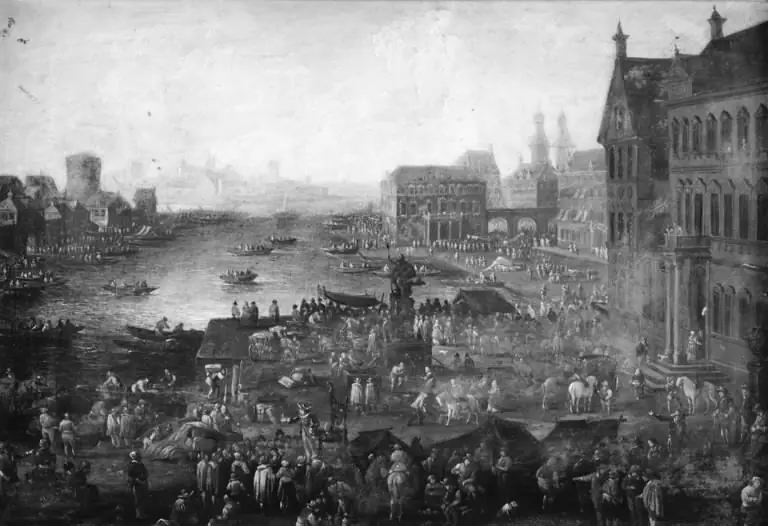 Square in Paris with Many Figures
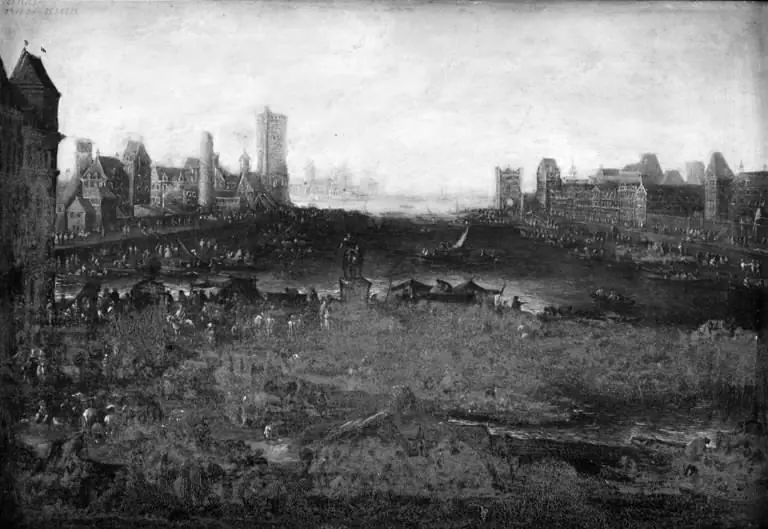 Square in Paris with Many Figures
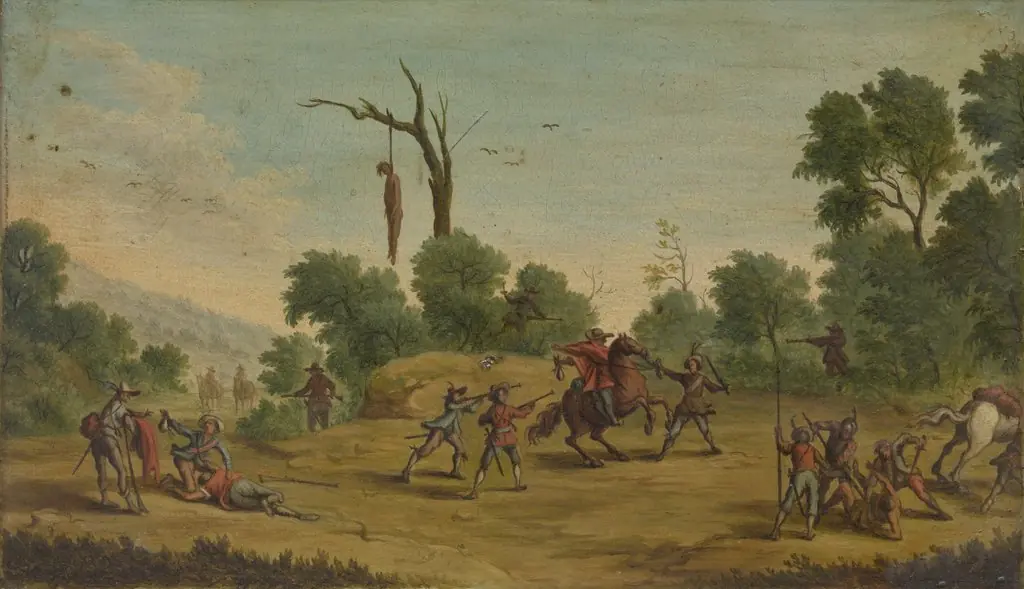 Horsemen Attacked by Robbers
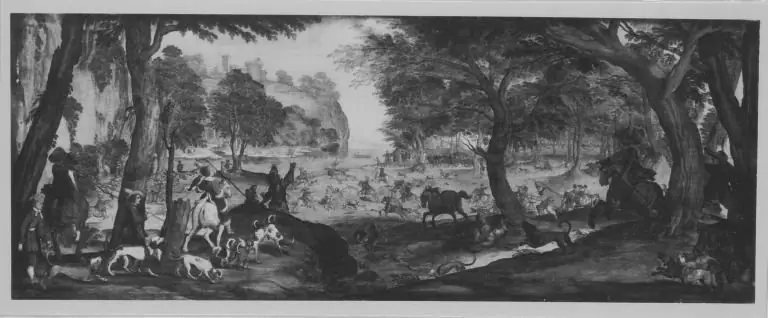 HOW WILL A COVERED PART BE CORRECTED?HOW WIKA A COVERED HEART DEED CORRECTED?
![Christ Walking on the Water [second plate], by Jacques Callot](https://artifactworldgallery.com/img/jacques-callot--christ-walking-on-the-water-second-plate--2069f3bfe4cb2126-w320.webp) Christ Walking on the Water [second plate]
Christ Walking on the Water [second plate]
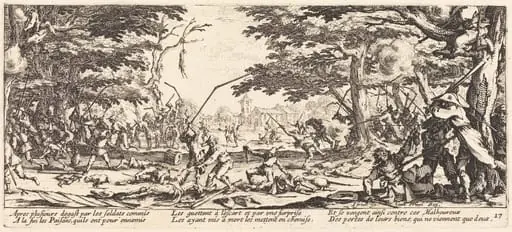 The Peasants Avenge Themselves
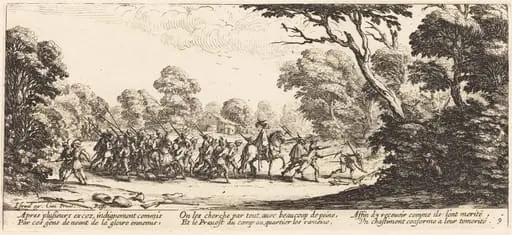 Discovery of the Criminal Soldiers
 The Peasants Avenge Themselves
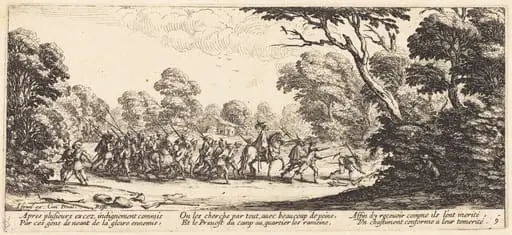 Discovery of the Criminal Soldiers
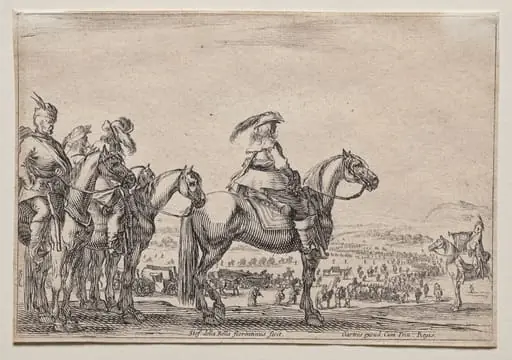 An Enemy on the March
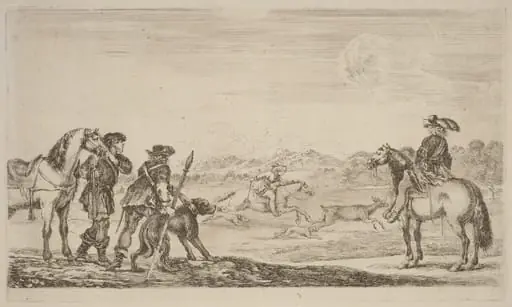 Small Deer Chased by a Cavalier
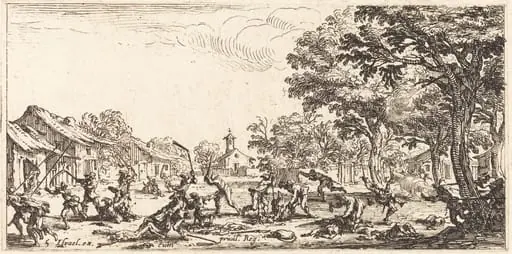 The Peasants' Revenge
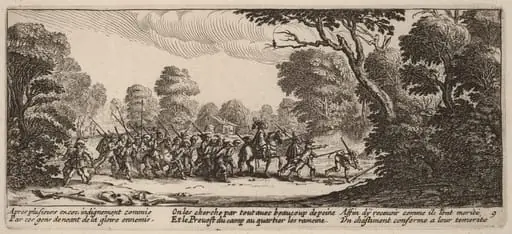 Discovery of the Criminal Soldiers
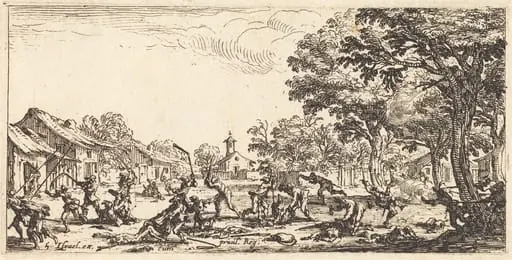 The Peasants' Revenge
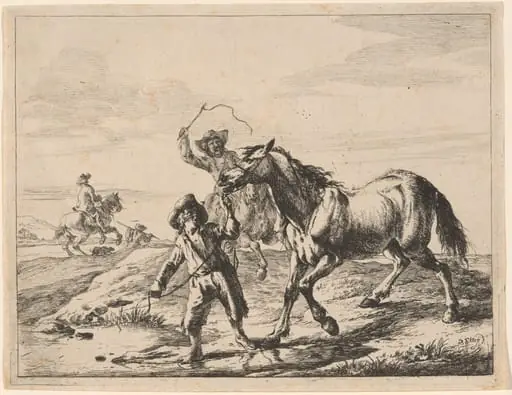 A Boy Taking a Horse to Drink
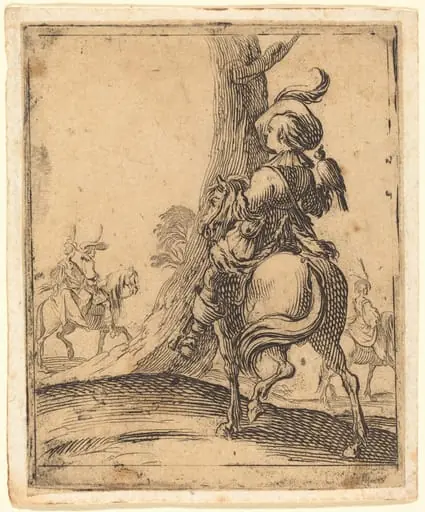 The Falconer
 Attacking Travelers on the Highway