Artwork
House of Pilate
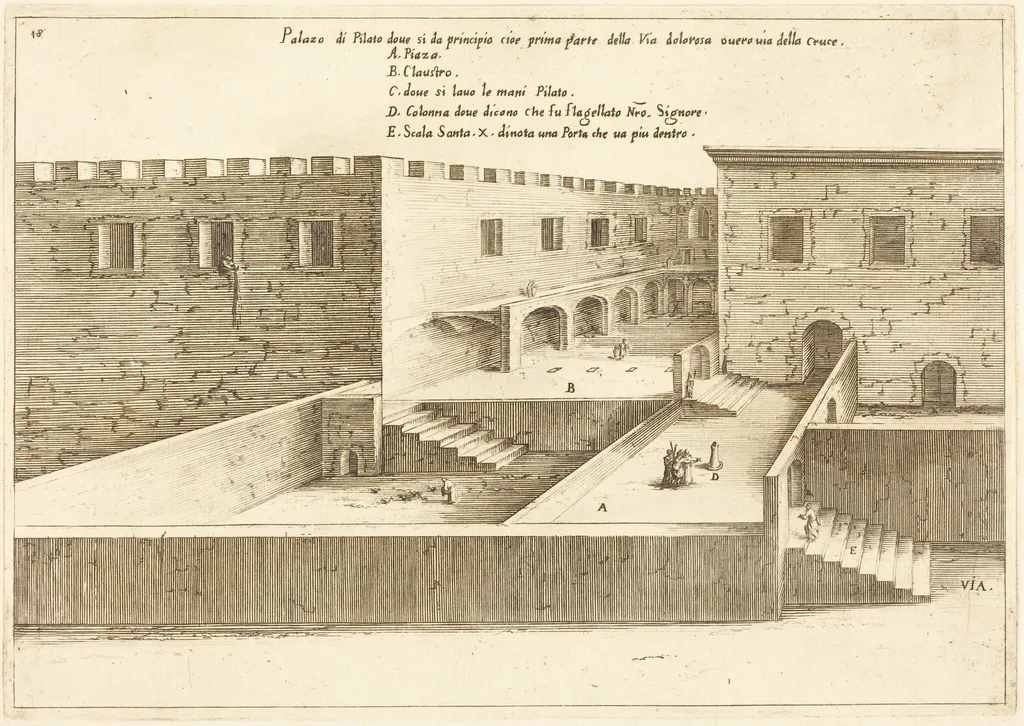
House of Pilate is an ink print by the Baroque artist Jacques Callot. It dates from 1619 and is held in the collection of the National Gallery of Art.
About this work
Overview
As a prolific printmaker from the Duchy of Lorraine, Callot specialized in intricate compositions that merged religious narratives with architectural detail.
Jacques Callot’s *House of Pilate*, created in 1619, is an etching and engraving on laid paper, produced as a restrike from the original copper plate. As a prolific printmaker from the Duchy of Lorraine, Callot specialized in intricate compositions that merged religious narratives with architectural detail. This work exemplifies his technical precision and interest in spatial representation, serving both as a devotional aid and an exercise in visual storytelling through print.
Subject & Meaning
The print depicts a fictionalized interior of the palace of Pontius Pilate, rendered as a cross-sectional diagram with labeled chambers and passageways. Key moments from the Passion narrative, such as Pilate washing his hands, are marked within the architecture. These annotations functioned as instructional guides for viewers unfamiliar with biblical sites, translating sacred texts into tangible, navigable spaces to aid contemplation and religious education.
Technique & Style
Callot employed fine etching and engraving to achieve remarkable detail, rendering thick walls, narrow windows, and winding staircases with meticulous line work. Tiny figures populate the structure, moving through courtyards and corridors, enhancing the sense of scale and activity. The use of labels directs the viewer’s attention, blending cartographic clarity with narrative intent. His technique allowed for dense, legible compositions that balanced architectural accuracy with symbolic function.
History & Provenance
The print is a restrike, made after Callot’s original 1619 plate, likely during the 17th or early 18th century when demand for his works remained high. Original impressions are rare; later strikes were often made from the same plate, sometimes with slight wear. This version retains the clarity of early impressions, preserving the fine lines and annotations that characterize Callot’s approach to religious illustration in print form.
Context
In early 17th-century Europe, printed images served as accessible tools for religious instruction, especially where pilgrimage was impractical. Callot’s architectural diagrams aligned with broader trends in devotional literature and Jesuit pedagogy, which emphasized visual learning. His depictions of biblical sites, though imaginative, drew on contemporary travel accounts and topographical conventions, bridging imagination and perceived historical truth.
Legacy
Callot’s *House of Pilate* contributed to the development of the architectural print as a didactic medium. His fusion of detailed topography with narrative labeling influenced later illustrators of religious and historical subjects. Though not widely reproduced in his lifetime, his prints became reference points for artists and scholars interested in the intersection of space, text, and sacred story, securing his role in the evolution of print-based education.
Artist & collection
Artist
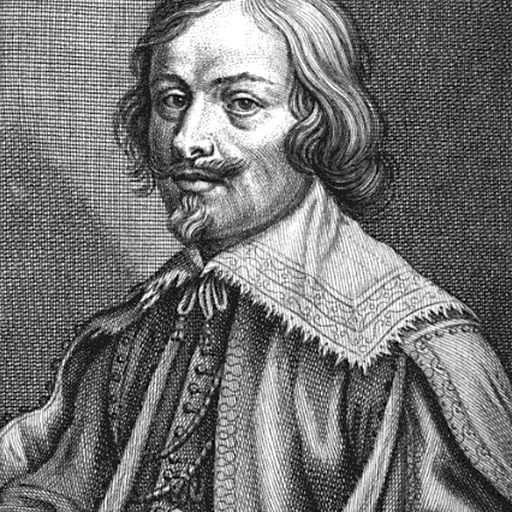
Jacques Callot was a baroque printmaker and draftsman from the Duchy of Lorraine.

 Holy Family at supper
 Restoration of the Aqueduct at Pisa
 Restoration of the Aqueduct at Pisa
 Square in Paris with Many Figures
 Square in Paris with Many Figures
 Horsemen Attacked by Robbers
 HOW WILL A COVERED PART BE CORRECTED?HOW WIKA A COVERED HEART DEED CORRECTED?
![Christ Walking on the Water [second plate], by Jacques Callot](https://artifactworldgallery.com/img/jacques-callot--christ-walking-on-the-water-second-plate--2069f3bfe4cb2126-w320.webp) Christ Walking on the Water [second plate]
Christ Walking on the Water [second plate]
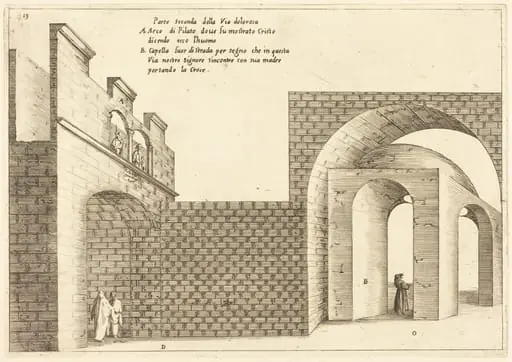 Second Part of the Via Dolorosa
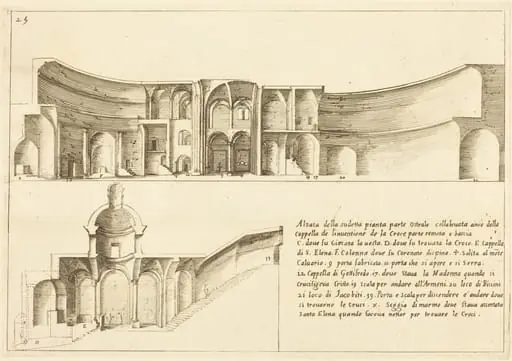 Elevation of the Chapel of the Invention of the Cross
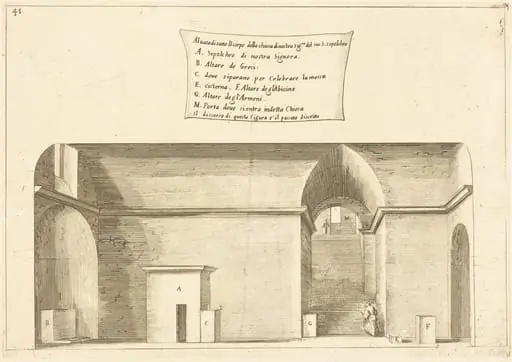 Elevation of the Church of the Holy Sepulchre
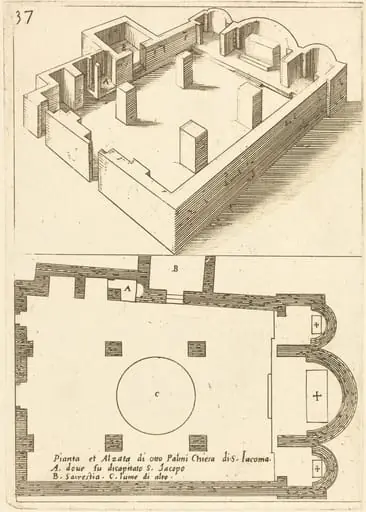 Plan and Elevation of the Church of S. Iacoma
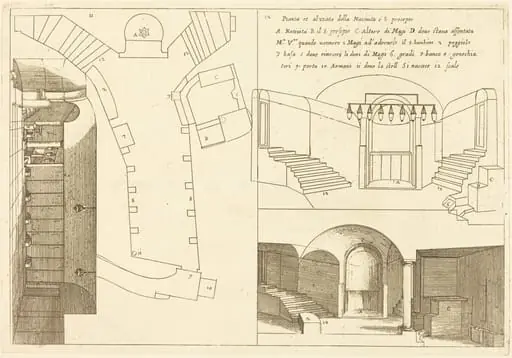 Plan and Elevation of the Church of the Holy Nativity
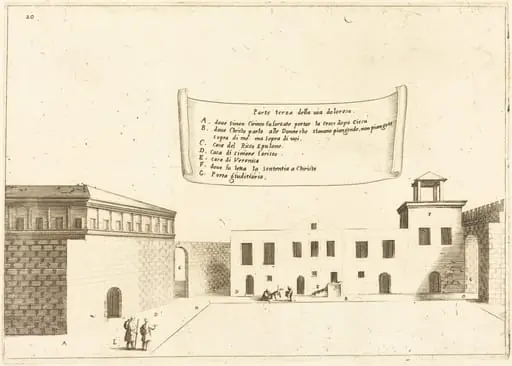 Third Part of the Via Dolorosa
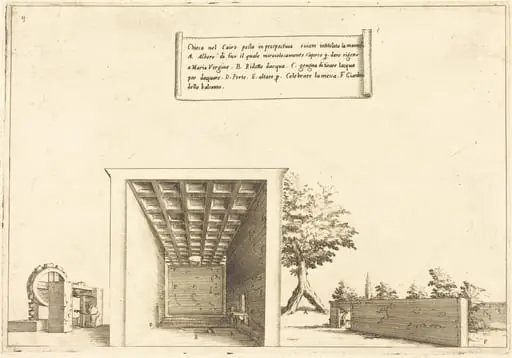 Church in Cairo
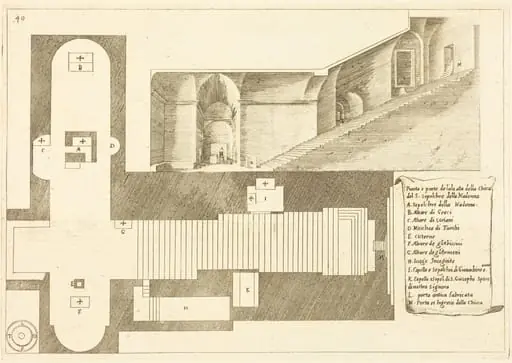 Plan and Part of the Elevation of the Church of the Holy Sepulchre of the Madonna
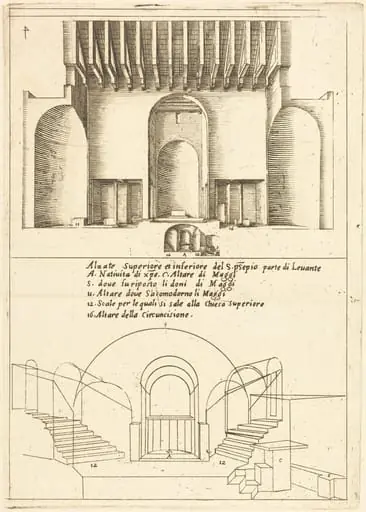 Elevation of the Church of the Holy Manger
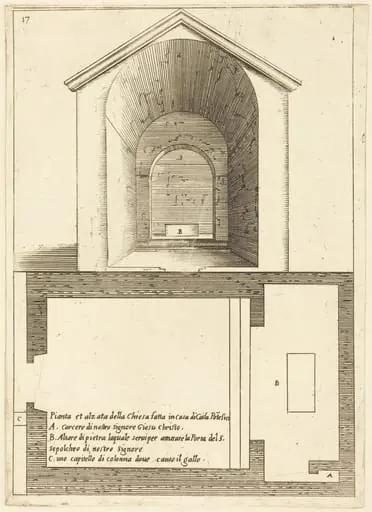 Plan and Elevation of the Church near the House of Caiaphas
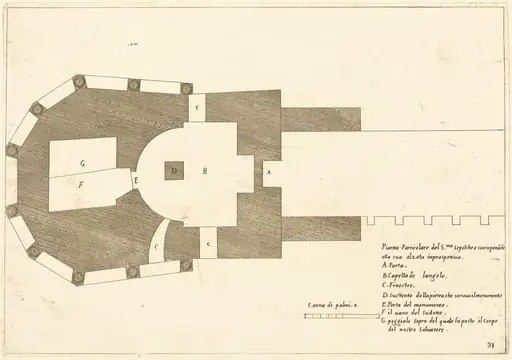 Plan of the Church of the Holy Sepulchre
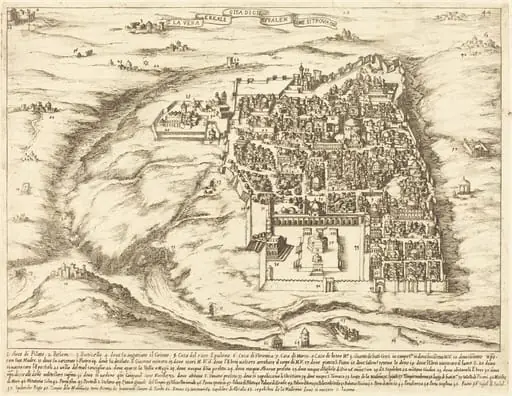 Aerial View of the City of Jerusalem