Artwork
Raising of Lazarus
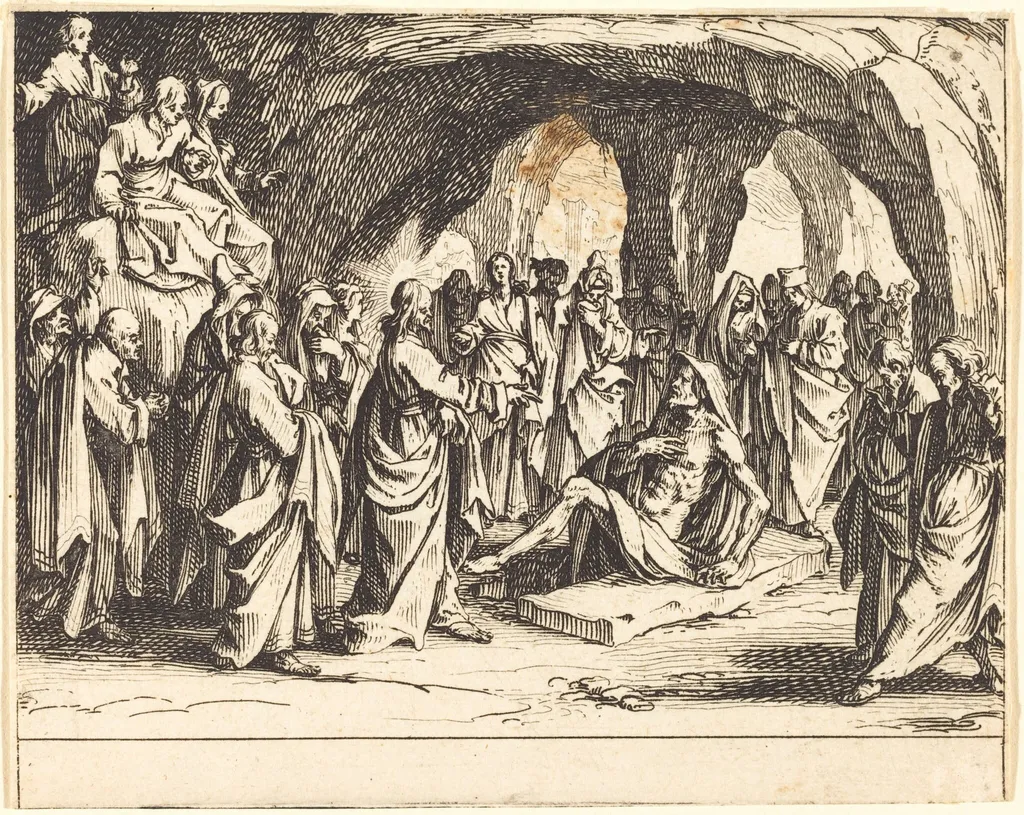
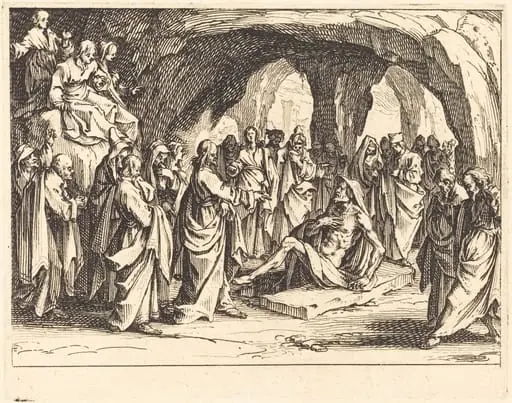
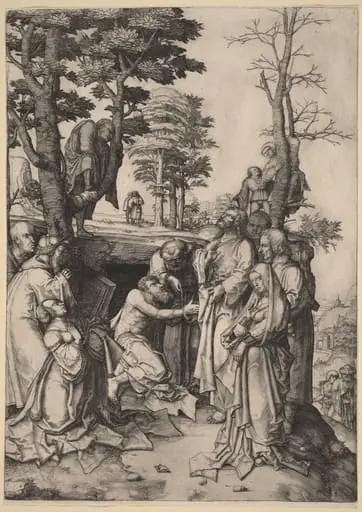
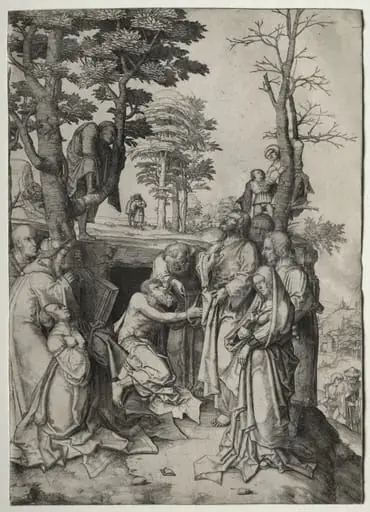
Raising of Lazarus is an ink print by the Baroque artist Jacques Callot. It dates from 1635 and is held in the collection of the National Gallery of Art.
About this work
Overview
Jacques Callot produced this etching in 1635, part of a vast output of over 1,400 prints that established him as a leading figure in early Baroque printmaking.
Jacques Callot produced this etching in 1635, part of a vast output of over 1,400 prints that established him as a leading figure in early Baroque printmaking. Created on laid paper, the work belongs to his series of religious subjects, distinct from his more famous depictions of war and peasant life. The technique demonstrates his precision in fine line work and atmospheric depth, characteristic of his mature style.
Subject & Meaning
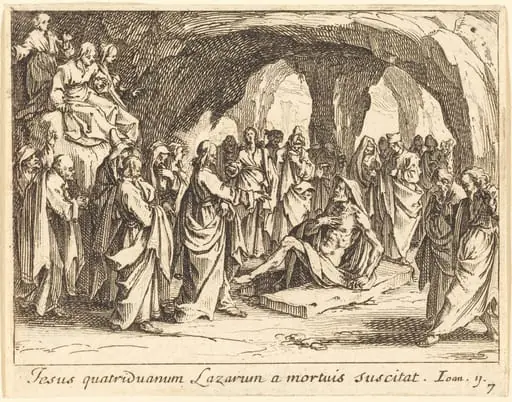
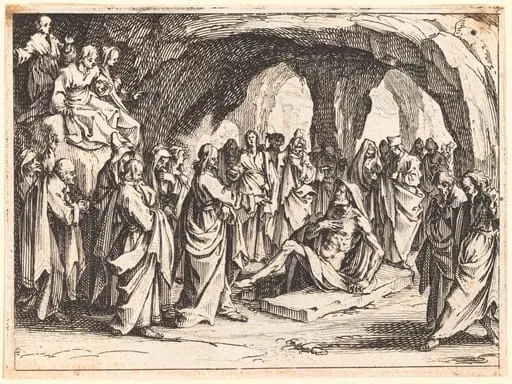
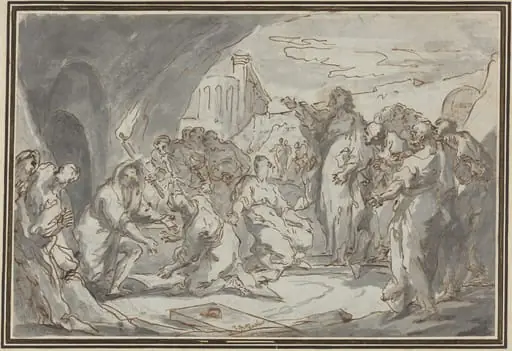
The scene depicts the biblical moment when Christ restores Lazarus to life, as described in the Gospel of John. Figures surround the shrouded body in varied postures of grief and awe, their gestures emphasizing the tension between death and divine intervention. The absence of overt miracles—no radiant light or divine figure—focuses attention on human reaction, suggesting contemplation over spectacle.
Technique & Style
Callot employed fine etched lines to render texture and volume with remarkable control, using cross-hatching to model folds of cloth and the contours of bodies. The dark, uneven background enhances the sense of mystery, while the sparse lighting directs focus to the central group. His use of the etching needle allowed for intricate detail, typical of his ability to convey emotional nuance through line alone.
History & Provenance
The print was made during Callot’s time in Florence, where he worked for the Medici court and absorbed Italian artistic influences. Though no early ownership records are widely documented, the work circulated among collectors of religious prints in 17th-century Europe. Its survival in multiple institutional collections suggests it was valued for its technical refinement and devotional resonance.
Context
Created during the Counter-Reformation, the image aligns with Catholic efforts to evoke emotional engagement with sacred narratives. Callot’s choice to emphasize human response rather than divine glory reflects a broader trend in Baroque religious art to make spiritual moments feel immediate and personal. His prints reached wide audiences, serving as both devotional aids and artistic demonstrations.
Legacy
Callot’s *Raising of Lazarus* contributed to the elevation of etching as a medium capable of serious religious expression. His influence extended to later printmakers who adopted his compositional clarity and emotional restraint. Though less celebrated than his satirical works, this print remains a quiet testament to his capacity for solemn narrative and technical mastery.
Artist & collection
Artist
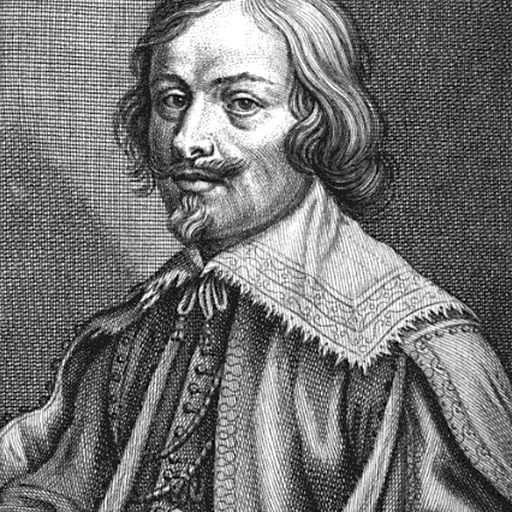
Jacques Callot was a baroque printmaker and draftsman from the Duchy of Lorraine.

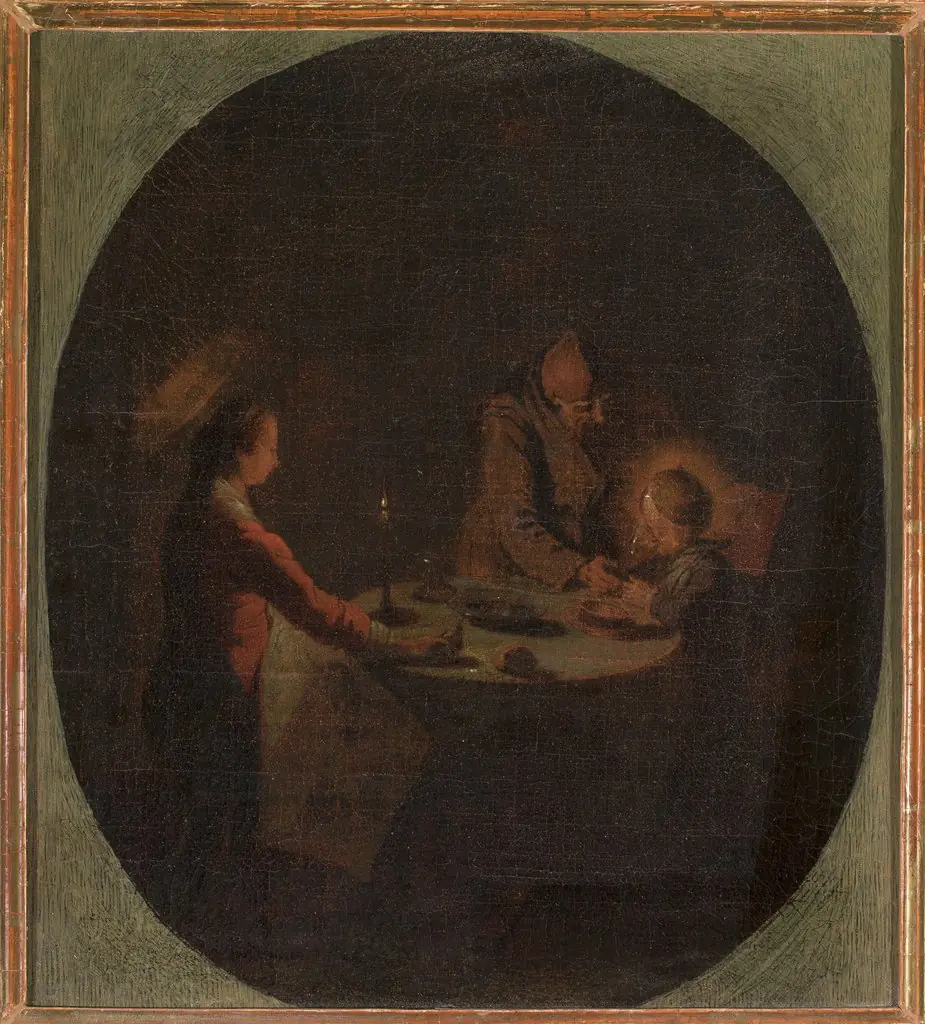 Holy Family at supper
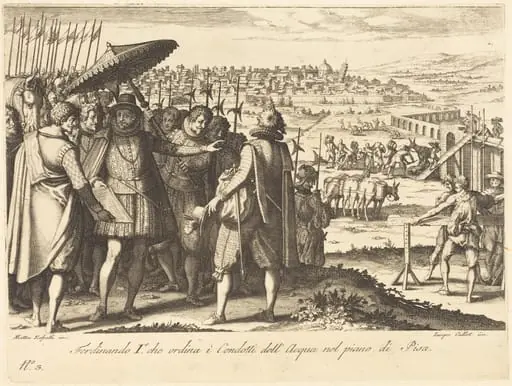 Restoration of the Aqueduct at Pisa
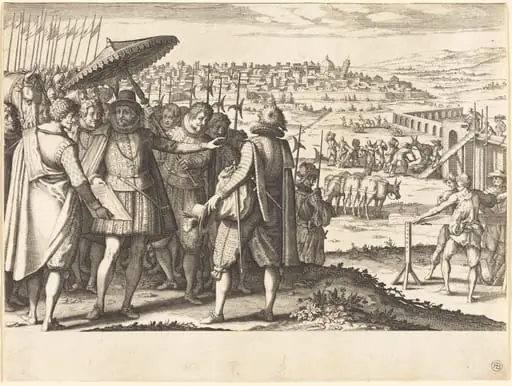 Restoration of the Aqueduct at Pisa
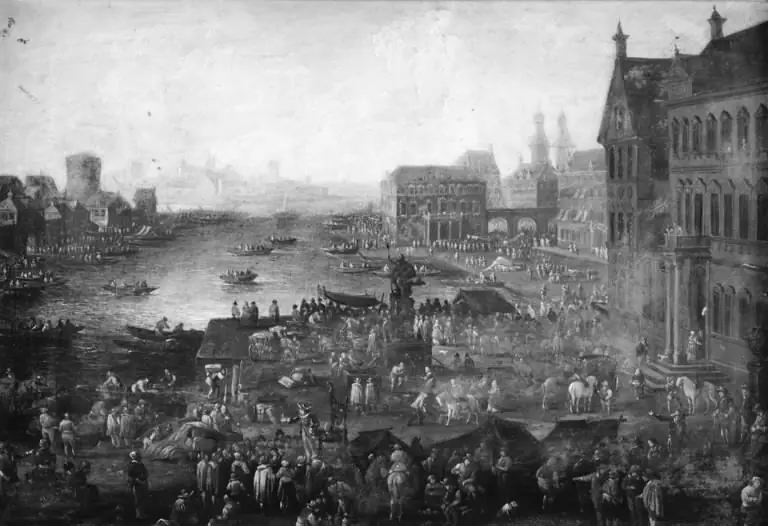 Square in Paris with Many Figures
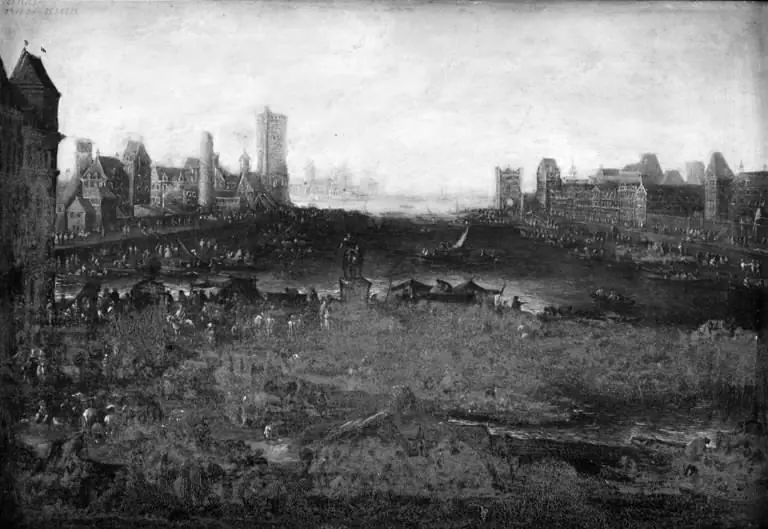 Square in Paris with Many Figures
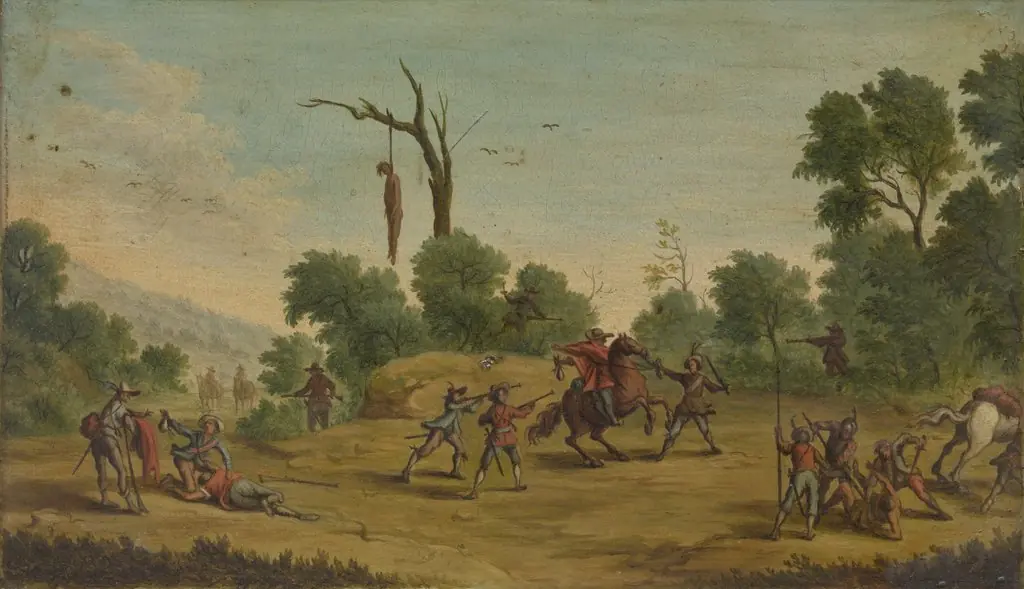 Horsemen Attacked by Robbers
 HOW WILL A COVERED PART BE CORRECTED?HOW WIKA A COVERED HEART DEED CORRECTED?
![Christ Walking on the Water [second plate], by Jacques Callot](https://artifactworldgallery.com/img/jacques-callot--christ-walking-on-the-water-second-plate--2069f3bfe4cb2126-w320.webp) Christ Walking on the Water [second plate]
Christ Walking on the Water [second plate]