Artwork
The Nativity
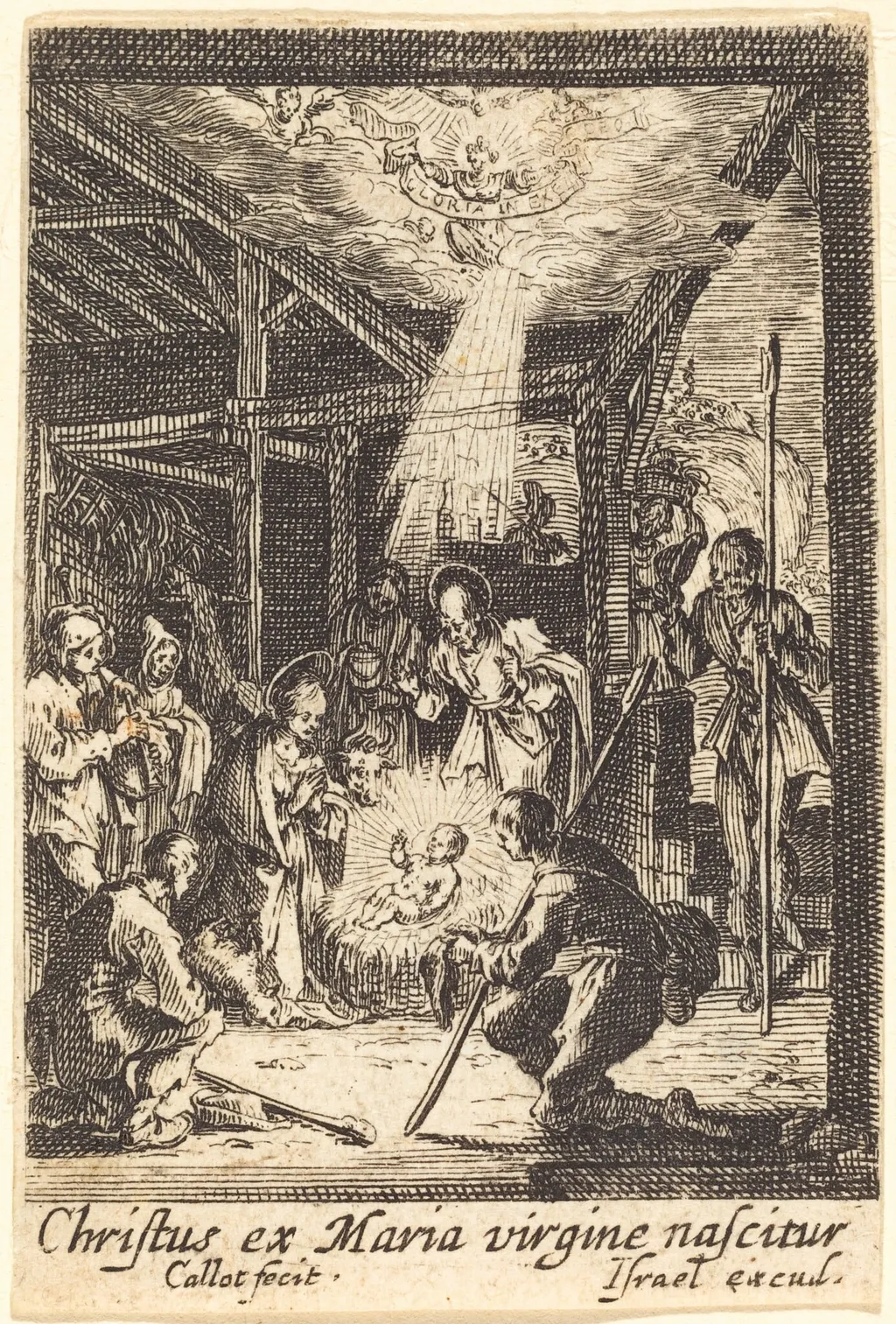
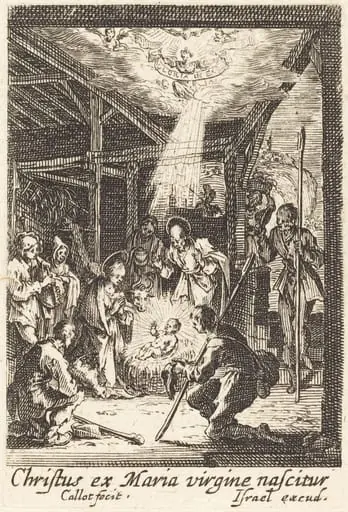
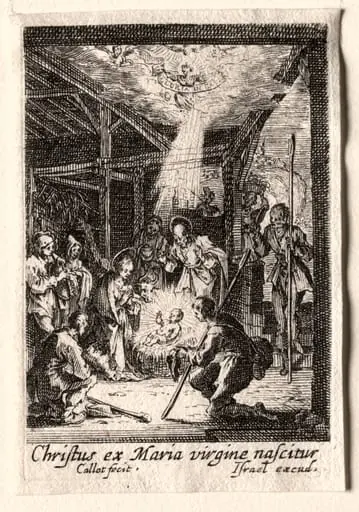
The Nativity is an ink print by the Baroque artist Jacques Callot. It dates from 1634 and is held in the collection of the National Gallery of Art.
About this work
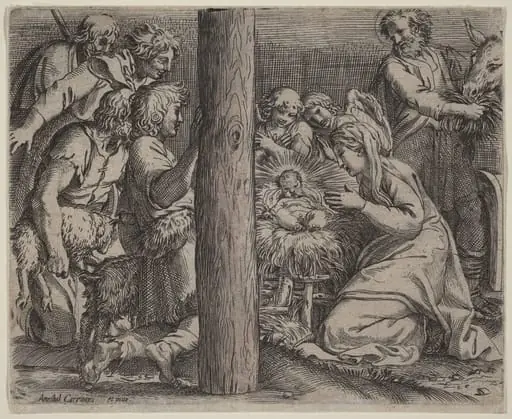
This etching shows Mary kneeling beside baby Jesus in a barn.
This etching shows Mary kneeling beside baby Jesus in a barn. Joseph stands nearby. Two shepherds peek through cracks in the walls.
Jacques Callot made this around 1633. It’s an etching, which means he carved lines into metal. Ink fills the grooves, then presses onto paper. The lines are delicate but clear.
This work feels quiet and real. Look for the way light falls on Mary’s robe. It’s soft, like candlelight.
Check out more prints by Callot, Jacques.
Overview
Jacques Callot, a French printmaker active in the early seventeenth century, produced an etching titled *The Nativity* circa 1634. Executed on laid paper, the work belongs to the religious genre and presents a modest, intimate scene of the birth of Christ. The composition is noted for its calm atmosphere and careful rendering of figures within a simple interior setting.
Subject & Meaning
The image depicts the Virgin Mary kneeling beside the infant Jesus within a modest barn, with Joseph standing nearby. Two shepherds are shown peering through cracks in the walls, suggesting a sense of humble witness. The tableau emphasizes the humanity of the event, focusing on quiet devotion rather than dramatic spectacle, aligning with Counter‑Reformation sensibilities that favored personal piety.
Technique & Style
Callot employed traditional etching, incising fine lines into a copper plate, inking the grooves, and transferring the image onto laid paper. The resulting lines are delicate yet precise, allowing subtle gradations of light, particularly on Mary’s robe, which appears illuminated by a soft, candle‑like glow. The composition integrates a detailed landscape background, a hallmark of Callot’s approach to narrative prints.
History & Provenance
Created around 1633‑34, the print is part of Callot’s prolific output of more than 1,400 etchings that documented both secular and sacred subjects. While the original ownership trail is not fully documented, the work has been cited in several catalogues of Baroque prints and is held in public collections that specialize in early modern graphic art.
Context
Callot worked in the Duchy of Lorraine during a period when French Baroque art was increasingly influenced by religious reform. His prints often combined meticulous observation of contemporary life with biblical stories, reflecting the era’s demand for accessible visual narratives that could educate and inspire devotion among a broad audience.
Artist & collection
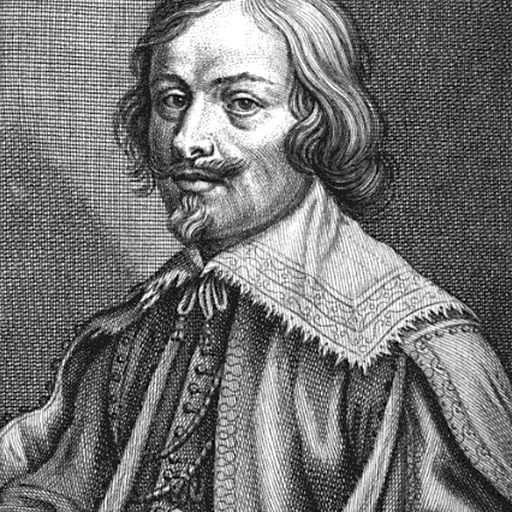
Artist
Jacques Callot was a baroque printmaker and draftsman from the Duchy of Lorraine.

 Holy Family at supper
 Restoration of the Aqueduct at Pisa
 Restoration of the Aqueduct at Pisa
 Square in Paris with Many Figures
 Square in Paris with Many Figures
 Horsemen Attacked by Robbers
 HOW WILL A COVERED PART BE CORRECTED?HOW WIKA A COVERED HEART DEED CORRECTED?
![Christ Walking on the Water [second plate], by Jacques Callot](https://artifactworldgallery.com/img/jacques-callot--christ-walking-on-the-water-second-plate--2069f3bfe4cb2126-w320.webp) Christ Walking on the Water [second plate]
Christ Walking on the Water [second plate]