Artwork
The Nativity
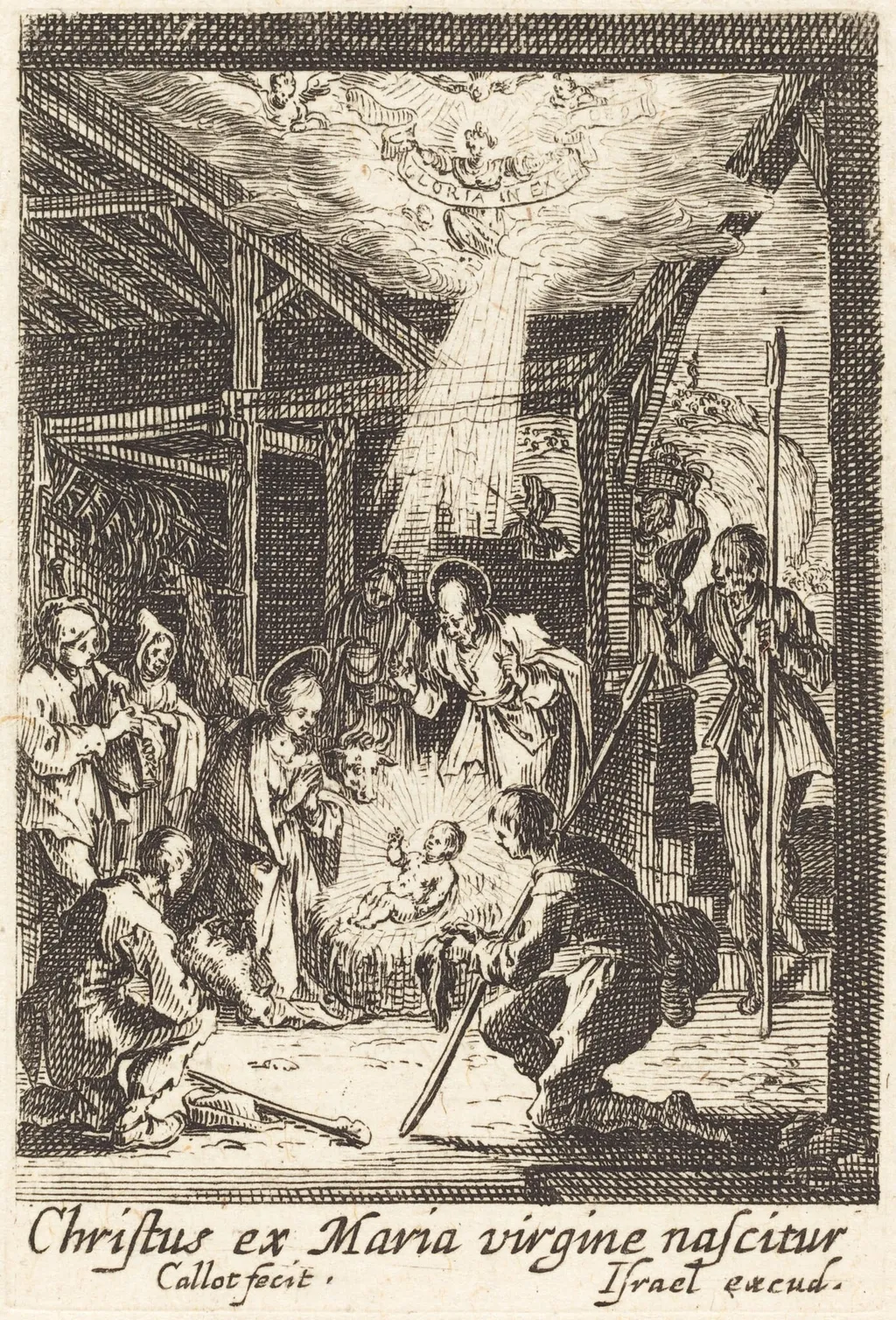
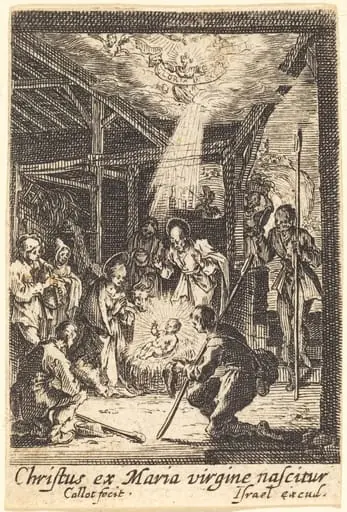
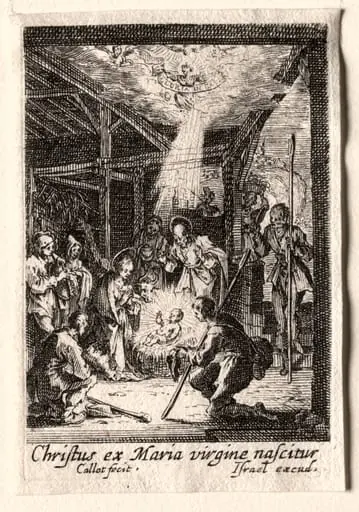
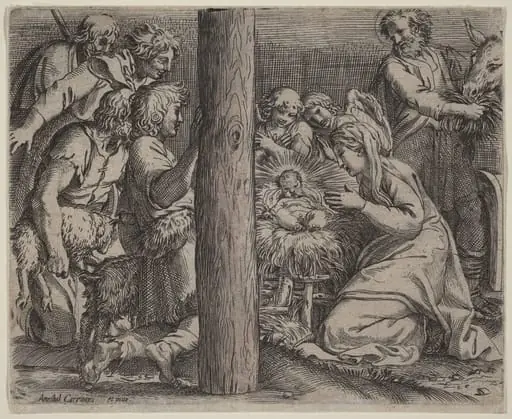
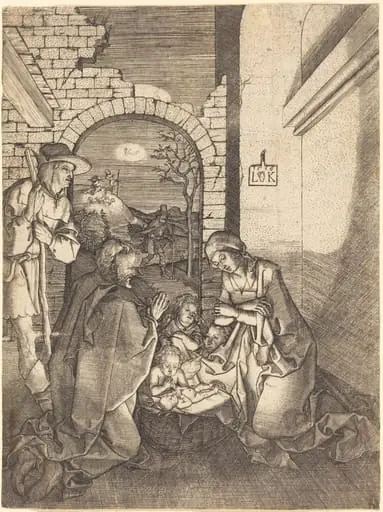
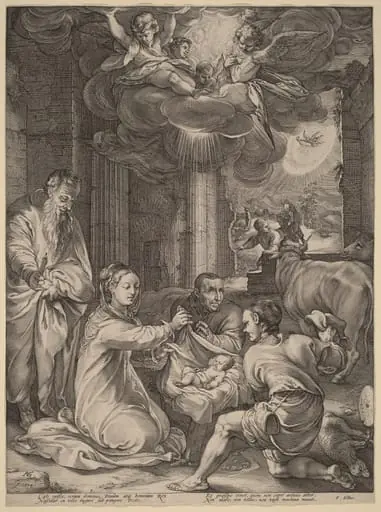
The Nativity is an ink print by the Baroque artist Jacques Callot. It dates from 1634 and is held in the collection of the National Gallery of Art.
About this work
Overview
The work belongs to a broader tradition of religious imagery in early 17th-century Europe, executed with technical precision and compositional clarity.
Jacques Callot produced this etching around 1634, capturing the biblical Nativity in fine linear detail on laid paper. As one of over 1,400 prints in his career, it reflects his dedication to printmaking as a medium for both sacred and secular narratives. The work belongs to a broader tradition of religious imagery in early 17th-century Europe, executed with technical precision and compositional clarity.
Subject & Meaning
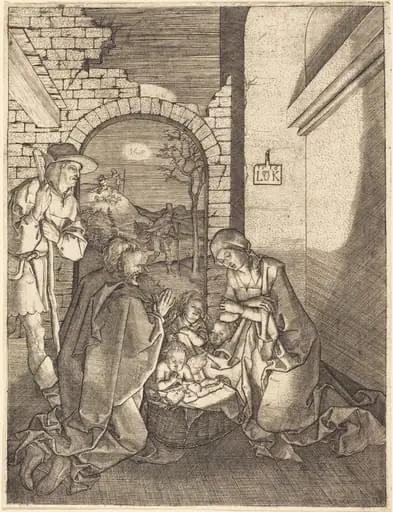
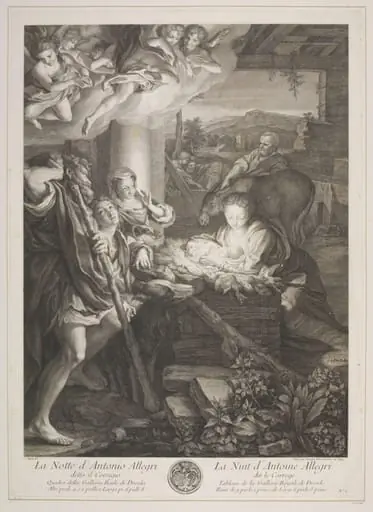
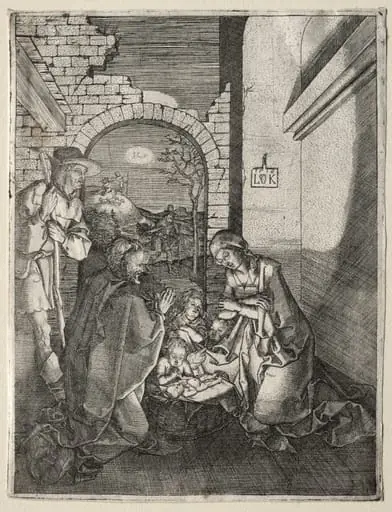
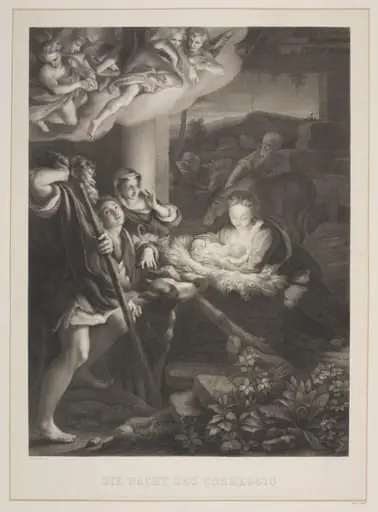
The scene depicts the moment of Christ’s birth, with the Virgin Mary, Joseph, and attendants gathered around the infant in a humble stable. Animals rest nearby, and distant figures observe from the landscape, suggesting both intimacy and universal significance. The composition emphasizes quiet reverence rather than grandeur, aligning with Counter-Reformation ideals that favored accessible, emotionally resonant religious scenes.
Technique & Style
Callot employed etching to achieve fine, controlled lines and subtle tonal gradations. By varying the depth and density of incised marks, he modeled forms and suggested atmospheric depth, particularly in the background hills and sky. The intricate linework animates the figures and creates a sense of quiet movement, guiding the viewer’s gaze toward the central group without overt dramatization.
History & Provenance
Created during Callot’s mature period in Nancy, the etching was likely made for private collectors or religious institutions in Lorraine and beyond. Though specific early ownership records are sparse, its survival in multiple institutional collections indicates its early circulation and enduring appeal among connoisseurs of Northern European printmaking.
Context
In the 1630s, religious imagery remained central in Catholic regions despite the rise of secular themes. Callot’s work responded to devotional needs while showcasing technical innovation. His ability to render complex scenes with clarity made his prints valuable for both personal meditation and educational use, bridging artistic skill and spiritual function.
Legacy
Callot’s Nativity exemplifies how etching could convey narrative depth with minimal means. His influence extended to later printmakers who adopted his linear precision and compositional balance. Though not widely reproduced in his lifetime, the work remains a reference point for understanding the expressive potential of etching in Baroque religious art.
Artist & collection

Artist
Jacques Callot was a baroque printmaker and draftsman from the Duchy of Lorraine.

 Holy Family at supper
 Restoration of the Aqueduct at Pisa
 Restoration of the Aqueduct at Pisa
 Square in Paris with Many Figures
 Square in Paris with Many Figures
 Horsemen Attacked by Robbers
 HOW WILL A COVERED PART BE CORRECTED?HOW WIKA A COVERED HEART DEED CORRECTED?
![Christ Walking on the Water [second plate], by Jacques Callot](https://artifactworldgallery.com/img/jacques-callot--christ-walking-on-the-water-second-plate--2069f3bfe4cb2126-w320.webp) Christ Walking on the Water [second plate]
Christ Walking on the Water [second plate]