Artwork
Christ Carrying the Cross
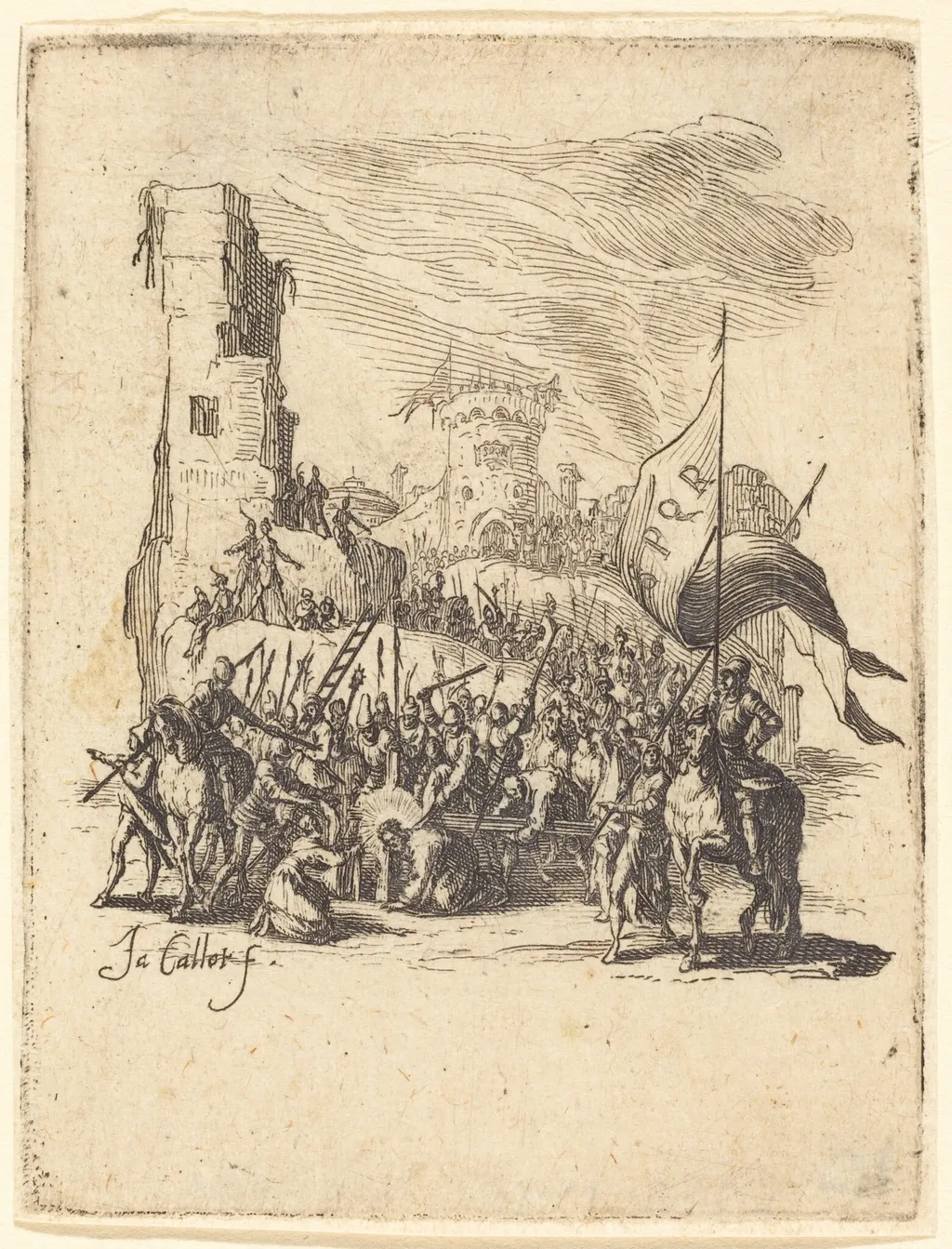
Christ Carrying the Cross is an ink print by the Baroque artist Jacques Callot. It dates from 1624 and is held in the collection of the National Gallery of Art.
About this work
Overview
Part of a prolific output of over 1,400 prints, the work belongs to his series of religious scenes, distinguished by intricate detail and dynamic composition.
Jacques Callot, a printmaker from the Duchy of Lorraine, created this etching around 1624 using fine lines on laid paper. Part of a prolific output of over 1,400 prints, the work belongs to his series of religious scenes, distinguished by intricate detail and dynamic composition. Unlike broad narrative paintings, Callot’s etching captures a moment of tension through precise engraving, emphasizing movement and emotional weight within a confined space.
Subject & Meaning
The scene portrays Christ struggling under the weight of the cross, surrounded by a crowd of onlookers, soldiers, and bystanders. The composition reflects the biblical Passion narrative, but Callot avoids idealization, instead presenting a chaotic, human moment. Figures gesture, push, and stare, conveying indifference, cruelty, or quiet sorrow. The focus on collective behavior underscores the weight of the event not just as spiritual symbol, but as a public spectacle.
Technique & Style
Callot employed fine-line etching with meticulous control, using varying line density to model form and depth. The background buildings and landscape are rendered with subtle tonal gradations, while the figures are defined by sharp contours and expressive gestures. His use of cross-hatching and stippling creates texture in clothing and architecture, enhancing the sense of crowded space without overwhelming the central figure. The paper’s laid texture subtly interacts with the ink, adding tactile richness.
History & Provenance
Created during Callot’s mature period in Florence, the etching was likely made for private collectors and connoisseurs rather than public display. It circulated widely in Europe through print networks, influencing later artists in its treatment of narrative detail. No single early ownership record is documented, but multiple impressions survive in major European collections, suggesting its early and sustained recognition among print enthusiasts.
Context
In early 17th-century Europe, religious imagery remained central to print culture, even amid rising secular interests. Callot’s work responded to Counter-Reformation demands for emotionally resonant sacred scenes, while his attention to crowd dynamics and urban settings mirrored contemporary interest in social observation. His etchings bridged devotional art and documentary realism, reflecting a broader trend toward depicting sacred events with psychological and spatial complexity.
Legacy
Callot’s technical innovations in etching—particularly his refinement of line control and compositional density—set new standards for narrative printmaking. *Christ Carrying the Cross* exemplifies his influence on later generations, including Rembrandt and Goya, who adopted his approach to emotional intensity and crowd composition. The work remains a reference point for how printmaking could convey both spiritual gravity and human immediacy through precise, intimate mark-making.
Artist & collection
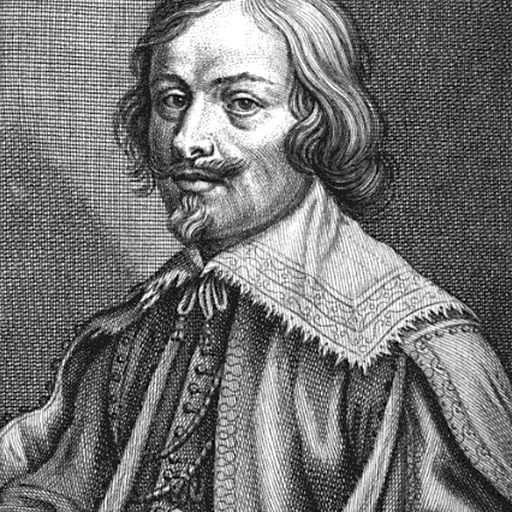
Artist
Jacques Callot was a baroque printmaker and draftsman from the Duchy of Lorraine.

 Holy Family at supper
 Restoration of the Aqueduct at Pisa
 Restoration of the Aqueduct at Pisa
 Square in Paris with Many Figures
 Square in Paris with Many Figures
 Horsemen Attacked by Robbers
 HOW WILL A COVERED PART BE CORRECTED?HOW WIKA A COVERED HEART DEED CORRECTED?
![Christ Walking on the Water [second plate], by Jacques Callot](https://artifactworldgallery.com/img/jacques-callot--christ-walking-on-the-water-second-plate--2069f3bfe4cb2126-w320.webp) Christ Walking on the Water [second plate]
Christ Walking on the Water [second plate]
 Christ Carrying the Cross
 Raising of the Cross
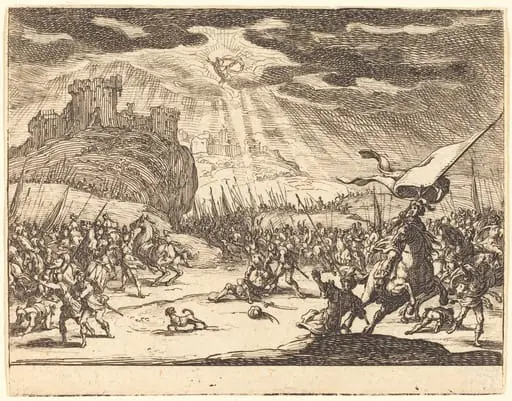 Conversion of Paul
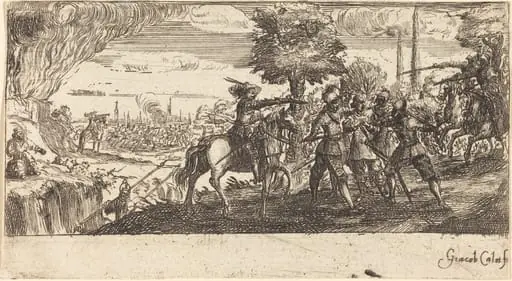 Landscape with Battle Scene
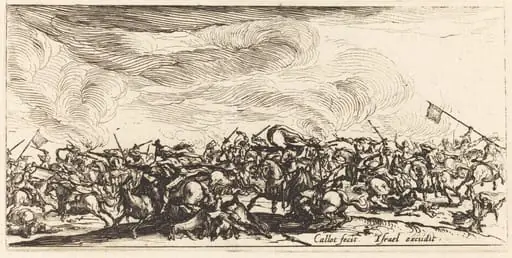 The Cavalry Combat with Swords
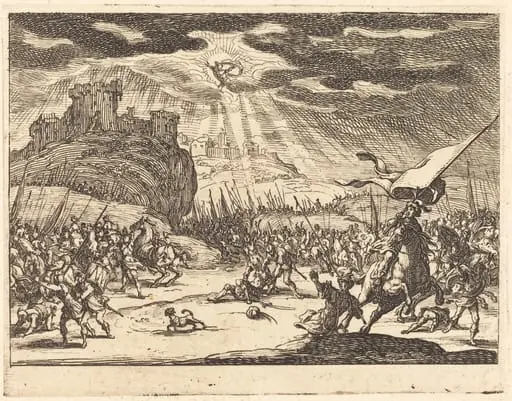 Conversion of Paul
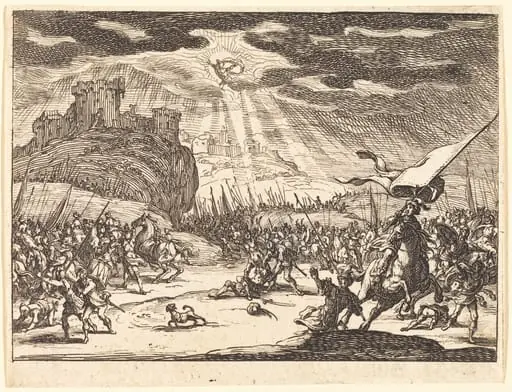 Conversion of Paul
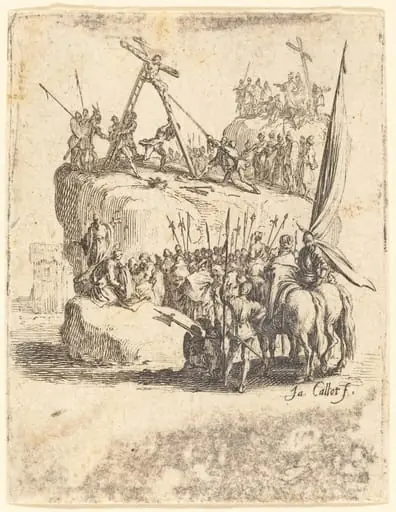 Raising of the Cross
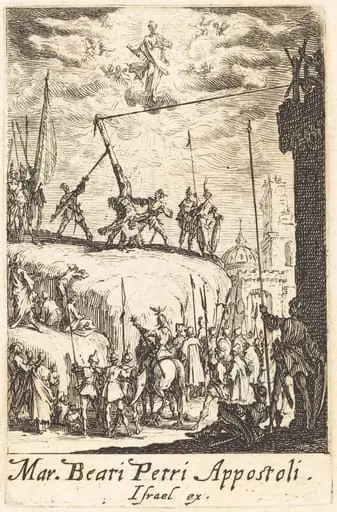 The Martyrdom of Saint Peter
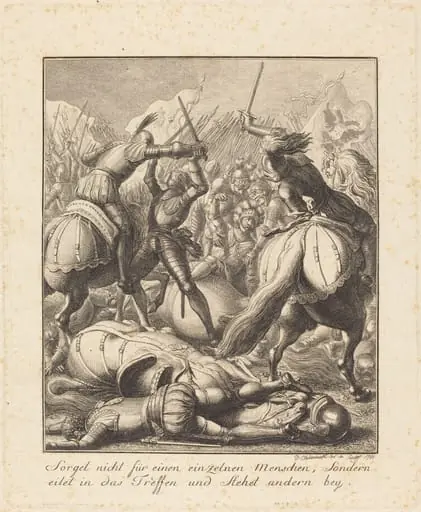 Rudolph of Hapsburg
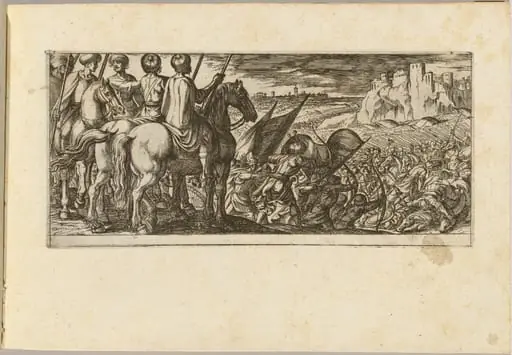 Battle Scene with Cavalry Observing from a Hill
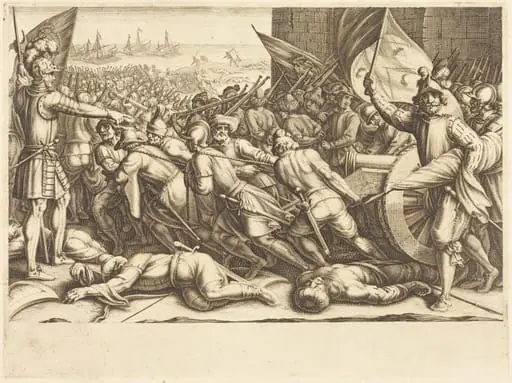 The Re-embarkation of the Turks