Artwork
The Holy Trinity in the Tree of Life, Adored by Franciscans
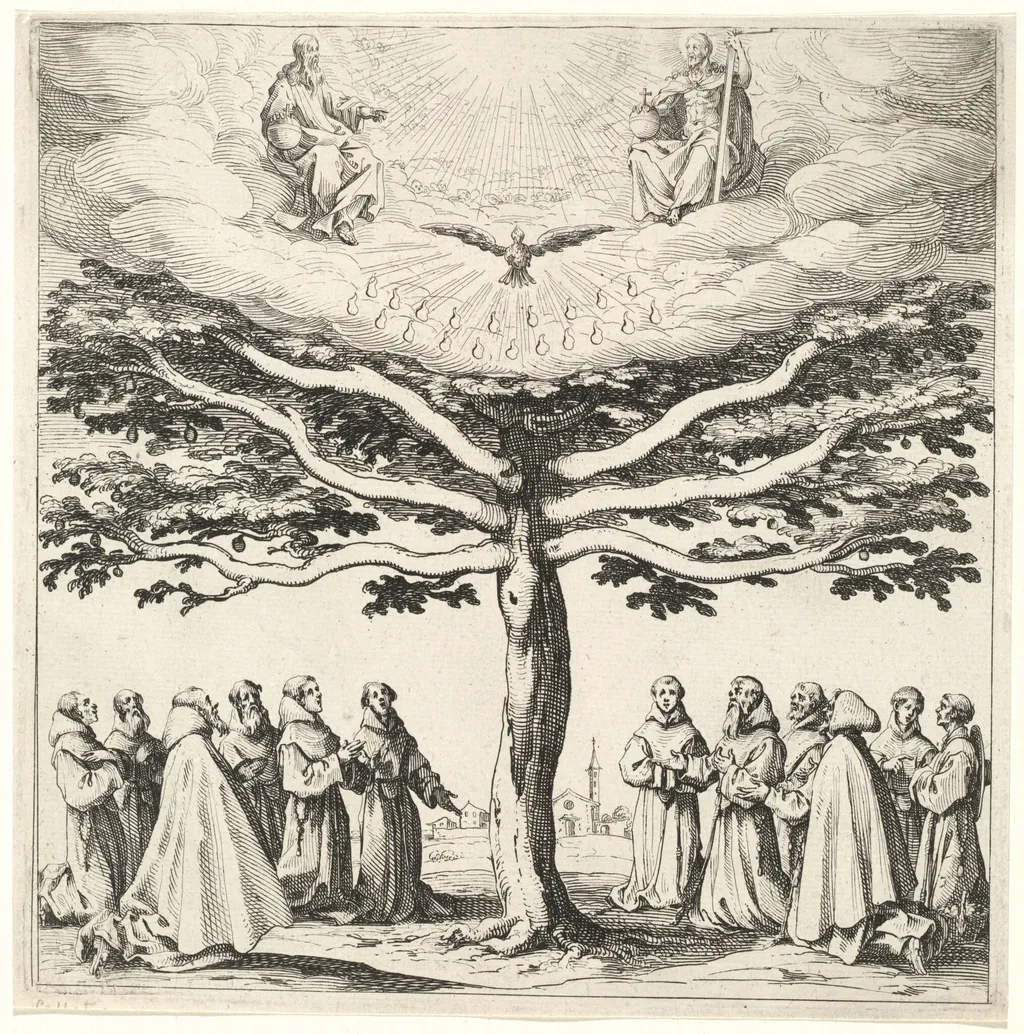
The Holy Trinity in the Tree of Life, Adored by Franciscans is an ink print by the Baroque artist Jacques Callot. It dates from 1621 and is held in the collection of the National Gallery of Art.
About this work
Overview
Jacques Callot’s 1621 etching, titled *The Holy Trinity in the Tree of Life, Adored by Franciscans*, presents a complex religious tableau rendered on laid paper. The image centers on a massive, split trunk that reveals the three faces of the Trinity, while a multitude of diminutive Franciscan figures kneel in reverence beneath the arboreal structure.
Subject & Meaning
The three faces—God the Father, Christ with luminous wounds, and the Holy Spirit as a dove—are set within a sunburst, emphasizing their celestial authority.
The work visualizes a mystical vision of the Holy Trinity emerging from the Tree of Life, a symbol traditionally linking divine creation with humanity. The three faces—God the Father, Christ with luminous wounds, and the Holy Spirit as a dove—are set within a sunburst, emphasizing their celestial authority. The surrounding Franciscans, rendered in simple habit and bare feet, embody humble devotion.
Technique & Style
Executed with etching rather than woodcut, the print displays Callot’s characteristic fine line work and intricate detailing. The delicate incisions convey the texture of bark, the architecture of tiny rooms carved into the trunk, and the expansive landscape in the background, creating depth and a sense of narrative space uncommon in early 17th‑century prints.
History & Provenance
Created in the Duchy of Lorraine, the etching belongs to Callot’s prolific output of more than 1,400 prints that documented both sacred and secular subjects. It reflects the artist’s baroque sensibility and his interest in combining religious iconography with elaborate, almost theatrical compositions.
Context
During the early 1600s, the Franciscan order emphasized contemplative worship and the visual representation of divine mysteries. Callot’s choice to place the order’s monks in a crowded, detailed setting aligns with contemporary Counter‑Reformation efforts to make religious experience accessible through vivid imagery.
Artist & collection

Artist
Jacques Callot was a baroque printmaker and draftsman from the Duchy of Lorraine.

 Holy Family at supper
 Restoration of the Aqueduct at Pisa
 Restoration of the Aqueduct at Pisa
 Square in Paris with Many Figures
 Square in Paris with Many Figures
 Horsemen Attacked by Robbers
 HOW WILL A COVERED PART BE CORRECTED?HOW WIKA A COVERED HEART DEED CORRECTED?
![Christ Walking on the Water [second plate], by Jacques Callot](https://artifactworldgallery.com/img/jacques-callot--christ-walking-on-the-water-second-plate--2069f3bfe4cb2126-w320.webp) Christ Walking on the Water [second plate]
Christ Walking on the Water [second plate]
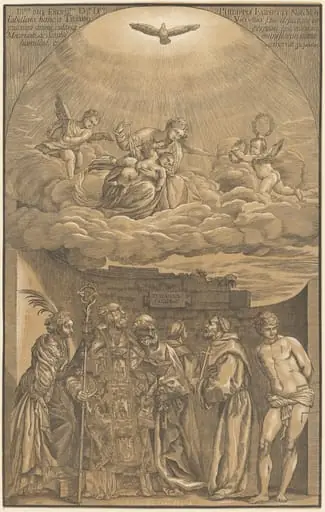 The Virgin and Child in the Clouds with Six Saints
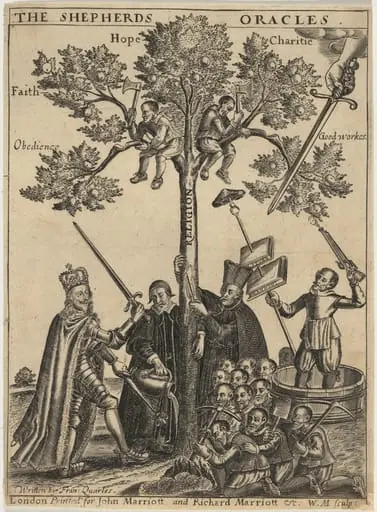 Title Page to Francis Quarles, Shepherds Oracles
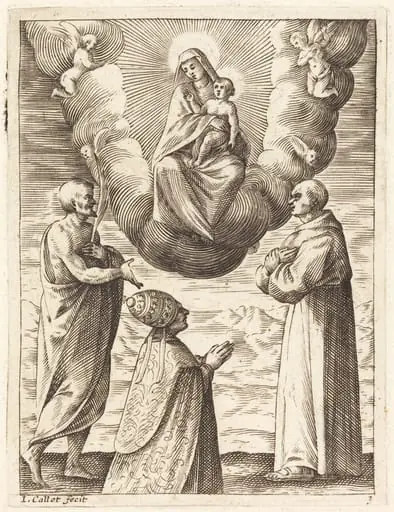 Boniface VIII with Saints Francis and Crispin Adoring the Virgin and Child
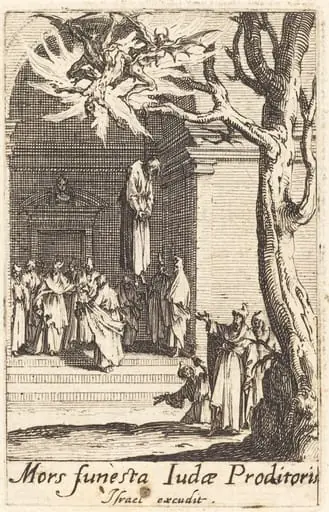 The Death of Judas
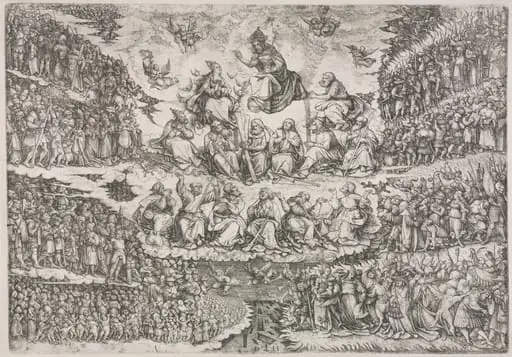 Last Judgment
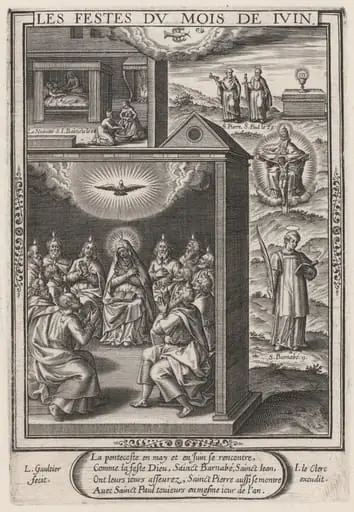 Les Festes du mois de Juin (June: The Pentecost)
 The Death of Judas
 The Assumption of the Virgin
 The Large Saint Anthony of Padua
 The Assumption of the Virgin