Artwork
The Resurrection
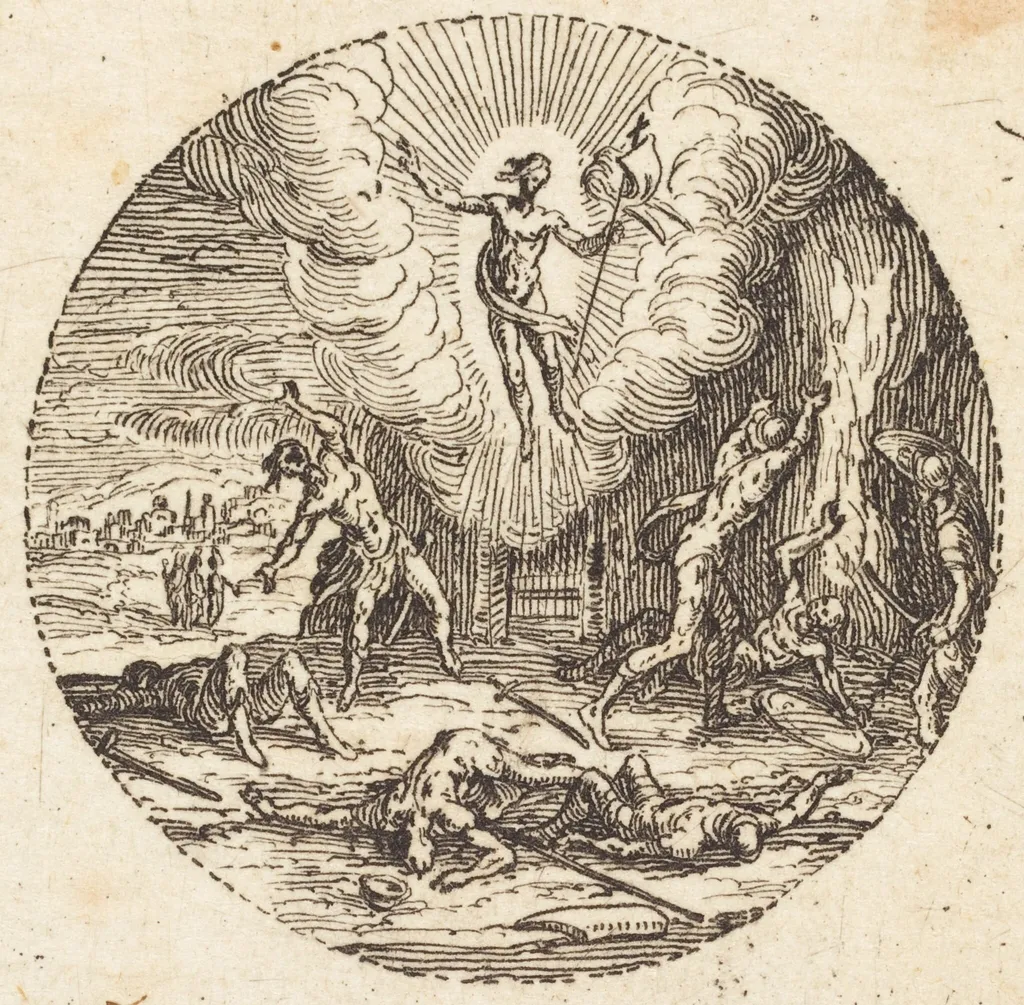
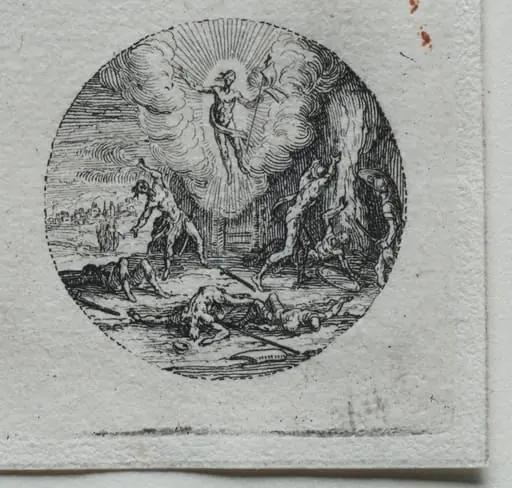
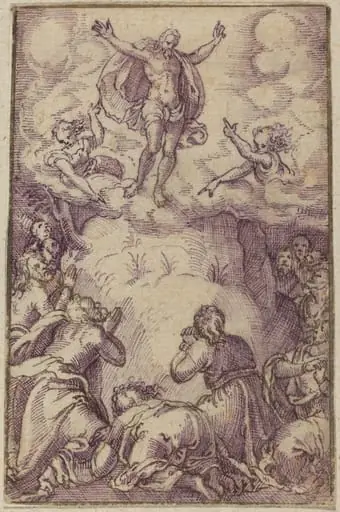
The Resurrection is an ink print by the Baroque artist Jacques Callot. It dates from 1631 and is held in the collection of the National Gallery of Art.
About this work
Overview
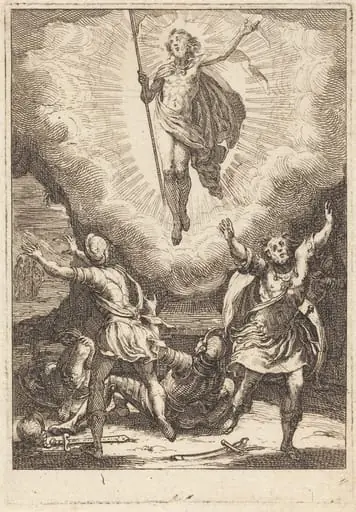
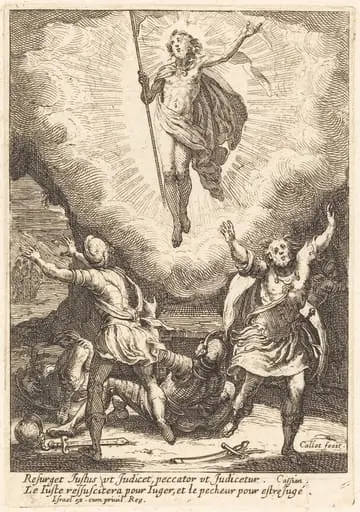
Created around 1631 by Jacques Callot, this etching on laid paper depicts the biblical Resurrection. As one of over 1,400 prints produced by the Lorrainer artist, it exemplifies his mastery of the etching technique and his engagement with sacred subjects. The work is rendered in monochrome, emphasizing tonal contrast and intricate line work to convey drama and movement within a confined space.
Subject & Meaning
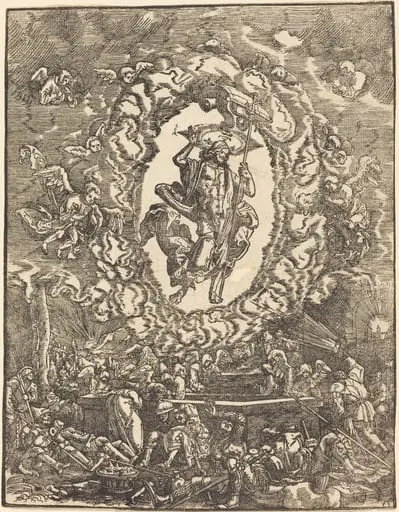
The scene centers on a luminous figure emerging from a stone tomb, surrounded by figures reacting with awe, fear, and reverence. The composition draws from Gospel accounts of Christ’s resurrection, but Callot infuses it with human immediacy. The scattered postures and upward gazes suggest a moment of divine interruption, transforming a theological event into a visceral, witnessed experience.
Technique & Style
The swirling clouds and jagged ground lines enhance the sense of upheaval, while the radiant figure stands out through negative space and minimal line work.
Callot employed fine, controlled etching lines to build texture and depth, using dense hatching for shadows and delicate strokes for atmospheric effects. The swirling clouds and jagged ground lines enhance the sense of upheaval, while the radiant figure stands out through negative space and minimal line work. His precision in rendering light and motion reflects his technical innovation in etching during the early Baroque period.
History & Provenance
The print was made during Callot’s mature period, after years of working in Florence and Paris, where he absorbed Italian and Northern European print traditions. Though no specific early ownership records are documented, the work aligns with his broader output distributed across religious and secular patrons. Its survival in multiple institutional collections suggests steady circulation among collectors of graphic art in the 17th and 18th centuries.
Context
In early 17th-century Europe, religious imagery remained central to print culture, even amid rising secular interests. Callot’s etchings responded to Counter-Reformation demands for emotionally resonant sacred scenes, while his detailed landscapes and figure groupings echoed contemporary trends in Flemish and Italian printmaking. His ability to merge narrative clarity with atmospheric complexity set his religious prints apart from more formulaic contemporaries.
Legacy
Callot’s *The Resurrection* contributed to the evolution of etching as a medium capable of conveying both spiritual gravity and psychological nuance. His technical innovations influenced later generations of printmakers, particularly in the use of layered tonal fields and dynamic composition. Though less widely known than his military scenes, this work remains a significant example of Baroque religious printmaking in France.
Artist & collection

Artist
Jacques Callot was a baroque printmaker and draftsman from the Duchy of Lorraine.

 Holy Family at supper
 Restoration of the Aqueduct at Pisa
 Restoration of the Aqueduct at Pisa
 Square in Paris with Many Figures
 Square in Paris with Many Figures
 Horsemen Attacked by Robbers
 HOW WILL A COVERED PART BE CORRECTED?HOW WIKA A COVERED HEART DEED CORRECTED?
![Christ Walking on the Water [second plate], by Jacques Callot](https://artifactworldgallery.com/img/jacques-callot--christ-walking-on-the-water-second-plate--2069f3bfe4cb2126-w320.webp) Christ Walking on the Water [second plate]
Christ Walking on the Water [second plate]