Artwork
The Watermill
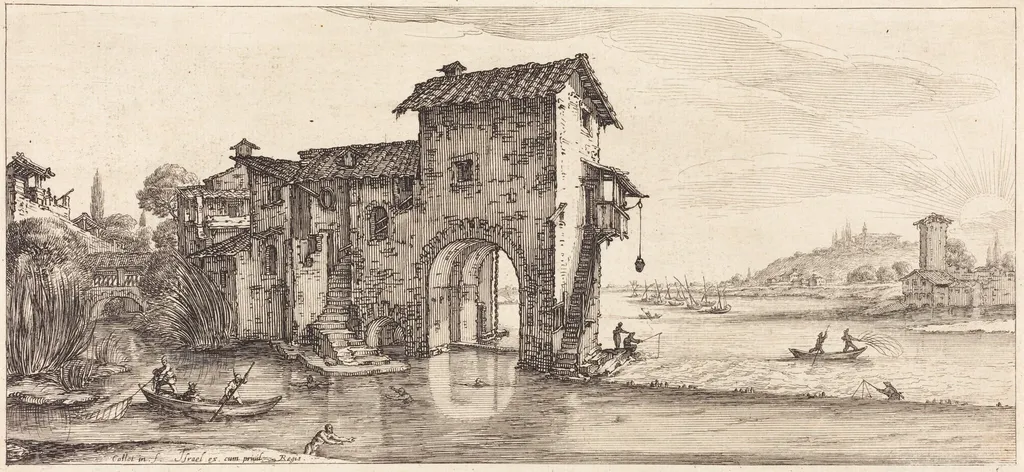
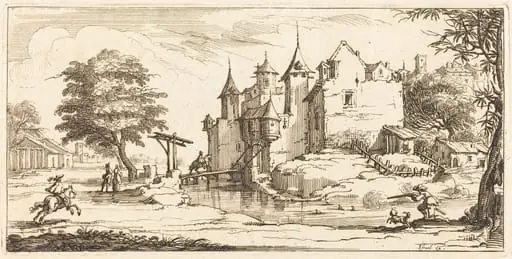
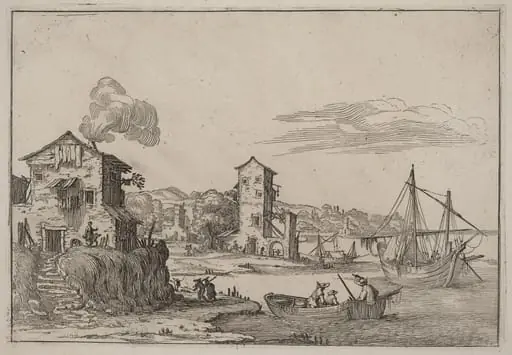
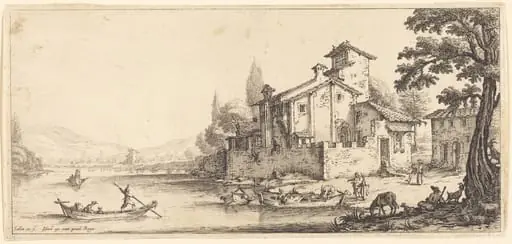
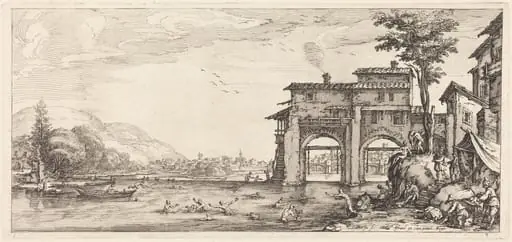
The Watermill is an ink print by the Baroque artist Jacques Callot. It dates from 1630 and is held in the collection of the National Gallery of Art.
About this work
Overview
Created around 1630 by Jacques Callot, *The Watermill* is an etching on laid paper that captures a quiet rural scene in the Duchy of Lorraine.
Created around 1630 by Jacques Callot, *The Watermill* is an etching on laid paper that captures a quiet rural scene in the Duchy of Lorraine. As one of over 1,400 prints produced by the artist, it exemplifies his focus on everyday environments rather than grand narratives. The work is part of the National Gallery of Art’s collection in Washington, D.C., and reflects Callot’s technical precision and interest in the textures of the natural and built world.
Subject & Meaning
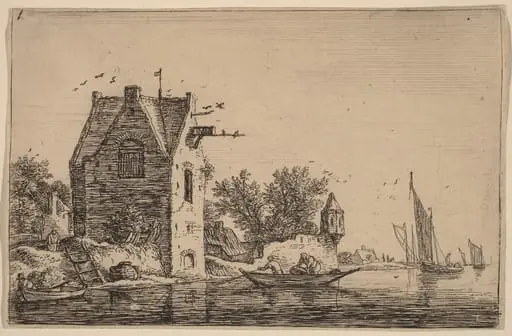
The scene depicts a weathered stone bridge partially submerged, with small boats gliding beneath and figures fishing in the shallows. Distant ships and modest buildings line the horizon, suggesting a modest riverside settlement. There is no overt narrative, but the imagery conveys a sense of quiet labor and the passage of time, emphasizing the interplay between human activity and the slow erosion of infrastructure.
Technique & Style
Callot employed etching to create fine, incised lines that hold ink and produce a grainy, atmospheric texture. His use of delicate, scratchy strokes renders the crumbling stone, rippling water, and distant foliage with subtle variation. The technique allowed him to capture both the fragility of the structure and the movement of the water, enhancing the scene’s tactile realism without relying on heavy shading or contrast.
History & Provenance
The print was made during Callot’s mature period, when he was actively documenting the landscapes and social scenes of northern France and the Low Countries. It entered the National Gallery of Art’s collection through established acquisition channels, likely as part of a broader effort to preserve early modern European prints. Its survival in good condition reflects careful handling and the durability of etched copper plates.
Context
In the early 17th century, etching emerged as a favored medium for artists seeking to record daily life with immediacy. Callot’s work aligned with a growing interest in topographical accuracy and vernacular subjects, distinct from the mythological or religious themes dominant in painting. His prints circulated widely among collectors and artisans, influencing how landscapes and rural economies were visually recorded across Europe.
Legacy
Callot’s detailed etchings, including *The Watermill*, helped establish printmaking as a legitimate medium for observational art. His approach to texture and scale influenced later generations of draftsmen and printmakers who sought to depict the mundane with nuance. While not widely exhibited as a singular icon, his body of work remains a vital record of early modern European environments and their quiet rhythms.
Artist & collection
Artist
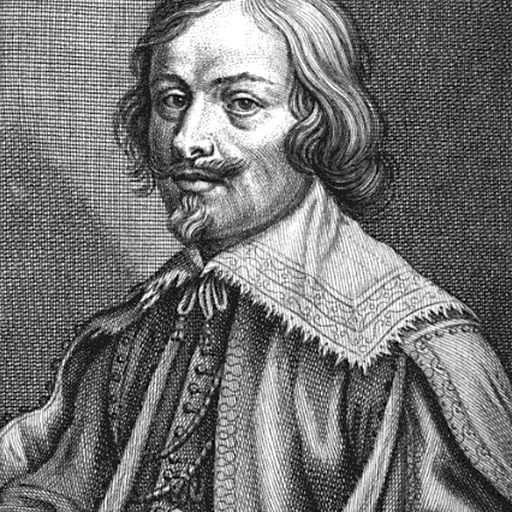
Jacques Callot was a baroque printmaker and draftsman from the Duchy of Lorraine.

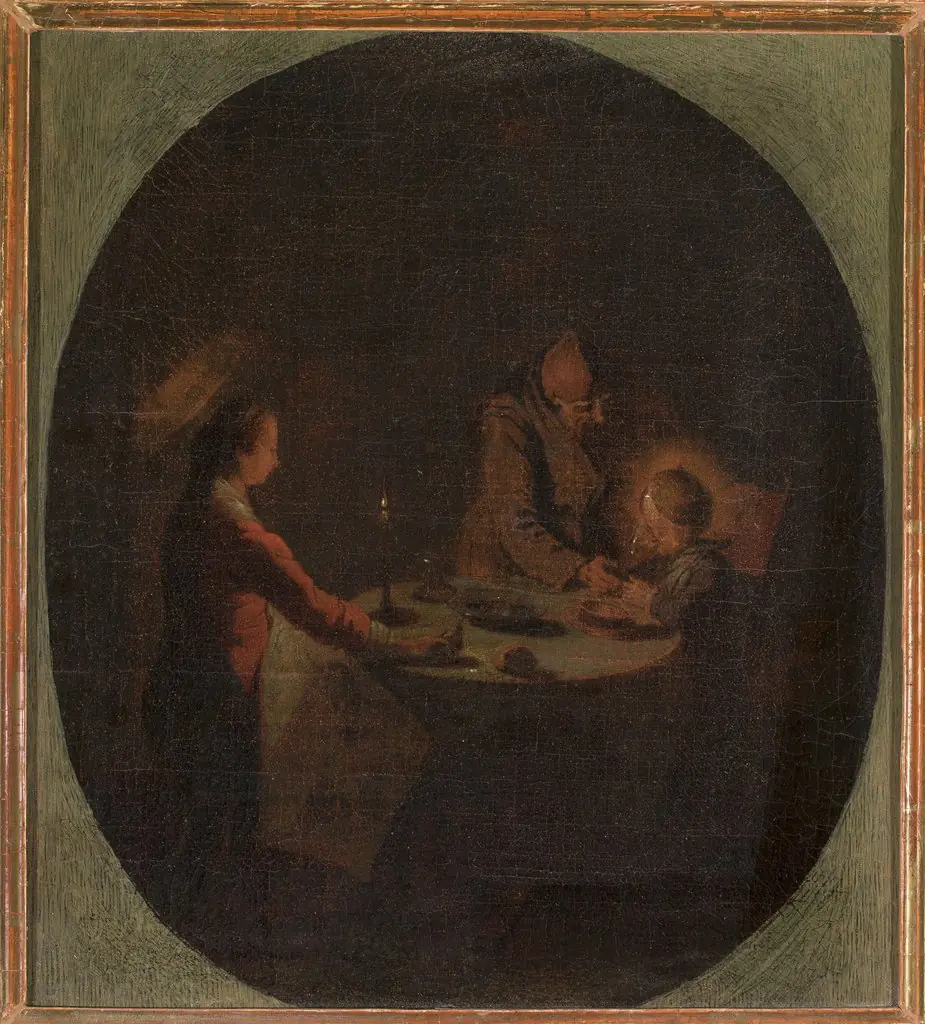 Holy Family at supper
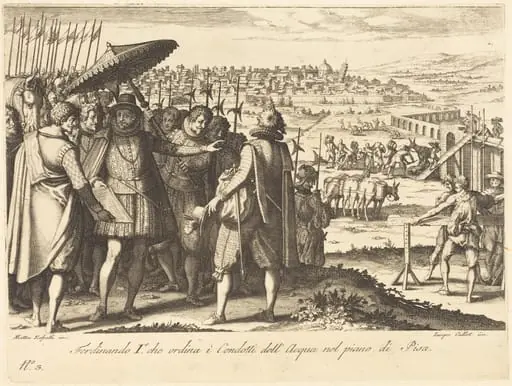 Restoration of the Aqueduct at Pisa
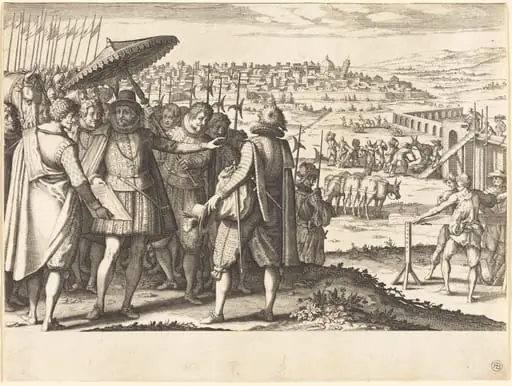 Restoration of the Aqueduct at Pisa
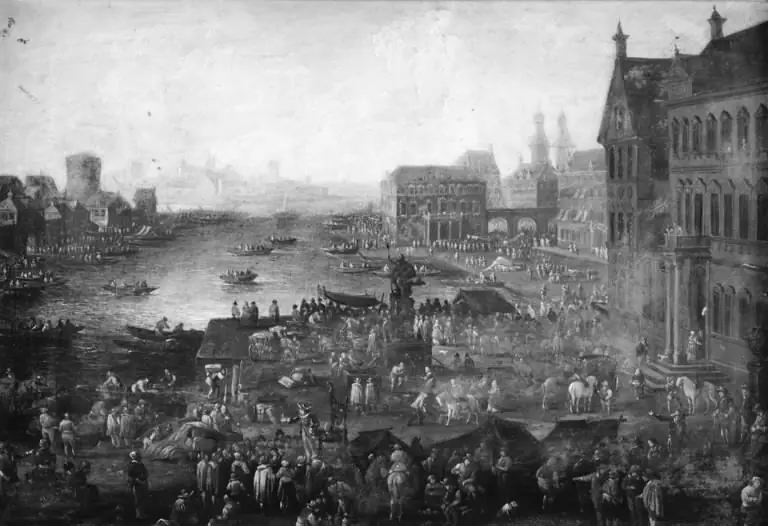 Square in Paris with Many Figures
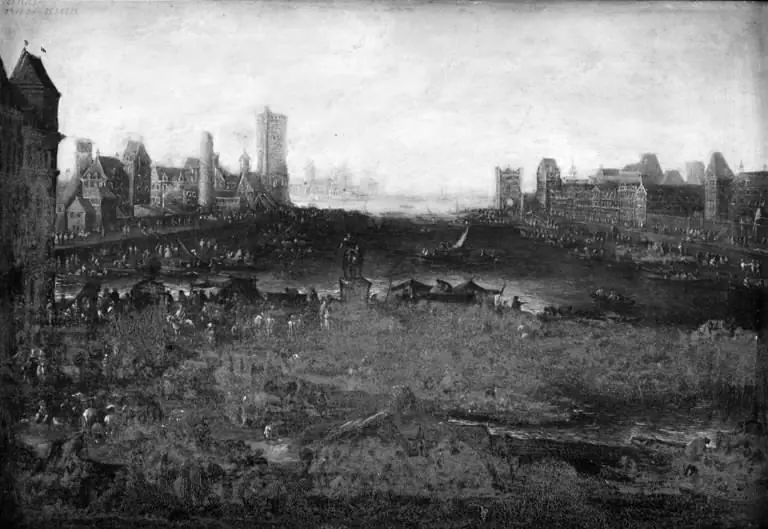 Square in Paris with Many Figures
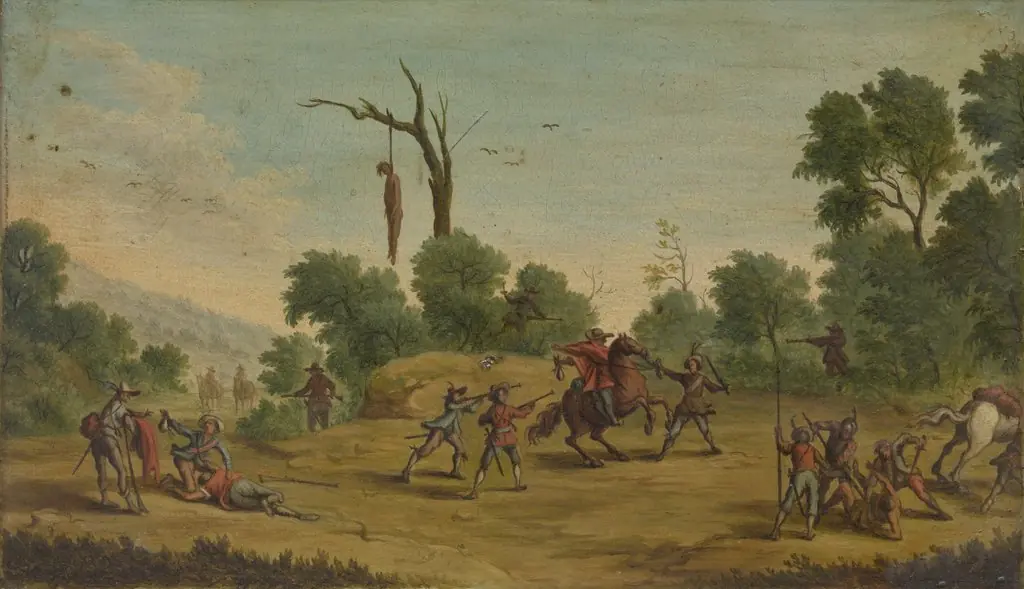 Horsemen Attacked by Robbers
 HOW WILL A COVERED PART BE CORRECTED?HOW WIKA A COVERED HEART DEED CORRECTED?
![Christ Walking on the Water [second plate], by Jacques Callot](https://artifactworldgallery.com/img/jacques-callot--christ-walking-on-the-water-second-plate--2069f3bfe4cb2126-w320.webp) Christ Walking on the Water [second plate]
Christ Walking on the Water [second plate]