Artwork
Zanni
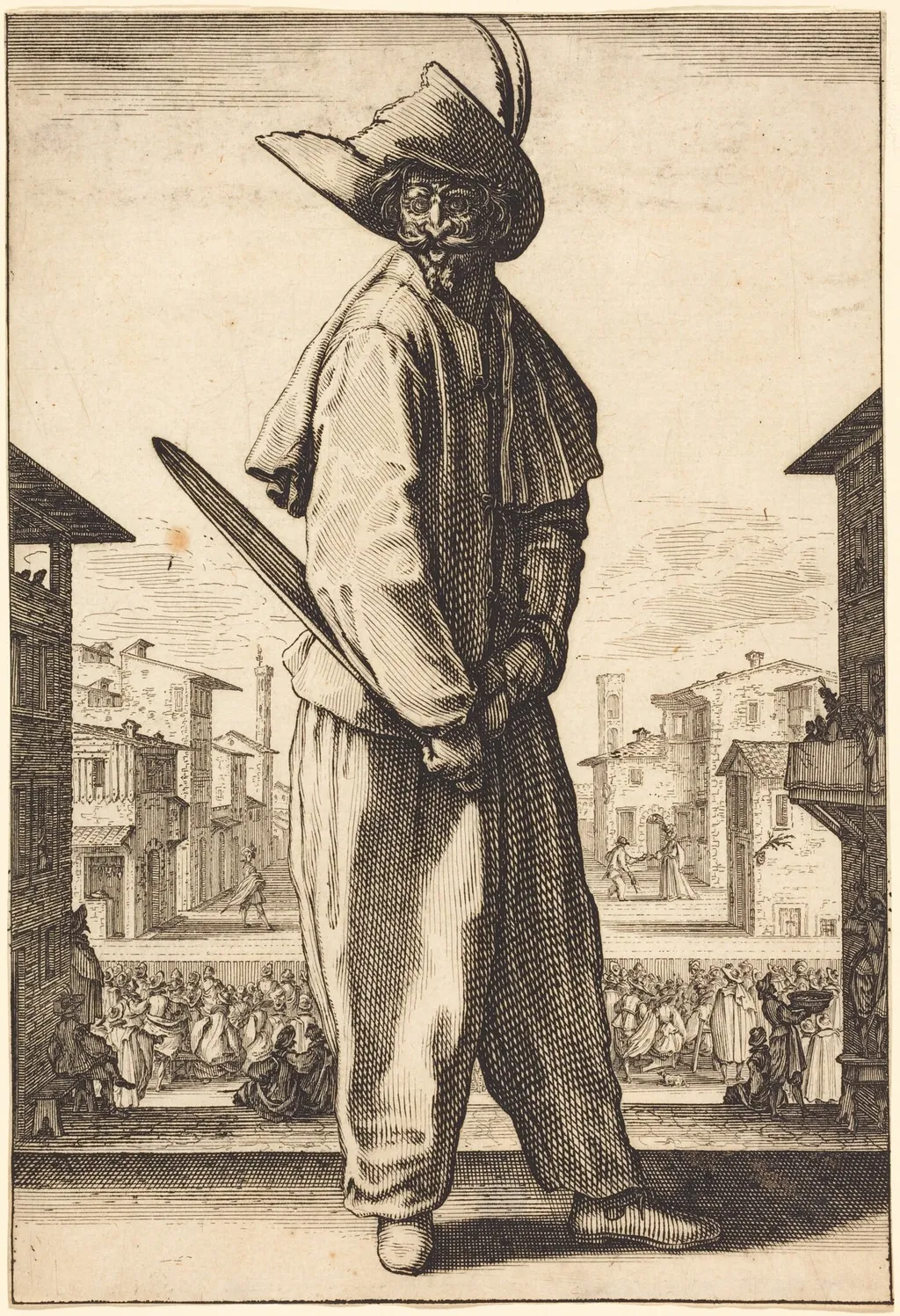
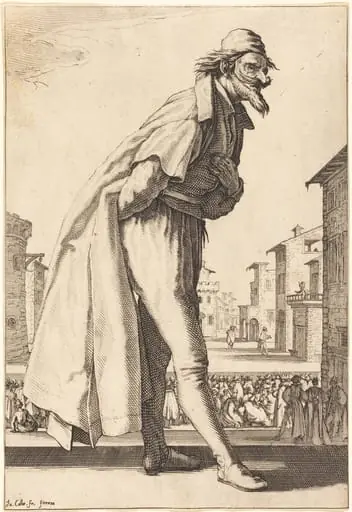
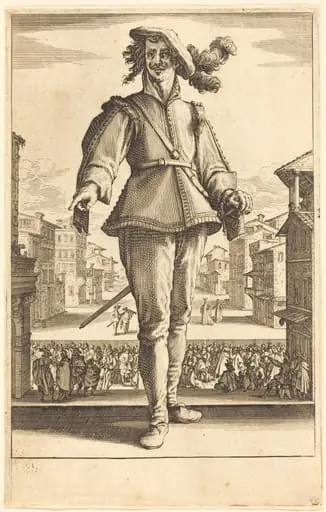
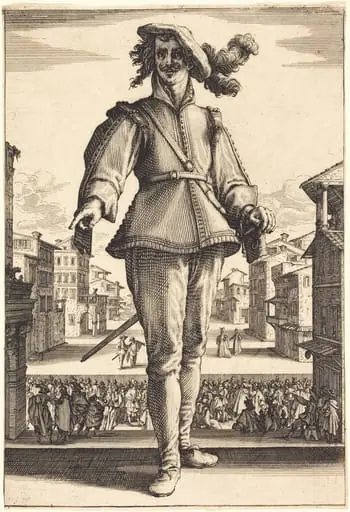
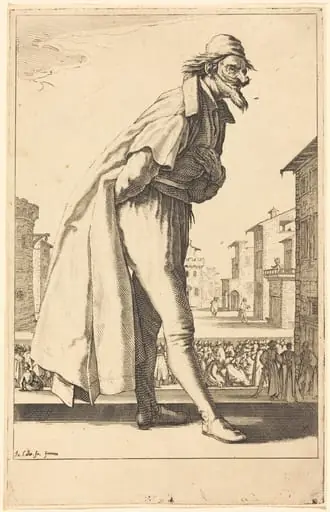
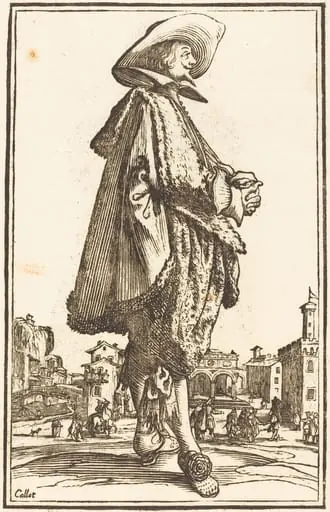
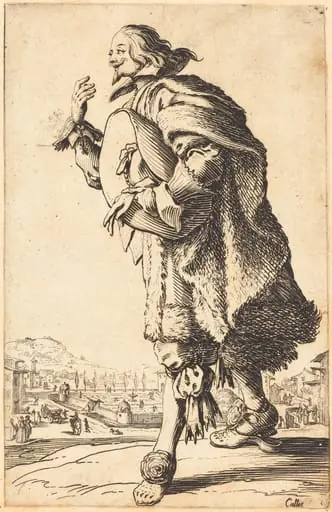
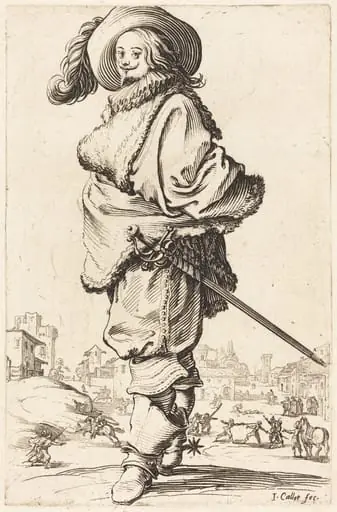
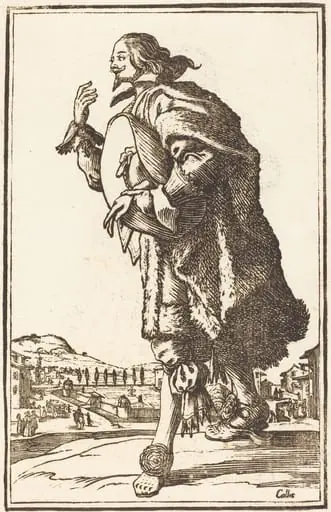
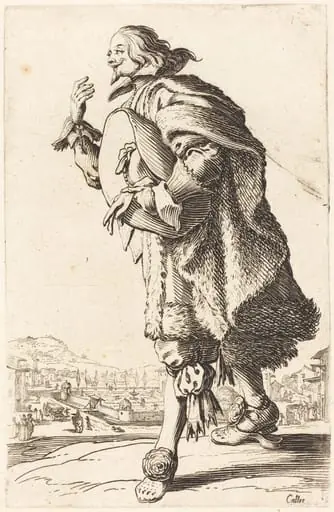
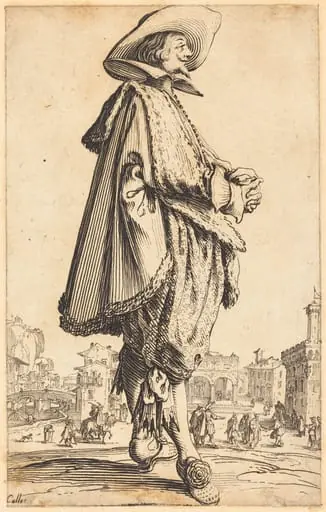
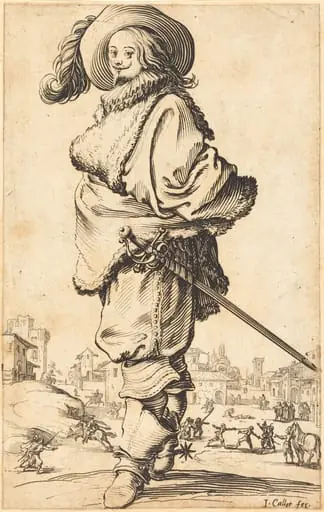
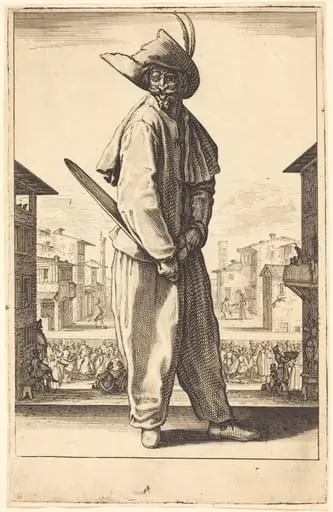
Zanni is an ink print by the Baroque artist Jacques Callot. It dates from 1619 and is held in the collection of the National Gallery of Art.
About this work
Overview
This work presents a solitary figure in a stylized urban setting, framed by three miniature scenes that expand its narrative scope beyond the central figure.
Jacques Callot’s *Zanni*, created in 1619, is an etching and engraving on laid paper produced by the French artist from the Duchy of Lorraine. Known for his prolific printmaking, Callot captured everyday life with precision, often focusing on figures on the margins of society. This work presents a solitary figure in a stylized urban setting, framed by three miniature scenes that expand its narrative scope beyond the central figure.
Subject & Meaning
The central figure is a Zanni, a stock character from the Italian commedia dell’arte, typically portrayed as a cunning servant. Rendered with his back turned, he holds a long stick and wears outdated clothing, suggesting both his social position and temporal displacement. The three background vignettes—churchgoers, a balcony gathering, and street observers—frame him within a broader social landscape, implying isolation amid communal activity.
Technique & Style
Callot employed fine etching and engraving to achieve intricate detail, using sharp, controlled lines to define texture and space. The paper’s laid texture enhances the tactile quality of the inked lines. The background scenes are compressed into small, framed compartments, creating a layered visual rhythm. His technique combines observational realism with stylized composition, reflecting both technical mastery and narrative intent.
History & Provenance
Created during Callot’s early career in Florence, *Zanni* belongs to a series of prints exploring theatrical and street life. It was likely made for collectors and connoisseurs interested in the visual culture of performance and social types. The print circulated widely in Europe, influencing later depictions of commedia figures. Its survival in multiple institutional collections attests to its early recognition among print enthusiasts.
Context
In early 17th-century Europe, interest in commedia dell’arte flourished among urban elites. Callot’s prints responded to this fascination, translating theatrical archetypes into intimate, detailed scenes. His work intersected with broader trends in printmaking, where artists used etching to document social hierarchies and public rituals. *Zanni* reflects a moment when theater and street life were increasingly viewed as subjects worthy of artistic study.
Legacy
Callot’s *Zanni* contributed to the standardization of commedia dell’arte imagery in print culture. Its layered composition and focus on marginal figures influenced later genre scenes in Dutch and French art. The print’s technical precision set a benchmark for etching, inspiring generations of artists to explore narrative complexity through fine-line techniques. It remains a key reference in studies of early modern visual anthropology.
Artist & collection

Artist
Jacques Callot was a baroque printmaker and draftsman from the Duchy of Lorraine.

 Holy Family at supper
 Restoration of the Aqueduct at Pisa
 Restoration of the Aqueduct at Pisa
 Square in Paris with Many Figures
 Square in Paris with Many Figures
 Horsemen Attacked by Robbers
 HOW WILL A COVERED PART BE CORRECTED?HOW WIKA A COVERED HEART DEED CORRECTED?
![Christ Walking on the Water [second plate], by Jacques Callot](https://artifactworldgallery.com/img/jacques-callot--christ-walking-on-the-water-second-plate--2069f3bfe4cb2126-w320.webp) Christ Walking on the Water [second plate]
Christ Walking on the Water [second plate]