Artwork
Entrance to Hyde Park at Hyde Park Corner
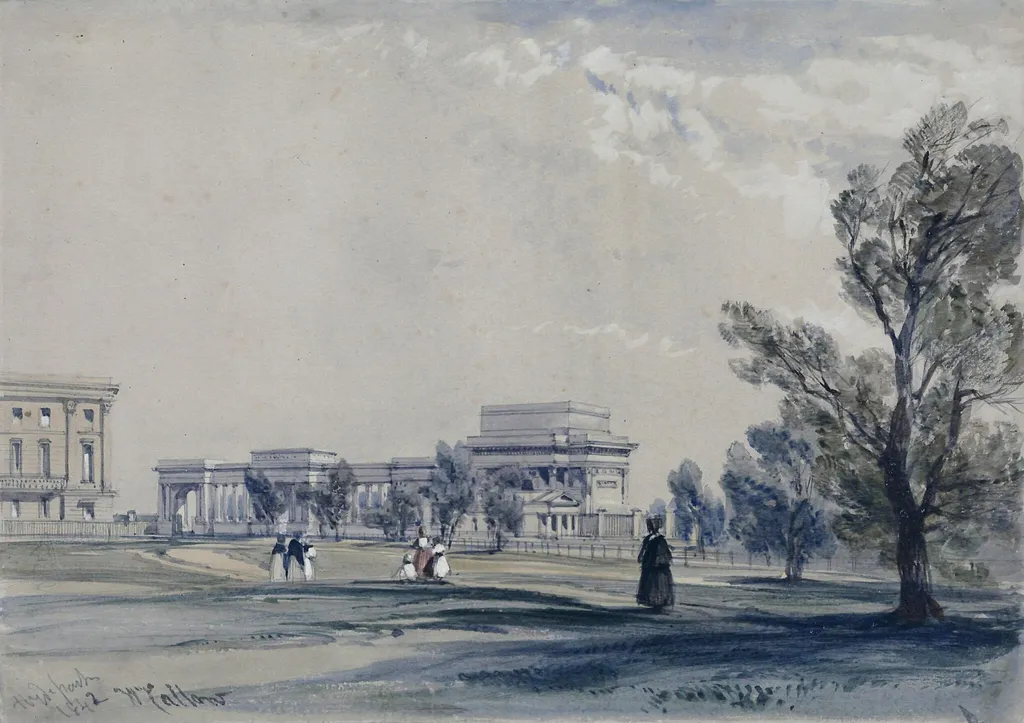
Entrance to Hyde Park at Hyde Park Corner is a watercolor work on paper by the British Romanticist artist William Callow. It dates from 1842 and is held in the collection of the Victoria and Albert Museum.
About this work
Overview
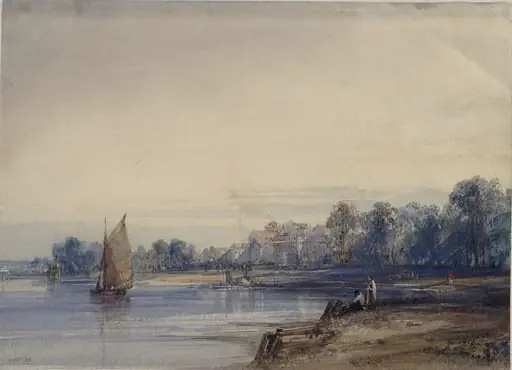
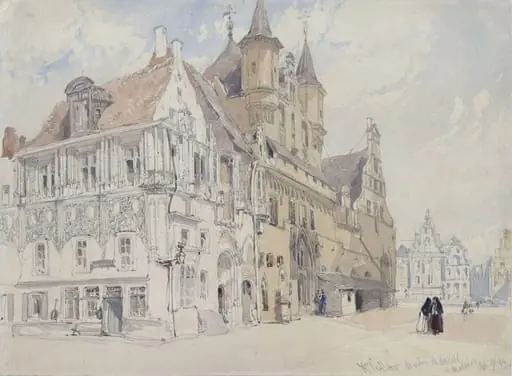
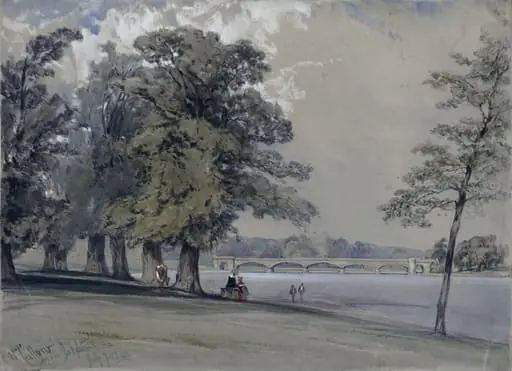
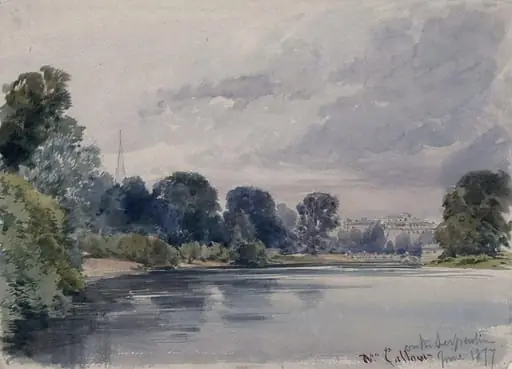
William Callow’s 1842 watercolour depicts the entrance to Hyde Park at Hyde Park Corner, capturing a quiet urban threshold with restrained detail. The work is signed and dated by the artist, reflecting a personal, observational approach. Soft washes and minimal brushwork convey a tranquil atmosphere, emphasizing the interplay between architecture and nature rather than bustling activity.
Subject & Meaning
The composition suggests a contemplative pause, inviting the viewer to experience the park as a serene retreat from urban life.
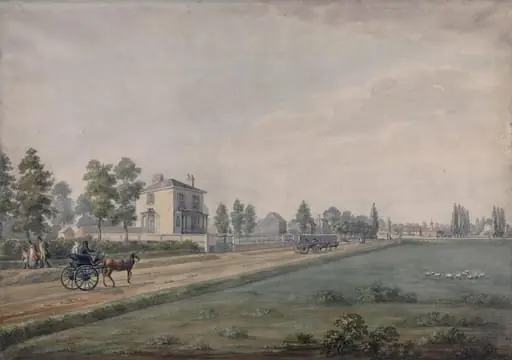
The scene centers on the transition from city to park, framed by a classical building on the left and a monumental white structure—likely the Marble Arch—partially visible through trees. Figures are sparse and scaled down, integrating them into the landscape rather than highlighting individual narratives. The composition suggests a contemplative pause, inviting the viewer to experience the park as a serene retreat from urban life.
Technique & Style
Callow employed light, transparent watercolour washes to suggest atmospheric depth and diffuse daylight. Loose, fluid brushstrokes define foliage and cloud forms, while architectural elements are rendered with gentle precision. The palette remains muted—pale skies, dark green trees, and pale stone—creating harmony between natural and built elements. The technique avoids detail in favor of mood, aligning with Romantic-era sensibilities.
History & Provenance
Created in 1842, the work belongs to a series of topographical watercolours Callow produced during his travels across Britain. It reflects his interest in documenting public spaces and architectural landmarks with accuracy and poetic restraint. The piece remained in private hands for much of the 19th century before entering institutional collections, where it is now preserved as an example of Victorian topographical art.
Context
In the early 1840s, London’s public parks were becoming symbols of civic order and leisure, accessible to a growing middle class. Callow’s depiction aligns with Romantic ideals that valued nature as a counterpoint to industrialization. His focus on quiet moments and subtle light echoes contemporaneous trends in landscape art, where the everyday was elevated through sensitivity to atmosphere and scale.
Legacy
Callow’s watercolour contributes to a broader tradition of British topographical art that prioritized observation over drama. Its understated quality influenced later artists interested in capturing urban landscapes with emotional restraint. Though not widely exhibited today, the work remains a quiet testament to 19th-century perceptions of public space as both functional and contemplative.
Own this work as a print
Artist & collection