Artwork
The punishment of Prometheus
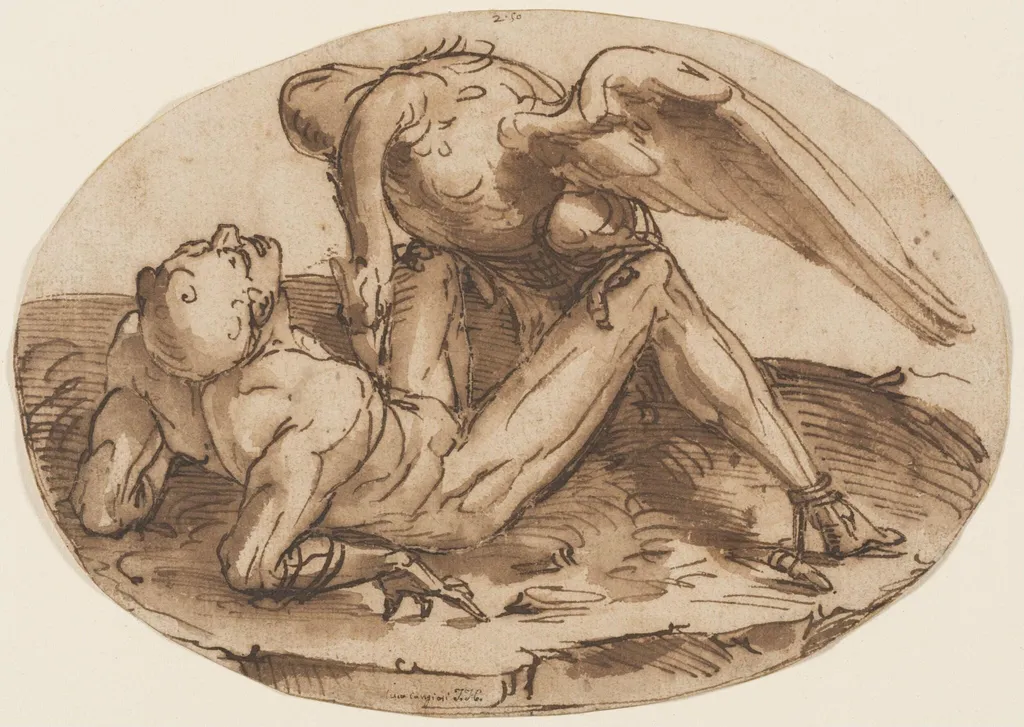
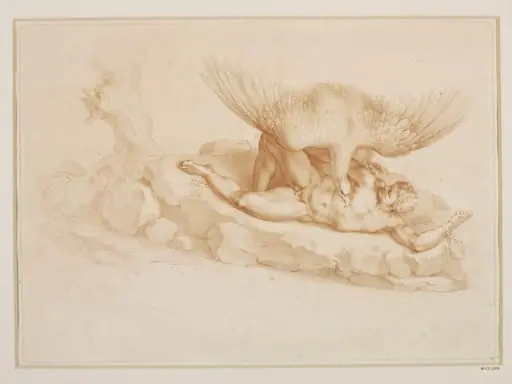
The punishment of Prometheus is a drawing by the Renaissance artist Luca Cambiaso. It dates from 1550 and is held in the collection of the Victoria and Albert Museum. This 1550 pen-and-ink drawing on paper depicts the myth of Prometheus bound and tormented by a bird.
About this work
Overview
This 1550 pen-and-ink drawing on paper depicts the myth of Prometheus bound and tormented by a bird. Executed in monochrome with wash techniques, the oval composition centers on the suffering figure, with minimal background detail. The work is held in the Victoria and Albert Museum’s collection and exemplifies Renaissance draftsmanship focused on human anatomy and emotional intensity.
Subject & Meaning
Prometheus, punished by Zeus for stealing fire and giving it to humanity, is shown chained and exposed as a vulture feeds on his liver—an eternal torment described in Greek myth. The contorted posture and anguished expression emphasize physical and spiritual suffering, reflecting Renaissance interest in classical narratives as vehicles for exploring human endurance and divine retribution.
Technique & Style
The artist employs fine pen lines and graded ink washes to model the body’s musculature and create a sense of volume. Shading accentuates the tension in limbs and the texture of skin and feathers, while the sparse landscape behind offers no distraction. The restrained palette and precise draftsmanship reflect a focus on form and emotional clarity over decorative detail.
History & Provenance
Created in 1550, the drawing entered the Victoria and Albert Museum’s collection through established European art acquisitions of the 19th century. Its attribution to a specific artist remains uncertain, though its style aligns with Italian Mannerist draftsmen active in the mid-16th century. It has been consistently cataloged as a study or independent work, not a preparatory sketch.
Context
In mid-16th-century Italy, mythological themes were frequently revisited by artists as expressions of humanist ideals and moral allegory. This drawing reflects a broader trend of using classical stories to examine suffering, rebellion, and fate. Its intimate scale and monochrome execution suggest it was intended for private contemplation rather than public display.
Legacy
Though not widely reproduced, the drawing contributes to the understanding of how Renaissance artists interpreted classical myths through direct, emotionally charged observation. Its focus on anatomical realism and psychological depth influenced later studies of the human form in both academic and expressive traditions.
Artist & collection
Artist
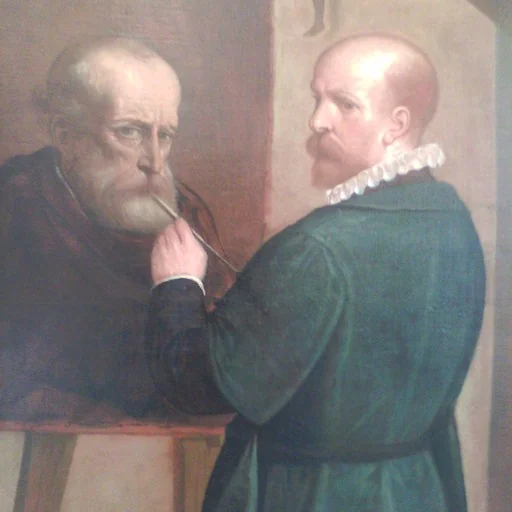
Luca Cambiaso was an Italian painter and draughtsman and the leading artist in Genoa in the 16th century.

 Tityus Devoured by the Vulture
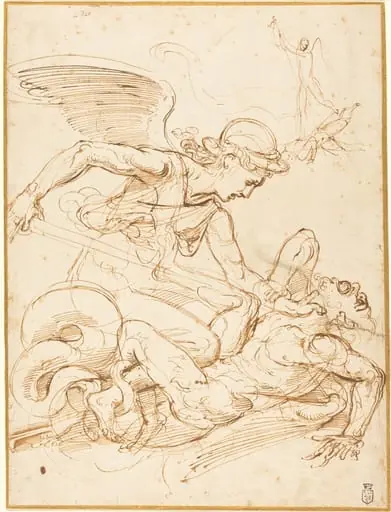 Saint Michael
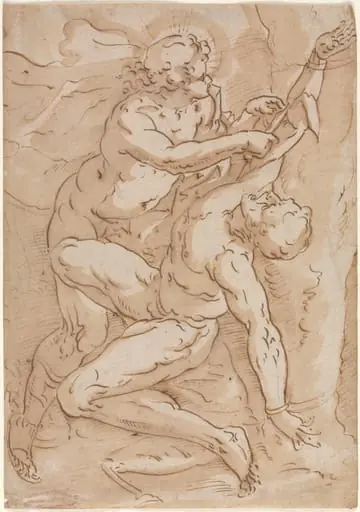 Apollo Flaying Marsyas (recto)
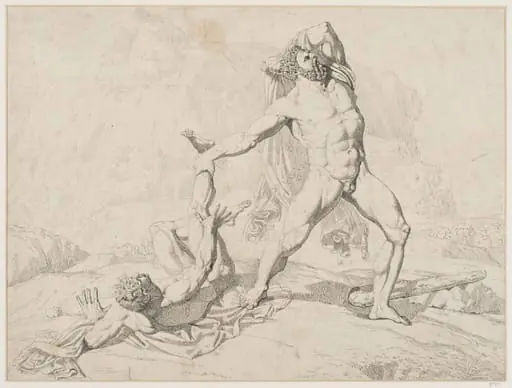 Hercules, in his death throes, hurling Lichas into the sea
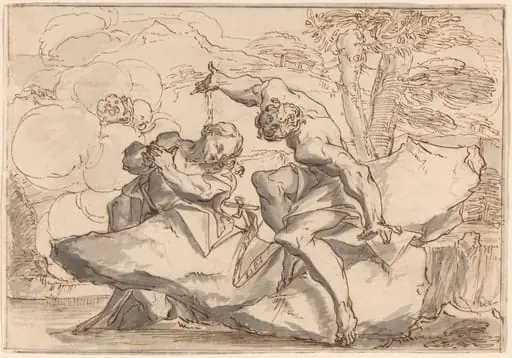 The Baptism of Christ
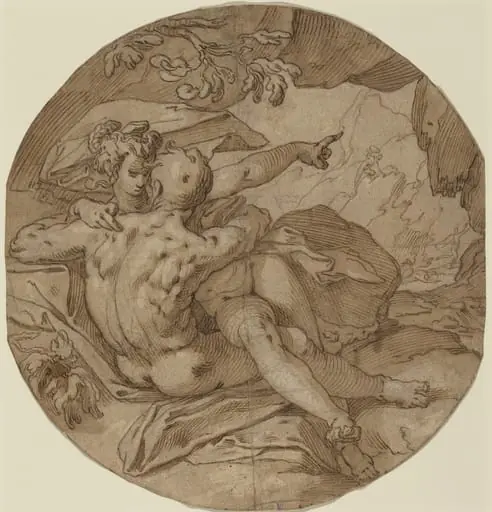 Acis and Galatea
 Hercules and Antaeus
 Male Academy with Wings
 Untitled
 Decorative Panel with Mythological Figures
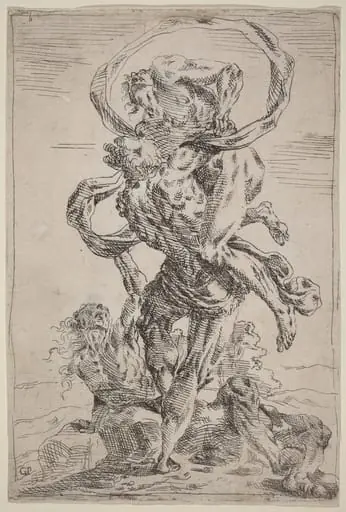 Hercules and Antaeus
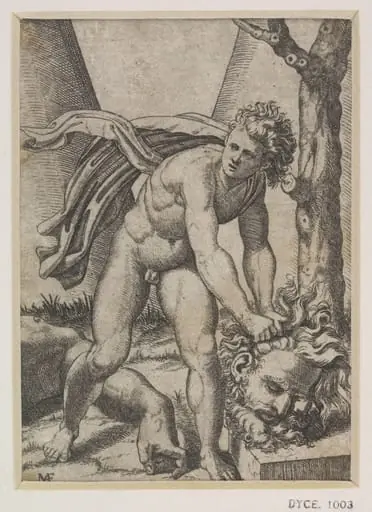 David raising the head of Goliath