Artwork
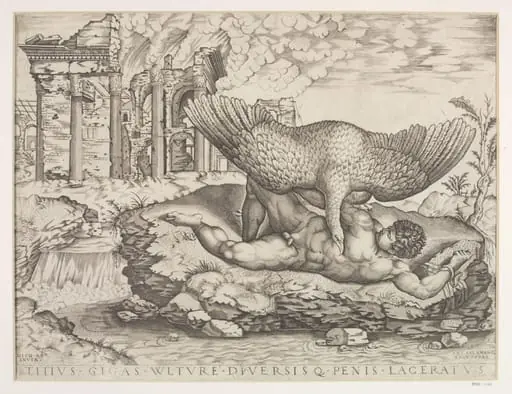
Tityus Devoured by the Vulture
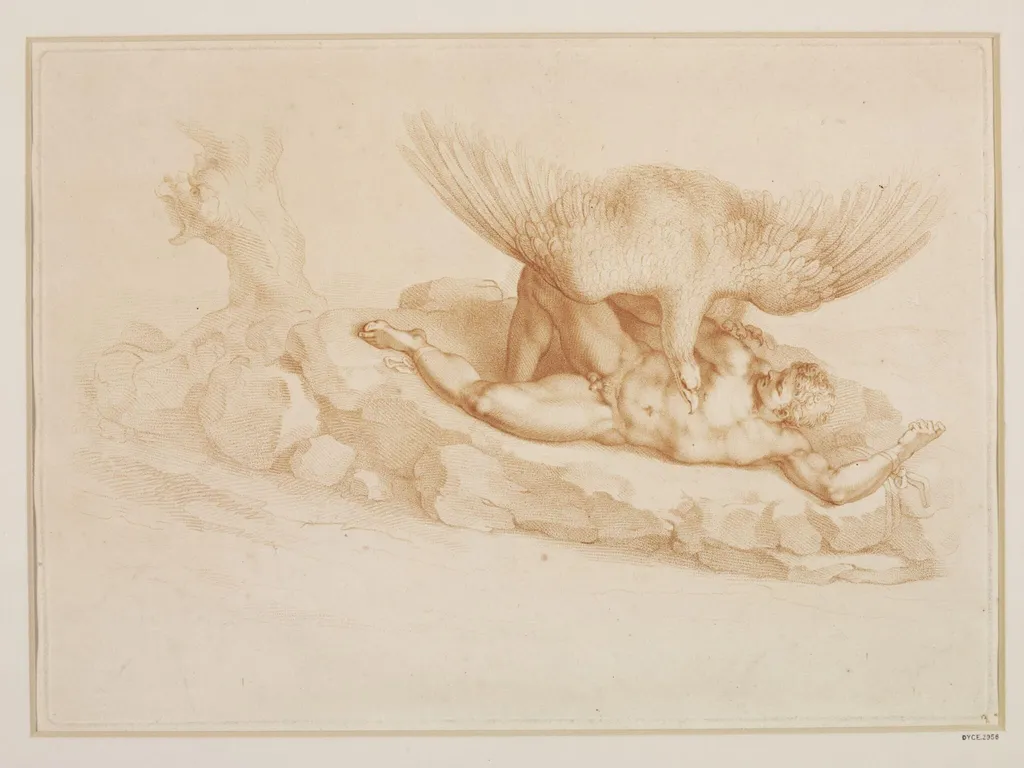
Tityus Devoured by the Vulture is a print by the Baroque artist Francesco Bartolozzi. It dates from 1740 and is held in the collection of the Victoria and Albert Museum.
About this work
Overview
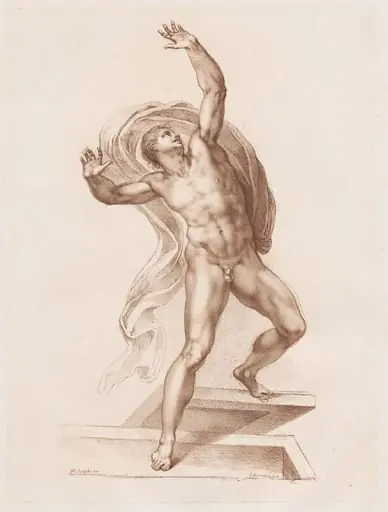
This engraving, a reverse reproduction of Michelangelo's composition by Francesco Bartolozzi, portrays the mythological scene of Tityus being devoured by a vulture. Executed in red ink on paper, it captures a dramatic moment from ancient mythology.
Subject & Meaning
The print depicts Tityus, a figure from Greek mythology, in the act of being consumed by a vulture as punishment. This scene conveys intense suffering and retribution, drawing on classical sources for its narrative.
Technique & Style
Bartolozzi's use of red ink on paper creates a striking visual effect. Soft shading techniques are employed to render detailed textures of muscle and skin, enhancing the realism of the struggle. The composition leverages chiaroscuro, where contrasts of light and shadow amplify the dramatic tension between Tityus and the vulture.
History & Provenance
Originally composed by Michelangelo, this work was later interpreted by Francesco Bartolozzi in engraving form, presented in reverse. Specific details on its creation date, inspirations, or ownership history are not provided.
Context
Rooted in Greek mythology, the scene of Tityus's punishment reflects Renaissance interests in classical themes. The vulture's attack symbolizes divine retribution, a common motif in art inspired by ancient legends.
Legacy
As an engraving based on Michelangelo's work, it contributes to the dissemination of Renaissance artistic ideals and mythological themes through printmaking, though its direct impact or notable exhibitions are not specified.
Artist & collection

Artist
Francesco Bartolozzi (21 September 1727 – 7 March 1815) was an Italian engraver, whose most productive period was spent in London. He is noted for popularizing the "crayon" method of engraving.

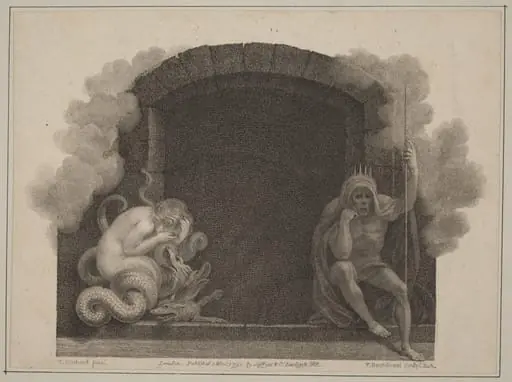
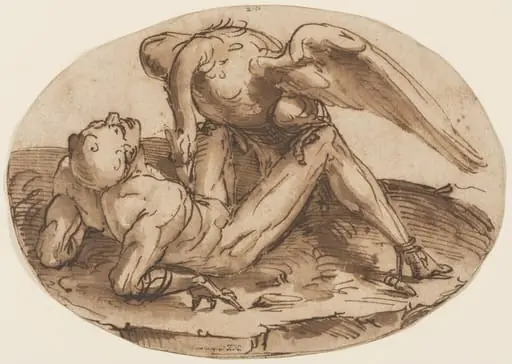 The punishment of Prometheus
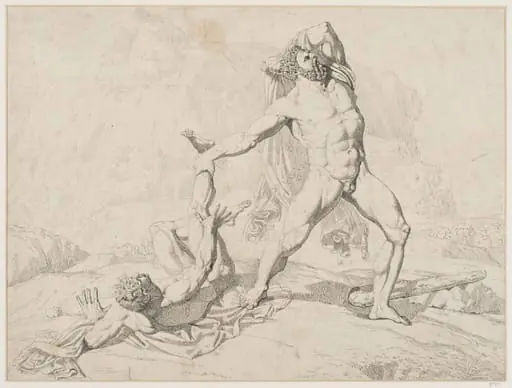 Hercules, in his death throes, hurling Lichas into the sea
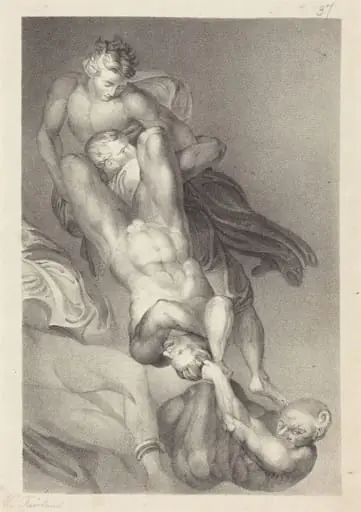 Part of the Last Judgment from Michael Angelo
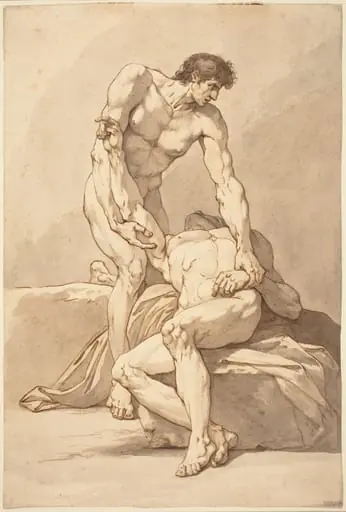 Two Nude Men
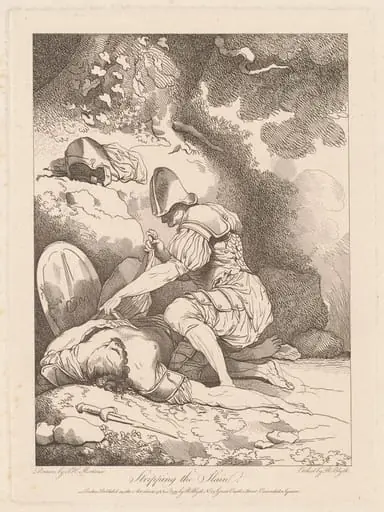 Stripping the Slain
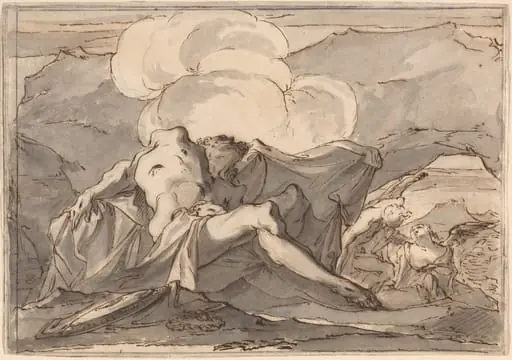 The Dead Christ with Angels
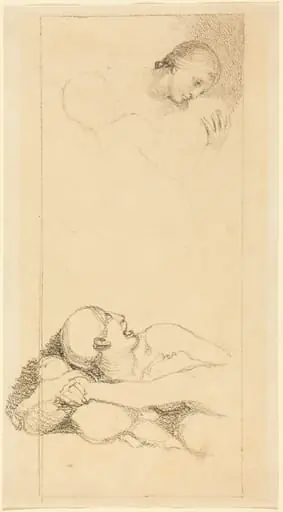 Frightened Man Looking Up; Woman and Children
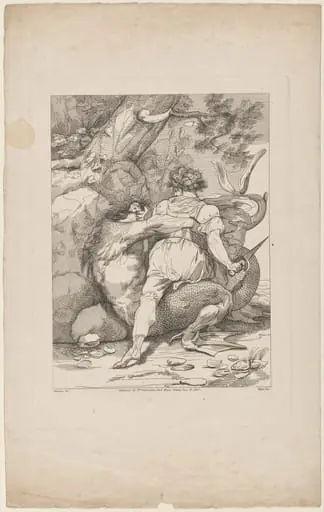 Man Attacking a Monster
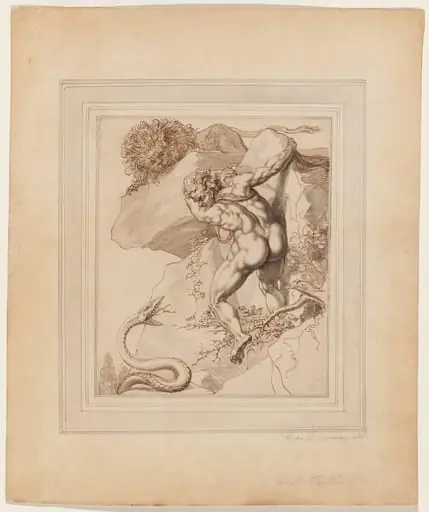 A Man Trapped between a Lion and a Serpent
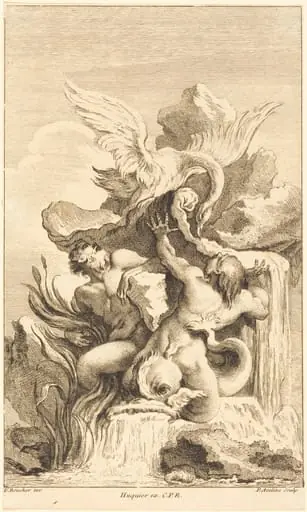 Two Tritons and a Swan
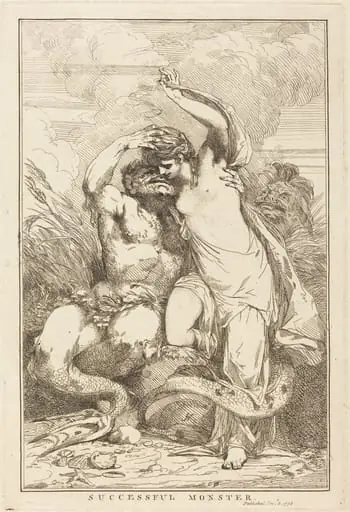 Successful Monster
 Tityus devoured by a Vulture