Artwork
The Banks of the Marne
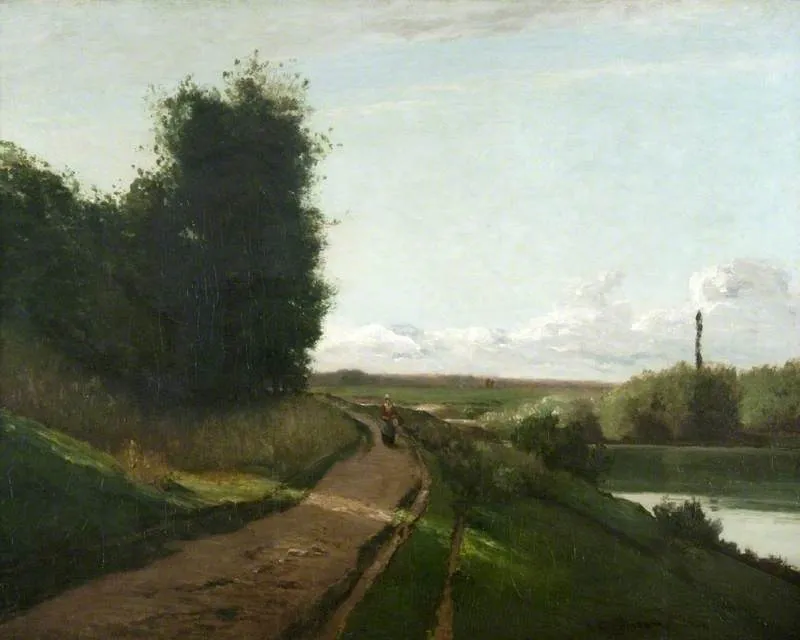
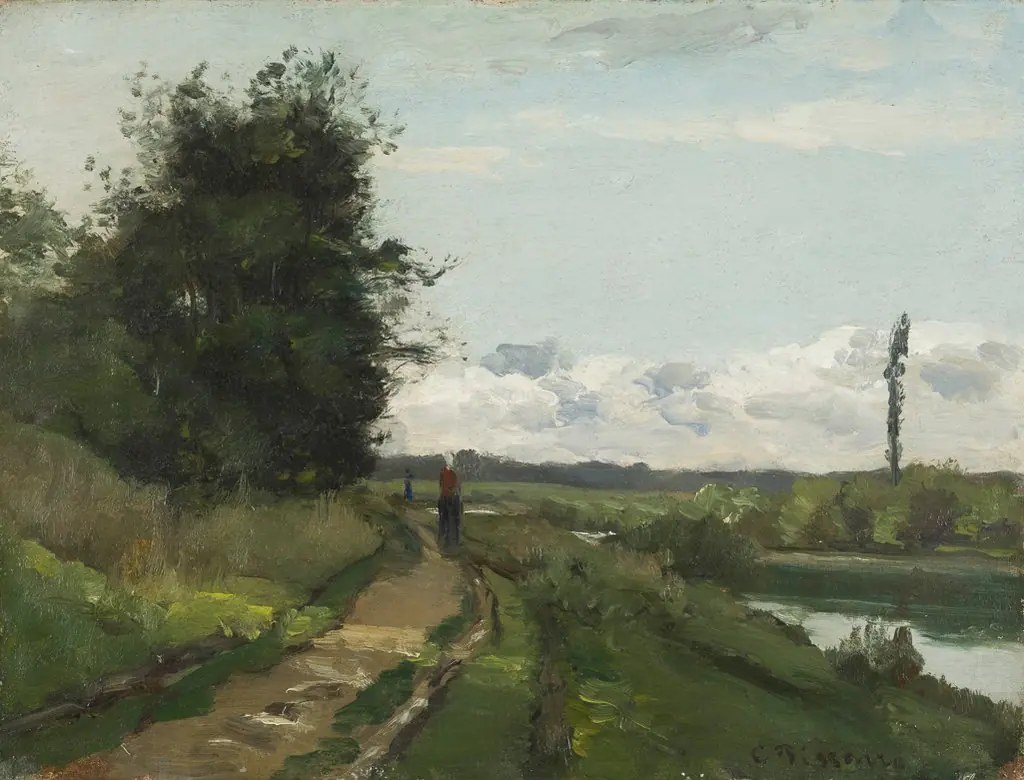
The Banks of the Marne is an oil painting by the Realist artist Camille Pissarro. It dates from 1864 and is held in the collection of the Kelvingrove Art Gallery and Museum.
About this work
Overview
Painted in 1864, *The Banks of the Marne* is an early oil work by Camille Pissarro, created before his engagement with Impressionist practices.
Painted in 1864, *The Banks of the Marne* is an early oil work by Camille Pissarro, created before his engagement with Impressionist practices. It reflects his formative years under the influence of Realist traditions, emphasizing observational accuracy and naturalistic tone. The scene captures a tranquil stretch of the Marne River, rendered with restrained color and careful attention to atmospheric conditions.
Subject & Meaning
The painting presents a quiet riverside scene, with a winding path bordered by dense vegetation and distant figures. There is no narrative drama—only the stillness of rural life. The absence of human activity in the foreground underscores a contemplative relationship between land and observer, aligning with Realist ideals that valued everyday environments over idealized or theatrical subjects.
Technique & Style
Pissarro employs textured brushwork to suggest the density of foliage and the roughness of the riverbank, while maintaining a cohesive tonal harmony. The palette is subdued—dominated by greens, browns, and grays—with soft transitions between light and shadow. This method, influenced by Corot and Courbet, prioritizes naturalism over decorative effect, creating depth through careful modulation of tone rather than vivid contrast.
History & Provenance
Created during Pissarro’s early period, the painting remained in private hands before entering the collection of Kelvingrove Art Gallery and Museum in Glasgow. Its preservation offers insight into the artist’s development prior to his association with the Impressionist group. The work’s continued presence in a public institution reflects its significance as a document of 19th-century French landscape practice.
Context
In the early 1860s, French landscape painting was shifting from academic conventions toward direct observation of nature. Pissarro, like other Realists, rejected historical or mythological themes in favor of unembellished rural scenes. *The Banks of the Marne* exemplifies this trend, aligning with broader movements that valued authenticity and the dignity of ordinary places over romanticized ideals.
Legacy
Though not yet Impressionist in technique, this work anticipates Pissarro’s later focus on light and landscape. It stands as a bridge between Realist discipline and the emerging interest in transient effects of nature. Its presence in a major public collection ensures its role as a reference point in understanding the evolution of modern landscape painting in France.
Artist & collection
Artist
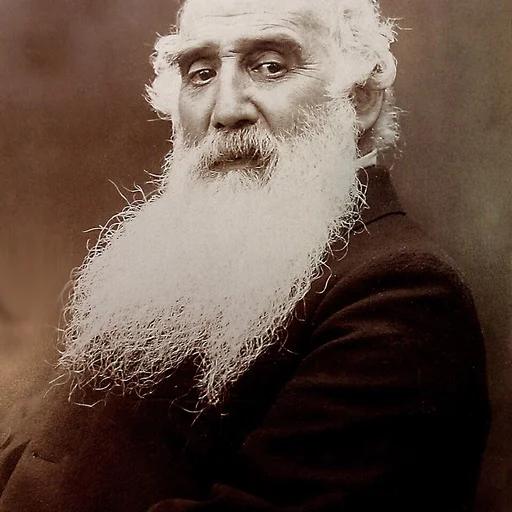
Jacob Abraham Camille Pissarro ( piss-AR-oh; French: ; 10 July 1830 – 13 November 1903) was a Danish-French Impressionist and Neo-Impressionist painter born on the island of Saint Thomas (now in the US Virgin Islands, but then in the…

 The Lake
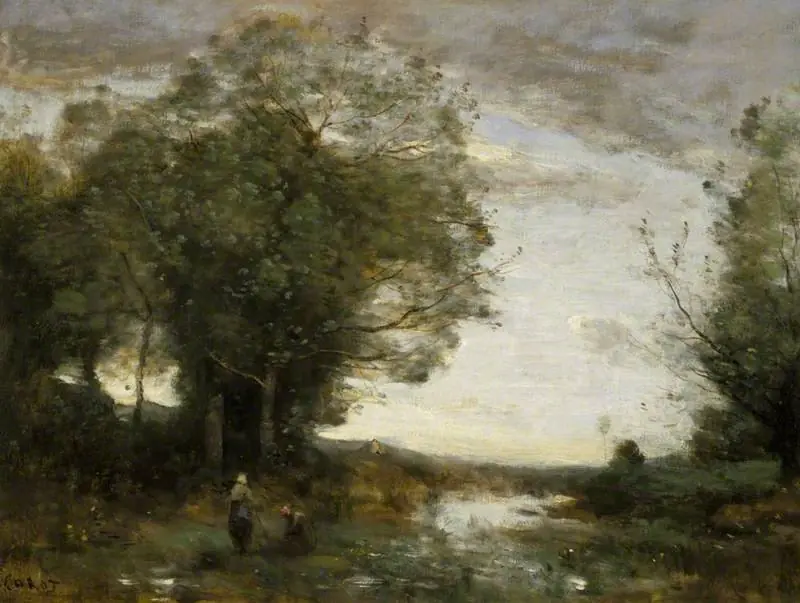 Souvenir of the Environs of La Ferté-sous-Jouarre (Morning)
 Scene on Otmoor
 The Mill
 On the banks of the Seine at Lévy, 1884
 Les bords de la Seine à Bougival
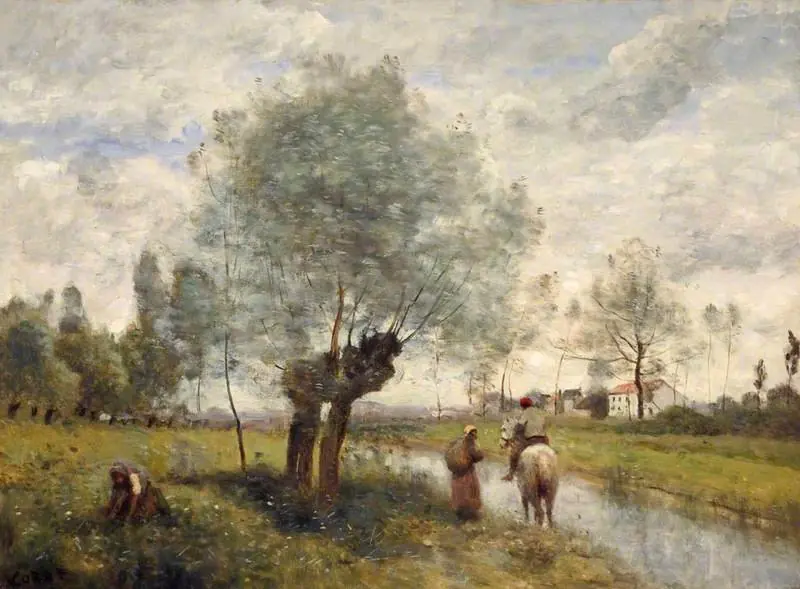 Landscape at Coubron
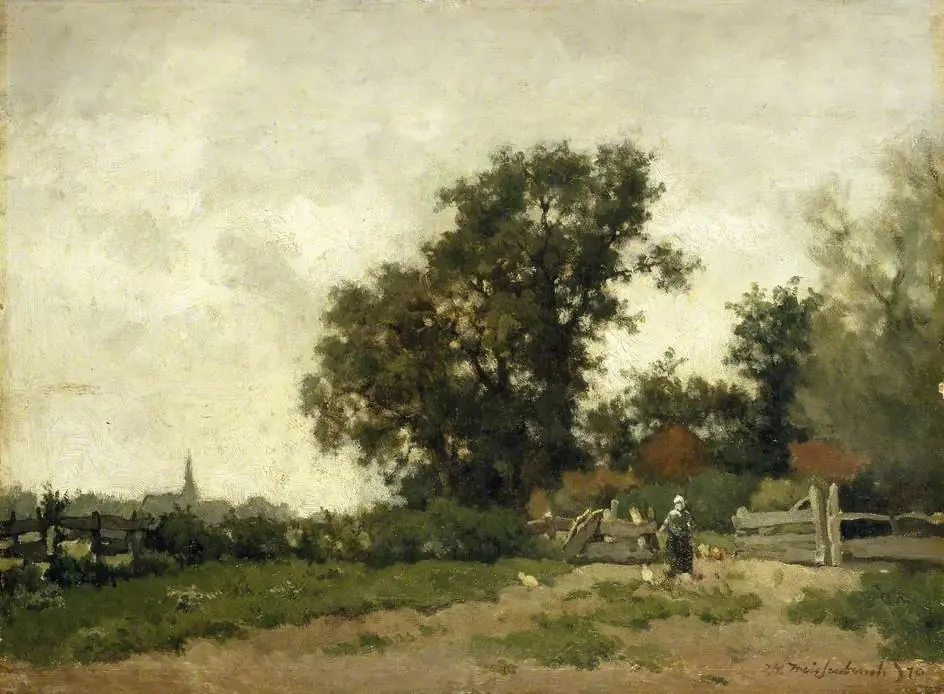 Landscape with a Peasant Girl feeding Chickens
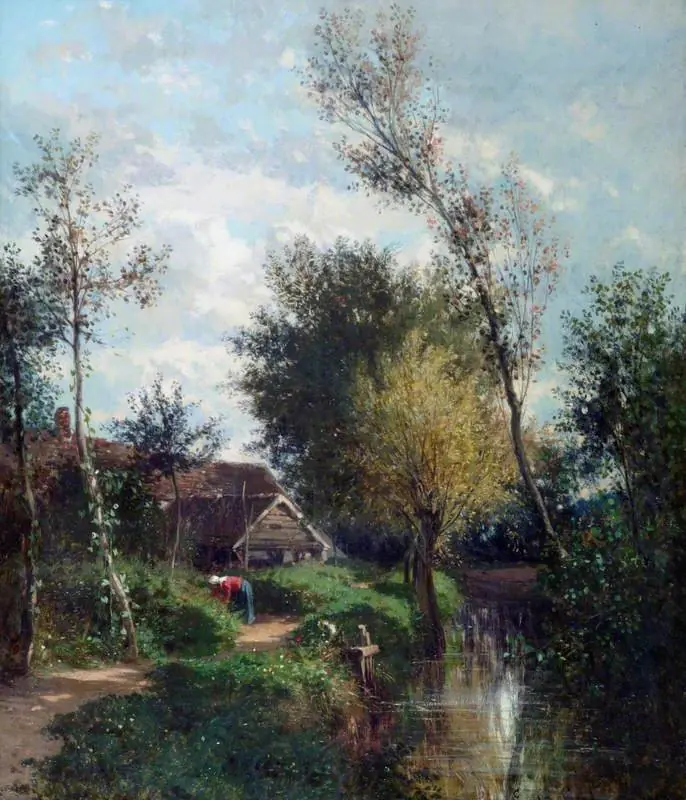 Landscape at Écouen, near Paris
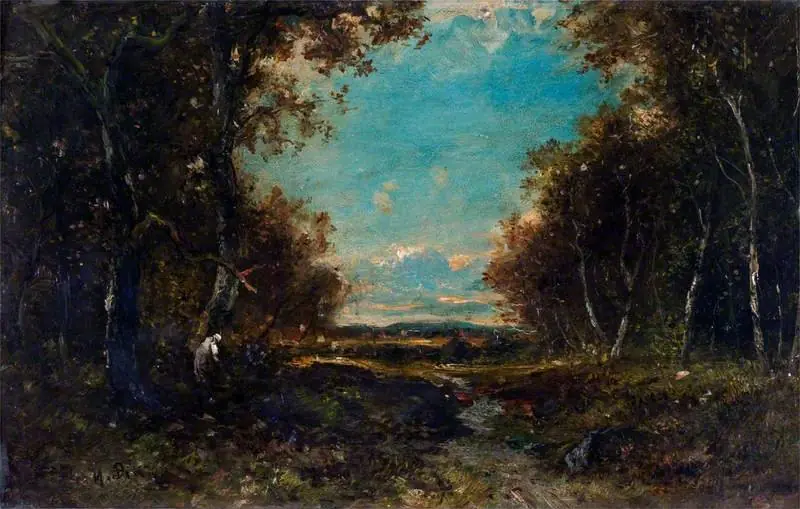 Landscape
 View of Dedham from the Lane Leading from East Bergholt Church to Flatford
 Landscape. Study