Artwork
Shepherd Playing a Flute and Leading His Flock
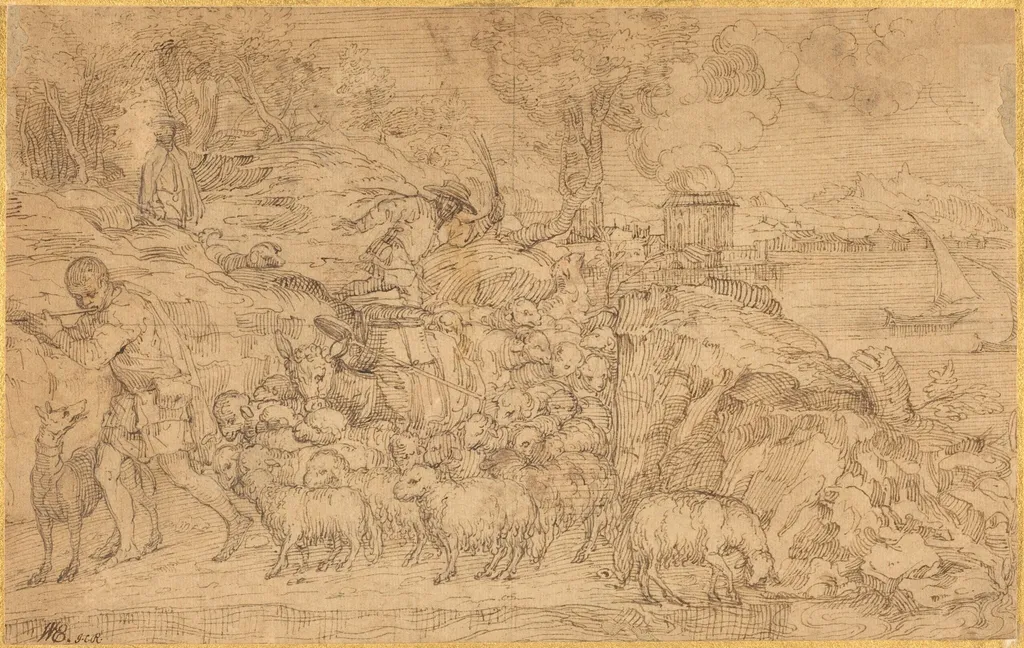
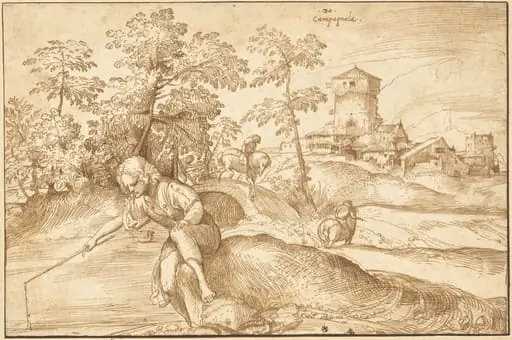
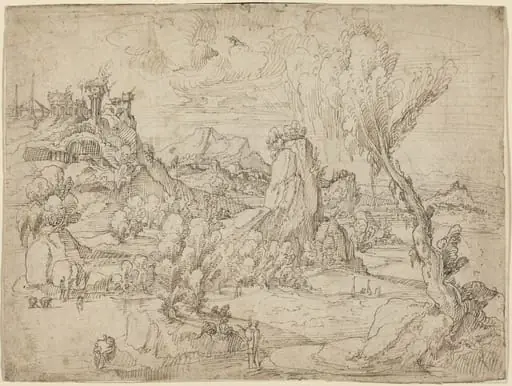
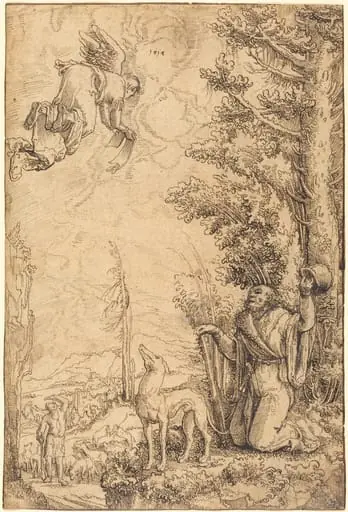
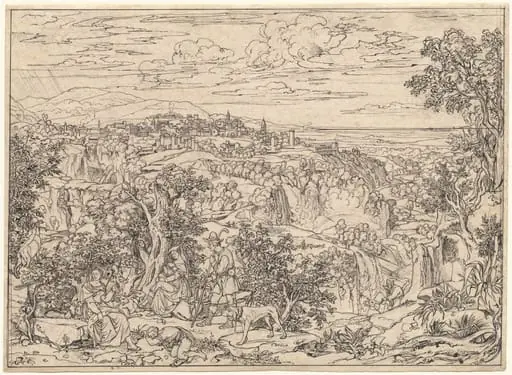
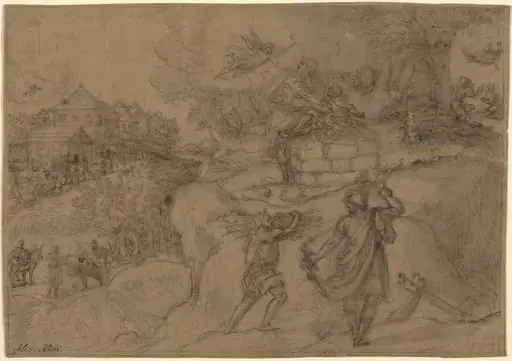
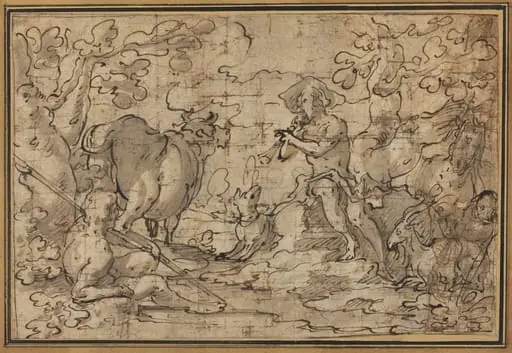
Shepherd Playing a Flute and Leading His Flock is a chalk drawing by the Renaissance artist Domenico Campagnola. It dates from 1532 and is held in the collection of the National Gallery of Art.
About this work
Overview
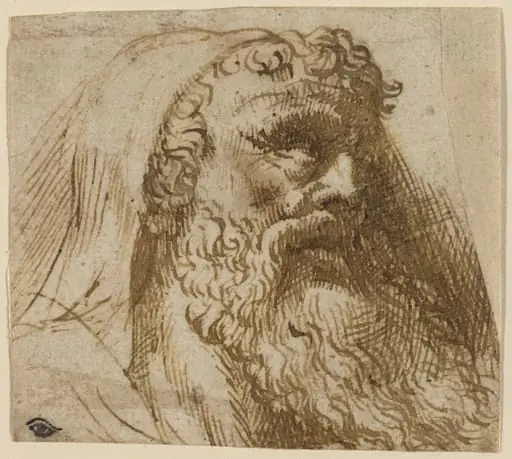
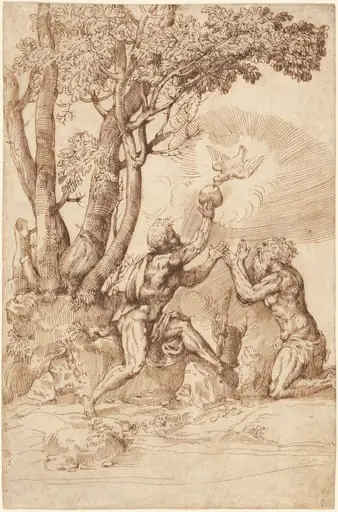
Domenico Campagnola’s 1532 drawing, titled *Shepherd Playing a Flute and Leading His Flock*, is executed on brown laid paper. The work combines pen work with two shades of brown ink applied over a black chalk underdrawing, creating a layered surface where light and shadow interact across the composition.
Subject & Meaning
The scene depicts a pastoral figure—a shepherd—holding a flute while a small herd of goats and sheep meanders around him. The inclusion of musical activity suggests a harmonious relationship between the caretaker and his animals, reflecting Renaissance ideals of bucolic tranquility and the gentle rhythm of rural life.
Technique & Style
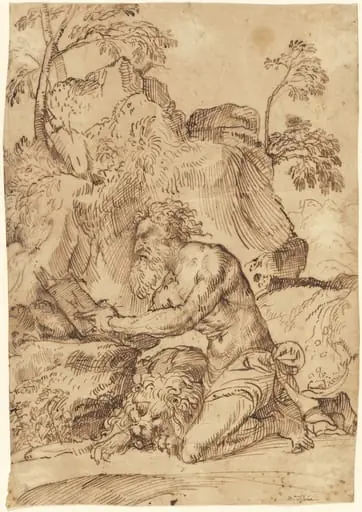
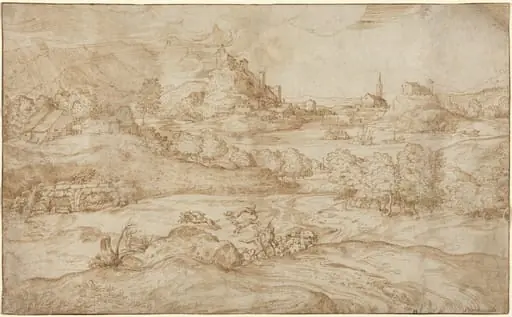
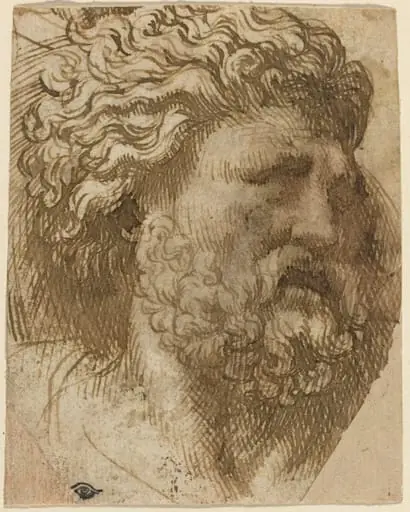
Campagnola employs dense cross‑hatching, using tightly spaced lines to model volume and generate subtle tonal gradations. Quick, sketchy strokes render trees and underbrush, while broader ink washes deepen the background. The interplay of pen, ink, and chalk produces a textured effect that gives the figures a sense of three‑dimensional presence despite the work’s two‑dimensional medium.
History & Provenance
It survives on its original brown laid paper, indicating it was likely a study or finished work intended for private circulation rather than public display.
Created in the early sixteenth century, the drawing belongs to Campagnola’s mature period, when he was active in the Veneto region. It survives on its original brown laid paper, indicating it was likely a study or finished work intended for private circulation rather than public display. Its provenance traces through several European collections before entering a museum holding of Renaissance drawings.
Artist & collection