Artwork
Saint Sebastian
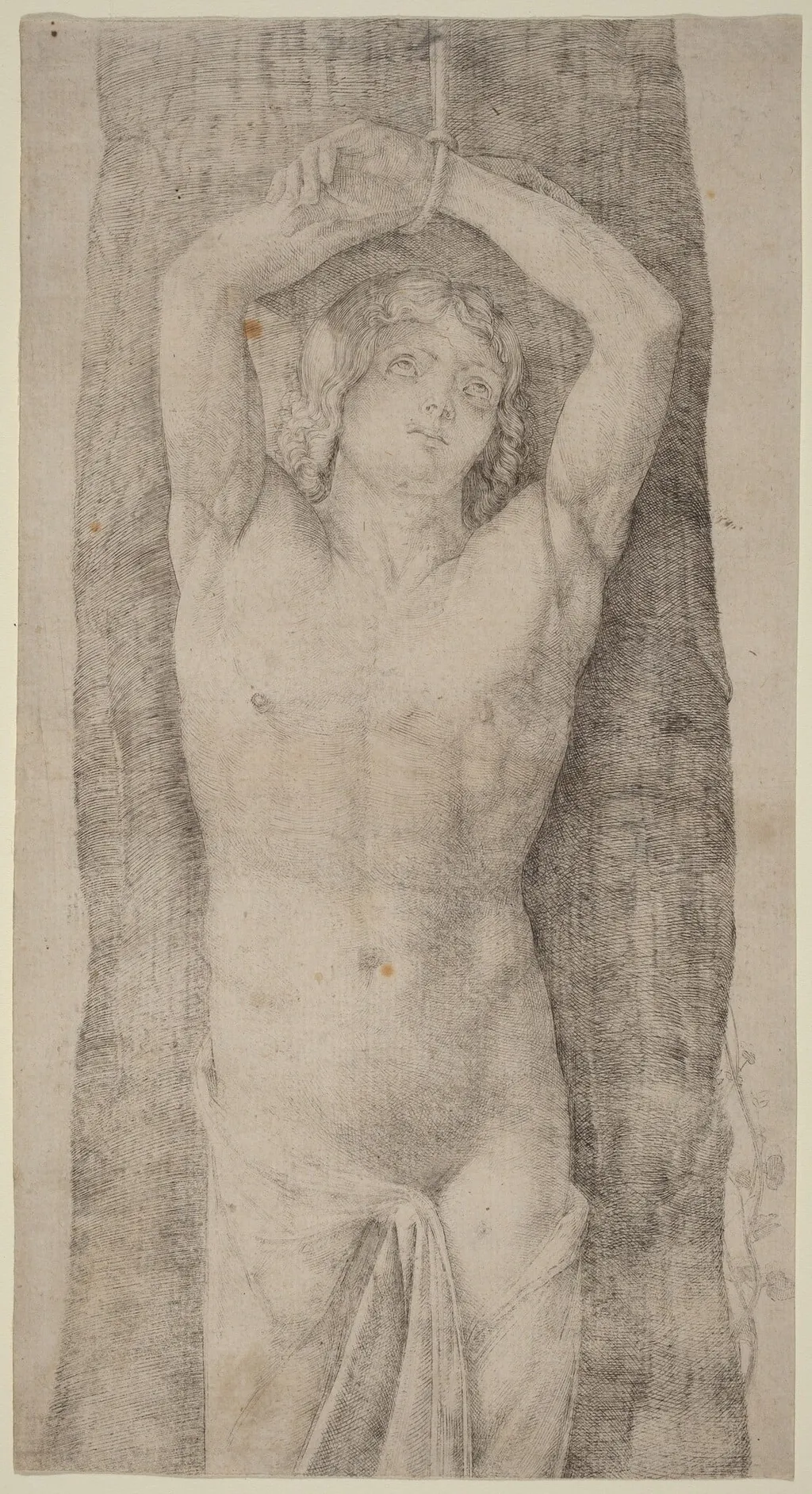
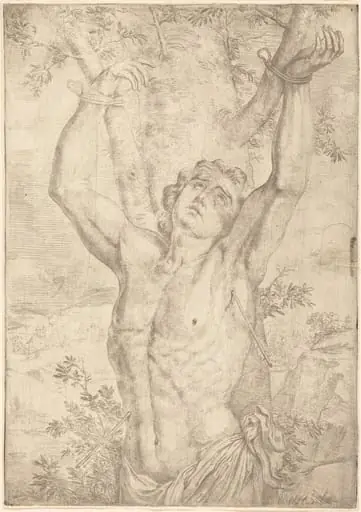
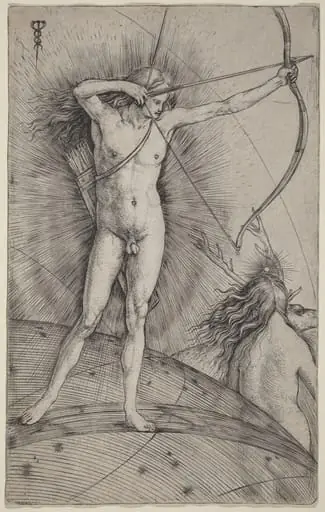
Saint Sebastian is an ink print by the Renaissance artist Jacopo de' Barbari. It dates from 1509 and is held in the collection of the National Gallery of Art.
About this work
Overview
As a Venetian artist who spent much of his career in Northern Europe, Barbari brought Italian Renaissance sensibilities to German printmaking.
Created around 1509, this engraving by Jacopo de' Barbari depicts Saint Sebastian, a Christian martyr traditionally shown pierced by arrows. As a Venetian artist who spent much of his career in Northern Europe, Barbari brought Italian Renaissance sensibilities to German printmaking. His work in this medium helped bridge artistic traditions across regions, contributing to the spread of humanist imagery in print form.
Subject & Meaning
Saint Sebastian, a Roman soldier martyred for his faith, is portrayed in the moment of his torment, bound to a tree trunk and pierced by multiple arrows. The image draws on hagiographic tradition, emphasizing endurance and divine grace under suffering. Barbari’s focus on the body’s tension and serene expression suggests a contemplative spirituality, aligning with Renaissance ideals of human dignity amid adversity.
Technique & Style
Barbari employed fine, dense cross-hatching to model form and depth, creating a textured surface that gives the skin and drapery a tactile quality. The lines are deliberate and layered, building shadow and volume without relying on tone or wash. This meticulous approach reflects his training in both painting and engraving, merging Italian precision with Northern European attention to detail.
History & Provenance
Barbari produced this engraving during his years in Germany, where he was active as a printmaker and court artist. While the exact early ownership is undocumented, the work circulated widely among collectors and artists in the early 16th century. Its survival in multiple impressions indicates its popularity and the demand for high-quality religious prints in Northern Europe at the time.
Context
In the early 1500s, printmaking was becoming a key medium for disseminating religious and classical imagery. Barbari’s engraving emerged alongside works by Dürer and others, contributing to a transalpine exchange of stylistic ideas. His synthesis of Italian composition with Northern linear discipline offered a model for artists seeking to elevate printmaking beyond mere illustration.
Legacy
Barbari’s Saint Sebastian influenced later engravers through its technical rigor and emotional restraint. The work exemplifies how Italian Renaissance forms could be adapted to Northern printmaking techniques, helping to establish the engraving as a serious artistic medium. Its precise execution and psychological depth set a standard for religious imagery in prints for decades.
Artist & collection
Artist
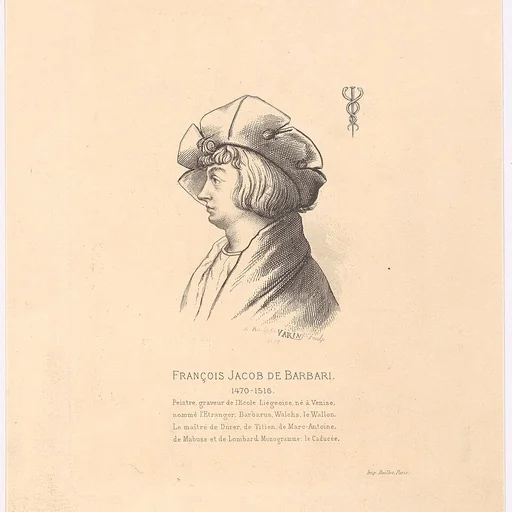
Jacopo de' Barbari, sometimes known or referred to as de'Barbari, de Barberi, de Barbari, Barbaro, Barberino, Barbarigo or Barberigo (c.

![View of Venice [lower right block], by Jacopo de' Barbari](https://artifactworldgallery.com/img/jacopo-de-barbari--view-of-venice-lower-right-block--371460ae957995b9-w320.webp)
![Bust of a Youth Looking Upward [recto], by Luca Signorelli](https://artifactworldgallery.com/img/luca-signorelli--bust-of-a-youth-looking-upward-recto--98d5b40adccc490b-w320.webp)