Artwork
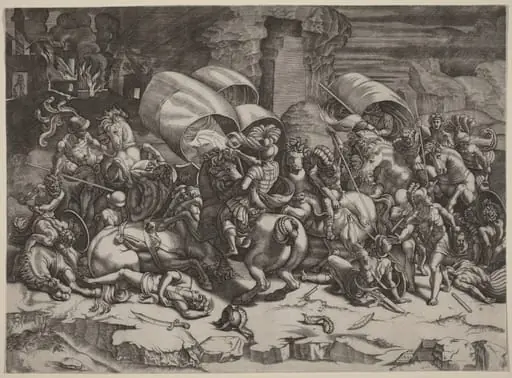
La bataille au bouclier sur la lance
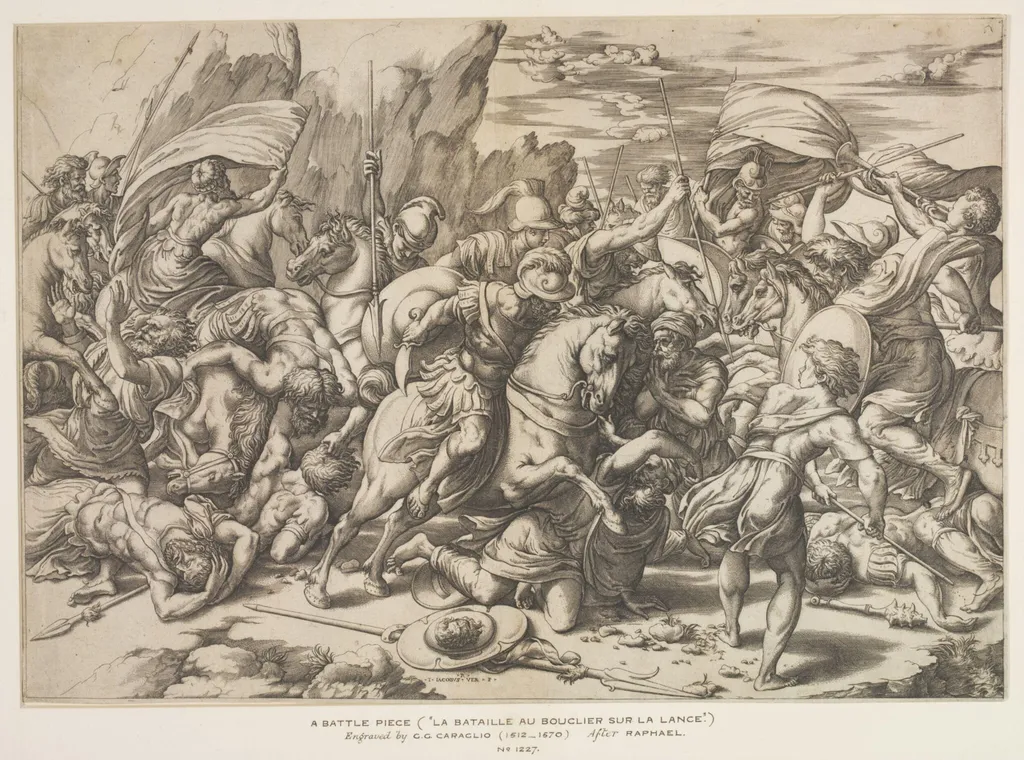
La bataille au bouclier sur la lance is a print by Giovanni Jacopo Caraglio. It dates from 1550 and is held in the collection of the Victoria and Albert Museum.
About this work
Overview
Its subject matter reflects the period’s interest in classical themes rendered with dramatic intensity.
La bataille au bouclier sur la lance is a Renaissance-era engraving by Giovanni Jacopo Caraglio, produced as a reproductive print after a lost design by Raphael. Executed in ink on paper, the work translates a complex compositional study into the medium of printmaking, emphasizing movement and conflict through intricate line work and tonal contrast. Its subject matter reflects the period’s interest in classical themes rendered with dramatic intensity.
Subject & Meaning
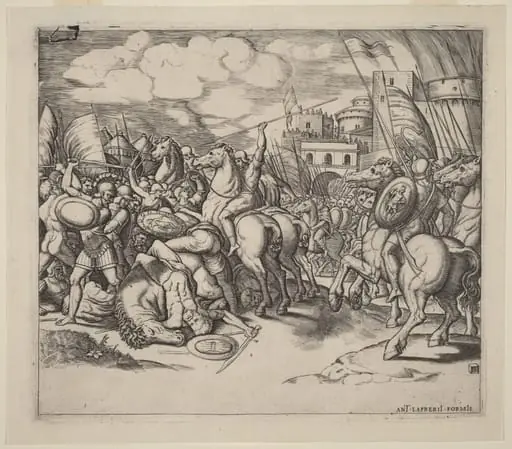
The scene portrays a violent melee among armored combatants, with tangled bodies, rearing horses, and fallen warriors creating a sense of unrelenting chaos. Though the title references shield and lance, the composition prioritizes the turmoil of battle over individual heroics. A stormy sky and distant ships suggest a broader military context, possibly alluding to naval or coastal warfare, reinforcing the theme of disorder and fate in conflict.
Technique & Style
Caraglio employed fine, controlled lines to model form and depth, using hatching and cross-hatching to build dramatic chiaroscuro. The contrast between light and shadow heightens the physicality of the struggle, guiding the viewer’s eye through the dense composition. The engraving’s precision reflects the technical mastery of 16th-century Italian printmakers, who translated painterly effects into the disciplined medium of metalplate printing.
History & Provenance
Created in the 1530s, the print was part of a broader effort by Caraglio to reproduce Raphael’s designs for wider circulation. As a skilled engraver in the service of the Medici and later the papal court, Caraglio helped disseminate High Renaissance imagery beyond original paintings. This print survives in several institutional collections, attesting to its early popularity and the demand for reproductive prints among collectors.
Context
During the early 16th century, prints served as key vehicles for spreading artistic ideas across Europe. Raphael’s compositions, though rarely accessible to the public, were widely known through engravings like this one. Caraglio’s work exemplifies how printmaking bridged elite art and broader audiences, transforming monumental designs into portable, repeatable images that shaped visual culture beyond the court and studio.
Legacy
The print contributed to the standardization of compositional motifs in Northern and Southern European printmaking. Caraglio’s technical approach influenced generations of engravers who sought to emulate the dynamism and emotional weight of Raphael’s designs. While the original drawing is lost, this engraving remains a vital record of Raphael’s influence and the evolving role of print in Renaissance artistic exchange.
Artist & collection
Artist
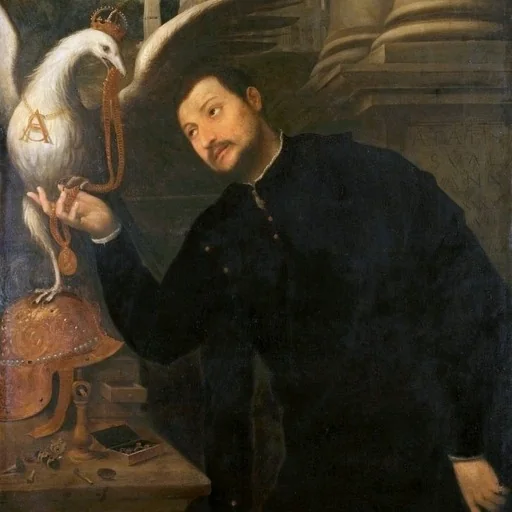
Jacopo Caraglio, Giovanni Jacopo Caraglio or Gian Giacomo Caraglio (c. 1500/1505 – 26 August 1565) known also as Jacobus Parmensis and Jacobus Veronensis was an Italian engraver, goldsmith and medallist, born at Verona…

 The Battle with the Cutlass
 David cutting off the head of Goliath
 The Victory of Scipio over Syphax
 The Triumph and Entry of the Emperor Sigismund into Mantua
 Capricci di varie battaglie
 Lion Hunt
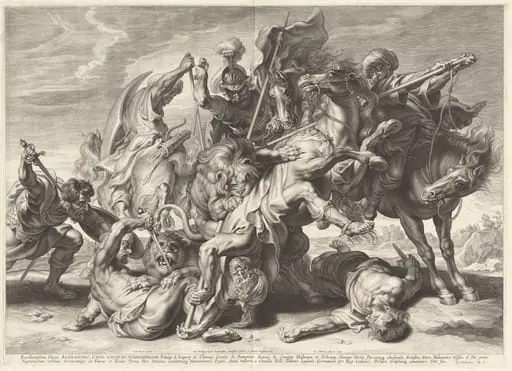 Lion Hunt
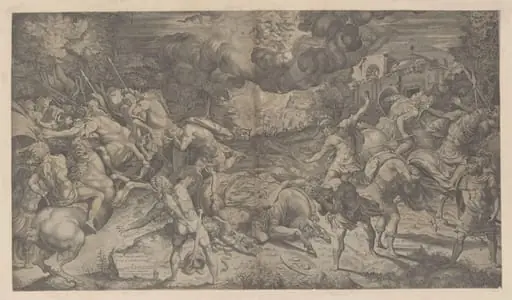 Conversion of Saul
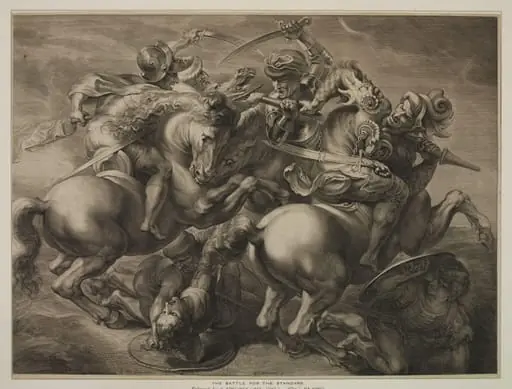 Battle for the Standard
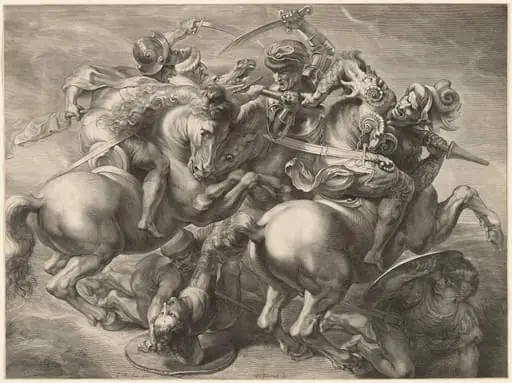 The Fight for the Standard
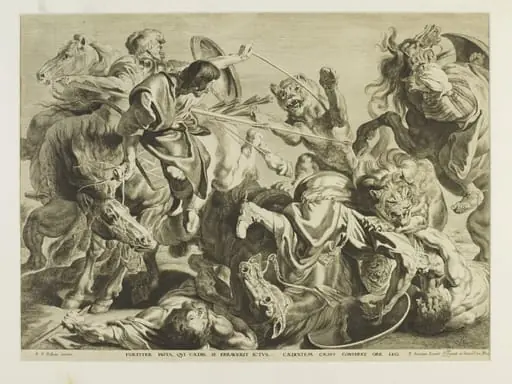 The Hunt of the Lion and Lioness
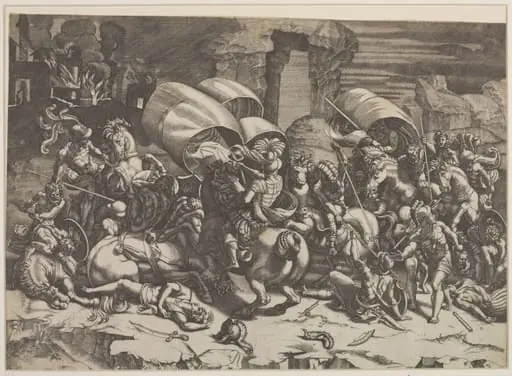 La bataille au coutelas