Artwork
The Fortune Teller
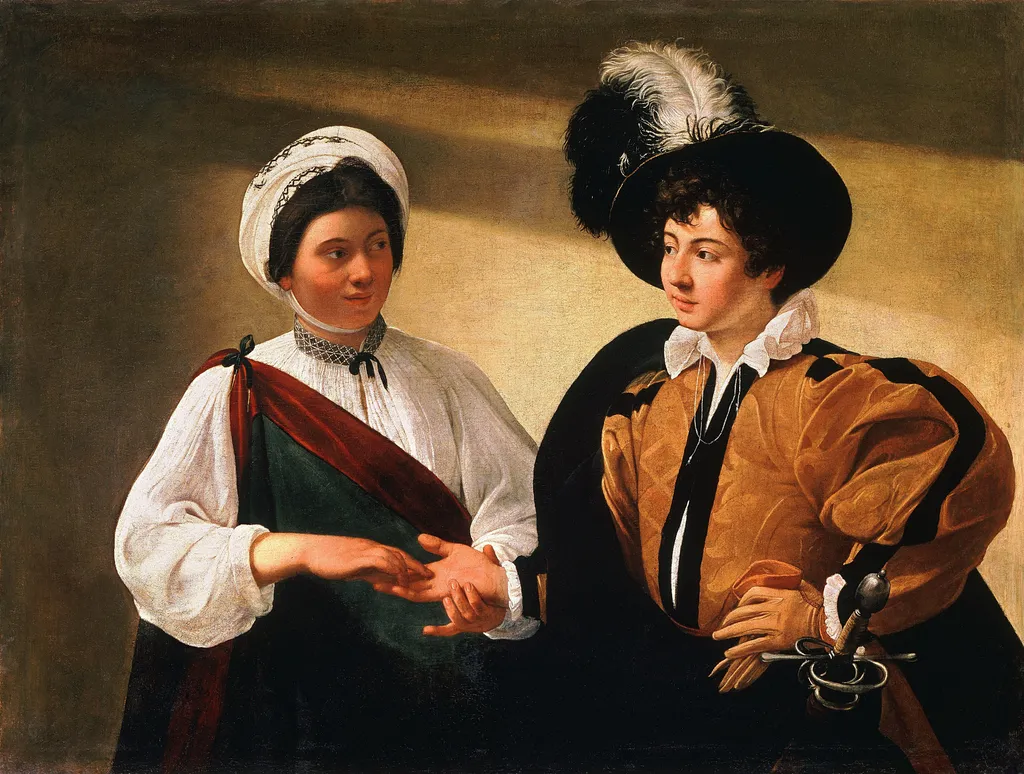
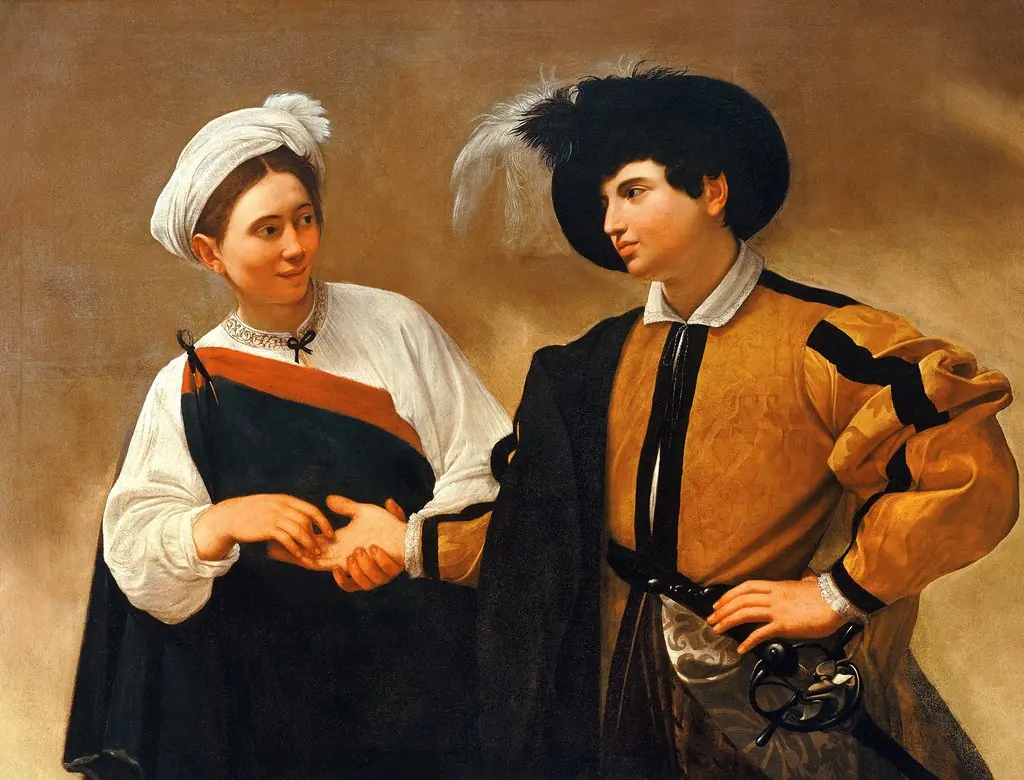
The Fortune Teller is an oil painting by the Baroque artist Caravaggio. It dates from 1598 and is held in the collection of the Department of Paintings of the Louvre.
About this work
Overview
Caravaggio’s *The Fortune Teller* exists in two early works, both dated to the mid‑1590s and attributed to the artist himself. One version resides in the Musei Capitolini in Rome, while the other is part of the Louvre’s collection in Paris. The precise years of execution remain debated among scholars, but both paintings illustrate the young master’s early interest in genre scenes.
Subject & Meaning
The scene captures a moment of casual deception, a common theme in Caravaggio’s early narrative studies.
The composition depicts a street‑wise encounter between a young woman and a young man. The woman, dressed in a dark green gown with a white cap and a red sash, clasps her hands together as the man, wearing a feathered hat and a brown doublet, offers a small object—presumably a token of a fortune‑telling exchange. The scene captures a moment of casual deception, a common theme in Caravaggio’s early narrative studies.
Technique & Style
Caravaggio employs his signature chiaroscuro, illuminating the woman’s face with a gentle light while consigning the man’s side to deep shadow. This stark contrast heightens the psychological tension between the figures and underscores the artist’s early mastery of dramatic lighting. The oil medium allows for a rich, tactile rendering of fabrics and skin, enhancing the realism of the encounter.
History & Provenance
The Roman version entered the Musei Capitolini collection in the 19th century, whereas the Parisian version was acquired by the Louvre after passing through several private hands. Both paintings have been the subject of scholarly debate regarding their dating and the sequence of their creation, reflecting the fluid nature of Caravaggio’s early output.
Context
Created during Caravaggio’s formative years in Rome, the work reflects the artist’s engagement with everyday street scenes and the lives of common people. It anticipates his later, more overtly religious compositions by demonstrating his skill in capturing fleeting gestures and the interplay of light and darkness.
Own this work as a print
Artist & collection
Artist
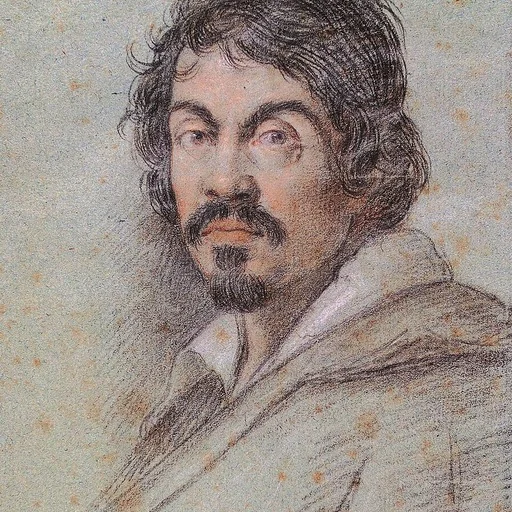
Michelangelo Merisi da Caravaggio (also Michele Angelo Merigi or Amerighi da Caravaggio; 29 September 1571 – 18 July 1610), known mononymously as Caravaggio, was an Italian painter active in Rome for most of his artistic life.

Museum
Department of Paintings of the Louvre
Continue through works from the same source collection.