Artwork
The Fortune Teller
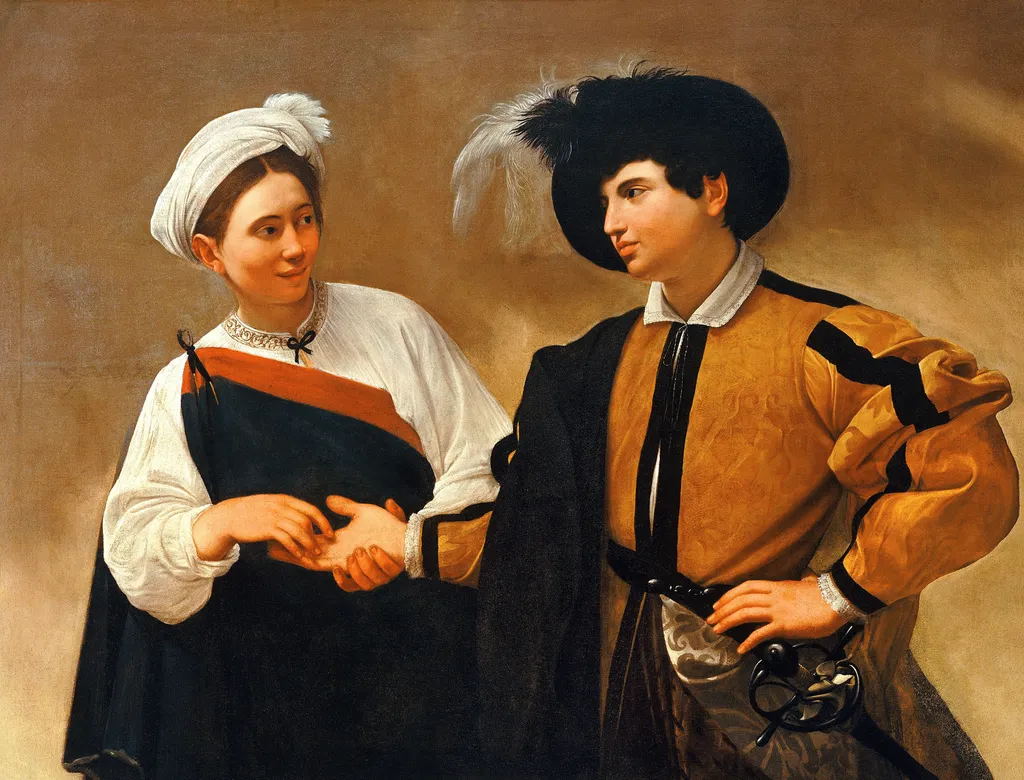
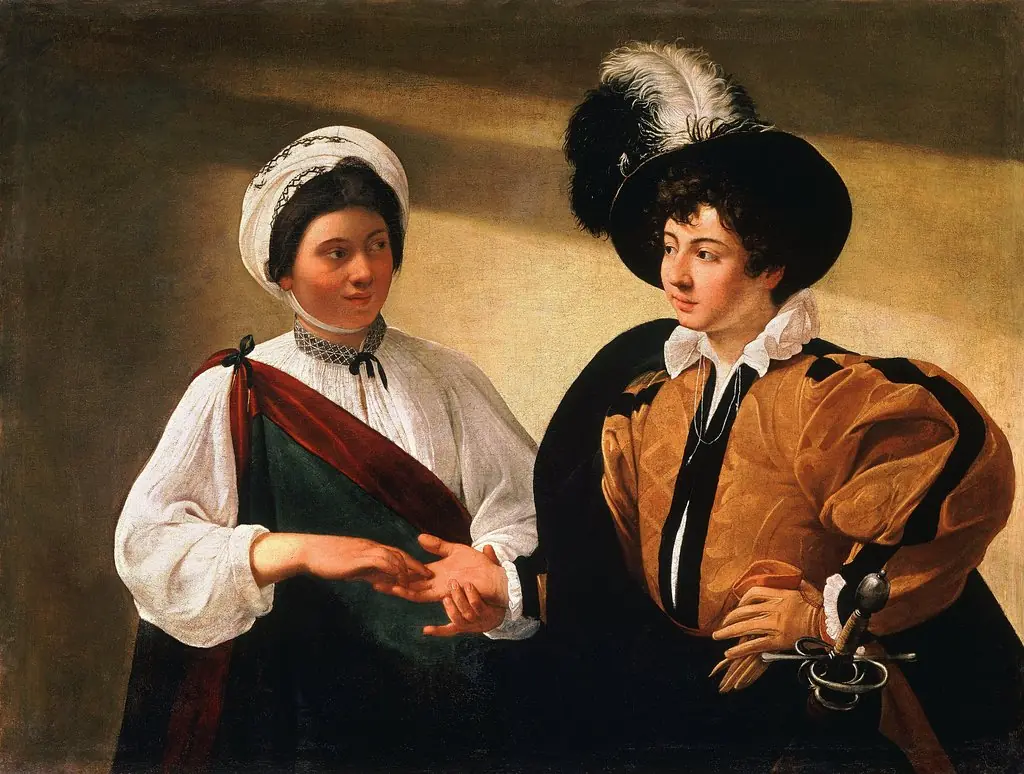
The Fortune Teller is an oil painting by the Baroque artist Caravaggio. It dates from 1598 and is held in the collection of the Capitoline Museums.
About this work
Overview
Caravaggio’s *The Fortune Teller*, executed in oil in 1598, presents a domestic scene in which a young man consults a woman for a palm reading. The composition captures a moment of quiet interaction, illuminated by a stark contrast of light and shadow that highlights the figures against a dark background.
Subject & Meaning
The work portrays a youthful gentleman, dressed in a black hat with a white feather, yellow shirt and black cape, engaged with a woman clothed in white head covering, shirt and black dress. The woman’s hand rests on his palm as she appears to interpret his fate, while his attentive expression suggests a blend of curiosity and seriousness.
Technique & Style
Employing the dramatic chiaroscuro that would become Caravaggio’s hallmark, the painting juxtaposes illuminated flesh tones with deep, enveloping darkness. The realistic rendering of textures—feathered hat, fabric folds, and skin—demonstrates the artist’s commitment to naturalistic observation and emotional immediacy.
History & Provenance
Created during Caravaggio’s early Roman period, the piece reflects his shift toward genre subjects drawn from everyday life. It entered the collection of the Capitoline Museums, where it remains part of the institution’s holdings of Baroque art.
Context
The painting belongs to the early Baroque era, a time when artists increasingly favored scenes of ordinary people over traditional religious or mythological themes. Caravaggio’s focus on a commonplace activity—fortune‑telling—exemplifies this broader cultural movement toward realism and the depiction of contemporary social practices.
Own this work as a print
Artist & collection
Artist
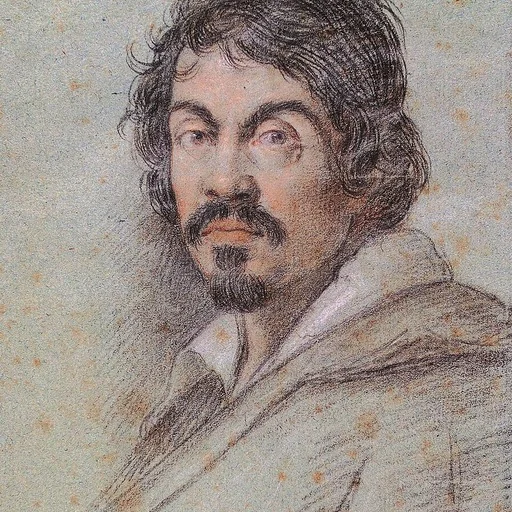
Michelangelo Merisi da Caravaggio (also Michele Angelo Merigi or Amerighi da Caravaggio; 29 September 1571 – 18 July 1610), known mononymously as Caravaggio, was an Italian painter active in Rome for most of his artistic life.