Artwork
Maica Domnului, Sfântul Nicolae, Sfântul Gheorghe, Sfântul Mihail
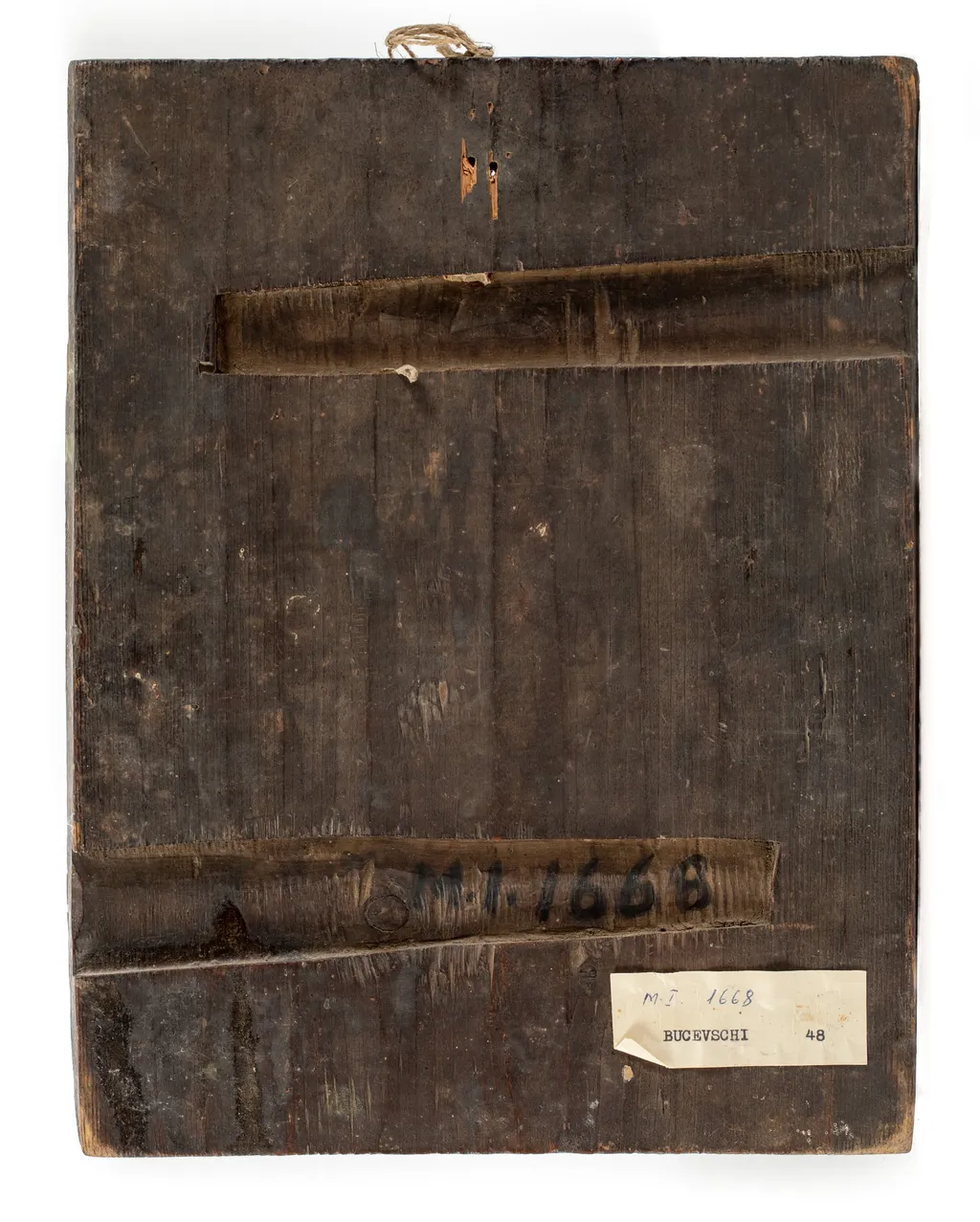
Maica Domnului, Sfântul Nicolae, Sfântul Gheorghe, Sfântul Mihail is an unspecified painting by Hugo Kołłątaj. It is held in the collection of the Moldova National Museum Complex. A weathered wooden panel, darkened by age and environmental exposure, bears faintly carved grooves that suggest stylized figures.
About this work
The carving looks simple but deliberate, with a few lines forming shapes—possibly figures or symbols.
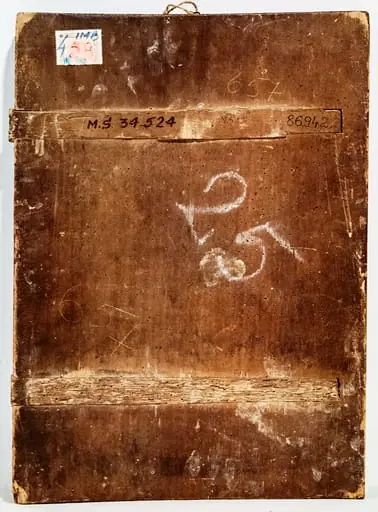
This is a dark, weathered wooden panel with faint grooves carved into the surface. The wood looks old and worn, with patches where the paint or carving has faded. Near the bottom right, there’s a small paper label with numbers and a name.
The label reads "Bucevschi 48" and "M.I. 1668," which might hint at where or when this piece was made. The carving looks simple but deliberate, with a few lines forming shapes—possibly figures or symbols.
Next, look up saint to see what these carvings might represent.
Overview
A weathered wooden panel, darkened by age and environmental exposure, bears faintly carved grooves that suggest stylized figures. The surface shows signs of wear, with areas where pigment or detail has eroded. A small paper label at the lower right, inscribed 'Bucevschi 48' and 'M.I. 1668,' indicates possible provenance and date, linking the object to a specific collection or workshop in the late 17th century.
Subject & Meaning
The carved forms likely represent four Christian saints: the Virgin Mary, Saint Nicholas, Saint George, and Saint Michael. These figures were commonly venerated in Eastern Orthodox tradition for their protective and intercessory roles. Their simplified rendering reflects devotional intent over naturalism, emphasizing spiritual presence rather than individualized detail.
Technique & Style
The carving employs minimal, deliberate lines to suggest human forms and attributes, avoiding elaborate detail. The wood’s texture and the shallow depth of the incisions point to a hand-carved, possibly folk or regional technique. The absence of bright pigment suggests the piece was never brightly painted or was stripped over time, leaving only the raw wood and its engraved contours.
History & Provenance
The label 'Bucevschi 48' and 'M.I. 1668' suggests the object was cataloged in a collection, possibly in Moldavia or Wallachia, during the late 17th century. The initials may refer to a collector or institution, while the date aligns with a period of religious art production under Ottoman suzerainty. Its survival implies it was preserved within a domestic or ecclesiastical context.
Context
Produced during a time when Orthodox communities maintained religious traditions under foreign rule, such carved panels served as private devotional objects. Their modest scale and material reflect limited resources and a focus on spiritual utility. Similar items were often kept in homes or small chapels, used for prayer and protection rather than public display.
Legacy
This panel stands as a quiet testament to vernacular religious practice in early modern Eastern Europe. Its simplicity and wear underscore the everyday nature of faith in this period. Though unremarkable in craftsmanship, its endurance offers insight into how sacred imagery was preserved outside formal church art traditions.
Artist & collection
Artist
This Polish folk painter worked in the late eighteenth and early nineteenth centuries, creating religious scenes with bold colors and simple shapes.
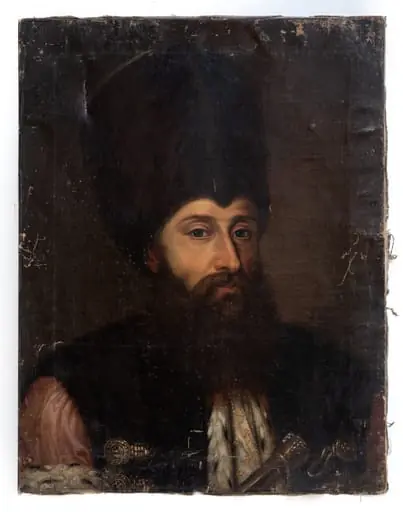 Alexandru Ipsilanti
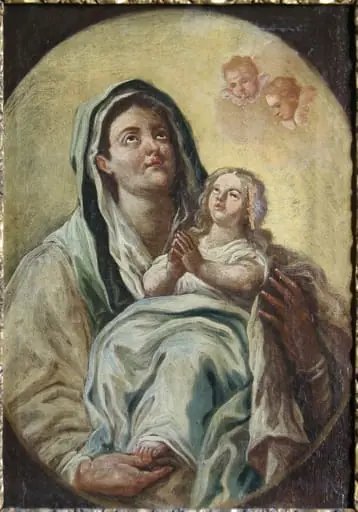 Fecioara Maria cu Pruncul Isus (în Reg. Inv.: Maria cu copilul Isus)
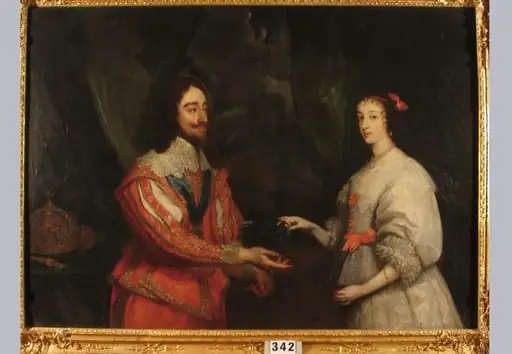 Regele Charles I Stuart al Angliei și soția sa Henrietta Maria de Franța (în Reg. Inv.: Carol I al Angliei și soția sa Henriette din Franța)
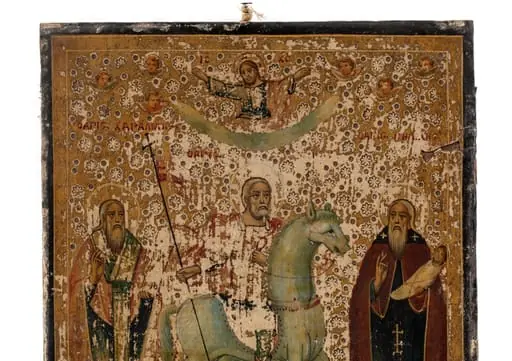 Sfântul Haralambie cu alți doi sfinți
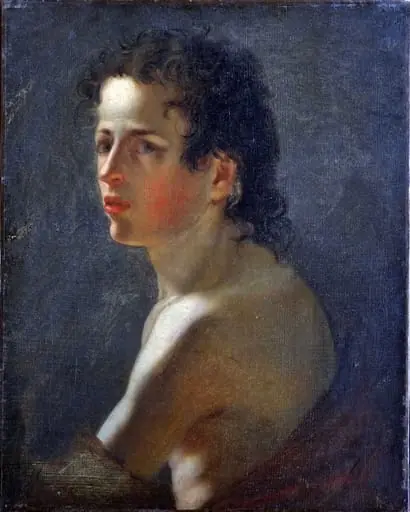 Portret de bărbat
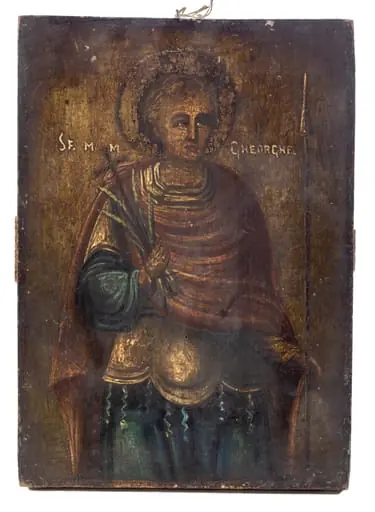 Sfântul Gheorghe
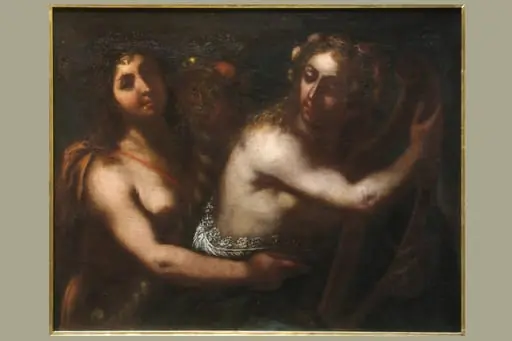 Vertumnus și Pomona (în Reg. Inv.: Vertumnus și Flora)
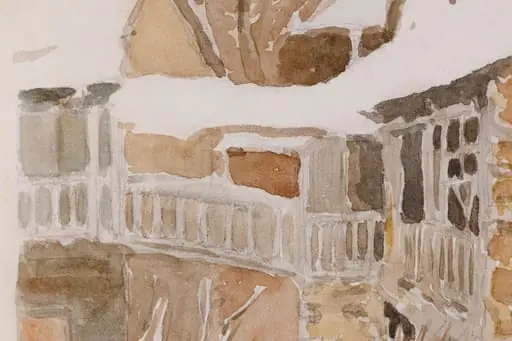 Iarnă
Iarnă
 Icoana îl reprezintă pe sfântul Gheorghe omorînd balaurul, într-o reprezentare caracteristică picturii târzii de la Nicula. Sfântul, călare pe calul alb,este plasat în centrul icoanei, tiparul fiind aproximativ același ca cel utilizat în perioada de înflorire a picturii pe sticlă la Nicula. Veșmintele sunt asemănătoare celor ale soldaților chezaro-crăiești, cizme înalte cu pinteni, tunică scurtă și largă, roșie, pantaloni bufanți, albaștri.Capul este descoperit,părul lung, negru, lăsat pe umeri.Chipul are trăsături butucănoase, nasul lung, gura mică, ochii negri, cu umbre gri. Nimb realizat cu bronz auriu. . În mână ține o suliță lungă terminată cu o cruce, cu care omoară balaurul, diform, verde, simbolizând zonele inferioare, ale păcatului, minimalizat ca dimensiuni pentru a accentua puterea binelui. Calul diform, are picioarele din față ridicate, coama și coada negre, șaua împodobită. Scena este încadrată de o ghirlandă de flori (ruje) Câmpul este policrom: alburiu între flori și ramă, roșu între chenarul de flori și umerii sfântului, și sub picioarele calului și ocru în rest. Icoana are caracteristicile specifice picturi târzii de la Nicula: câmpul policolor, culori discordante, abundența detaliului, decor floral abundent, sticla de proveniență industrială, folosirea bronzului în locul foiței de aur. Rama profilată, îmbinată oblic la colțuri, este vopsită cu cafeniu. Stinghia verticală din dreapta lipsește. Pe spate are un dos tot din lemn. Sfântul Gheorghe era considerat sfântul cel mai mare peste turme, câmpuri și hergheliile de cai. Se mai considera că descuie primăvara și leagă iarna.
 Icoai"(a
 Scene din viața lui Iisus (Coborârea la iad și cele douăsprezece praznice împărătești)
 Scena Coborârii de pe cruce sau Punerea în mormânt, Plângerea Domnului, se regăsește și pe epitafurile pictate din biserici(picturi pe pânză înfățișând înroparea lui Isus. Acesta se păstrează în altar , în Vinerea Mare, sau vinerea Prohodului fiind așezat pe masa pe sub care trec credincioșii(numită aer), apoi se înconjoară cu el biserica de trei ori iar în final se intră în biserică pe sub acest epitaf, în semn de participare simbolică la îngroparea Domnului) Scena este redată pe orizontală. Prohodul Domnului este redat conform erminiei, aici cu un număr redus de personaje. Isus Hristos, coborât de pe cruce, deasupra peitri mormântului, așezat pe giulgiul susținut de Iosif din Amariteea și Nicodim, ambii în vârstă. Iisus are ochii închiși, mâinile împreunate pe piept, în jurul capului nimb iradiant, influență apuseană. Central, lângă trupul lui Iisus, Fecioara Maria frângându-și mâinile și privind către Fiul ei. Înveșmântată cu maforion cernit și stola brun roșcat. Nimb simplu. În spatele ei , crucea răstignirii, în dreapta evanghelistul Ioan, în stânga Maria Magdalena și Maria lui Nicodim. Doi îngeri înaripați(posibil arhangheli, inscripțiile nu se disting. Concentrarea converge către Iisus, către care privesc și sunt aplecați cu toții. Aureolele redate la o anunită distanță de capul personajelor, sunt inspirate din pictura apuseană. Drapajul veșmintelor realizat cu măiestrie, urmărind anatomia corpului. Fondul brun roșcat, nuanță mai deschisă decât chenarul lat pe care este trecută cu majuscule albe, pe trei laturi, inscripția "Mormânt nou s-a deschis pentru trupul tău preacurat împăratul împăraților" Latura de jos cu stratul pictural deteriorat a fost pictat ulterior într-o nuanță de verde închis.
 Icoana este segmentată în patru ferestre, icoană cruce, reprezentându-i pe Sfântul Mare Mucenic Gheorghe purtător de biruință, de două ori, pe diagonală, pe Sfântul Mare Ierarh Nicolae făcător de minuni și vindecător de boli, pe Sfânta Mare Cuvioasă Parascheva, de la Iași. Au veșminte roșii vermillon, epitrahilul Sfântului Nicolae este verde smarald, fondul Sfintei Parascheva este orange, fondul Sfântului Gheorghe din dreapta registrul inferior este verde. Întreaga tematică iconografică este încadrată de un chenar decorativ geometrizant, dantelat, din foiță aurie. Registrul superior are fondul albastru ultramarin, iar registrul inferior fondul este rozaliu pal. Interiorul crucii este un rotund verde-absint. Icoana excelează prin combinațiile cromatice luminoase și foarte vii. Inedită este și prezența dublă, în ipostasuri diferite, pe diagonală, a Sfântului Mare Mucenic Gheorghe. Icoana este de Țara Oltului. Are rama colorată în cafeniu și roșu, în interior. Inscripția din româno-chirilică se traduce SF Gheorghe Sf Nicolae Sf Parascheva Sf Gheorghe.
 Icoana este pictată pe dosul unei bucăți de sticlă dreptunghiulară, în ax vertical; Sf. Dumitru, izvorâtorul de mir, care se prăznuiește pe 26 octombrie, este unul din sfinții reprezentați ca războinici, deși din viața lui nu se deduc fapte de arme. Semnificația este cea a războiului nevăzut cu patimile.În concepția populară Sf. Dimitrie este cel care dezleagă iarna, corespondentul Sf. Gheorghe care leagă iarna și dezleagă primăvara. Reprezentările lor sunt deasemenea asemănătoare, fie călare, Sf. Gheorghe pe cal alb și Sf. Dimitrie pe cal roșu. Aici Sf. Dimitrie 3/4, este redat ușor din semiprofil, în picioare, în mâna dreaptă cu o suliță iar în stânga avînd o cruce. Mantie roșie, lungă, cămașă verde închis, zale.Chipul este realizat în manieră naivă, expresiv.Părul lung, negru este revărsat pe umeri. Câmp bleu, cu un chenar din flori mari, roșii cu frunze în aceeași nuanță de verde pe care zugravul a mai utilizat-o. Inscripția este pe fond alb, într-un chenar dreptunghiular plasat în spatele aureolei. Pictura are caracteristicile specifice picturii niculene:stângăcia, simplitatea și primitivismul desenului; compoziția sumară, culorile intense. Rama- 4 șipci de brad profilate, culoarea lemnului natur.
 Sfânta Paraschiva încoronată este reprezentată frontal, 3/4, Nimbul trasat cu roșu depășește linia chenarului și partea superioară a coroanei. Tehnica iluminării treptate cu elemente specifice: accentuarea zonei ochilor, tonurile de pământ ale umbrelor. Tunica decorată cu motive fitomorfe ample incizate în stratul de foiță. Mantie închisă în față, cu decor linar și bordură lată cu motive geometrice 3 șiruri de incizii în grund). Pe cap, umeri lăsat pe spate, un maforion de culoare deschisă. În mâna dreaptă, Sfânta ține o cruce mică, rusească, (6 brațe)în stânga un rotulus desfășurat cu inscripția scrisă în limba slavonă: Cred în unul Dumnezeu… alte inscripții: pe chenar de o parte și de alta a nimbului: Chipul Sf. Mucenițe Parascheva Vineri, în colțul stâng al icoanei ѾOН pe nimbul cruciger al lui Iisus, reprezentat ca pe sfântul Keramion. Cromatica: Chenar roșu cu două linii galbene și mărginit cu brun; fond - foița metalică decorată prin incizare, cu chenar multiplu din motive geometrice reteate. Tip Krashnuskha. Pe spate, un timbru al miliței RPR.
 Buna gro
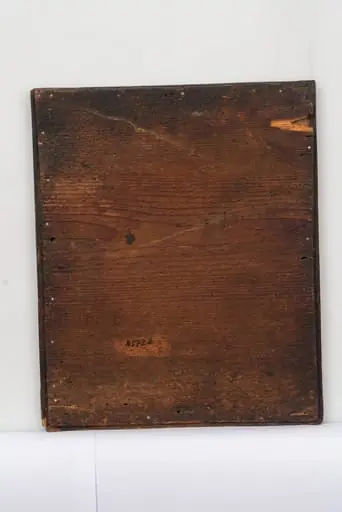 Tema icoanei face parte din ciclul Patimilor Mântuitorului și înfățișează scena Răstignirii Domnului. Compoziția este extrem de simplă: Hristos răstignit în mijloc pe cruce, Maica Domnului în dreapta Lui, iar Sfântul Ioan Evanghelistul în stânga. Cromatica se compune din tonuri de roșu vermillon, verde, albastru, ocru galben, negru și gri. Rama icoanei e profilată, băițuită, și e formată din îmbinarea a patru baghete de lemn. Sticla este spartă în mai multe fragmente.
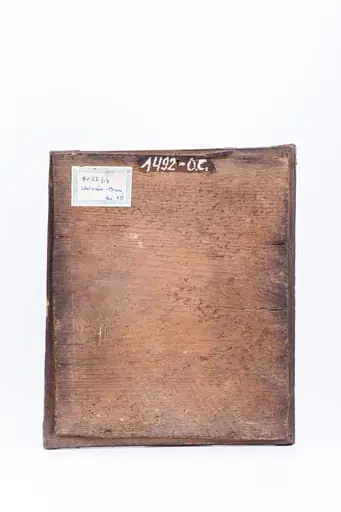 Icoana îl reprezintă pe Mântuitorul Iisus Hristos, copil fiind, redat semi-profil, înfășurat cu o mantie roșie vermillon, dar cu umerii goi de copilaș, ținând în mâini, globul pământesc cu crucea deasupra, asemnea unui chivot de biserică. Fondul icoanei este albastru cobalt, în centrul icoanei, creându-se un adânc veșnic. În marginile icoanei, fondul este alb-ivoriu, înconjurat de elemente decorative fitomorfe - 8 trandafiri, ruje, roșii, cu frunze verzi. În registrul inferior este galben-solar.