Artwork
The Goldfinch
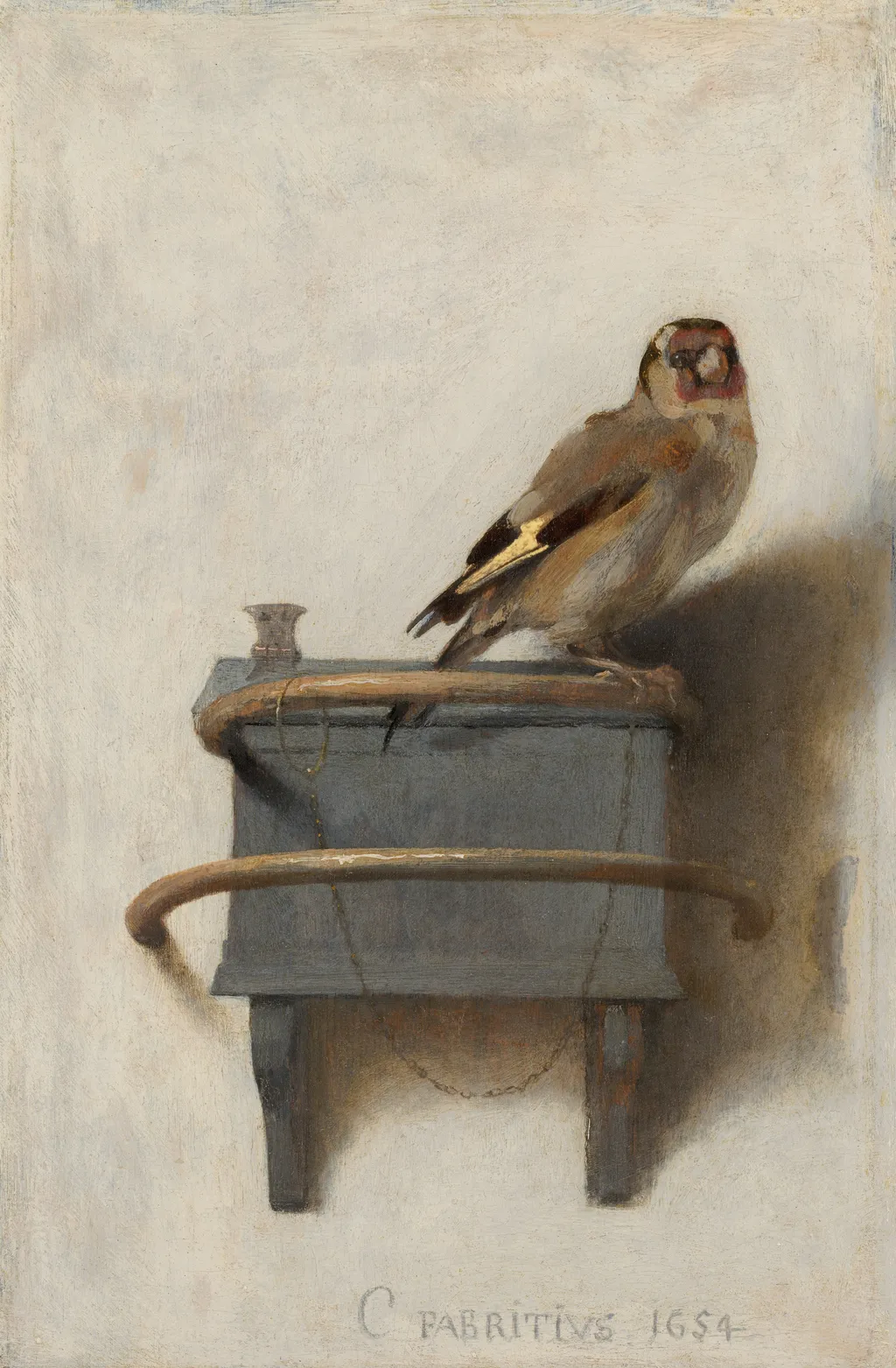
The Goldfinch is an oil painting by the Dutch Golden Age artist Carel Fabritius. It dates from 1654 and is held in the collection of the Mauritshuis.
About this work
If you enjoyed this quiet study of a bird, you might want to explore more about the museum.
The Goldfinch is an oil painting by Carel Fabritius, dated 1654. It shows a life‑sized European goldfinch that is chained to a perch. The work is a trompe‑l'œil piece on a small panel, measuring about 33.5 by 22.8 cm, and it was originally part of a larger structure such as a window jamb. It has been in the Mauritshuis collection in The Hague since 1896. If you enjoyed this quiet study of a bird, you might want to explore more about the museum.
Overview
Painted in 1654 by Carel Fabritius, The Goldfinch is a small oil-on-panel work depicting a life-sized European goldfinch chained to its perch. Measuring 33.5 by 22.8 centimeters, it was likely once mounted as part of a larger architectural element, such as a window frame or protective panel. The painting survived the 1654 Delft gunpowder explosion, which killed its creator and destroyed much of his studio.
Subject & Meaning
The bird, rendered with quiet precision, is shown in a moment of stillness, its chain suggesting captivity yet also framing its presence as an object of observation. The choice of a goldfinch—a bird associated with endurance and, in Christian symbolism, Christ’s passion—hints at layered meaning. Yet the painting resists overt narrative, focusing instead on the quiet dignity of a living creature within a confined space.
Technique & Style
Fabritius employed subtle gradations of color and fine brushwork to mimic the texture of feathers and the sheen of the bird’s beak and eyes. The trompe-l’œil effect is achieved through precise perspective and the illusion of the bird perched directly on the panel’s surface, as if extending into the viewer’s space. The limited palette and controlled lighting reflect the restrained aesthetic of Delft painting at the time.
History & Provenance
The painting remained in the possession of Fabritius’s circle after his death in the 1654 explosion. It entered the Mauritshuis collection in The Hague in 1896, where it has been held ever since. Its survival through centuries of ownership changes and historical upheaval is remarkable, given its fragile medium and the violent end of its creator’s life.
Context
Fabritius was a pupil of Rembrandt and a key figure in the Delft school, known for his innovative use of light and spatial depth. The Goldfinch stands apart from typical Dutch still lifes of the period by its intimacy and lack of symbolic clutter. Its placement within domestic architecture suggests it was meant to be viewed up close, perhaps as a decorative yet contemplative object in a private home.
Legacy
Though little known during the 17th and 18th centuries, the painting gained renewed attention in the 20th century for its emotional restraint and technical finesse. It is now recognized as a rare surviving example of Fabritius’s mature work and a testament to the quiet power of observation in Dutch Golden Age art.
Own this work as a print
Artist & collection
Artist
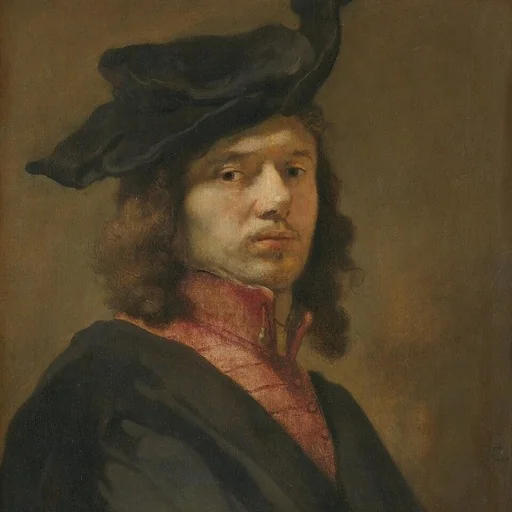
Carel Pieterszoon (abbr. Pietersz.) Fabritius (Dutch pronunciation: ; bapt. 27 February 1622 – 12 October 1654) was a Dutch painter. He was a pupil of Rembrandt and worked in his studio in Amsterdam. Fabritius, who was…

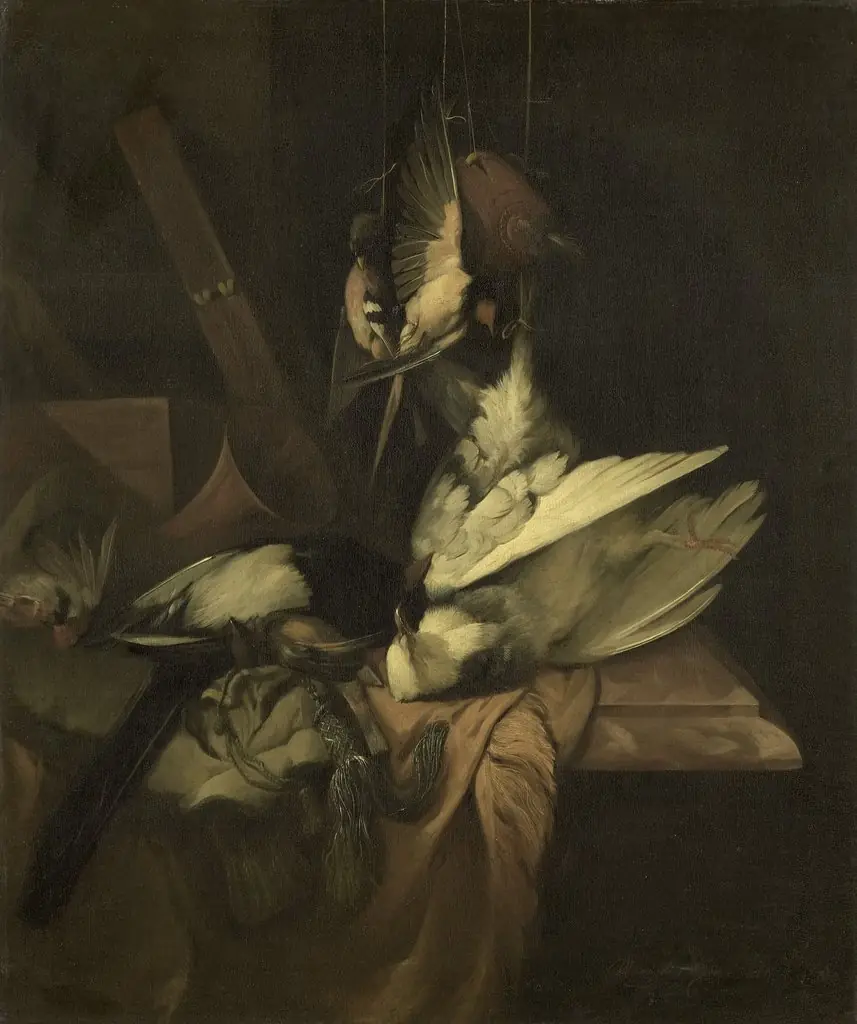 Still life with birds and hunting implements
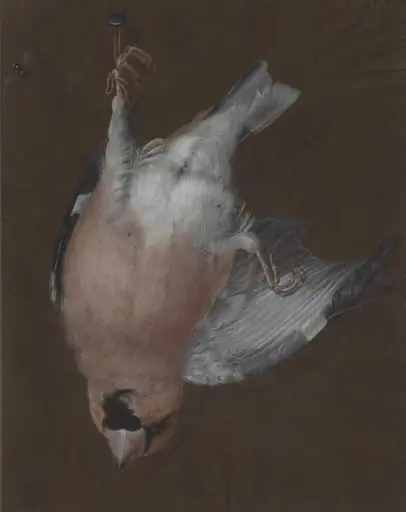 A Rose-Breasted Finch Hanging from a Nail
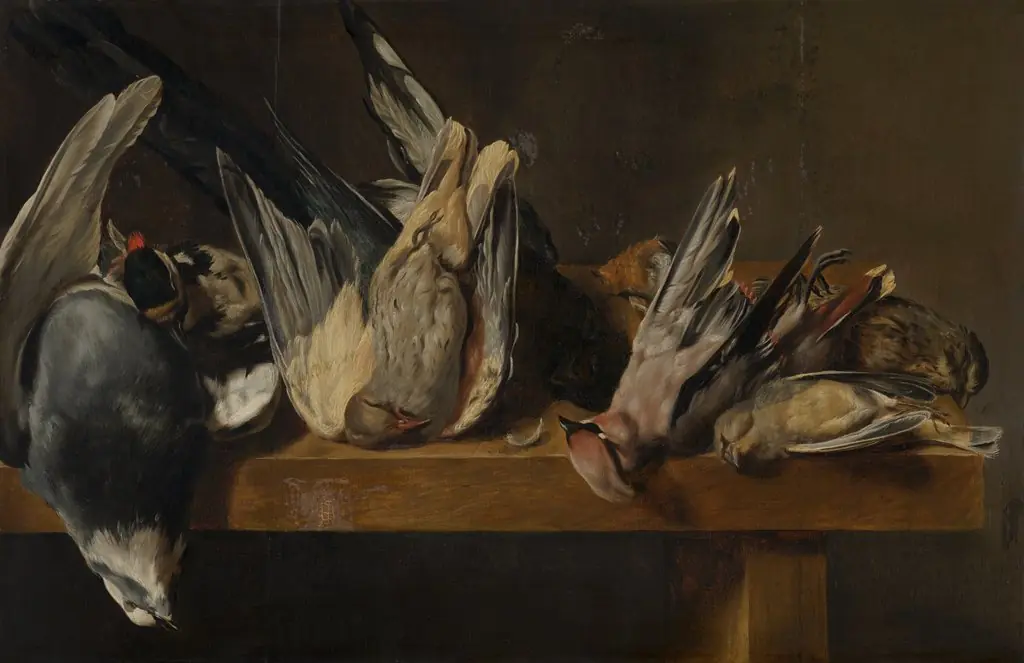 Dead Birds
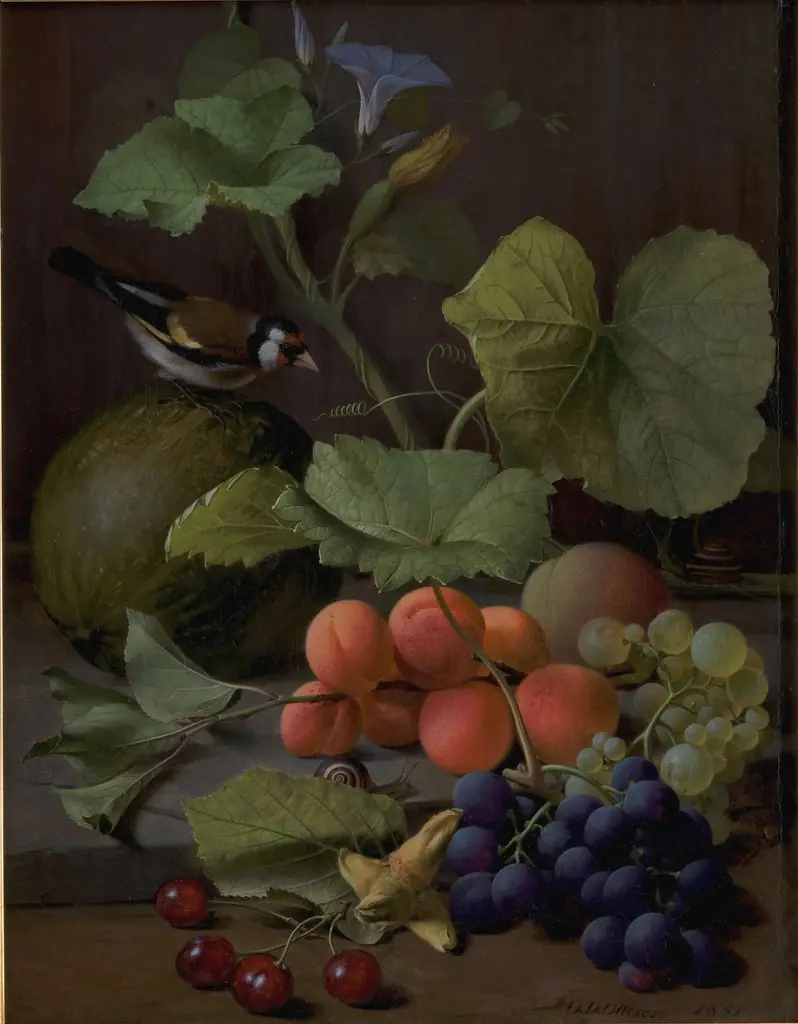 Frugtstykke med en stillids
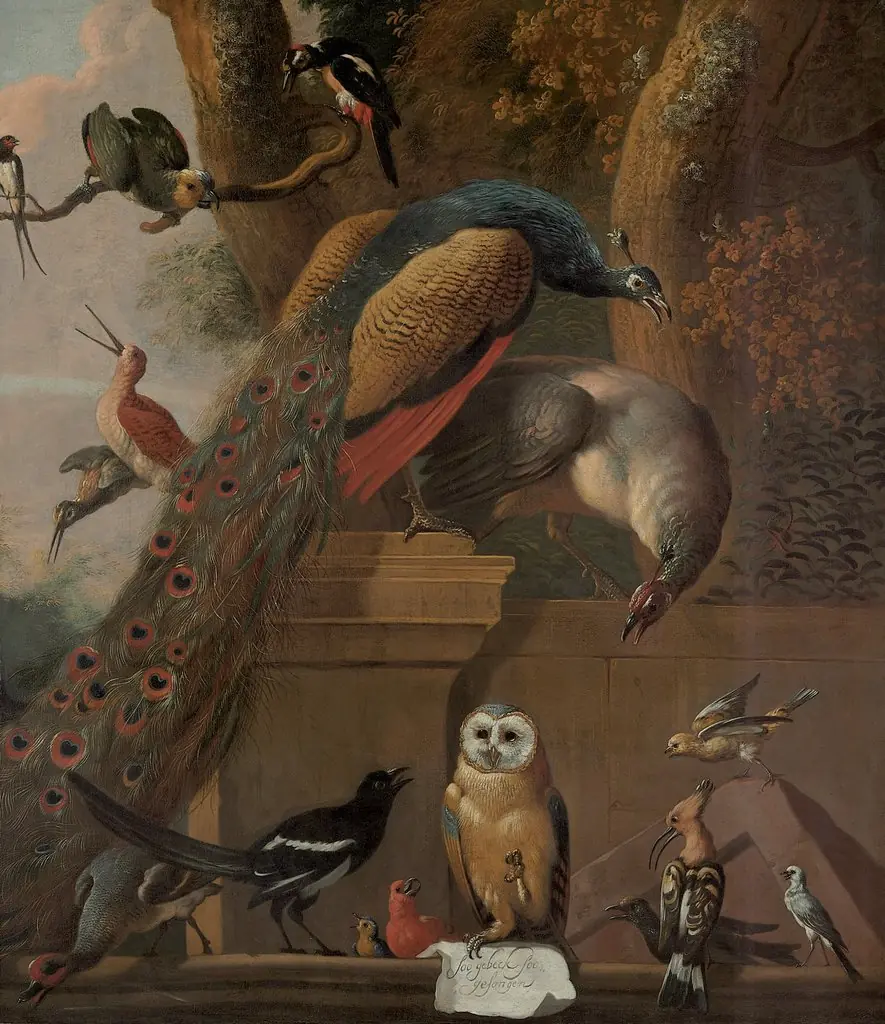 Bird Concert
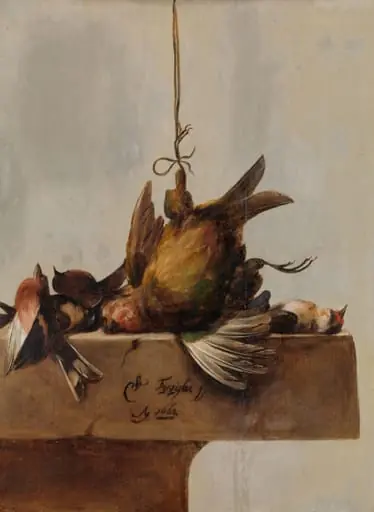 Still Life with Birds
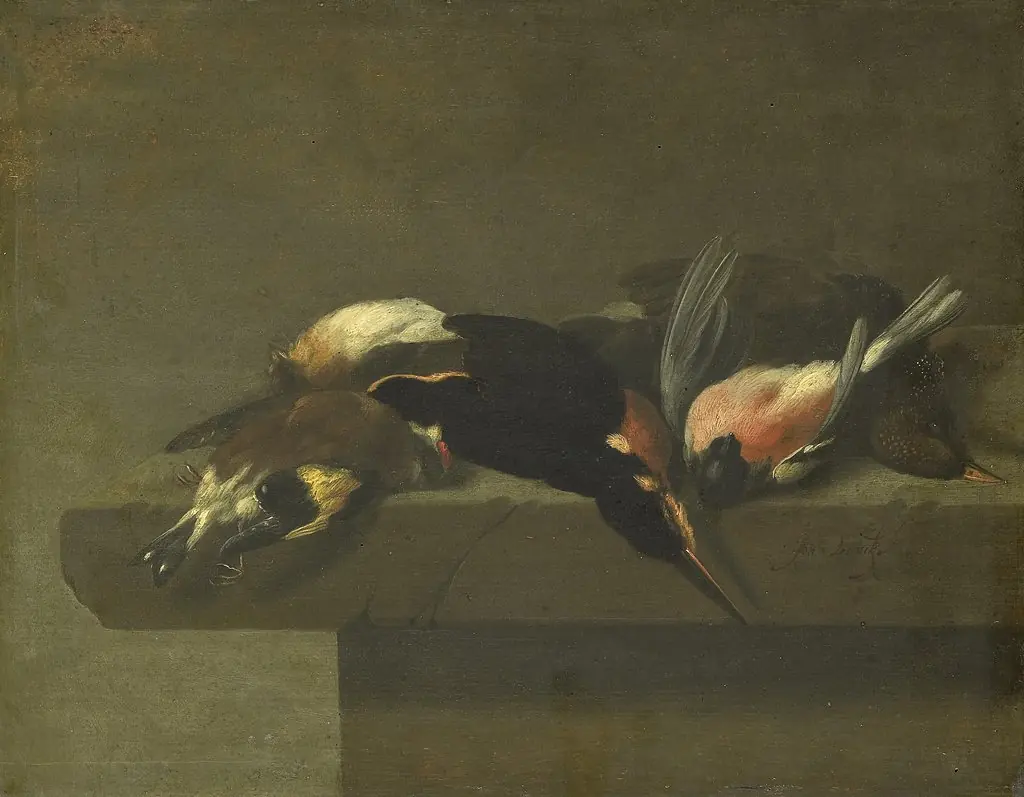 Dead birds
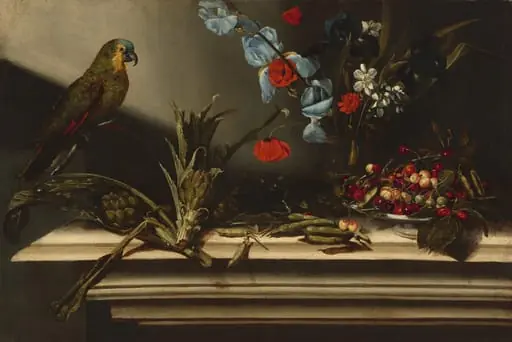 Still Life with Artichokes and a Parrot
 Dead Birds
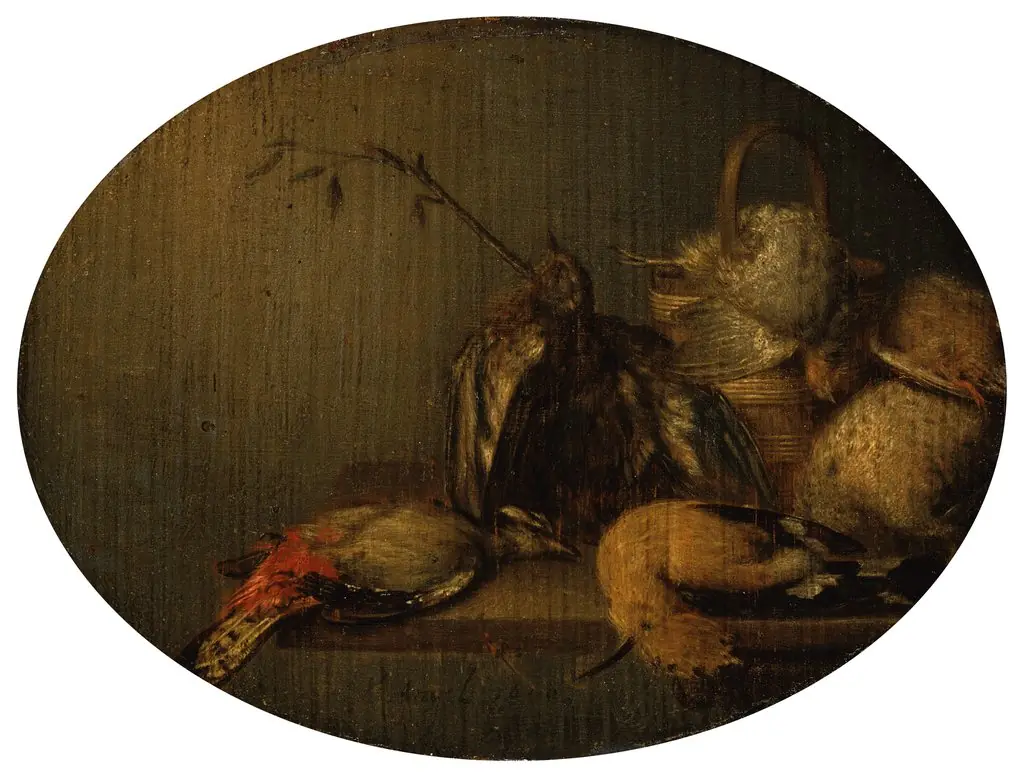 Still Life with Dead Birds
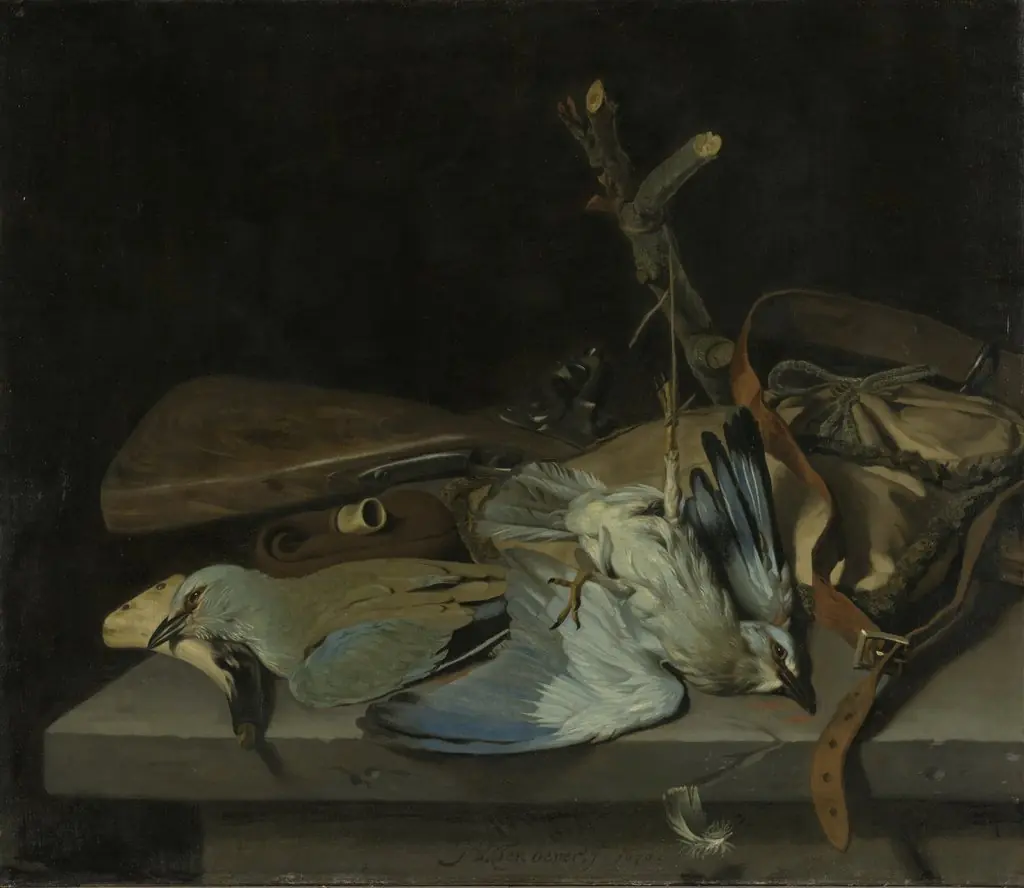 Still life with hunting implements and birds
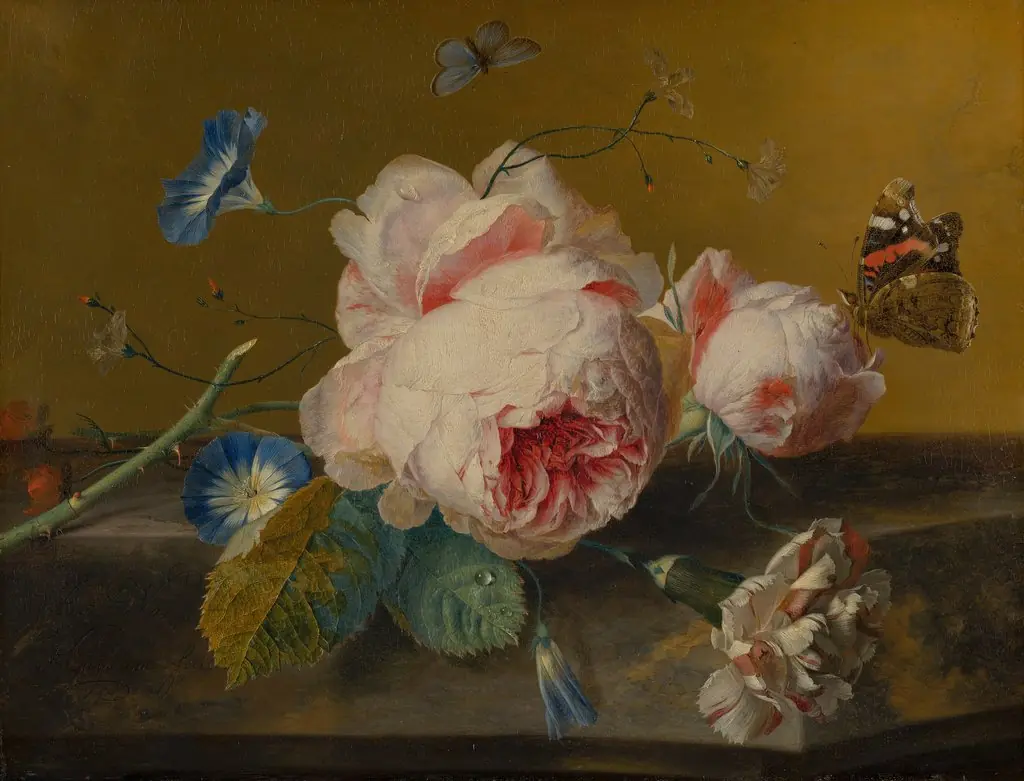 Flower Still Life