Artwork
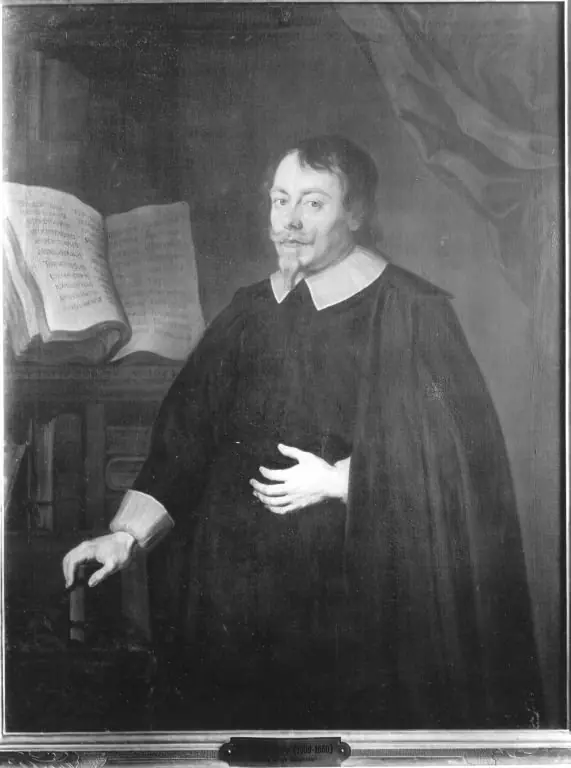
Portrait of Casparus de Carpentier, Walloon Minister at Sliedrecht, Amersfoort and Amsterdam
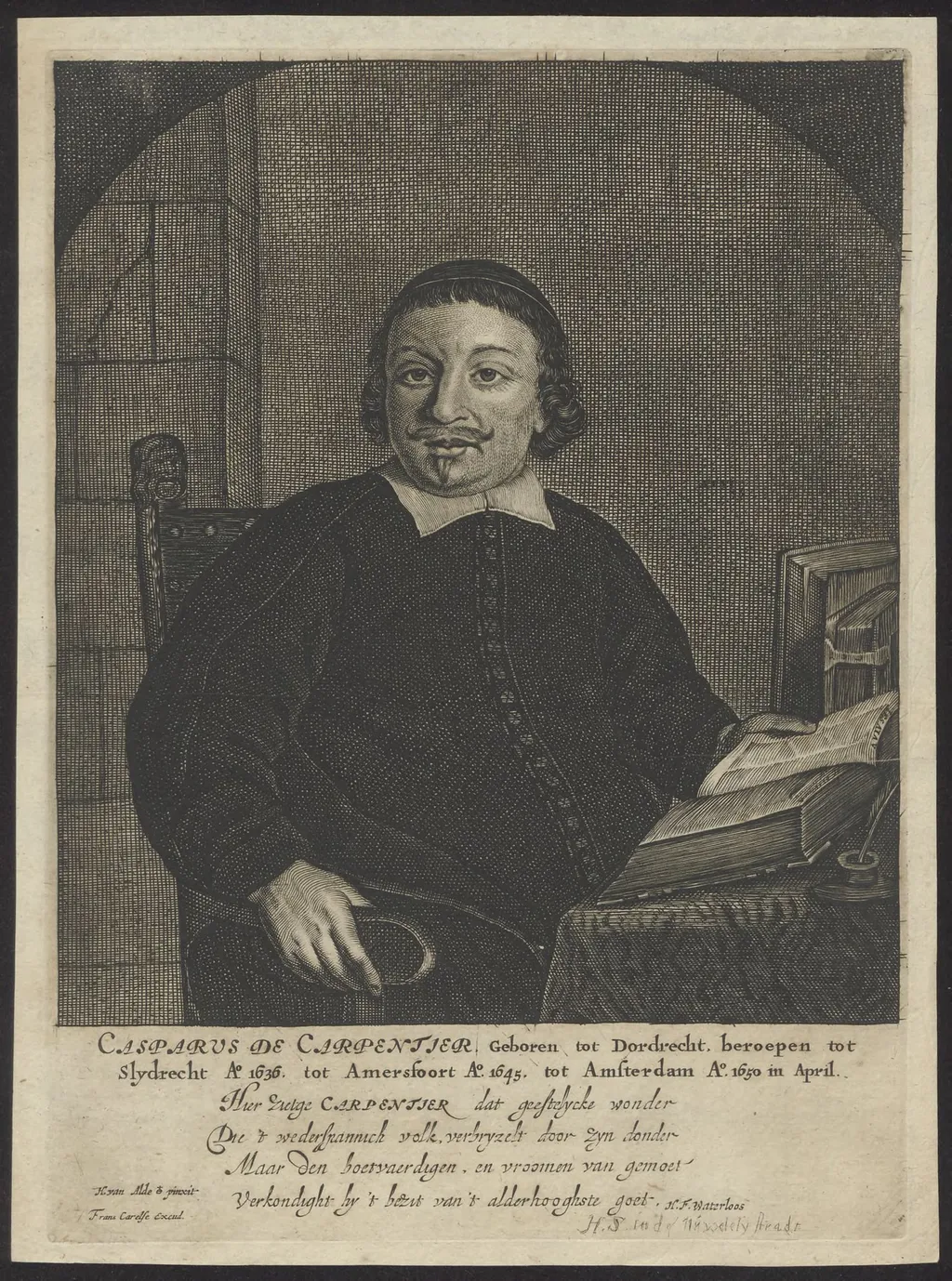
Portrait of Casparus de Carpentier, Walloon Minister at Sliedrecht, Amersfoort and Amsterdam is an unspecified painting by the Dutch Golden Age artist Frans, Carelse. It dates from 1650 and is held in the collection of the Leiden University Libraries.
About this work
Overview
This image is a reproductive print derived from a painted portrait of Casparus de Carpentier, a Walloon minister active in Sliedrecht, Amersfoort, and Amsterdam. The original painting is attributed to H. van Alde, while this version includes added textual elements and a handwritten annotation, suggesting it was produced as a circulated likeness rather than a unique commission.
Subject & Meaning
Carpentier is depicted seated, gazing directly at the viewer in attire typical of early 17th-century Protestant clergy.
Carpentier is depicted seated, gazing directly at the viewer in attire typical of early 17th-century Protestant clergy. His composed demeanor and formal dress reflect the dignity associated with his religious role. The inclusion of a Dutch verse beneath the image reinforces his public identity, likely serving as a devotional or commemorative tribute to his service within the Walloon Reformed community.
Technique & Style
The print reproduces the compositional clarity and restrained lighting of the original painting, likely employing chiaroscuro to model the figure’s form. The addition of handwritten text and verse indicates a hybrid approach—blending visual portraiture with literary commemoration. The style remains faithful to Dutch portraiture of the period, emphasizing stillness and moral gravity over theatricality.
History & Provenance
The image carries a manuscript note at the bottom, partially illegible, possibly indicating a location or owner: 'H.S. in de …ij stradt.' The presence of H.F. Waterloo’s verse suggests the print was circulated among Walloon congregations, perhaps as a keepsake or memorial. Its production likely occurred after van Alde’s original, positioning it as a secondary, text-enhanced reproduction within a religious network.
Context
As a Walloon minister, Carpentier belonged to a French-speaking Protestant community in the Dutch Republic, maintaining distinct cultural and liturgical traditions. Portraits like this one served to affirm clerical authority and communal identity during a time of religious consolidation. The integration of verse into the image reflects a broader practice of merging visual and literary culture in Reformed devotional life.
Legacy
This print exemplifies how religious figures were memorialized through reproducible media in the early modern Netherlands. Its layered composition—painting, verse, and handwriting—reveals a modest but meaningful tradition of personal and communal veneration. Though not widely known today, such works contributed to the visual culture of minority Protestant communities in the Dutch Republic.
Artist & collection
Artist
This Dutch painter, active in the late 1600s, made formal portraits of church leaders like Casparus de Carpentier, a Walloon minister.