Artwork
William Lilly
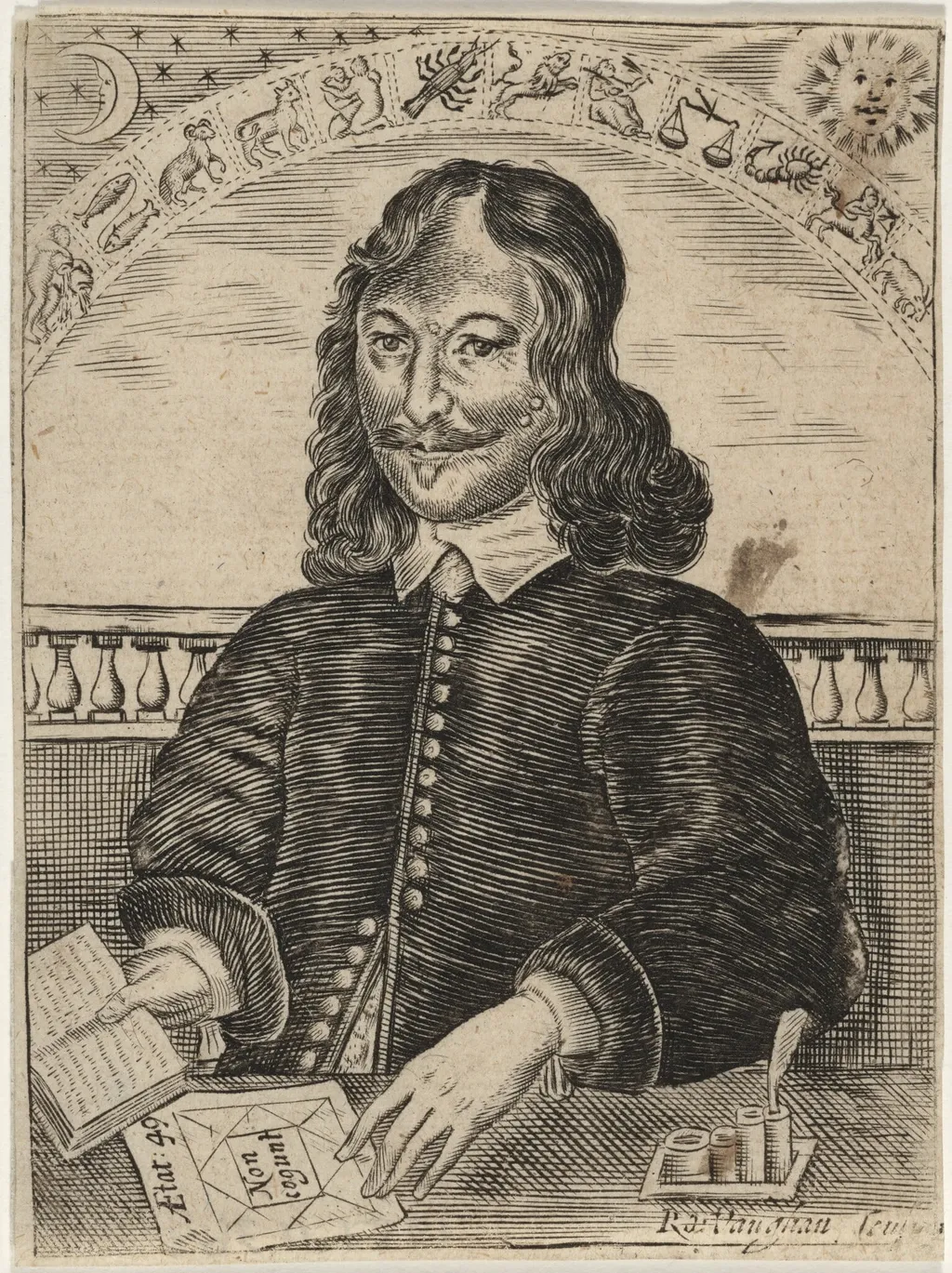
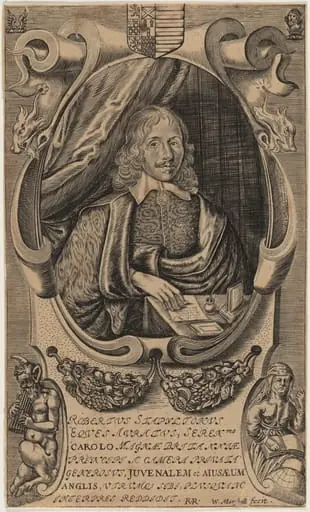
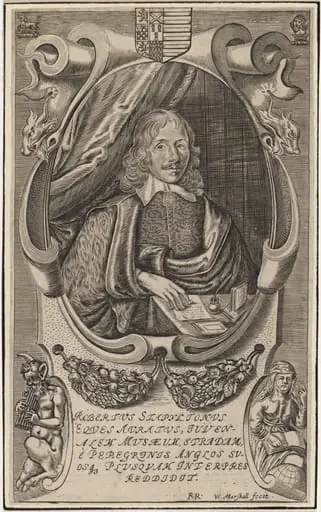
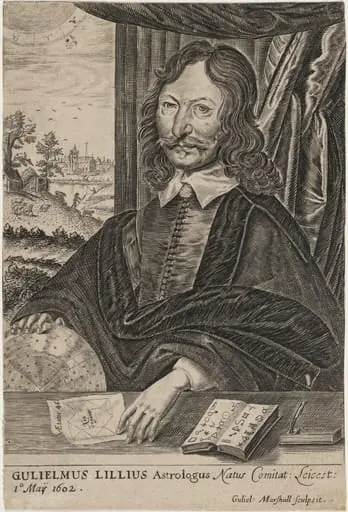
William Lilly is an ink print by the Renaissance artist Robert Vaughan. It dates from 1640 and is held in the collection of the National Gallery of Art.
About this work
Overview
The background is densely populated with small, intricate symbols—animals, celestial signs, and tools of divination—suggesting his professional domain.
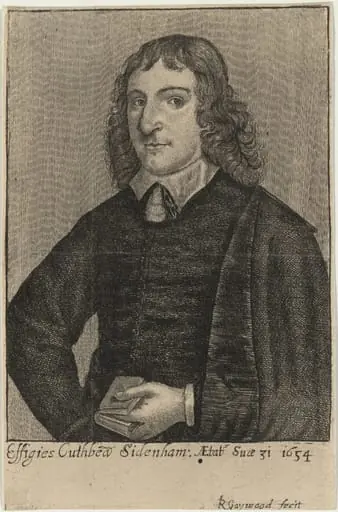
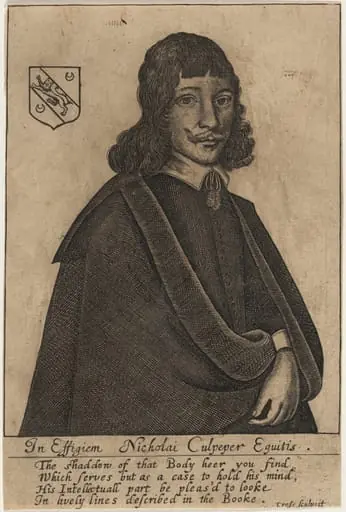
This 1640 engraving by Robert Vaughan depicts William Lilly, an English astrologer and writer. Rendered in monochrome, the portrait presents Lilly seated, dressed in a dark, high-collared coat, with his hand resting on a surface. The background is densely populated with small, intricate symbols—animals, celestial signs, and tools of divination—suggesting his professional domain. Fine, precise lines define his features and the surrounding imagery, characteristic of the engraving technique of the period.
Subject & Meaning
William Lilly was a prominent figure in 17th-century English astrology, known for his almanacs and public predictions. The imagery surrounding him—lion, scales, scorpion, and other zodiacal emblems—functions as a visual lexicon of his craft, linking his identity to celestial authority. These symbols do not merely decorate but assert his role as an interpreter of cosmic order, grounding his public persona in the language of astrology then widely consulted by both elites and commoners.
Technique & Style
Vaughan employed the engraving method, incising fine lines into a metal plate to create the image. The shading on Lilly’s face and clothing is achieved through controlled cross-hatching, giving volume and texture without color. The background symbols are rendered with equal precision, their small scale demanding close viewing. This technique allowed for high detail and reproducibility, making the portrait suitable for wide dissemination among readers of Lilly’s publications.
History & Provenance
Created in 1640, the engraving likely accompanied one of Lilly’s published works, serving as a portrait for his audience. It was produced during a period when astrological texts were popular, and visual representations of astrologers helped legitimize their authority. The print survives in several institutional collections, including the British Museum, where it is preserved as part of the historical record of early modern scientific and esoteric culture.
Context
In mid-17th-century England, astrology remained intertwined with astronomy, medicine, and politics. Lilly’s public prominence coincided with the English Civil War, during which his predictions were sought by both Parliamentarians and Royalists. The engraving reflects a cultural moment when celestial interpretation held real social weight, and visual symbols of astrology were used to convey expertise and credibility in printed media.
Legacy
Vaughan’s engraving endures as one of the most recognizable images of Lilly, frequently reproduced in historical studies of early modern astrology. It exemplifies how visual portraiture was used to communicate professional identity beyond text. While Lilly’s astrological claims are no longer accepted scientifically, the print remains a valuable artifact of how knowledge, belief, and representation intersected in the pre-Enlightenment public sphere.
Artist & collection