Artwork
Magdalena Parrella y Urbieta and her Daughter, Elisa Tapia y Parrella
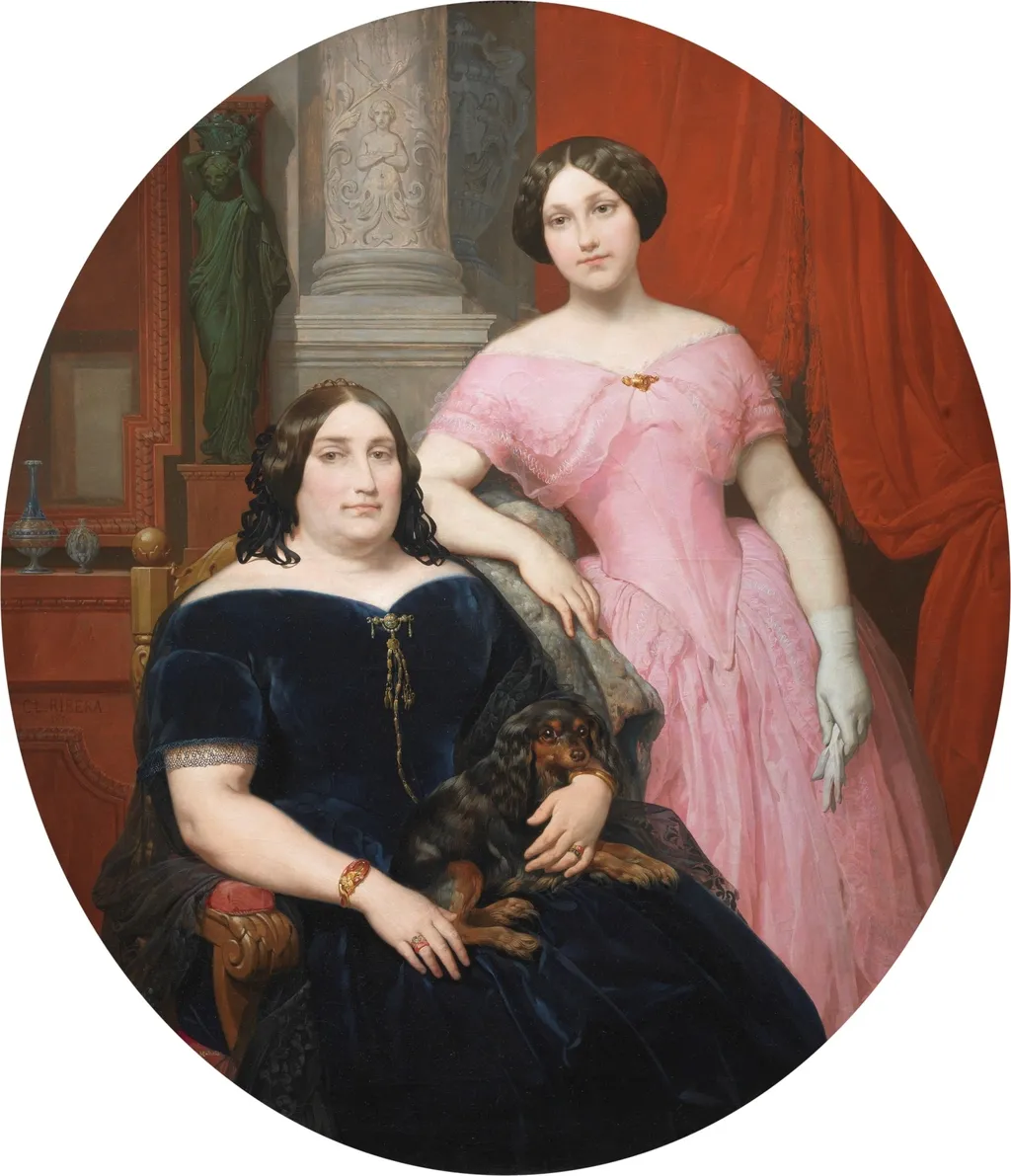
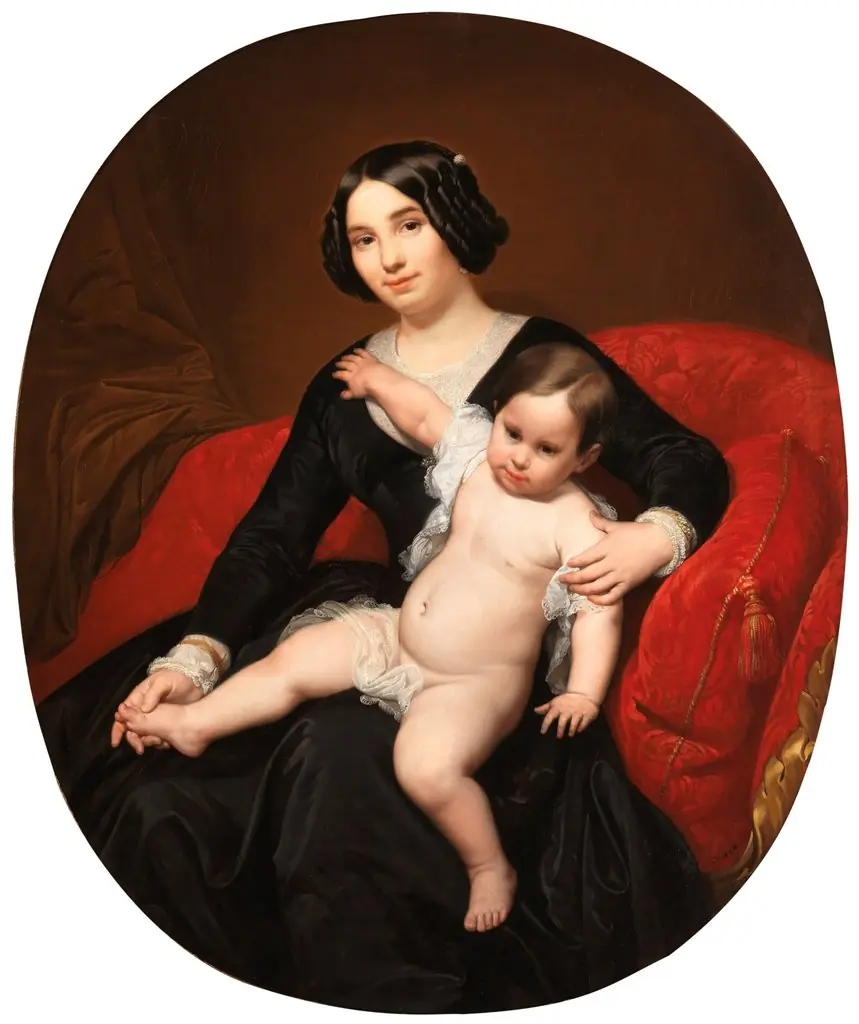
Magdalena Parrella y Urbieta and her Daughter, Elisa Tapia y Parrella is an oil painting by the Biedermeier artist Carlos Luis de Ribera y Fieve. It dates from 1850 and is held in the collection of the Museo del Prado.
About this work
Overview
Created around 1850 by Spanish painter Carlos Luis de Ribera y Fieve, this oil on canvas portrays Magdalena Parrella y Urbieta alongside her daughter Elisa Tapia y Parrella. The composition places the pair in an opulently furnished interior, their figures framed by a deep red curtain that gives the setting a theatrical quality. The work is part of the collection of the Museo del Prado in Madrid.
Subject & Meaning
The presence of a mirror, suggested by the title, invites contemplation of identity and familial bonds.
The painting presents the mother and daughter seated side by side, each dressed in refined attire: the elder in a dark blue gown trimmed with lace and a gold necklace, the younger in a pale pink dress with delicate lace sleeves. A small black‑and‑tan dog rests between them, adding a domestic touch. The presence of a mirror, suggested by the title, invites contemplation of identity and familial bonds.
Technique & Style
Ribera employs a smooth, academic brushwork typical of mid‑nineteenth‑century Spanish portraiture. Careful modeling of fabrics captures the sheen of silk and lace, while the red curtain and marble column provide contrasting textures. Subtle chiaroscuro highlights the figures against a muted background, emphasizing their dignified poise.
History & Provenance
The portrait was likely commissioned by the Parrella family, reflecting their social standing. After remaining in private hands for several decades, the canvas entered the national collection and was acquired by the Museo del Prado, where it has been displayed as part of the museum’s 19th‑century holdings.
Context
Ribera’s work aligns with the era’s interest in domestic genre scenes that combined portraiture with interior decoration. The inclusion of luxurious furnishings, a marble column, and a classical statue underscores the family's wealth and the period’s fascination with neoclassical motifs within everyday settings.
Artist & collection
Artist
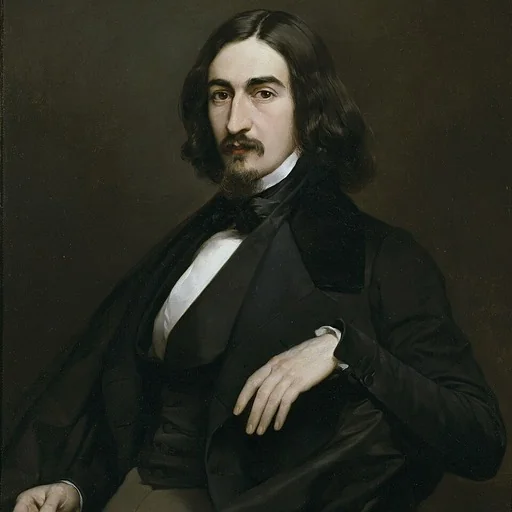
Carlos Luis de Ribera y Fieve (1815–1891) was an artist, born in Rome.

 Manuela María Miquel y Lucuy
 Young Woman
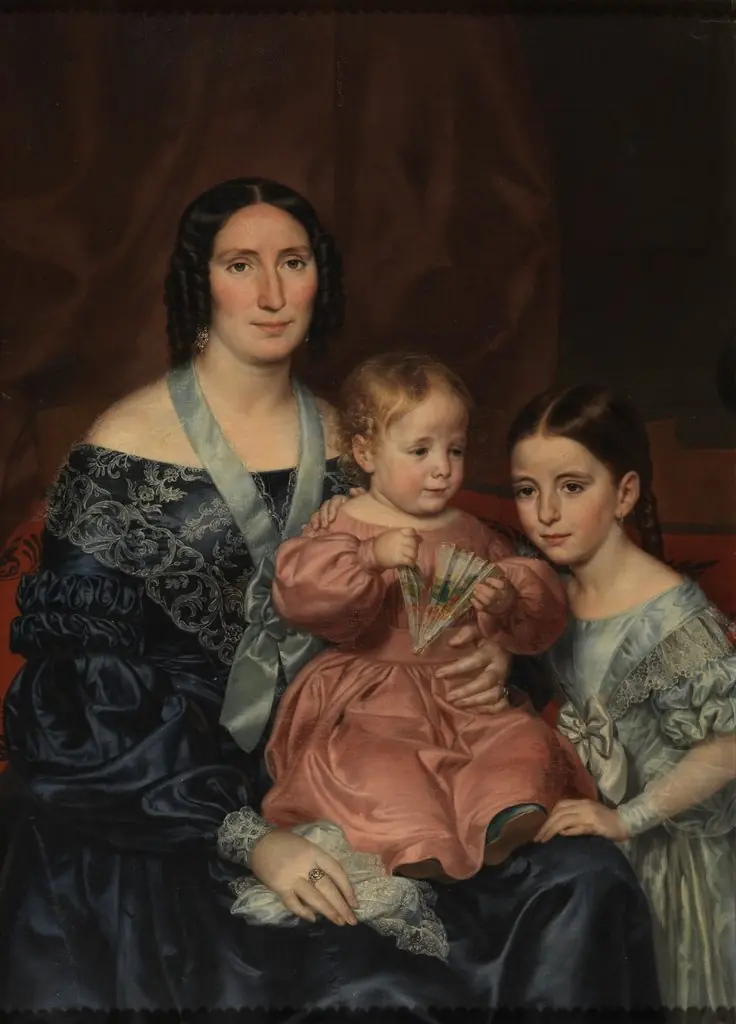 The Barrio Family
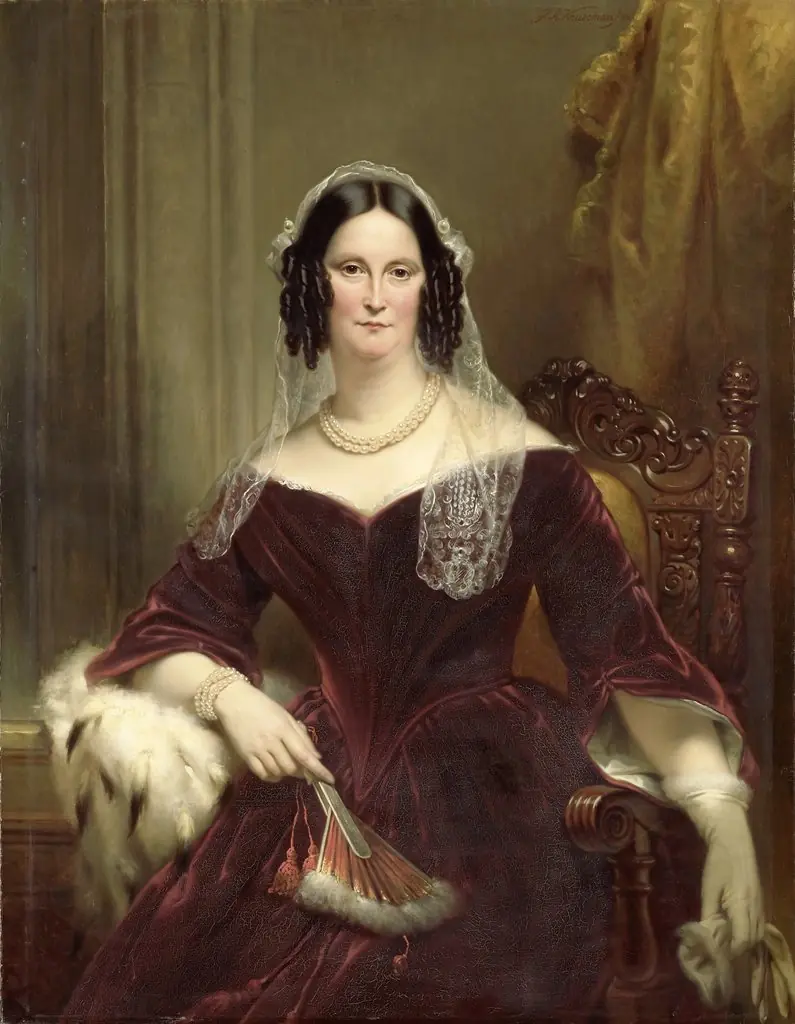 Portrait of Dieuwke Fontein, second Wife of Adriaan van der Hoop
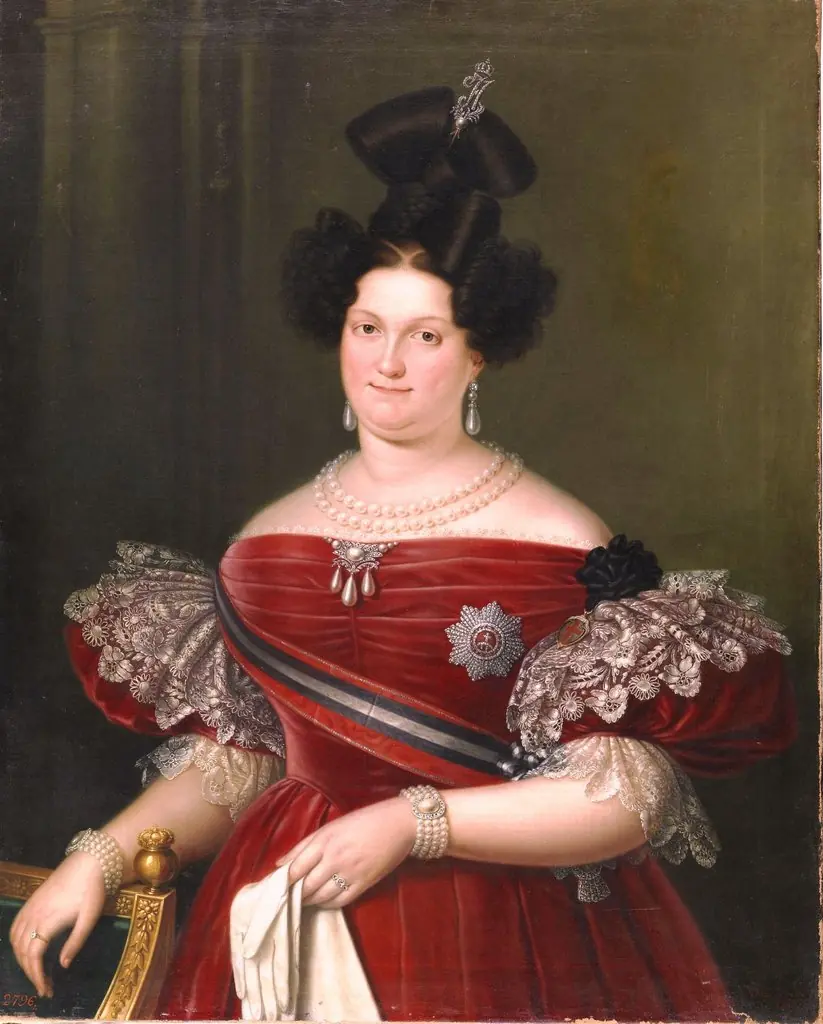 María Cristina de Borbón
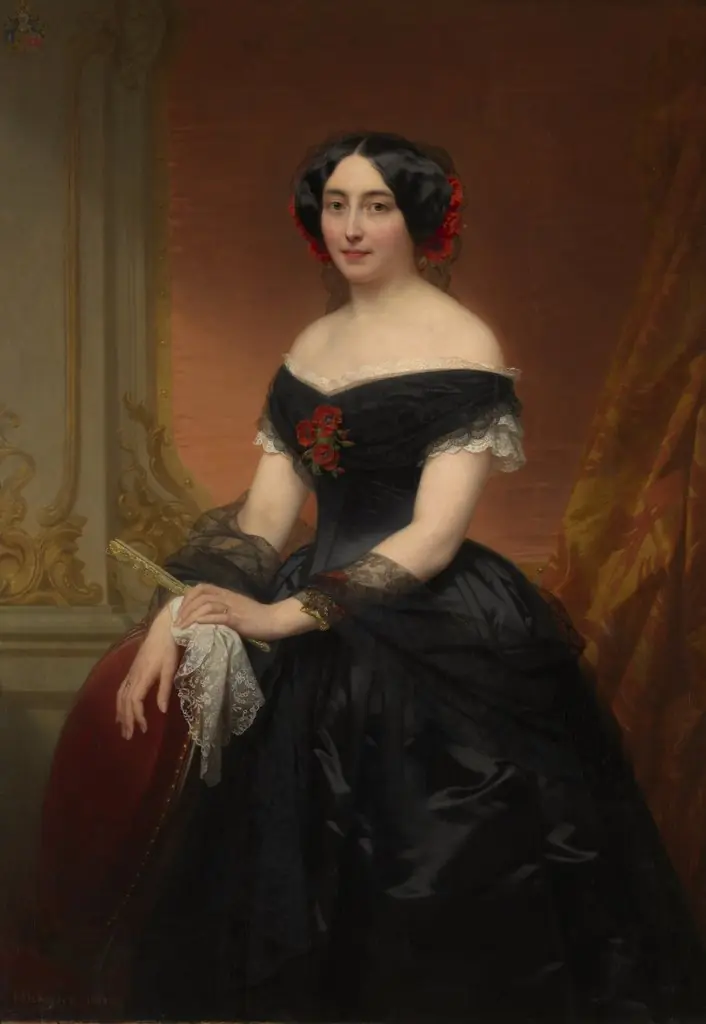 Madame Mols-de Brialmont
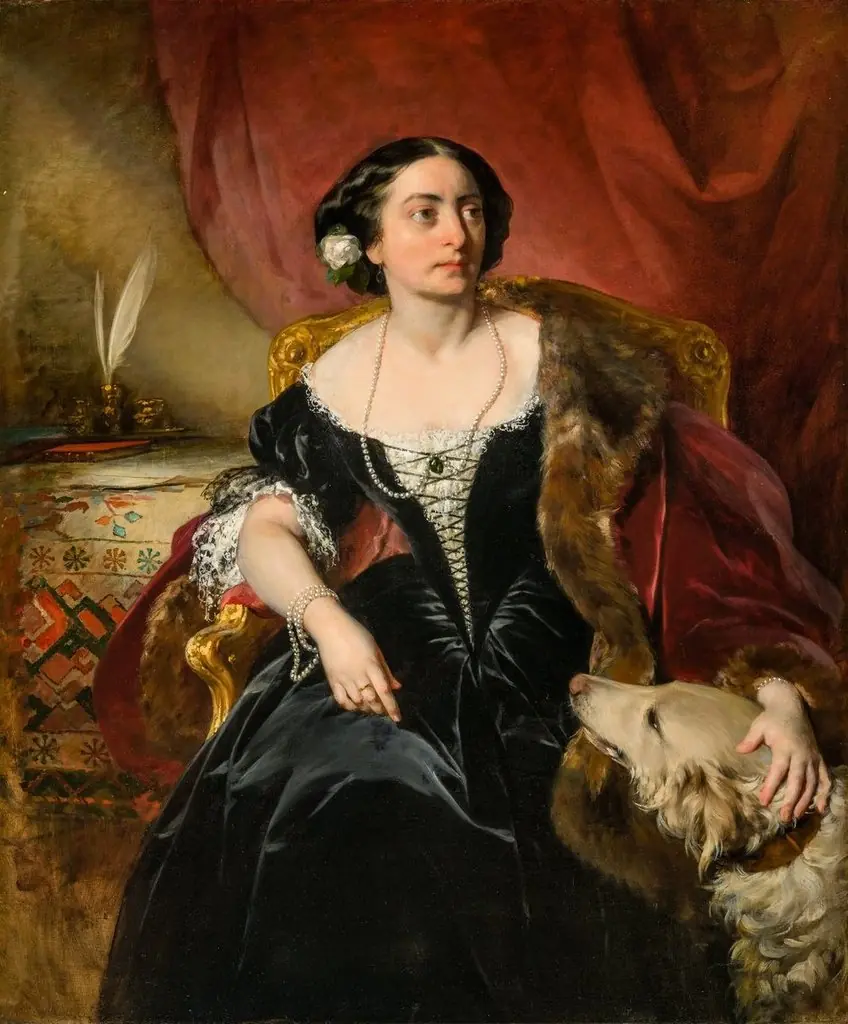 Portrait of Countess Nákó
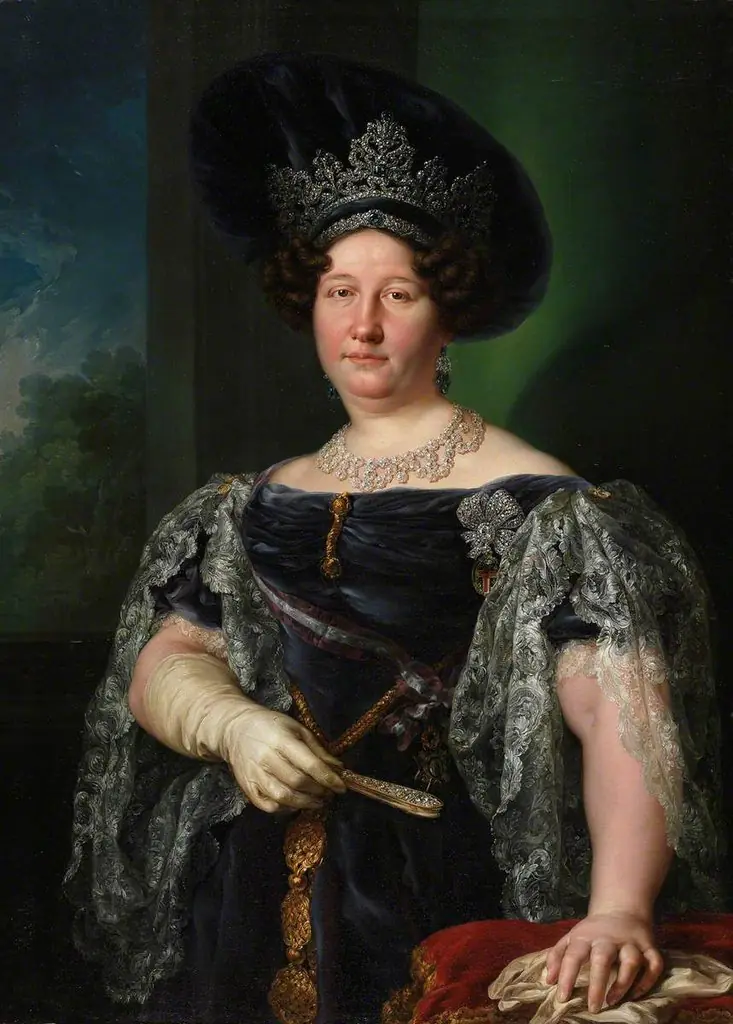 Maria Isabel du Boubón, Queen of the Two Sicilies
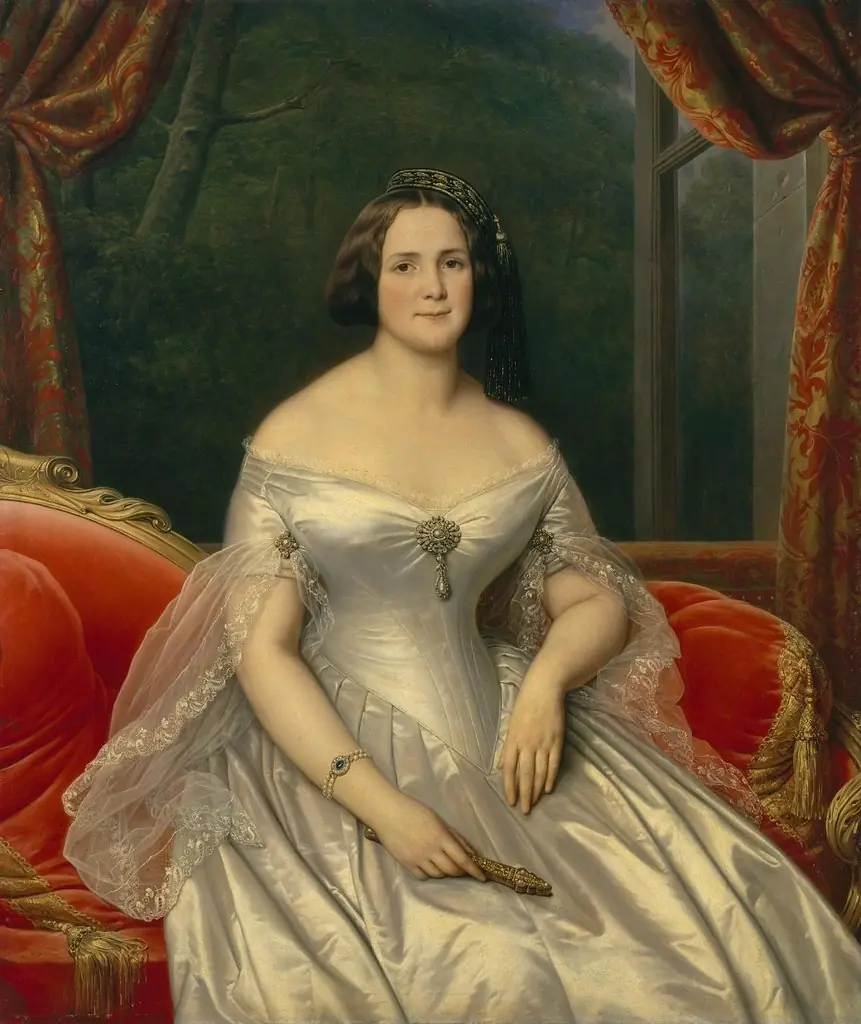 Portrait of Anna Benardaki
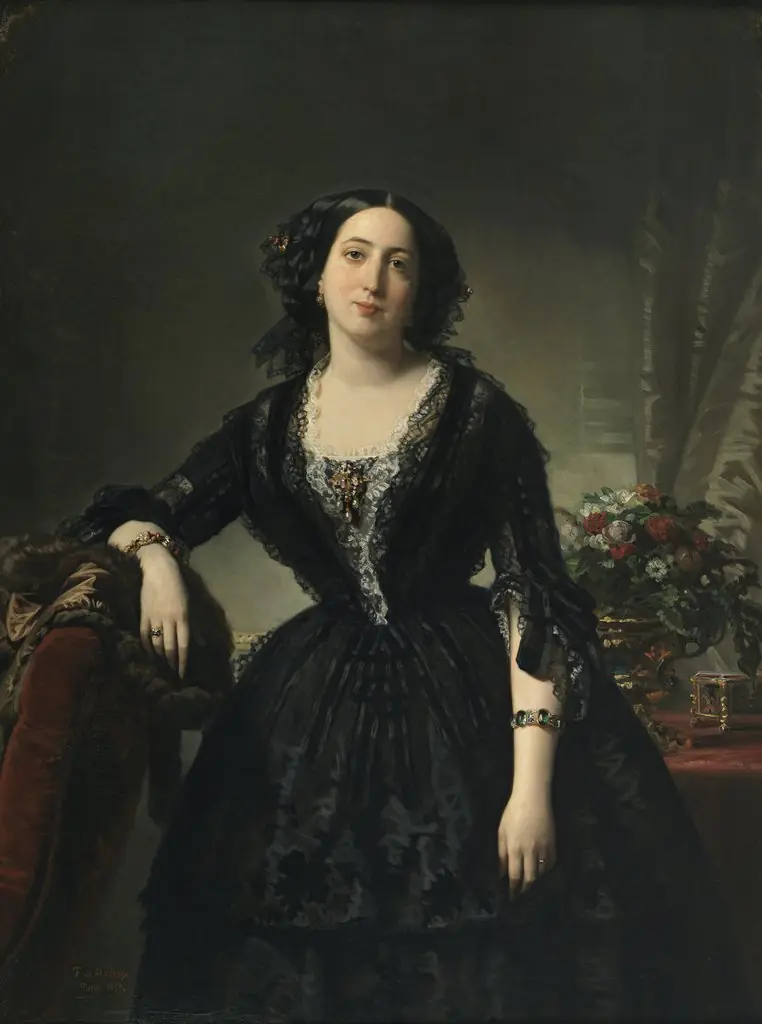 María Dolores de Aldama, Marchioness of Montelo
 Portrait of Johanna Henriette Engelen, second Wife of Daniel Francis Schas
 Portrait of Marie Thérèse of France, Duchess of Angoulême (1778-1851)