Artwork
David Slaying Goliath
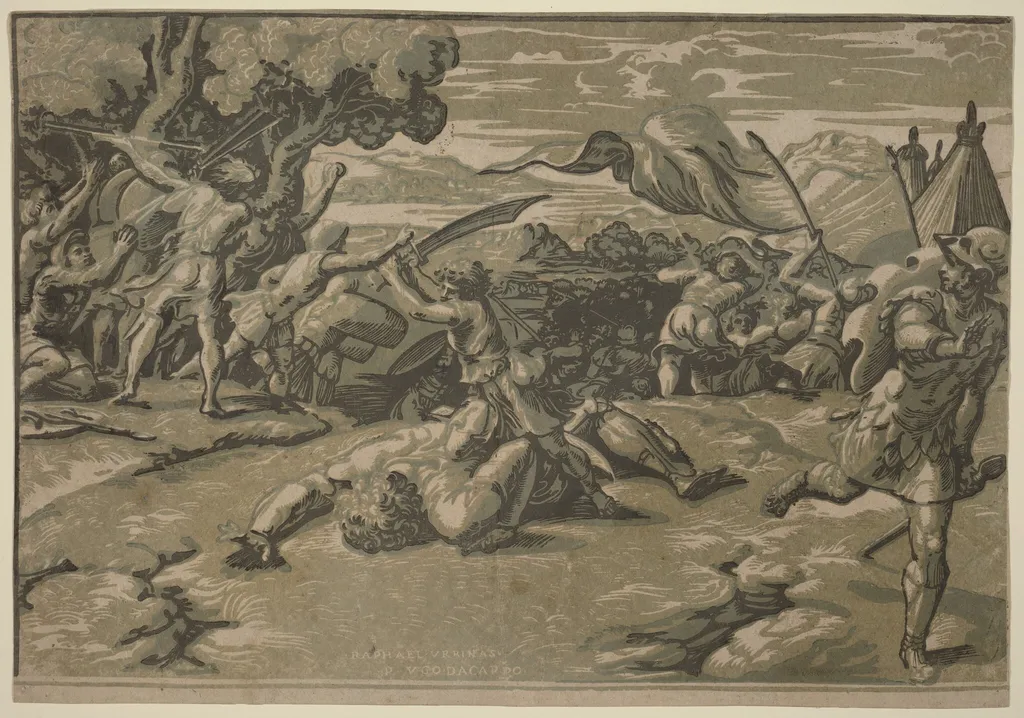
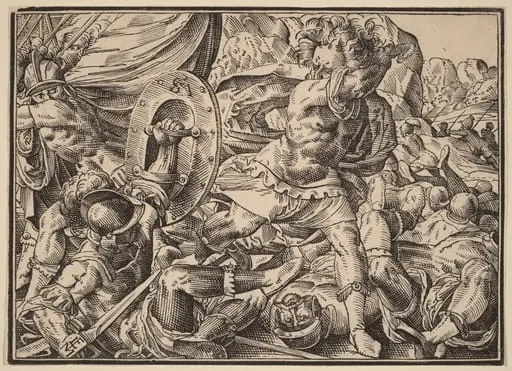
David Slaying Goliath is an ink print by the Renaissance artist Ugo da Carpi. It dates from 1520 and is held in the collection of the National Gallery of Art.
About this work
Overview
David Slaying Goliath is a chiaroscuro woodcut print created by Ugo da Carpi around 1520. It is a representation of the biblical story of David's victory over Goliath, executed in a technique that utilizes multiple woodblocks to achieve tonal variation.
Subject & Meaning
The print depicts a chaotic battle scene with a small, shirtless boy standing over a giant's fallen body, holding a rock. The boy's size relative to the giant references the biblical story of David and Goliath. The scene is populated by muscular, twisting figures with tense faces, some fleeing or reaching for weapons.
Technique & Style
The print employs chiaroscuro, a technique characterized by strong contrasts of light and shadow. Ugo da Carpi, who helped refine this method, used three woodblocks to achieve the desired tonal variation. The use of chiaroscuro creates a sense of depth, making the figures appear to pop from the background.
History & Provenance
Ugo da Carpi was an Italian printmaker active in Venice, Rome, and Bologna between 1502 and 1532. He promoted the chiaroscuro woodcut technique as his own innovation and secured early copyrights for it.
Artist & collection
Artist
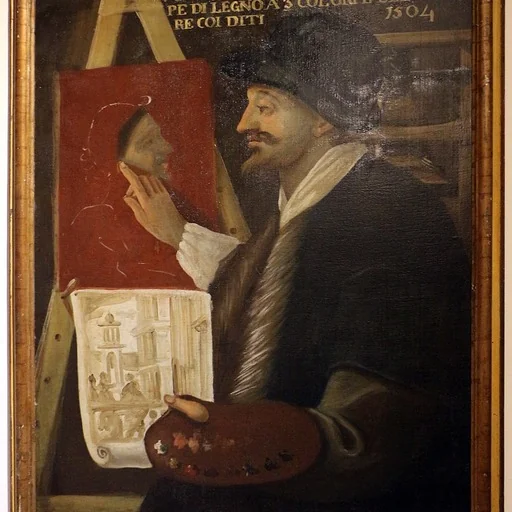
Ugo da Carpi (c. 1450–1480 – c. 1523–1532) was an Italian printmaker active between 1502 and 1532 in the cities of Venice, Rome and Bologna. He is known for his technical and stylistic contributions to the chiaroscuro…

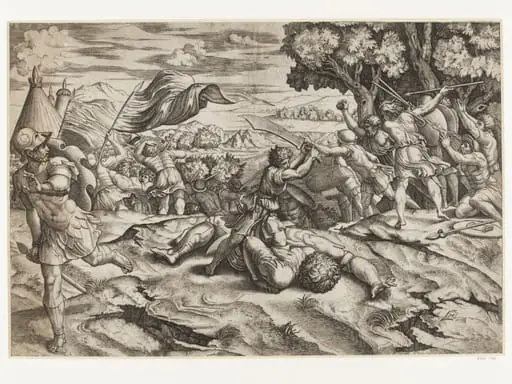 David cutting off the head of Goliath
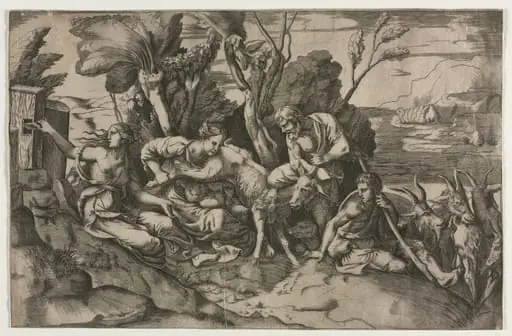 Jupiter Suckled by the Goat Amalthea
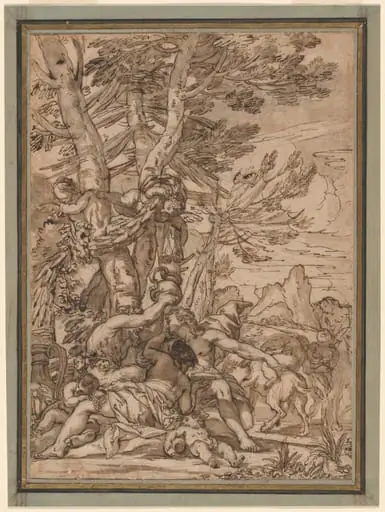 A Bacchanal
 Untitled
 Sinon Deceiving the Trojans
 Christ Tells His Disciples of the Last Judgment
 The Way of Salvation
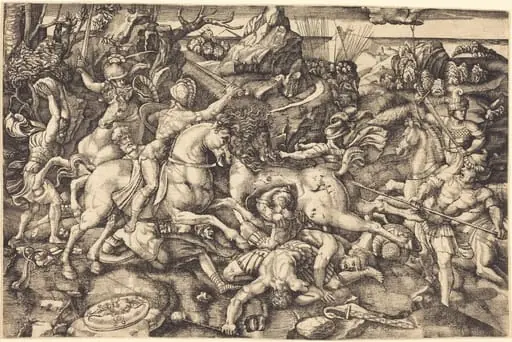 Combat between Horsemen and Foot Soldiers
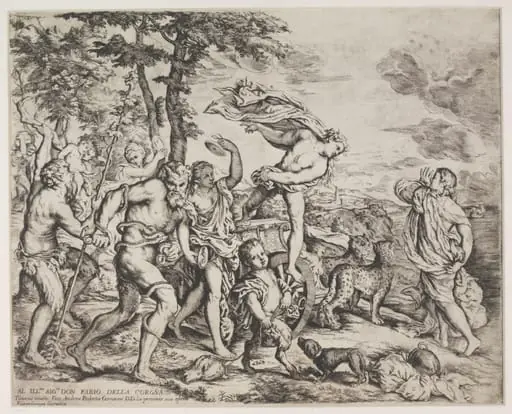 Bacchus and Ariadne
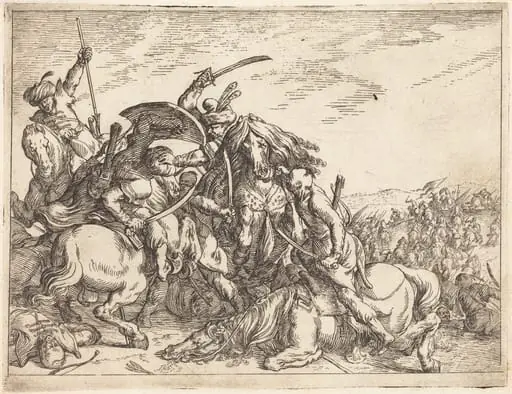 Capricci di varie battaglie
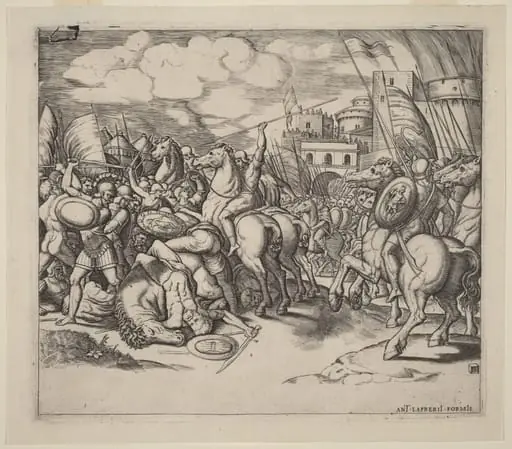 The Victory of Scipio over Syphax
 Ulysses and Polyphemus