Artwork
Diogenes
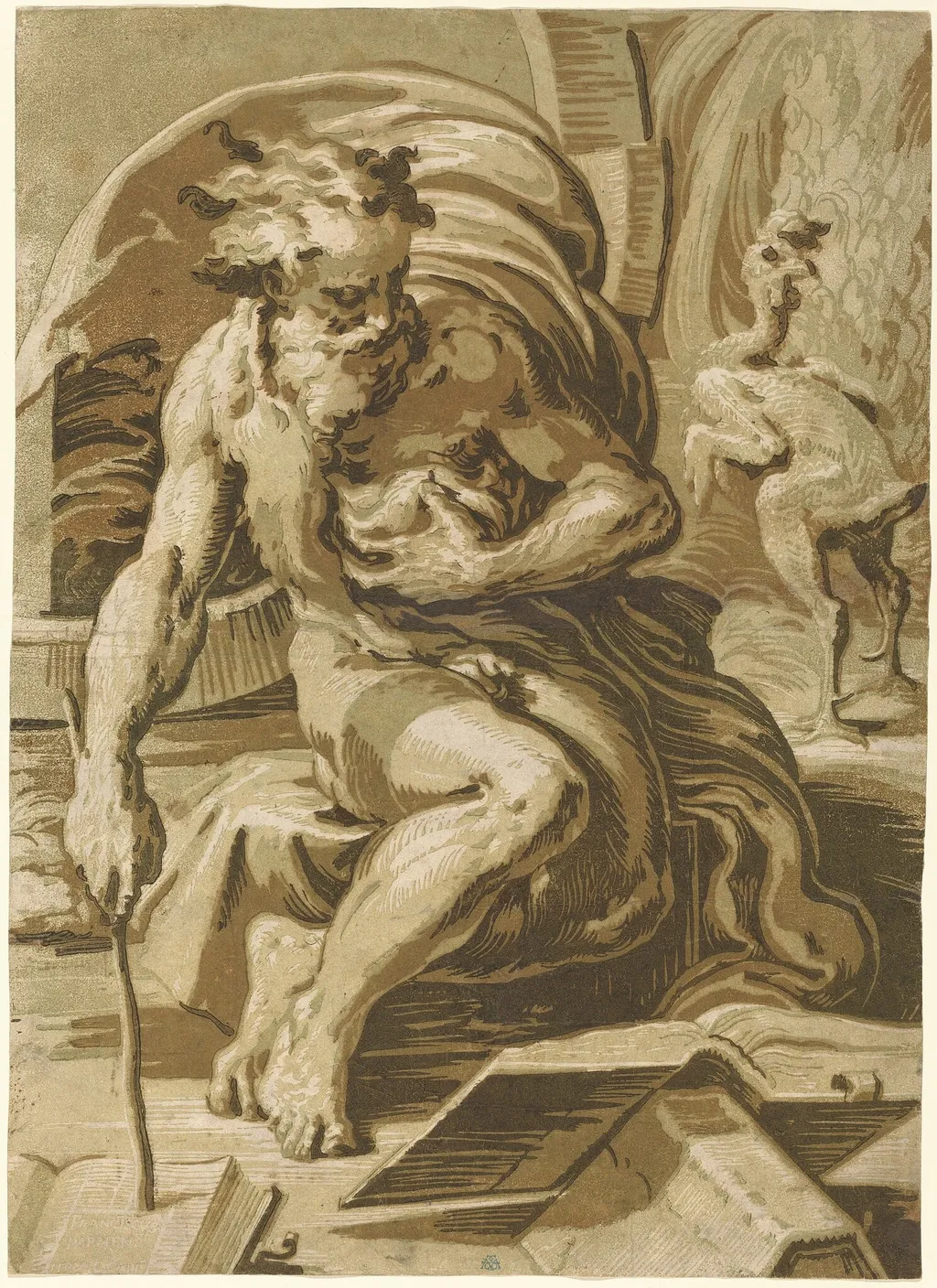
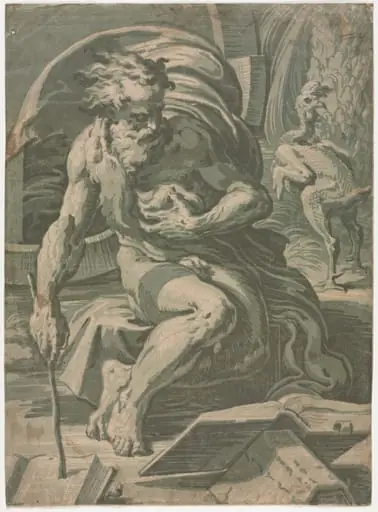
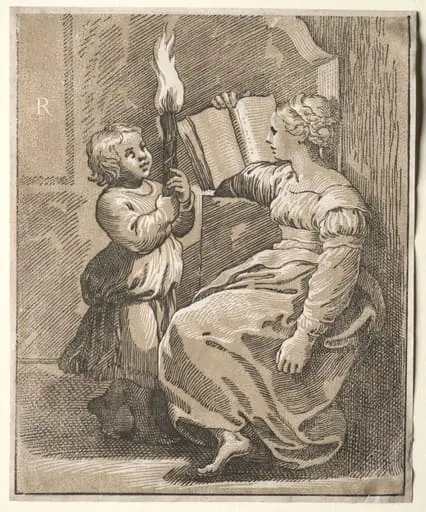
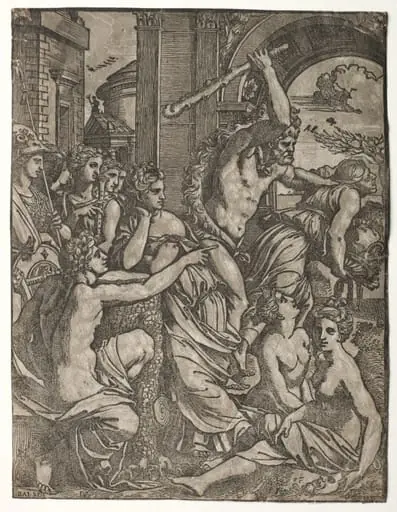
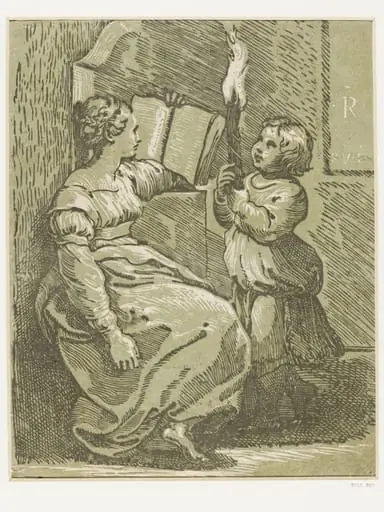
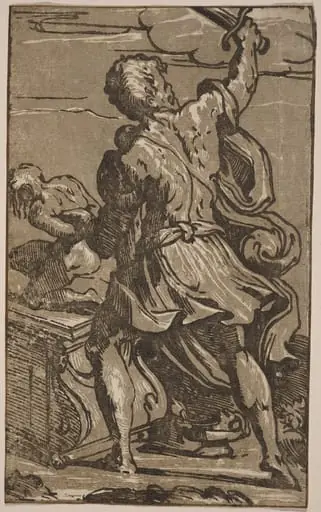
Diogenes is an ink print by the Renaissance artist Ugo da Carpi. It dates from 1527 and is held in the collection of the National Gallery of Art.
About this work
Overview
Ugo da Carpi, an Italian printmaker active in the early 16th century, created *Diogenes* around 1527 using a multi-block chiaroscuro woodcut technique.
Ugo da Carpi, an Italian printmaker active in the early 16th century, created *Diogenes* around 1527 using a multi-block chiaroscuro woodcut technique. The work is printed in brown and green tones from four separate blocks, each contributing to subtle gradations of light and shadow. This method allowed for a tonal richness uncommon in woodcuts of the period, reflecting da Carpi’s technical innovation and his efforts to secure legal protection for the process.
Subject & Meaning
The print portrays Diogenes of Sinope, the ancient Greek philosopher known for his rejection of material wealth and conventional social norms. Seated on the ground with a staff in hand and wrapped in a simple robe, he is depicted in quiet contemplation. The sparse background and focused composition emphasize his isolation and inner reflection, aligning with the Cynic ideal of self-sufficiency and philosophical detachment from worldly concerns.
Technique & Style
Da Carpi employed four carved woodblocks to layer tones of brown and green, creating depth through controlled contrasts rather than line. The brown line block defines form, while the tone blocks build atmosphere through soft transitions. This approach mimicked the chiaroscuro effects of drawing and painting, elevating woodcut from a reproductive medium to one capable of expressive nuance. The result is a quiet, sculptural presence with a sense of volume achieved through ink density alone.
History & Provenance
Da Carpi actively promoted his chiaroscuro technique, petitioning both the Venetian Senate and Pope Leo X for exclusive rights to its use. *Diogenes* was likely produced during his time in Rome or Bologna, where he refined his method after initial experiments in Venice. Though few impressions survive, the print’s existence confirms his ambition to establish printmaking as a legitimate art form deserving of intellectual property recognition.
Context
In the early 1520s, Italian artists and printmakers were exploring ways to replicate the tonal effects of Renaissance painting in print. Da Carpi’s work emerged alongside broader interest in classical philosophy and humanist ideals, making Diogenes a fitting subject. His technical innovations responded to a market seeking more sophisticated prints, while his legal efforts reflected growing awareness of authorship and artistic ownership in the print trade.
Legacy
Though da Carpi’s copyright petitions were largely unsuccessful, his chiaroscuro woodcuts influenced later printmakers in Italy and beyond. *Diogenes* stands as an early example of how print could convey philosophical depth through tone and composition rather than narrative detail. His work contributed to the medium’s evolution, paving the way for more expressive uses of woodcut in the 16th century.
Own this work as a print
Artist & collection
Artist
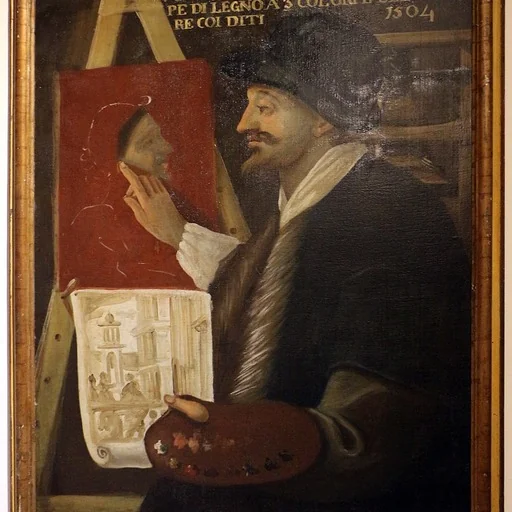
Ugo da Carpi (c. 1450–1480 – c. 1523–1532) was an Italian printmaker active between 1502 and 1532 in the cities of Venice, Rome and Bologna. He is known for his technical and stylistic contributions to the chiaroscuro…