Artwork
Pietro Antonio Tolentino
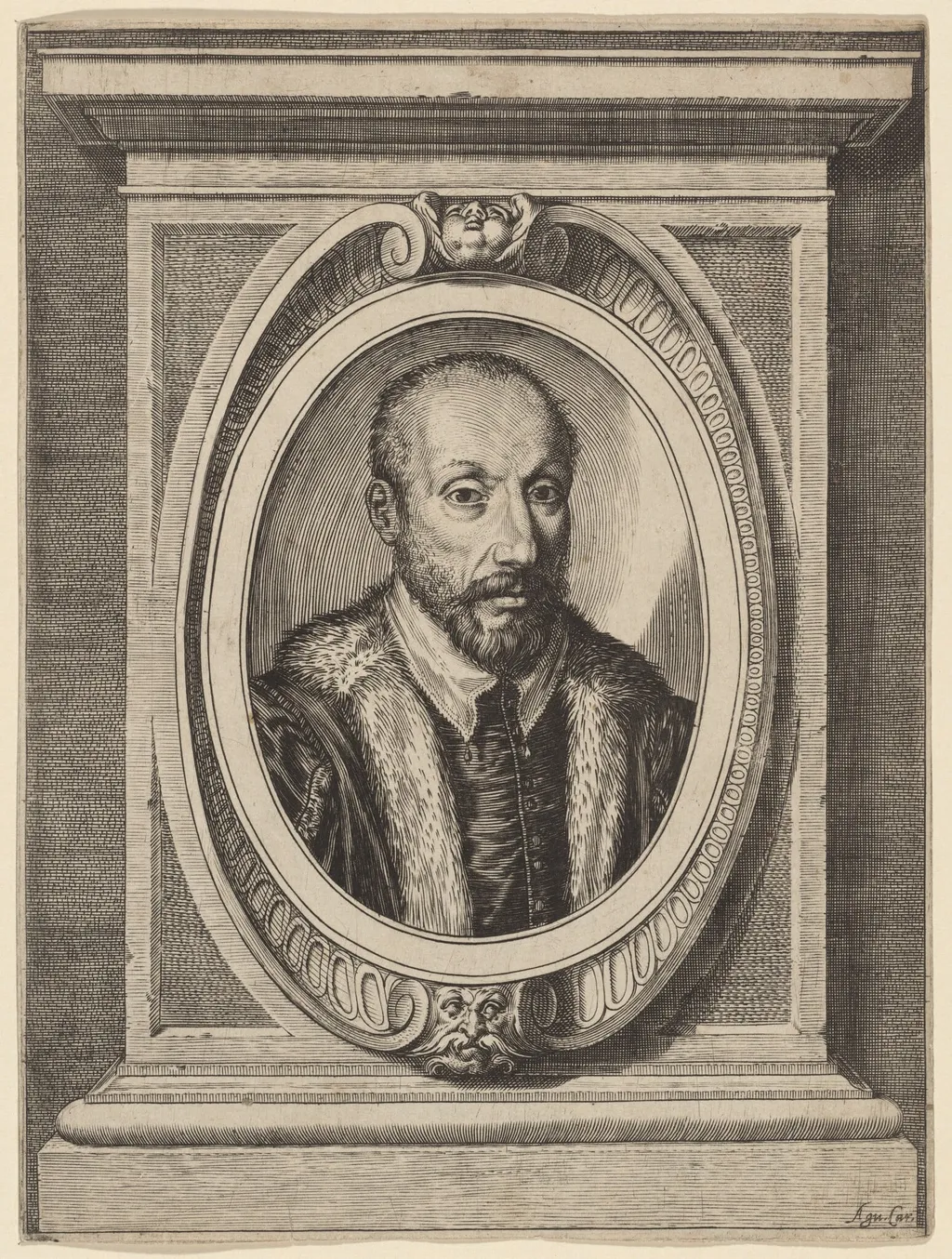
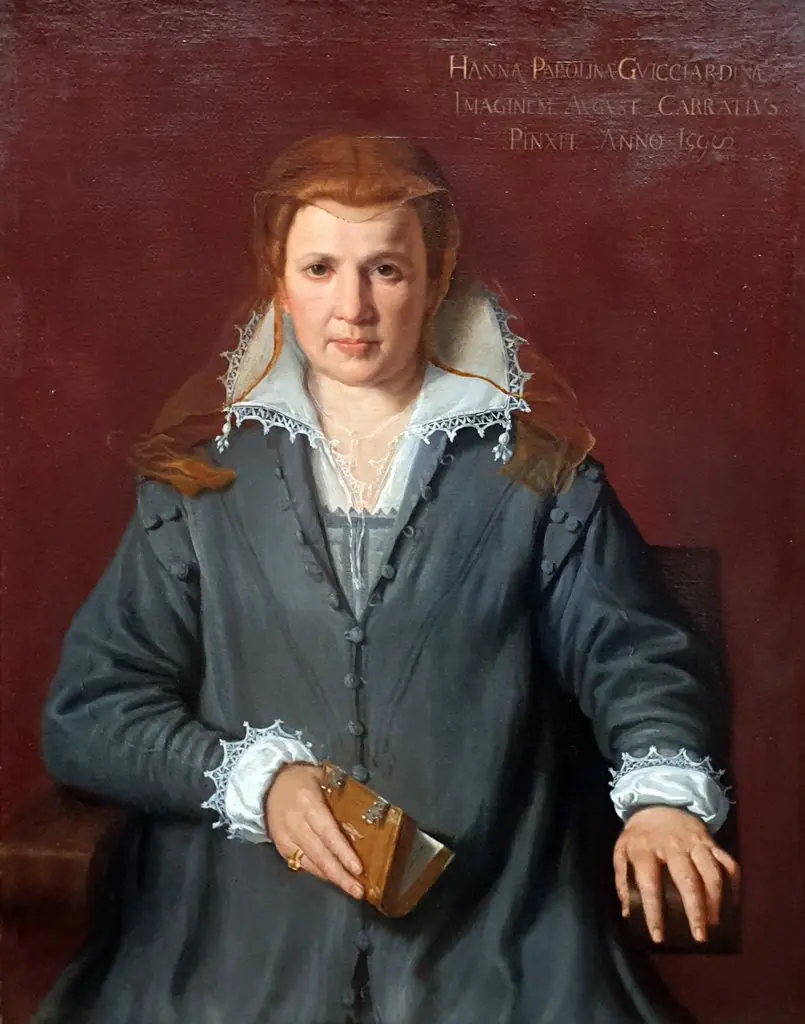
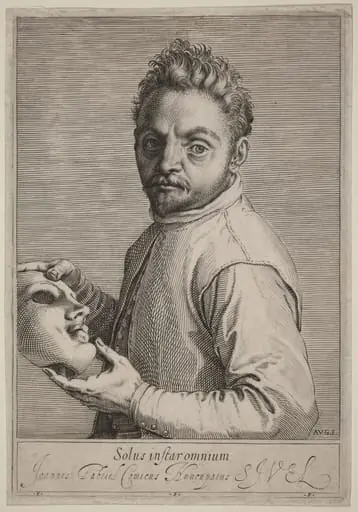
Pietro Antonio Tolentino is an ink print by the Renaissance artist Agostino Carracci. It dates from 1588 and is held in the collection of the National Gallery of Art.
About this work
Overview
As a printmaker and co-founder of the Accademia degli Incamminati in Bologna, Carracci sought to revive naturalism in art through disciplined draftsmanship.
Agostino Carracci created this black-and-white engraving around 1588, depicting the Italian cleric Pietro Antonio Tolentino. As a printmaker and co-founder of the Accademia degli Incamminati in Bologna, Carracci sought to revive naturalism in art through disciplined draftsmanship. This portrait exemplifies his commitment to clarity and structural integrity in reproductive prints, aligning with the academy’s broader artistic reforms.
Subject & Meaning
The subject, Pietro Antonio Tolentino, was a respected religious figure whose dignified bearing is rendered with quiet solemnity. His short beard, tightly curled hair, and high ruffled collar suggest clerical status and personal austerity. The composition avoids ornamentation, focusing instead on the gravity of the sitter’s presence, reflecting the reformist values of the Bolognese academy that favored moral seriousness over theatricality.
Technique & Style
Carracci employed fine, controlled lines and subtle gradations of tone to model the face and fabric with precision. The ruffled collar and textured hair reveal meticulous attention to surface detail, achieved through cross-hatching and delicate stippling. The oval portrait is enclosed within a rectangular border adorned with decorative swirls, a common framing device in Renaissance prints that enhances compositional balance without distracting from the figure.
History & Provenance
Created during Carracci’s early career in Bologna, the engraving likely served as a portrait commission or an academic exercise in figural representation. While specific early ownership records are sparse, it circulated among collectors and artists familiar with the Accademia’s ideals. Its survival reflects the growing demand for high-quality reproductive prints that disseminated the Bolognese school’s aesthetic principles.
Context
In the late 16th century, Mannerist art dominated Italian visual culture with its elongated forms and artificial elegance. Carracci and his circle opposed this trend, advocating a return to observation, classical proportion, and emotional restraint. This engraving, like others from the Accademia, functioned as both a portrait and a pedagogical tool, demonstrating how disciplined line work could convey truth and dignity.
Legacy
Carracci’s engravings, including this portrait, influenced generations of printmakers by proving that intaglio techniques could achieve the same naturalism as painting. His emphasis on careful observation and structural clarity helped shift printmaking from mere reproduction toward a respected artistic medium. The work remains a quiet testament to the Bolognese reform movement’s enduring impact on European graphic arts.
Artist & collection
Artist
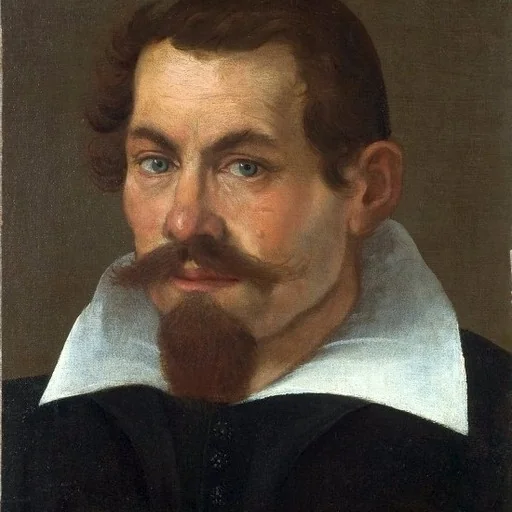
Agostino Carracci ( kə-RAH-chee, UK also kə-RATCH-ee, Italian: ; also Caracci; 16 August 1557 – 22 March 1602) was an Italian painter, printmaker, tapestry designer, and art teacher.