Artwork
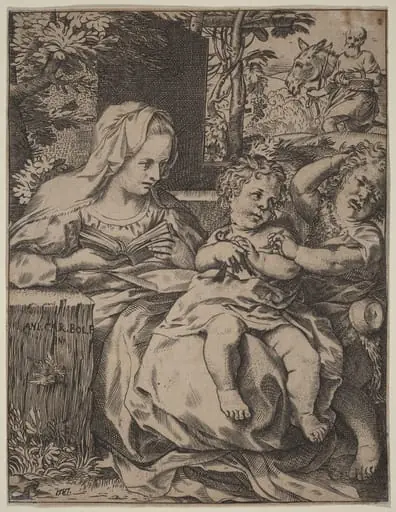
The Virgin and Child with Saint Anne and Saint John
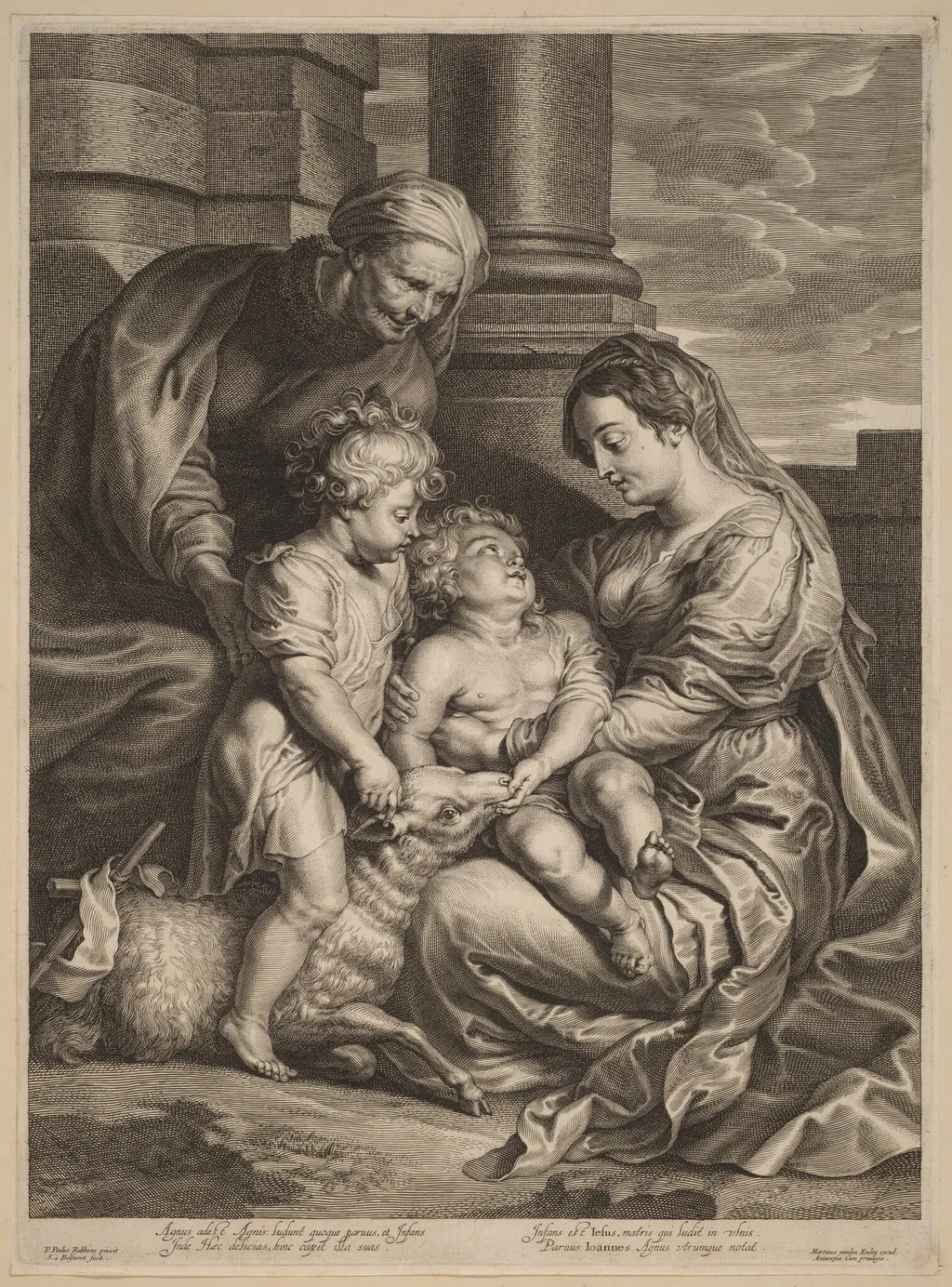
The Virgin and Child with Saint Anne and Saint John is an ink print by the Baroque artist Schelte Adams Bolswert. It dates from 1638 and is held in the collection of the National Gallery of Art. Created in 1638, this engraving on laid paper presents a quiet devotional scene.
About this work
Overview
The composition is rendered in fine line work, characteristic of early‑modern printmaking, and reflects the religious subject matter popular in the period.
Created in 1638, this engraving on laid paper presents a quiet devotional scene. The Virgin Mary holds the infant Jesus, while Saint Anne and the youthful Saint John are positioned nearby, forming a compact group that emphasizes familial intimacy. The composition is rendered in fine line work, characteristic of early‑modern printmaking, and reflects the religious subject matter popular in the period.
Subject & Meaning
The image brings together three figures linked by biblical and familial ties: Mary, mother of Christ; the infant Jesus; Saint Anne, traditionally regarded as Mary’s mother; and the child Saint John the Baptist, often shown as a companion of the infant Christ. Their close arrangement suggests a harmonious lineage and spiritual kinship, inviting contemplation of the holy family’s unity and the role of intergenerational devotion.
Technique & Style
Executed with meticulous cross‑hatching, the engraving achieves a subtle gradation of tone that suggests volume and texture. Delicate lines define the drapery, facial expressions, and background details, while the interplay of light and shadow creates a sense of depth. The precision of the line work reflects the Flemish print tradition of the early seventeenth century, where reproductions aimed to capture the painterly qualities of original works.
History & Provenance
The work is attributed to Schelte Adamsz. Bolswert, a Frisian engraver who worked in Antwerp and was closely associated with Peter Paul Rubens’ workshop. Bolswert specialized in translating paintings by Rubens and contemporaries such as Anthony van Dyck into prints, thereby disseminating their compositions. This particular engraving was likely produced for a devotional market, circulating among collectors and churches in the Dutch‑Flemish region.
Context
In the 1630s, religious prints served both as objects of private piety and as visual extensions of major artistic studios. Antwerp’s bustling print industry enabled artists like Bolswert to reach a wider audience, while the inclusion of Saint Anne reflects contemporary Counter‑Reformation emphasis on the sanctity of the Holy Family. The engraving thus functions within a broader network of devotional imagery that reinforced Catholic identity.
Artist & collection
Artist
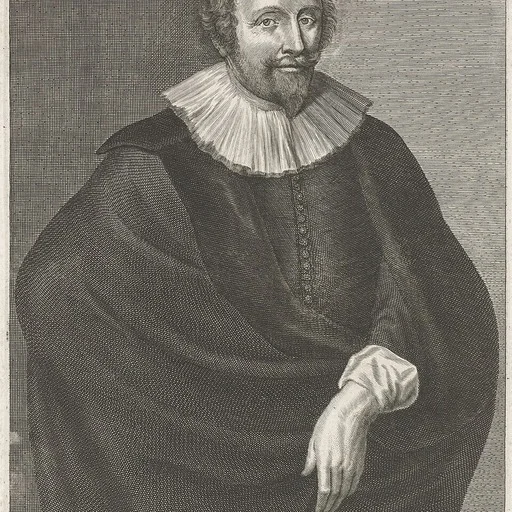
Schelte a Bolswert or Schelte Adamsz. Bolswert (c. 1586 – 1659) was a Frisian engraver who worked most of his career in Antwerp where he was one of the lead engravers in Rubens' workshop. He is known for his…

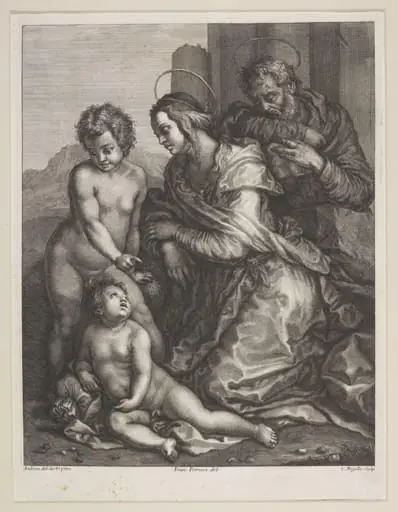 Holy Family
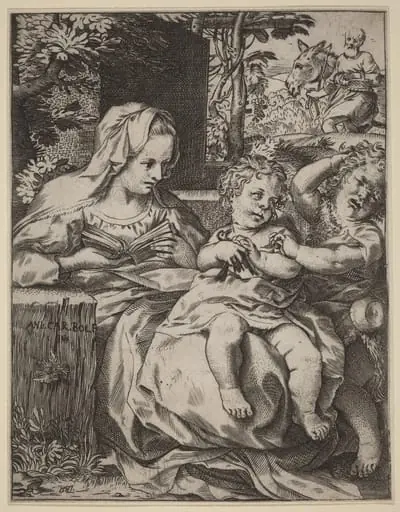 The Madonna of the Swallow (La Madonna Della Rondinella)
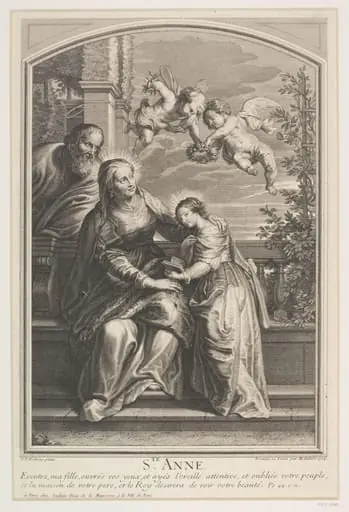 St. Anne
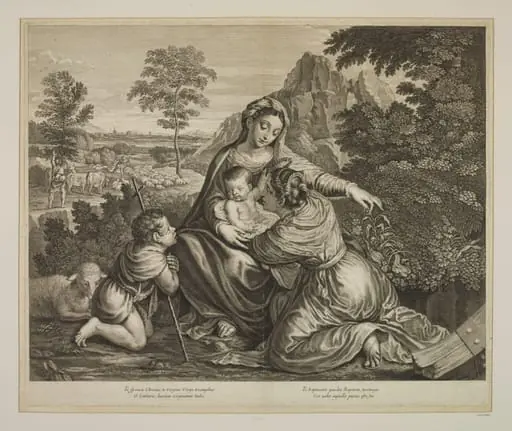 The Marriage of St. Catherine
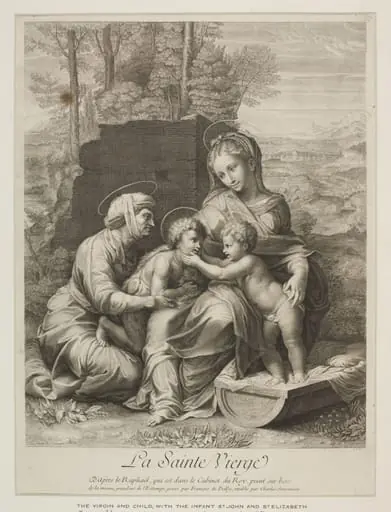 LA SAINTE VIERGE
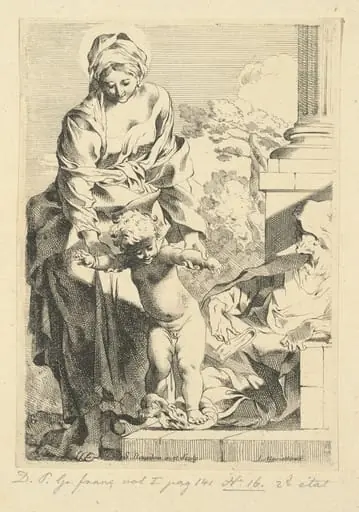 Virgin and Child Trampling Sin
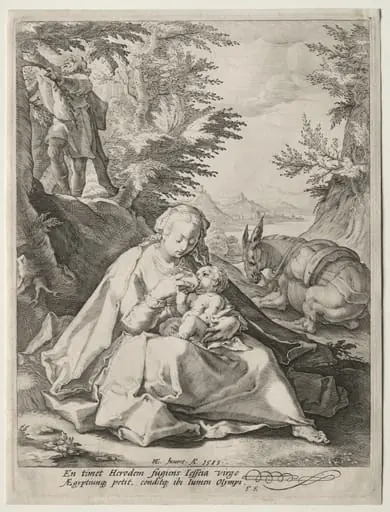 Rest on the Flight into Egypt
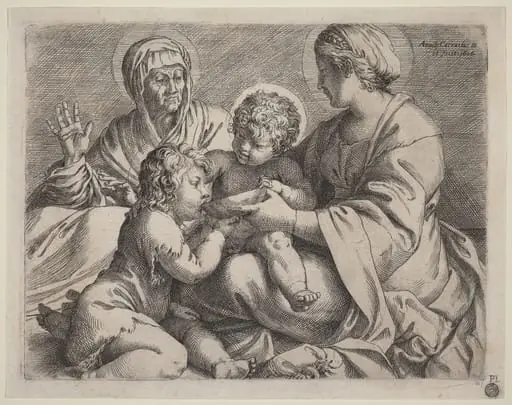 The Madonna della Scodella
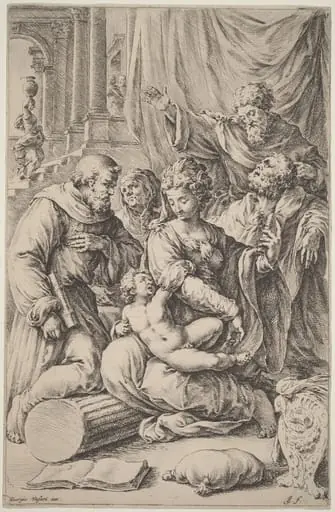 Holy Family with Saints
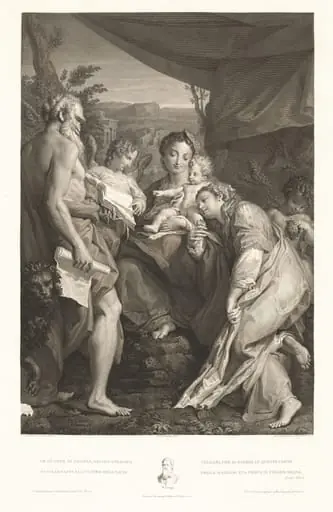 Virgin and Child with Saints Jerome and Catherine and an Angel
 The Madonna of the Swallow