Artwork
Standing Boy in a Landscape
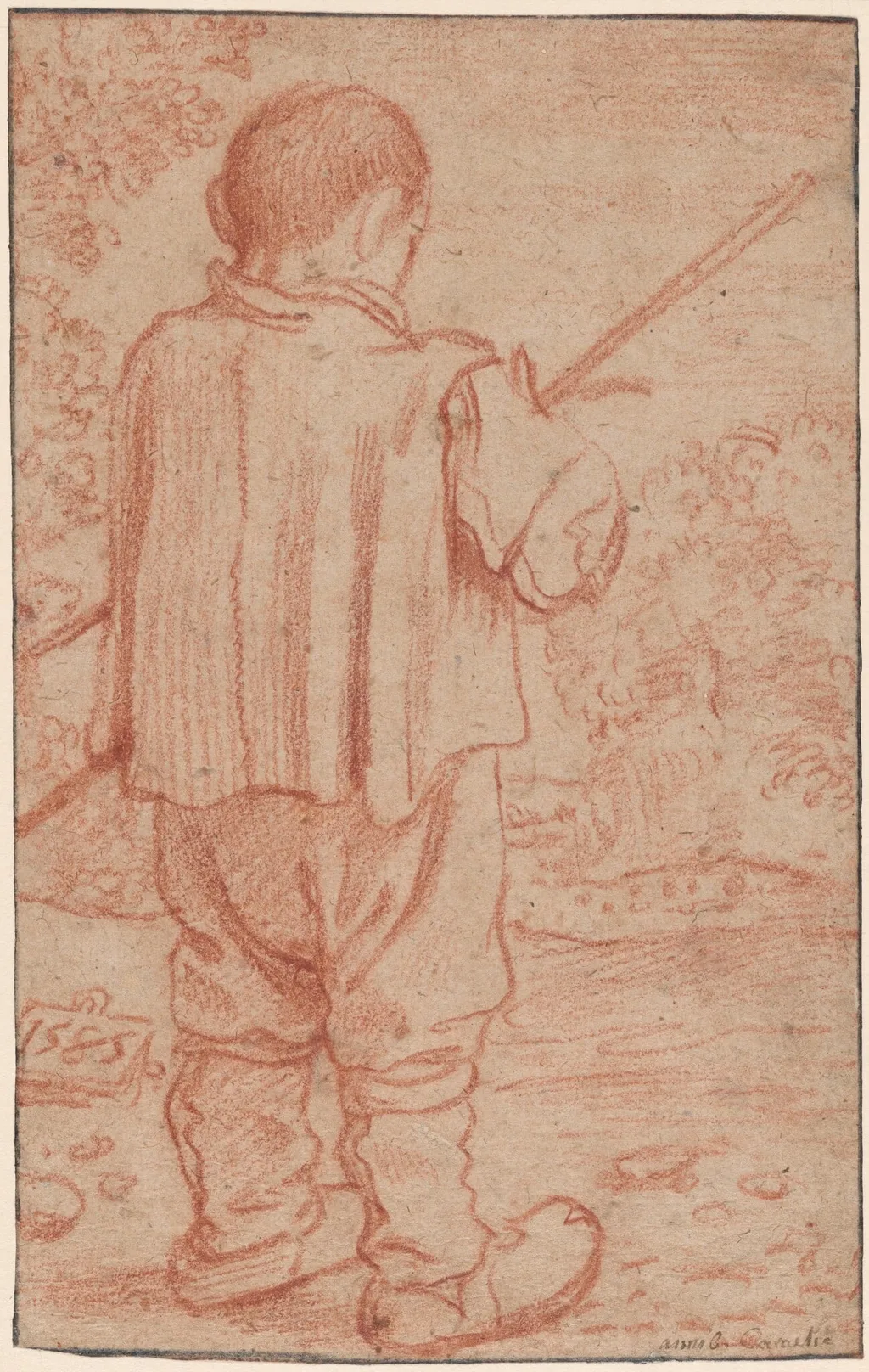
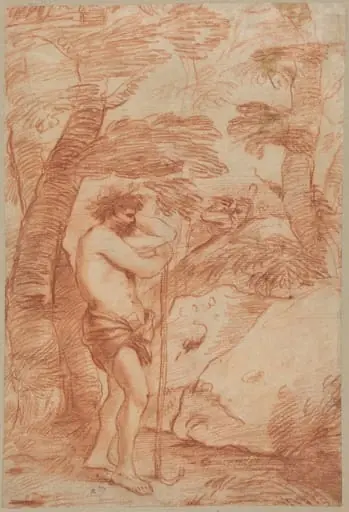
Standing Boy in a Landscape is a chalk drawing by the Renaissance artist Lodovico Carracci. It dates from 1585 and is held in the collection of the National Gallery of Art.
About this work
Overview
, and exemplifies the artist’s early engagement with observational drawing as a means of capturing transient moments in the natural world.
This drawing, executed in red chalk on buff laid paper around 1585, is attributed to Lodovico Carracci. It depicts a solitary boy standing in a natural setting, rendered with quiet precision. The work belongs to the collection of the National Gallery of Art in Washington, D.C., and exemplifies the artist’s early engagement with observational drawing as a means of capturing transient moments in the natural world.
Subject & Meaning
The figure, viewed from behind, stands motionless along a winding path, surrounded by dense vegetation. His posture—right arm bent, left arm hanging—suggests contemplation rather than action. The absence of narrative detail or symbolic elements shifts focus to the figure’s quiet presence within nature, reflecting a Renaissance interest in the individual’s relationship to the environment, unadorned by allegory.
Technique & Style
Carracci employed red chalk with restrained sensitivity, using varied line weight and soft hatching to model form and suggest depth. The buff paper’s warm tone integrates with the chalk, enhancing the naturalism of the scene. Foliage is indicated through delicate, overlapping strokes rather than detailed rendering, creating atmospheric recession. The technique reveals a focus on observation over idealization, characteristic of Carracci’s preparatory practice.
History & Provenance
The drawing entered the National Gallery of Art’s collection in the 20th century, though its earlier ownership remains undocumented. It is generally dated to the mid-1580s, a period when Carracci was developing his approach to landscape and figure studies in Bologna. Its survival as a standalone sheet, rather than a study for a larger work, suggests it was valued for its own compositional integrity.
Context
In the 1580s, Carracci and his circle in Bologna were redefining artistic practice by emphasizing direct observation of nature. This drawing aligns with a broader movement away from Mannerist stylization toward naturalism. While not a finished painting, it reflects the growing importance of landscape as a subject worthy of independent study, foreshadowing later developments in European drawing traditions.
Legacy
Though modest in scale, this drawing exemplifies Carracci’s role in revitalizing drawing as a disciplined art form. Its emphasis on quiet observation and tonal harmony influenced later generations of artists who sought to capture nature with sincerity. As a surviving example of preparatory work from a pivotal moment in Italian art, it contributes to understanding the transition from Mannerism to Baroque naturalism.
Artist & collection


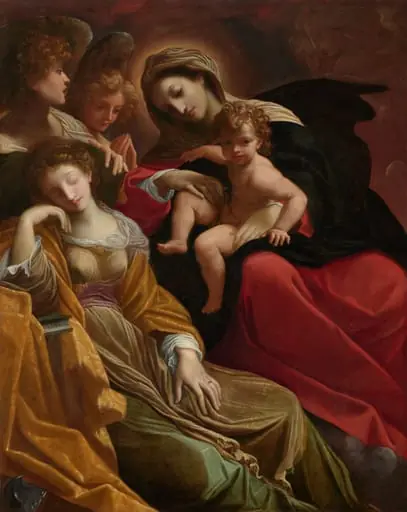 The Dream of Saint Catherine of Alexandria
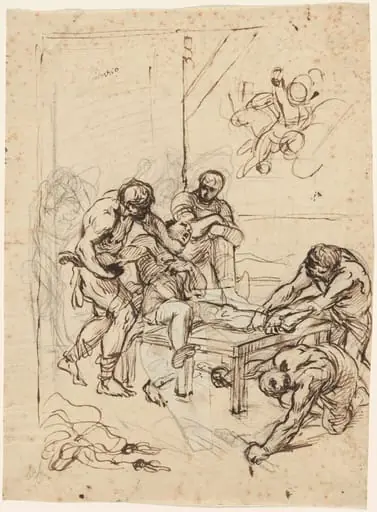 The Martyrdom of Saint Lawrence
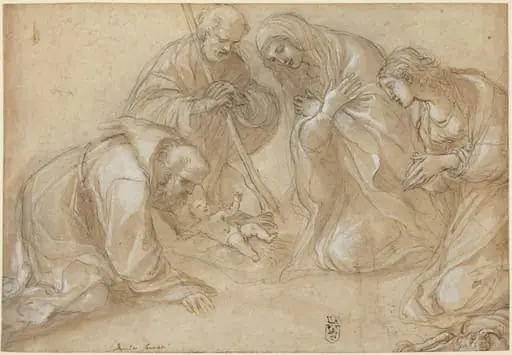 The Nativity with Saints Francis and Agnes
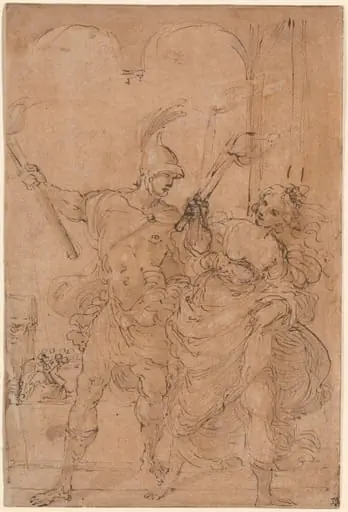 Alexander and Thaïs Setting Fire to Persepolis
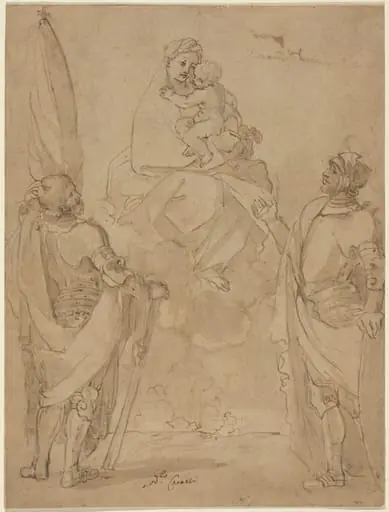 The Virgin and Child Appearing to Saints George and William
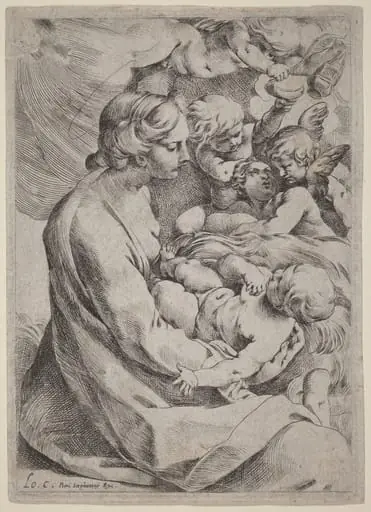 Madonna and Child with Angels
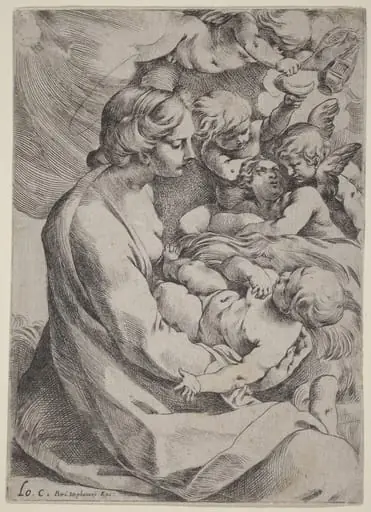 Madonna and Child with Angels
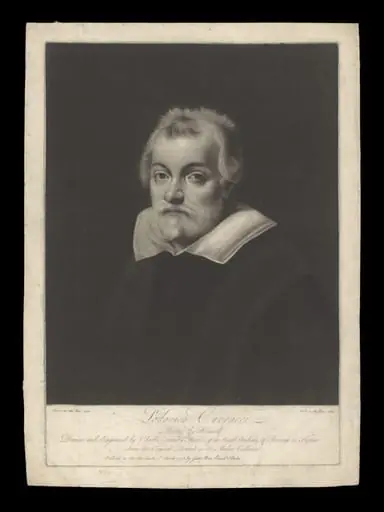 H Beard Print Collection
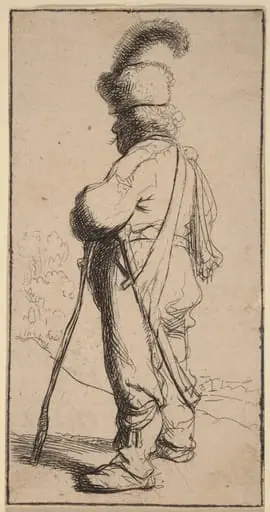 Polander Leaning on a Stick
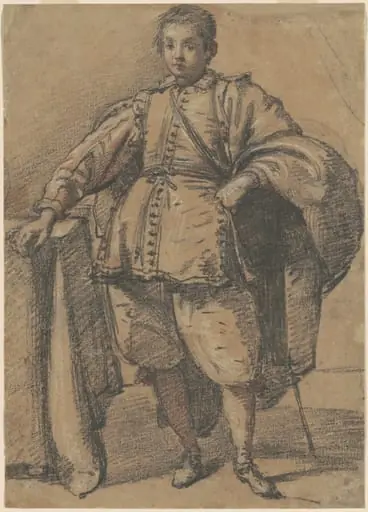 Portrait of a Young Nobleman
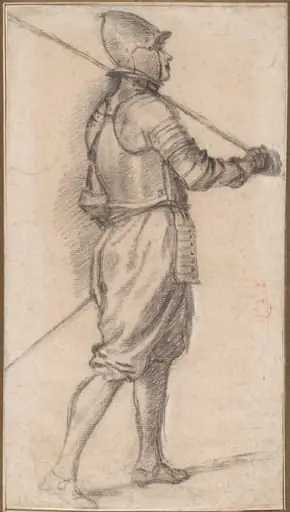 Standing Soldier, Facing Right
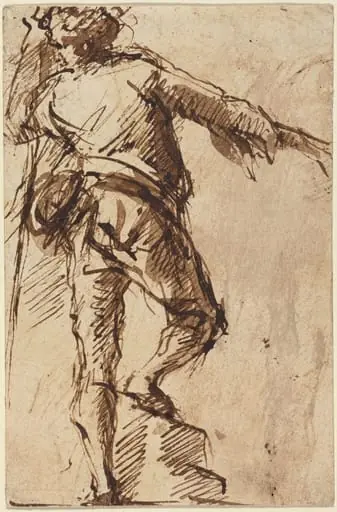 A Young Man with a Staff
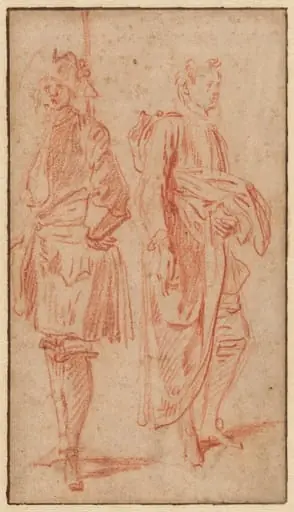 Two Standing Soldiers, One Wearing a Hat
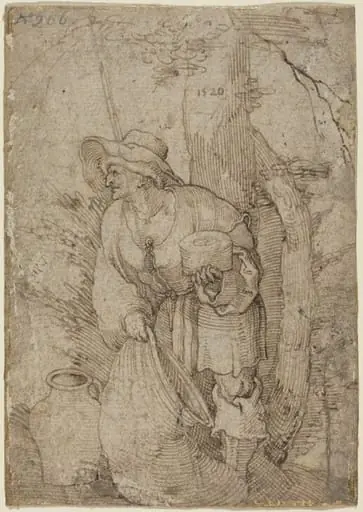 Old Man Standing under Tree
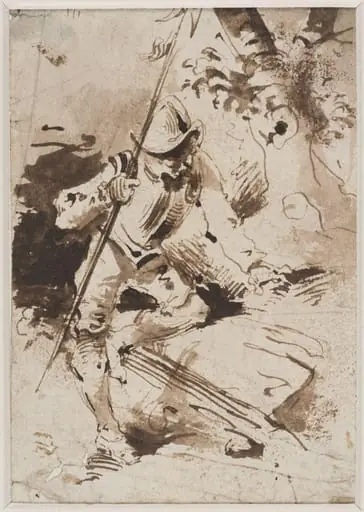 A halberdier resting his left hand and knee on a rock, with a tree in the backgroud
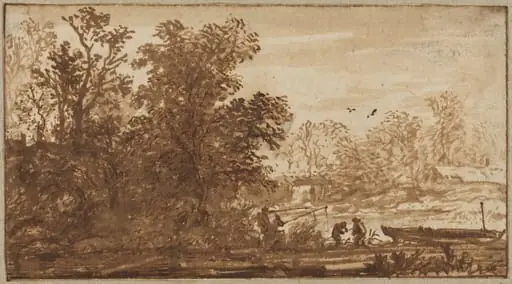 Fisherman in a River Landscape
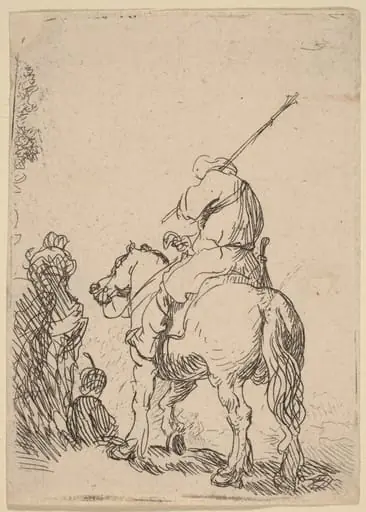 Turbaned Soldier on Horseback
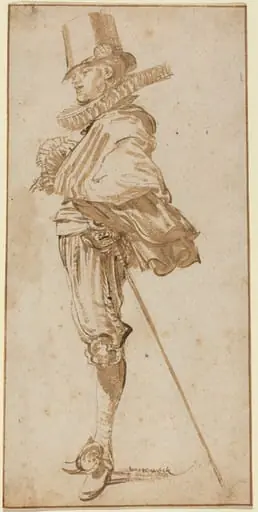 Standing Cavalier Wearing a Sword
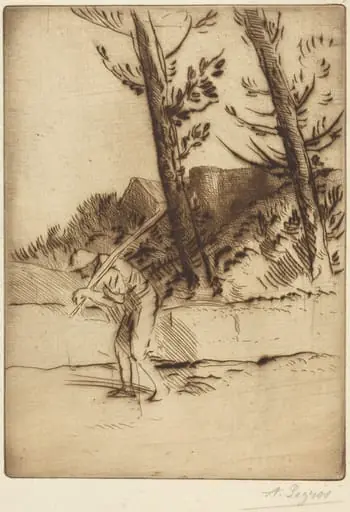 View of a Farm (La ferme des Bordes)
 Standing Shepherd in a Landscape