Artwork
View of a Farm (La ferme des Bordes)
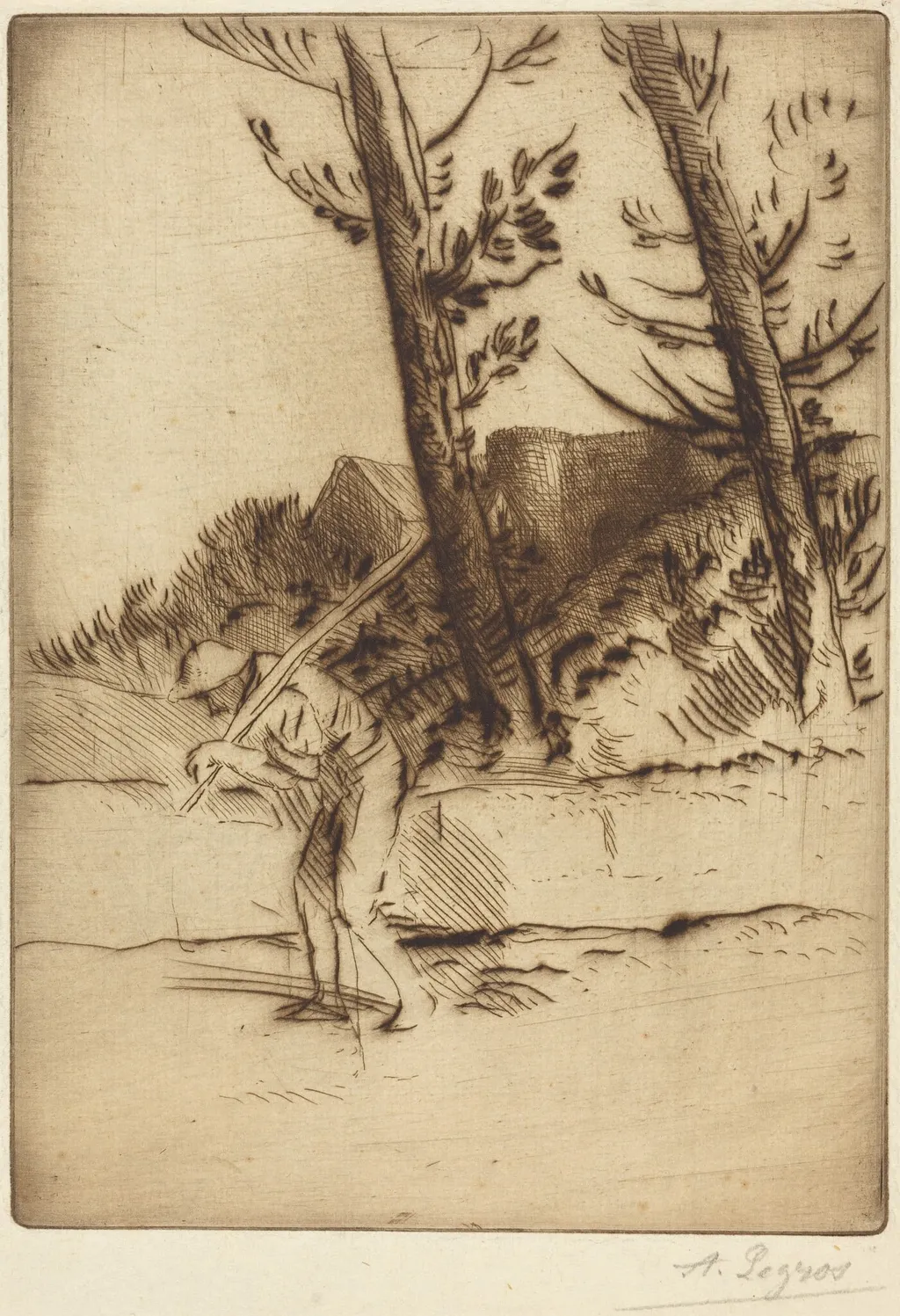
View of a Farm (La ferme des Bordes) is an ink print by the Romanticist artist Alphonse Legros. It dates from 1874 and is held in the collection of the National Gallery of Art.
About this work
Overview
Though French by birth, Legros had been based in London since 1863, where he became a central figure in the revival of fine printmaking.
Created in 1874 by Alphonse Legros, *View of a Farm (La ferme des Bordes)* is a print executed in etching and drypoint. Though French by birth, Legros had been based in London since 1863, where he became a central figure in the revival of fine printmaking. This work reflects his interest in rural life and his mastery of tonal nuance through incised lines, capturing a quiet moment in the countryside with minimal but deliberate mark-making.
Subject & Meaning
The scene portrays a solitary figure approaching a farmhouse, accompanied by a horse-drawn cart. No dramatic event unfolds; instead, the focus lies in the rhythm of daily labor and the stillness of the landscape. The absence of human faces and the subdued scale of the structures suggest contemplation over narrative. The image conveys a sense of quiet endurance, rooted in the rhythms of agricultural life rather than its spectacle.
Technique & Style
Legros employed etching and drypoint to build texture through layered, incised lines. Drypoint’s burr creates soft, velvety shadows, while etching allows for finer contours. The rendering of trees, furrows, and rocks relies on rapid, gestural strokes that suggest form without defining it. Light is modeled through gradations of ink, not sharp contrasts, resulting in a hazy, atmospheric effect that prioritizes mood over precision.
History & Provenance
The print was made during Legros’s early years in England, a period when he was actively promoting etching as a serious artistic medium. Though the exact provenance of this particular impression is not documented, it aligns with his broader output from the 1870s, which often depicted rural scenes from southern England and his native Burgundy. It was likely circulated among print collectors and art students in London.
Context
In the 1870s, British printmaking was undergoing a renaissance, with artists turning away from reproductive engraving toward original, expressive etchings. Legros, influenced by French Realism and Dutch landscape traditions, brought a direct, observational approach that contrasted with academic norms. His focus on humble rural subjects resonated with broader European trends favoring everyday life over historical or mythological themes.
Legacy
Legros’s prints, including this one, helped redefine etching as a vehicle for personal expression rather than mere reproduction. His economical use of line and emphasis on atmosphere influenced a generation of British printmakers, including those associated with the Etching Revival. Though less known today than his contemporaries, his work remains a quiet benchmark for the emotional potential of tonal printmaking.
Artist & collection

Artist
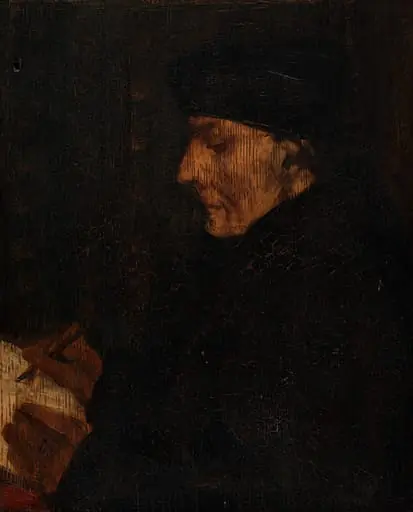
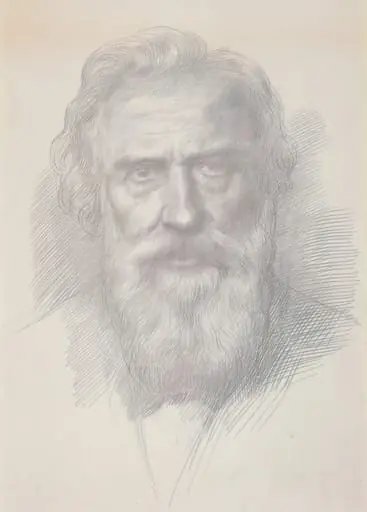
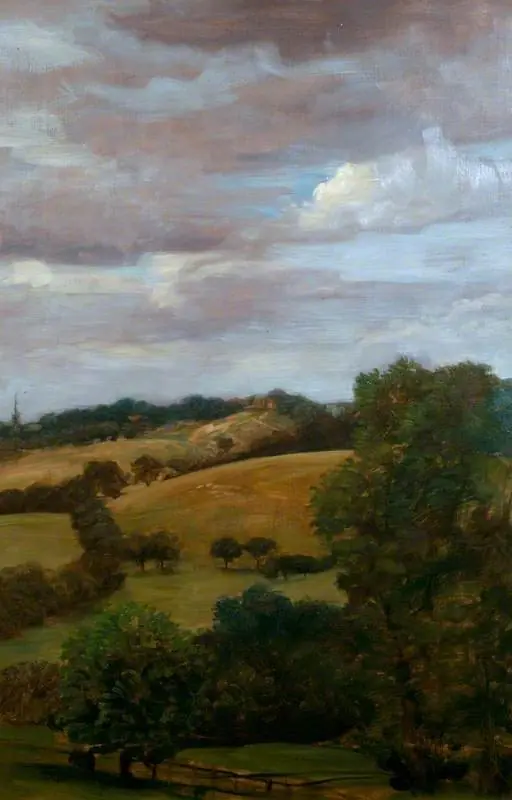
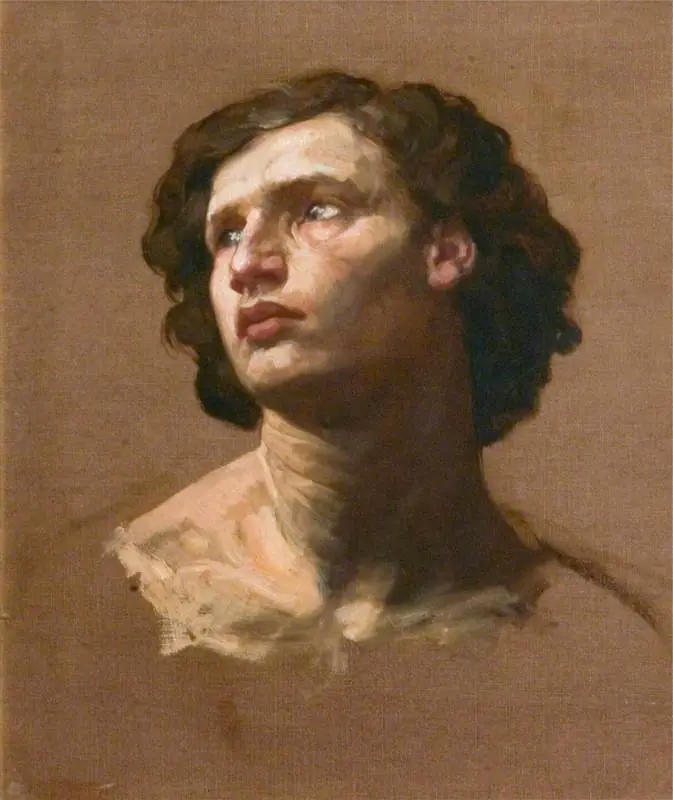
Alphonse Legros (French pronunciation: ; 8 May 1837 – 8 December 1911) was a French, later British, painter, etcher, sculptor, and medallist.

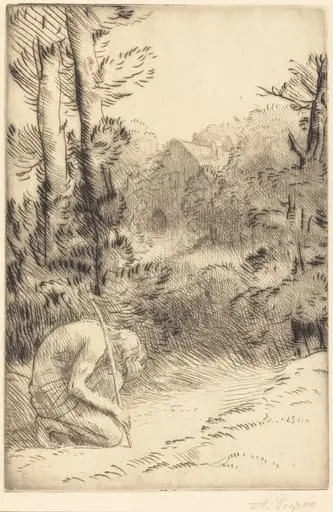 The Prodigal Son, 2nd plate (L'enfant prodigue)
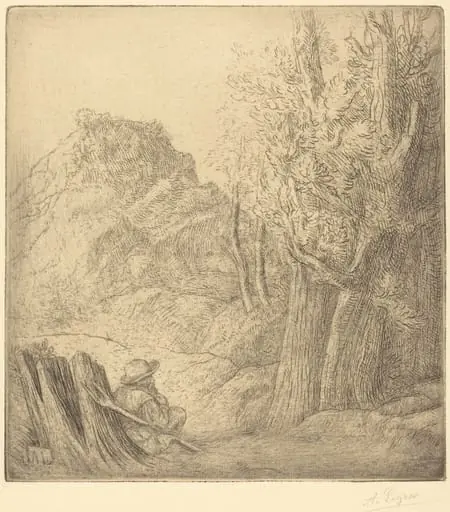 Old Village (Ville vieille)
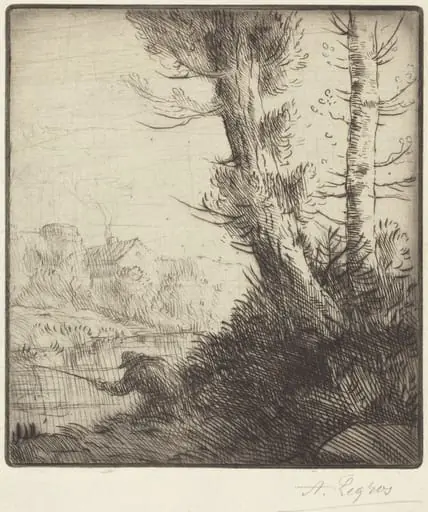 Banks of the Oise (Bord de l'Oise)
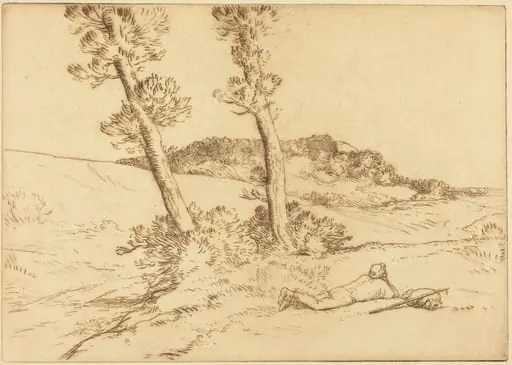 Traveler Reclining on the Grass (Le voyageur etendu sur le gazon)
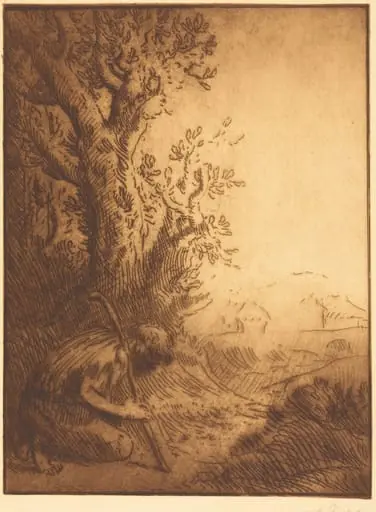 The Prodigal Son, 4th plate (L'enfant prodigue)
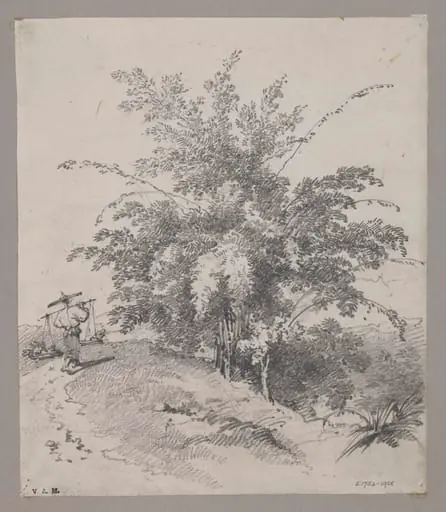 Bamboo tree
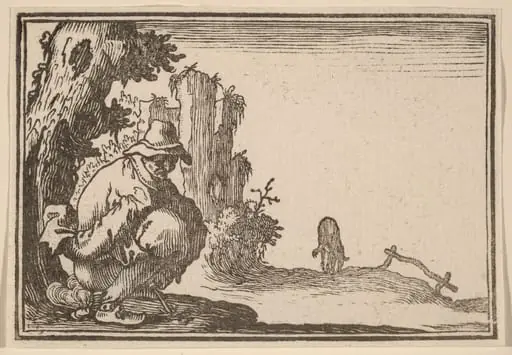 Peasant Defecating
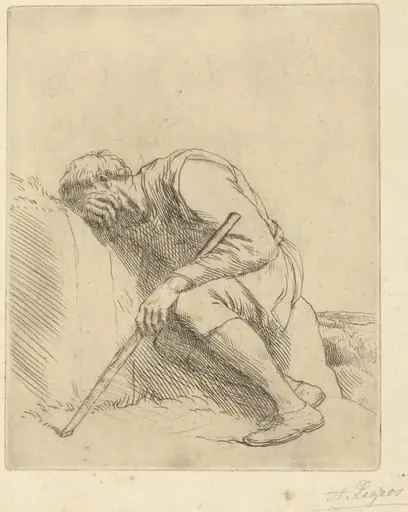 Sinbad the Sailor (Sinbad le marin)
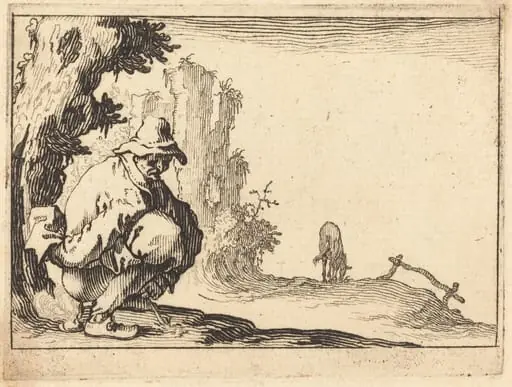 Peasant Defecating