Artwork
Two Standing Soldiers, One Wearing a Hat
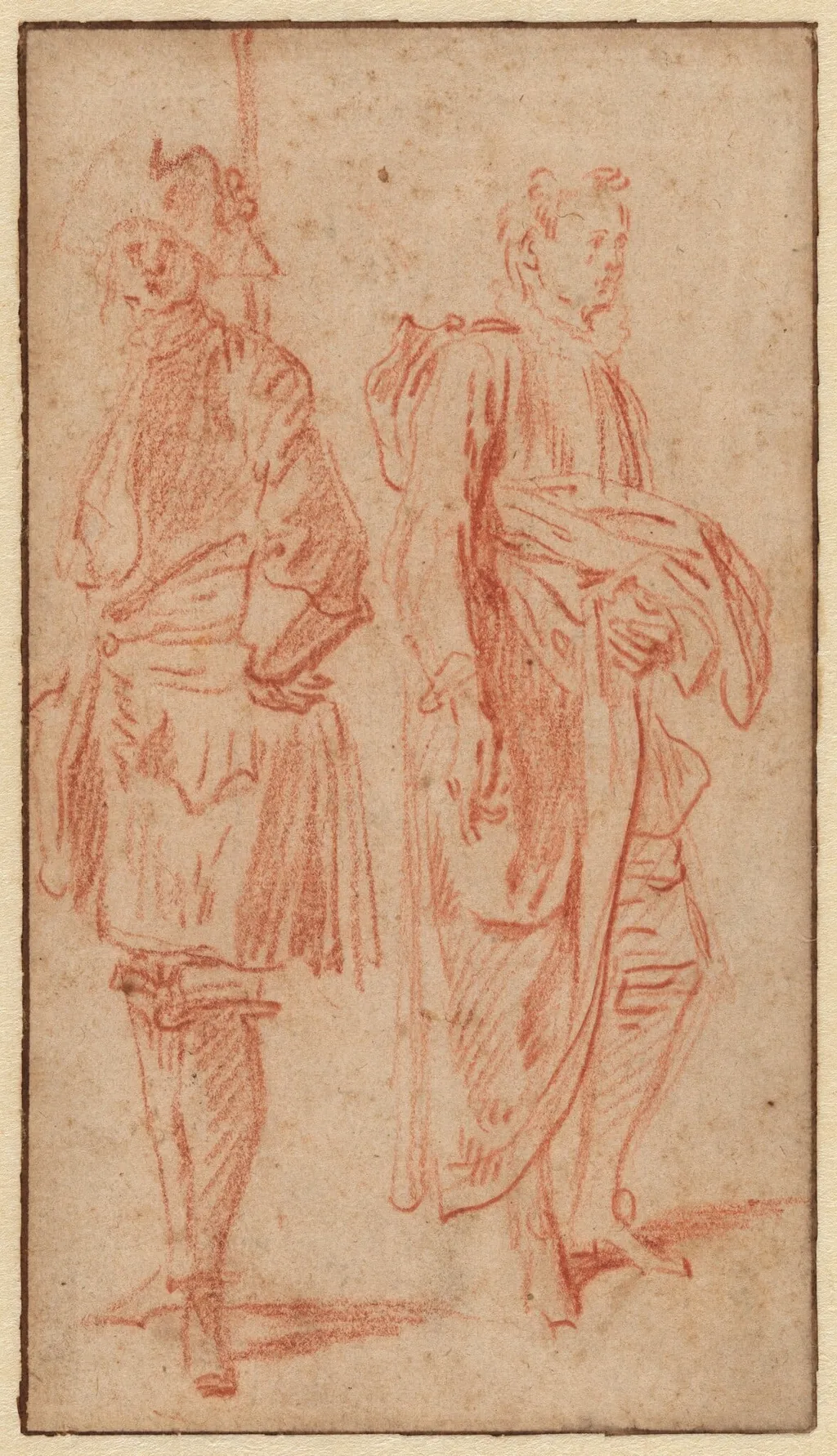
Two Standing Soldiers, One Wearing a Hat is a chalk drawing by the Baroque artist Jean Antoine Watteau. It dates from 1710 and is held in the collection of the National Gallery of Art.
About this work
Overview
Created around 1710 by Antoine Watteau, this red chalk drawing depicts two standing soldiers, one with a low-brimmed hat, the other bareheaded.
Created around 1710 by Antoine Watteau, this red chalk drawing depicts two standing soldiers, one with a low-brimmed hat, the other bareheaded. Executed on warm-toned laid paper, the work is held in the National Gallery of Art, Washington. Its rapid, unrefined strokes suggest it was made as a preparatory study, not a finished piece. The medium and spontaneity reflect Watteau’s habit of observing and recording figures in motion for later use in larger compositions.
Subject & Meaning
The two soldiers, rendered without narrative context, appear as studies in posture and costume rather than individuals with identity. Their simple, fitted uniforms hint at military life without specifying rank or unit. The contrast between the hatted and bareheaded figures may reflect casual observation of real soldiers, emphasizing physical presence over symbolism. The drawing’s lack of detail suggests it served as a visual reference, not a commentary on war or duty.
Technique & Style
Watteau employed red chalk with fluid, economical strokes, capturing form through suggestion rather than definition. The lines are swift and layered, preserving the immediacy of observation. The warm beige paper enhances the chalk’s earthy tone, creating subtle contrast without artificial emphasis. Unfinished edges and minimal shading reinforce the sketch’s function as a working study, prioritizing gesture and proportion over polish.
History & Provenance
The drawing entered the National Gallery of Art’s collection through the Chester Dale bequest in 1963. Its earlier provenance is not fully documented, but its style and medium align with Watteau’s known practice of producing numerous figure studies during the early 1710s. These sketches were often kept in his studio as references, later dispersed after his death. This piece remains among the few surviving examples of his direct observational work.
Context
In early 18th-century France, artists routinely produced figure studies to master anatomy and movement before painting. Watteau, influenced by Flemish and Venetian traditions, favored quick sketches over rigid academic exercises. This drawing reflects a broader shift toward naturalism in drawing practices, where spontaneity and observation replaced idealized forms. Such studies were foundational to the emerging Rococo sensibility, valuing lifelike presence over grandeur.
Legacy
Though not widely exhibited, this drawing exemplifies Watteau’s method of translating lived observation into artistic language. It influenced later artists who valued preparatory work as an essential part of creative process. Its preservation highlights the importance of sketches in understanding an artist’s development, shifting focus from finished masterpieces to the quiet, iterative labor behind them.
Artist & collection
Artist
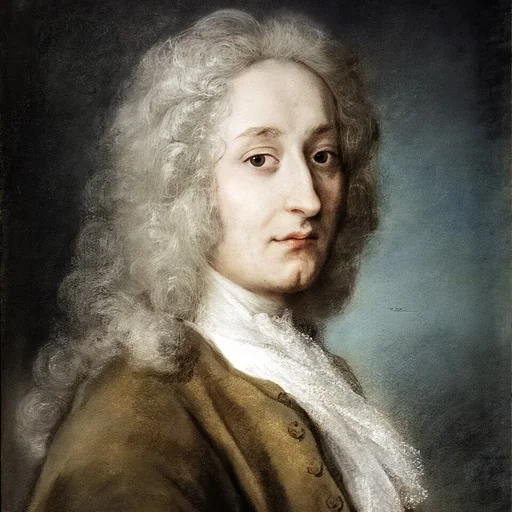
Jean-Antoine Watteau was a French painter and draughtsman whose brief career spurred the revival of interest in colour and movement, as seen in the tradition of Correggio and Rubens.

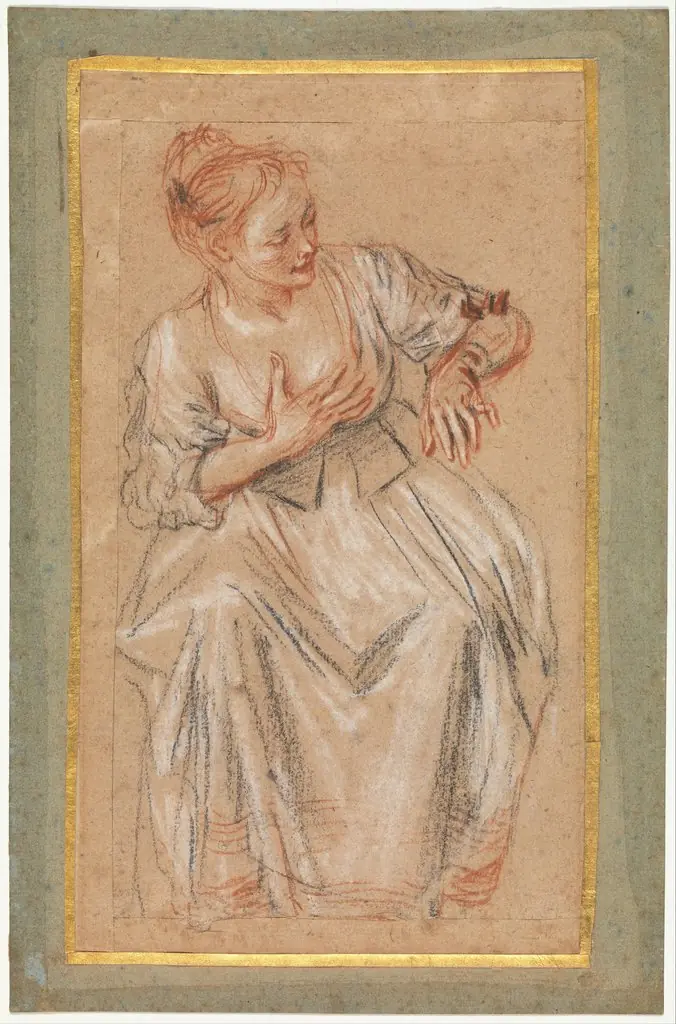
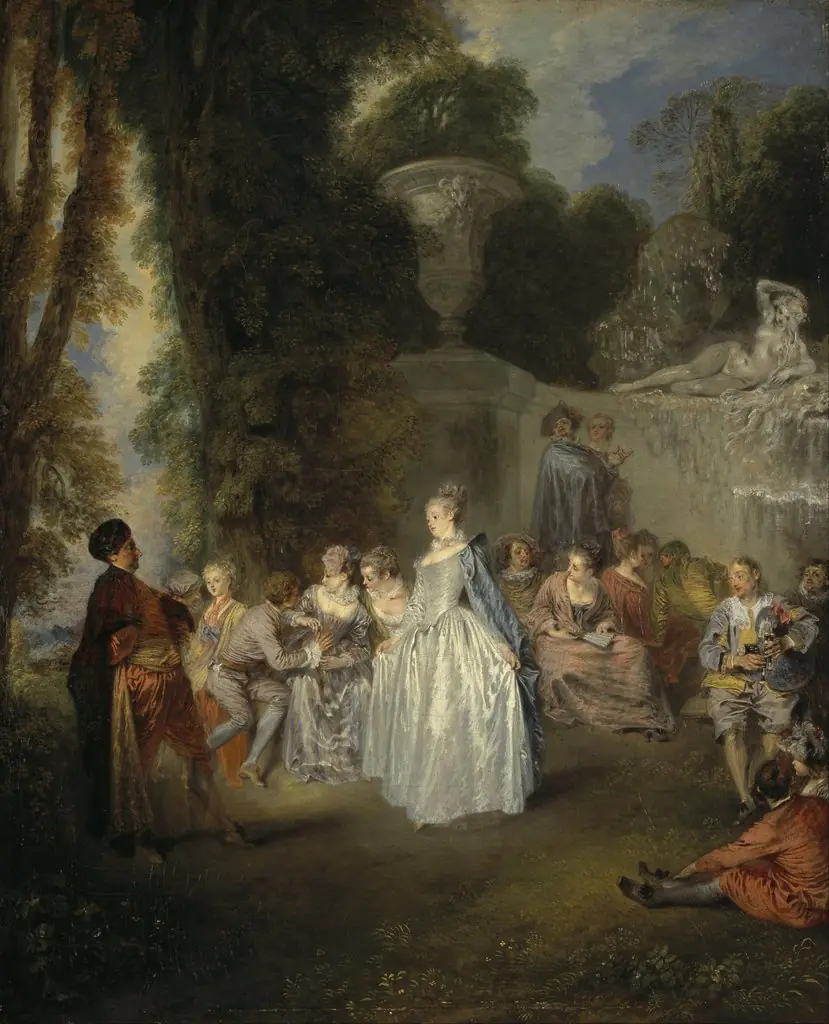
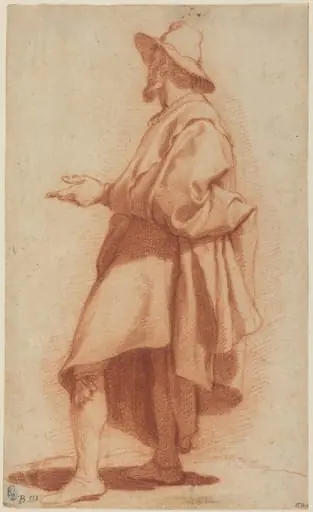 Standing Man Wearing a Cloak and Hat
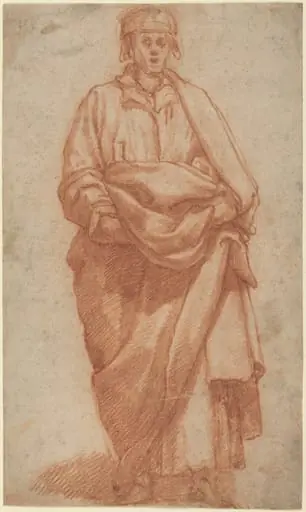 Standing Man
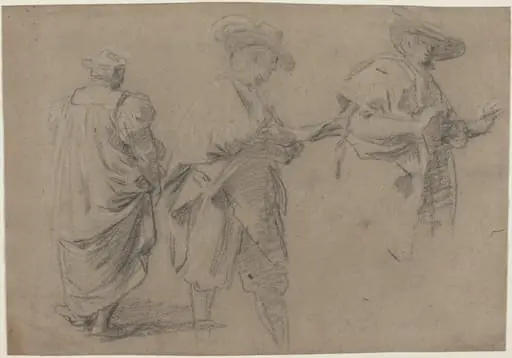 A Judge and Two Gentlemen Lawyers
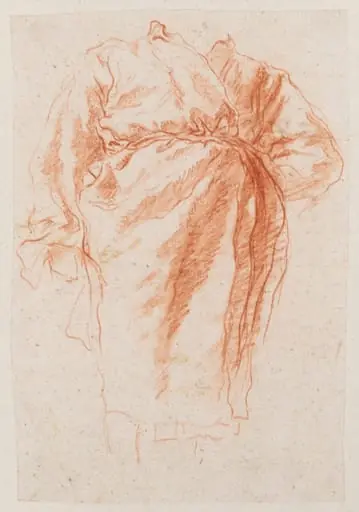 Study of a Draped Figure
![Man Leaning on a Rail [verso], by Matteo Rosselli](https://artifactworldgallery.com/img/matteo-rosselli--man-leaning-on-a-rail-verso--c9936b6777df930d-w320.webp) Man Leaning on a Rail [verso]
Man Leaning on a Rail [verso]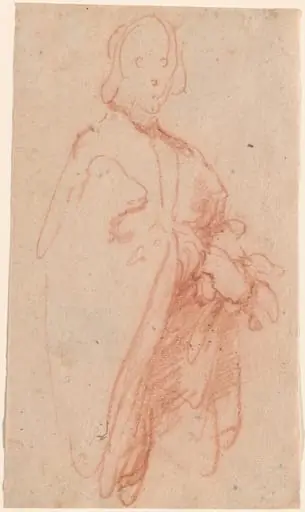 A Standing Man with Cloak and Gloves
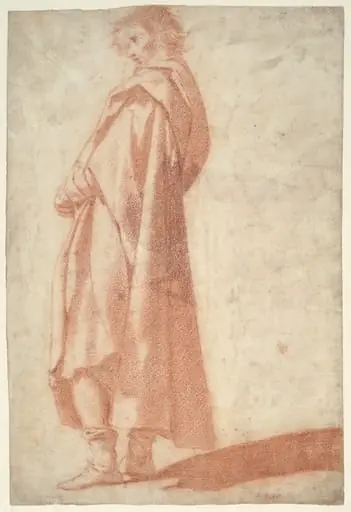 A Standing Male Figure, Facing Left
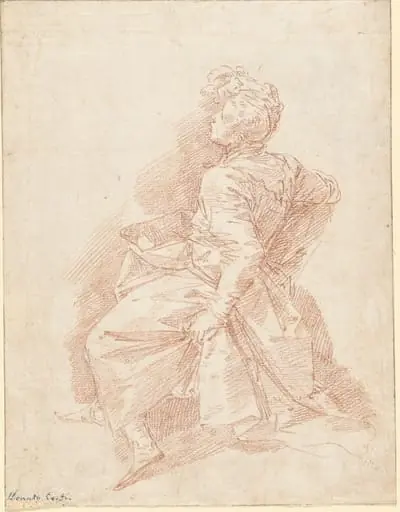 A Seated Man
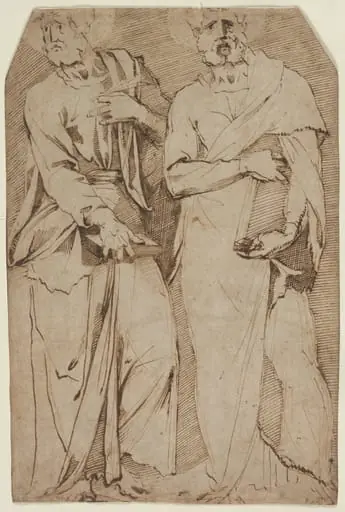 Two Standing Saints
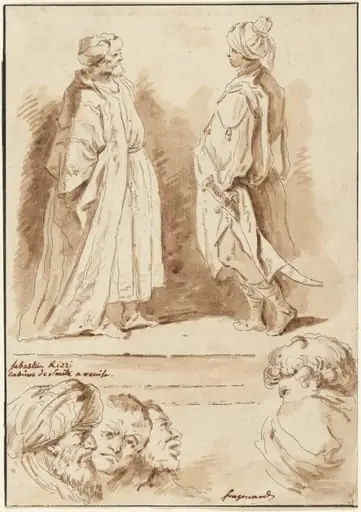 Details from "The Adoration of the Magi" and "The Pool at Bethesda"
![A Comic Actor Dressed as a Gentleman [recto], by Jean-Baptiste Joseph Pater](https://artifactworldgallery.com/img/jean-baptiste-joseph-pater--a-comic-actor-dressed-as-a-gentleman-recto--e5df5dc0f9bcc859-w320.webp) A Comic Actor Dressed as a Gentleman [recto]
A Comic Actor Dressed as a Gentleman [recto]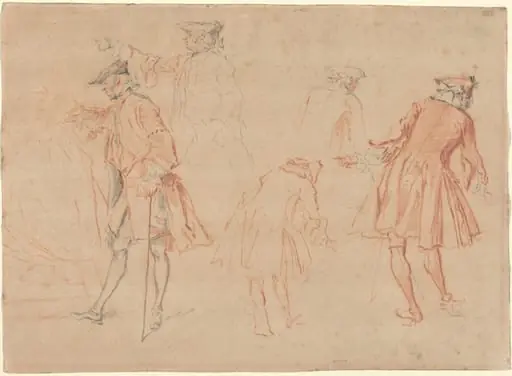 Sketches of a Gentleman