Artwork
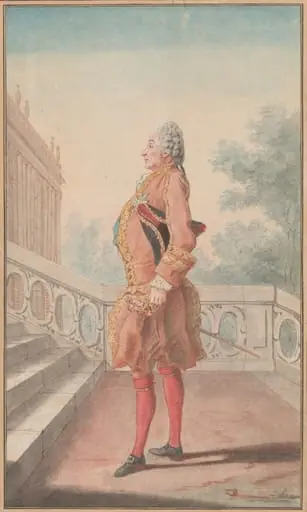
Louis-Philippe, Duc d'Orléans, and His Son, Louis-Phillipe Joseph, Duc de Chartres
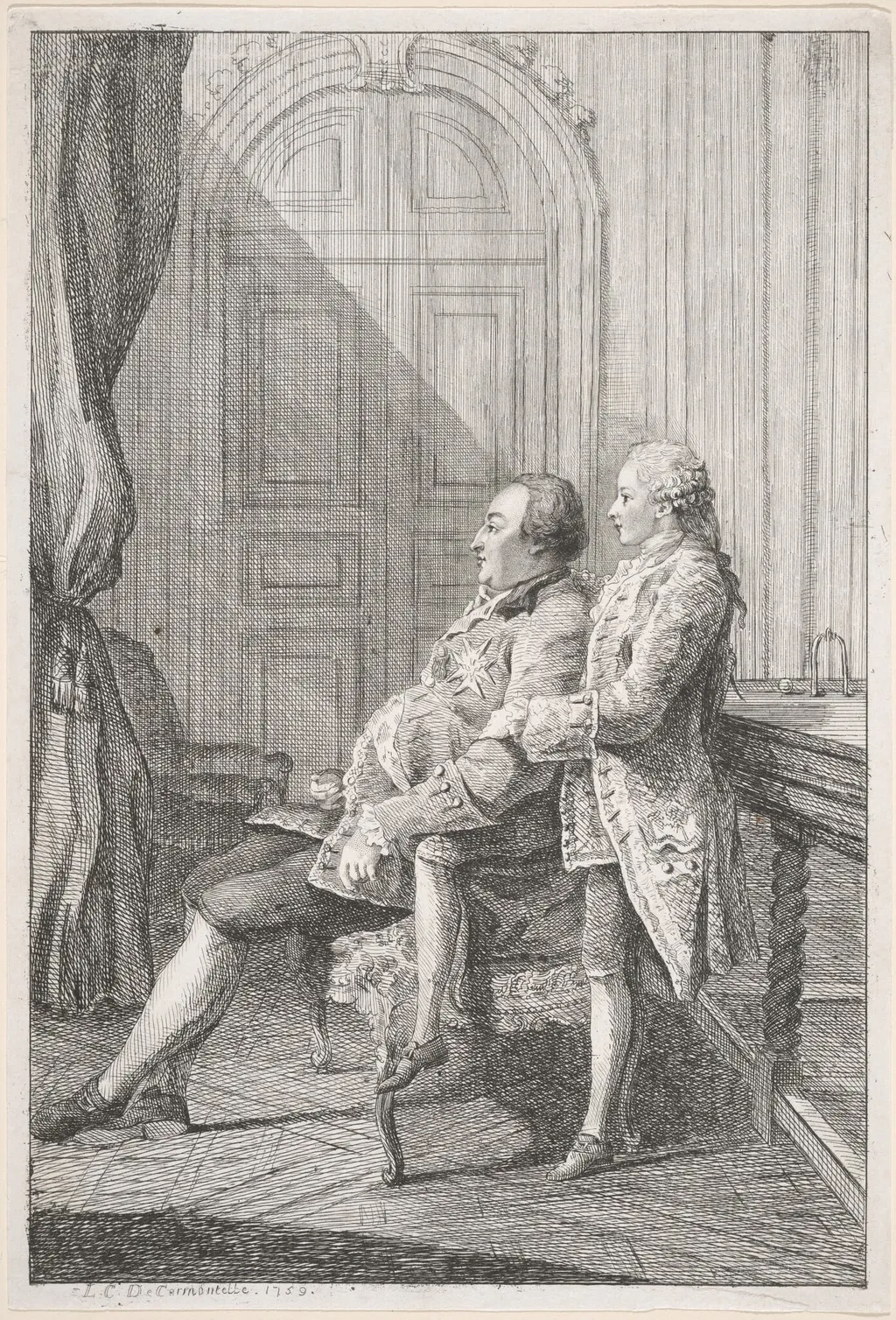
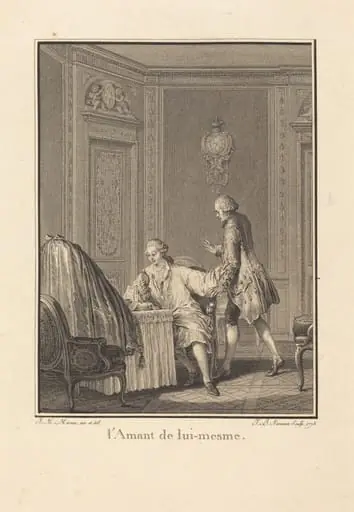
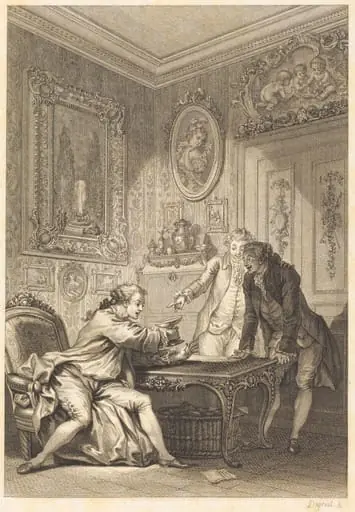
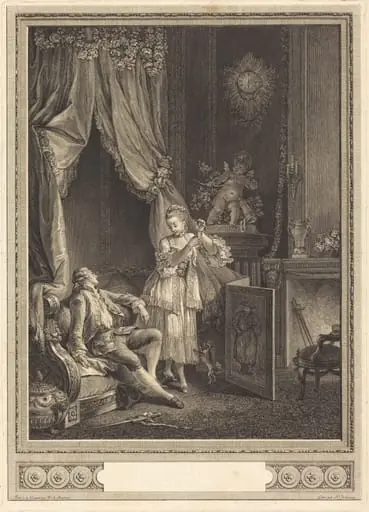
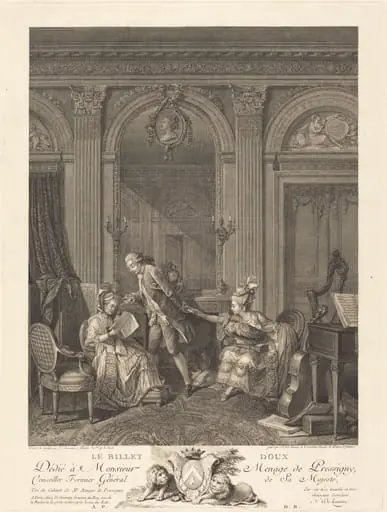
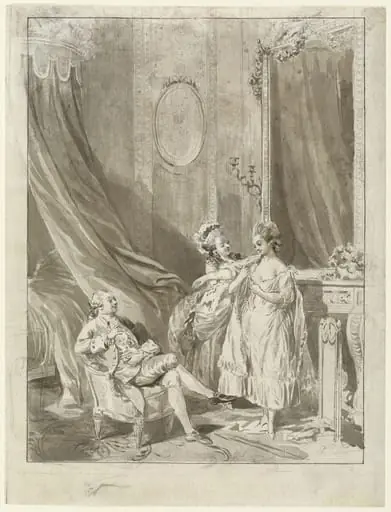
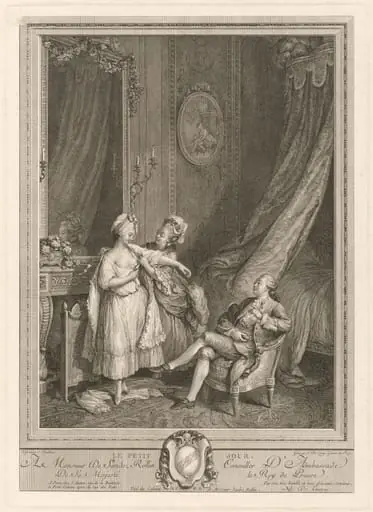
Louis-Philippe, Duc d'Orléans, and His Son, Louis-Phillipe Joseph, Duc de Chartres is an ink print by the Romanticist artist Carrogis, Louis de, called Carmontelle. It dates from 1759 and is held in the collection of the National Gallery of Art. This 1759 etching by Carmontelle depicts Louis-Philippe, Duke of Orléans, and his son Louis-Philippe Joseph, Duke of Chartres.
About this work
Overview
This 1759 etching by Carmontelle depicts Louis-Philippe, Duke of Orléans, and his son Louis-Philippe Joseph, Duke of Chartres.
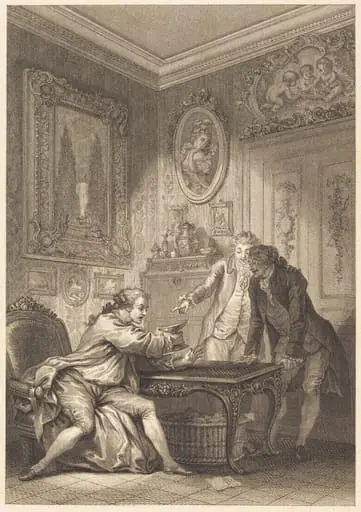
This 1759 etching by Carmontelle depicts Louis-Philippe, Duke of Orléans, and his son Louis-Philippe Joseph, Duke of Chartres. Rendered in black-and-white on laid paper, the work captures a private domestic moment rather than a formal portrait. The composition emphasizes intimacy through subtle gestures and spatial arrangement, characteristic of Carmontelle’s approach to capturing aristocratic life with quiet realism.
Subject & Meaning
The scene portrays the Duke of Orléans seated, holding a small object, while his son stands beside him, leaning forward with attentive posture. Their interaction suggests a moment of quiet mentorship or familial exchange, free from ceremonial grandeur. The absence of symbols of power or status shifts focus to personal connection, reflecting Enlightenment ideals of domestic virtue and filial relationship within aristocratic circles.
Technique & Style
Carmontelle employed fine, controlled etching lines to model fabric textures, facial features, and ambient light. The play of shadow and delicate hatching creates depth without heavy contrast, enhancing the scene’s naturalism. The arched window and corner desk are rendered with precision, grounding the figures in a tangible interior space. The medium’s linear clarity supports the work’s understated, observational tone.
History & Provenance
Created in 1759, the print was likely made for private circulation among the Orléans family and their circle. It entered the collection of the National Gallery of Art in Washington, D.C., where it remains today. Its survival in good condition reflects its value as a personal artifact rather than a widely distributed public image, preserving a rare glimpse into 18th-century aristocratic domesticity.
Context
Carmontelle, known for his intimate portraits and theatrical designs, worked during a period when French aristocracy increasingly valued private life over public spectacle. This etching aligns with broader cultural shifts toward domesticity and emotional authenticity. Unlike official portraiture, it avoids allegory and pomp, favoring the quiet rhythms of daily interaction among the elite.
Legacy
The work exemplifies Carmontelle’s contribution to the evolution of the intimate portrait in print. His use of etching to capture fleeting, unposed moments influenced later artists exploring domestic themes. While not widely reproduced in his time, it endures as a quiet testament to the personal dimensions of aristocratic life in pre-revolutionary France.
Artist & collection

Artist
Carrogis, Louis de, called Carmontelle
Carrogis, Louis de, called Carmontelle (1760–1770) was an artist.