Artwork
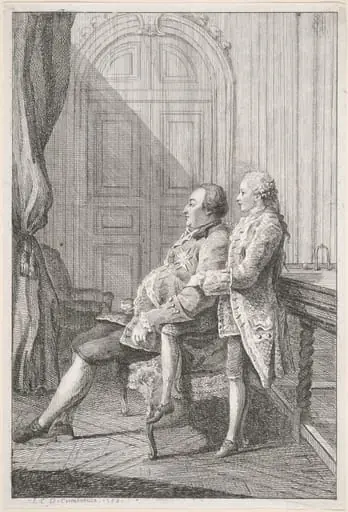
Monsieur and Madame Blizet with Monsieur Le Roy the Actor
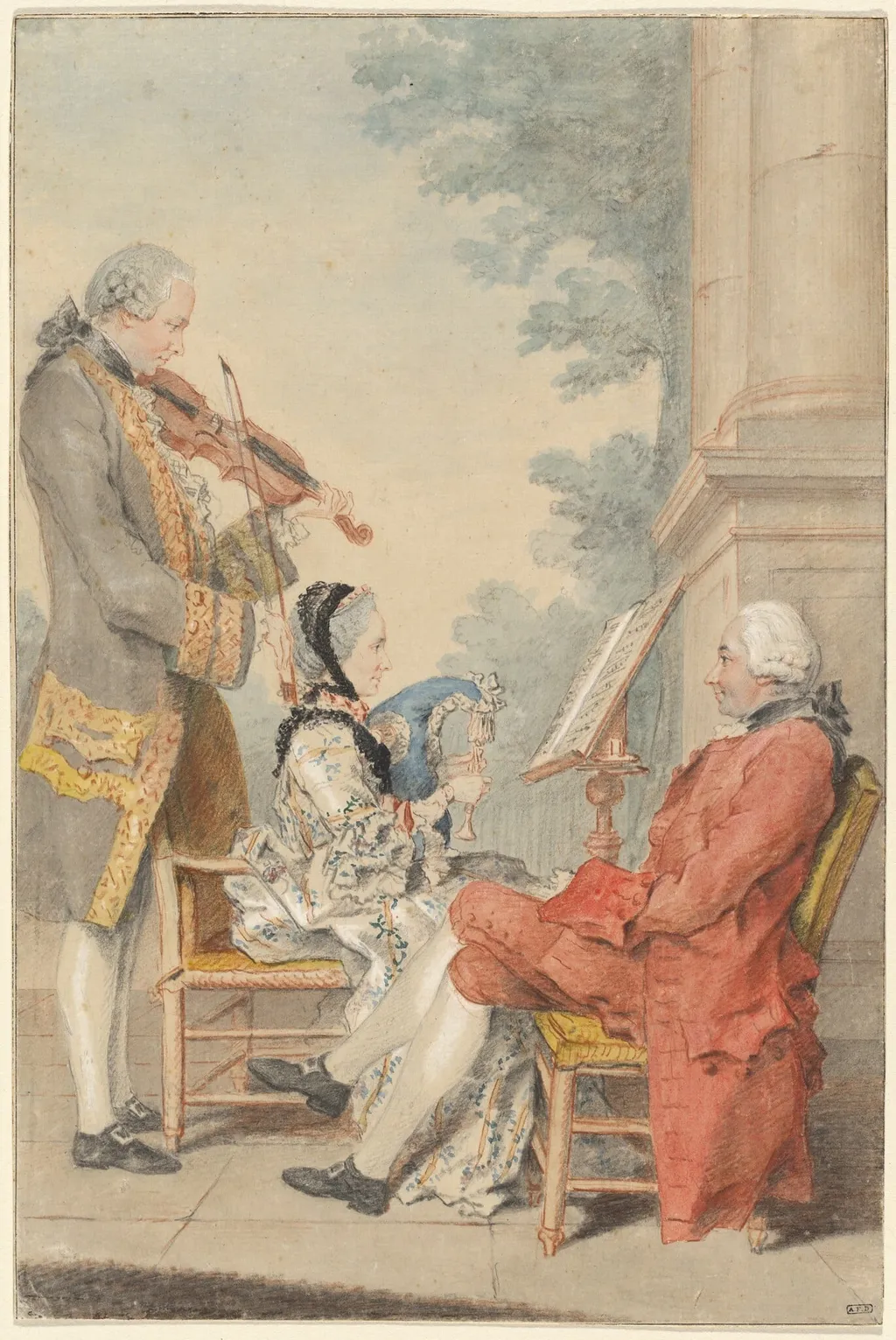
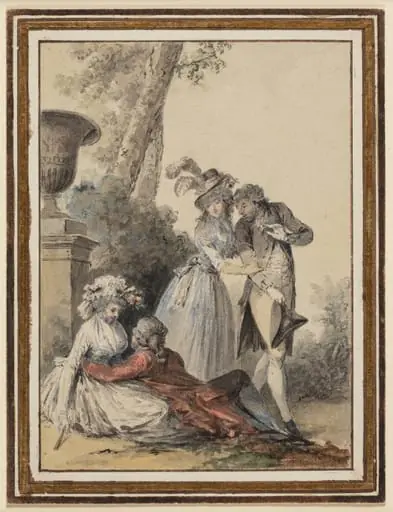
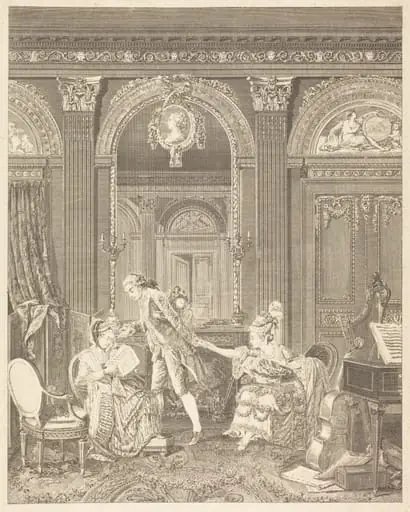
Monsieur and Madame Blizet with Monsieur Le Roy the Actor is a chalk drawing by the Romanticist artist Carrogis, Louis de, called Carmontelle. It dates from 1765 and is held in the collection of the National Gallery of Art. Created around 1765 by Louis de Carmontelle, this drawing depicts three figures in an intimate interior setting.
About this work
Overview
The work is mounted on paper and laid down for preservation, reflecting 18th-century practices in handling delicate works on paper.
Created around 1765 by Louis de Carmontelle, this drawing depicts three figures in an intimate interior setting. Executed in watercolor and gouache over chalk underdrawings, it captures a quiet moment of domestic music-making. The work is mounted on paper and laid down for preservation, reflecting 18th-century practices in handling delicate works on paper. Its modest scale and refined materials suggest it was intended for private viewing rather than public display.
Subject & Meaning
The scene portrays Monsieur and Madame Blizet alongside the actor Monsieur Le Roy, engaged in a private musical interlude. The man in yellow plays violin, his bow mid-motion, while Madame Blizet sits quietly with an open book, suggesting contemplation. The actor in red, leaning forward with a small object in hand, appears absorbed yet detached. Together, they represent a moment of cultivated leisure, blending artistic performance with domestic serenity, typical of Enlightenment-era private life.
Technique & Style
Carmontelle layered watercolor and gouache over red and black chalk outlines, using glazes to build subtle tonal transitions. Graphite adds fine details, particularly in facial features and fabric folds. The soft, diffused light from an unseen window enhances the quiet atmosphere. The chalk underdrawing remains visible in places, revealing the artist’s spontaneous, sketch-like approach. The delicate handling of texture—especially in the floral pattern of the dress—demonstrates a sensitivity to surface and material.
History & Provenance
The drawing was likely made for a private patron or as a personal record of a social gathering, common in Carmontelle’s practice. It remained in private collections through the 19th and 20th centuries before entering a public institution. Its preservation on laid paper, with later mounting, indicates careful handling over time. No early exhibition records exist, suggesting it was never intended for public display, reinforcing its role as an intimate portrait of everyday culture.
Context
In mid-18th-century France, watercolor drawings like this were favored for capturing fleeting, personal moments among the bourgeoisie. Carmontelle, known for his portraits of artists and intellectuals, often documented social rituals with a blend of observation and charm. This work reflects the era’s interest in domestic music, literary leisure, and the blurring of artistic and social roles—where actors, musicians, and patrons mingled in informal settings.
Legacy
Carmontelle’s work contributed to the evolution of the informal portrait in drawing, influencing later artists who sought to capture candid human interaction. Though not widely exhibited in his lifetime, this piece exemplifies a shift toward intimate, psychologically nuanced depictions of everyday life. Today, it stands as a quiet testament to the private cultural rituals of Enlightenment France, valued for its sensitivity rather than its grandeur.
Artist & collection

Artist
Carrogis, Louis de, called Carmontelle
Carrogis, Louis de, called Carmontelle (1760–1770) was an artist.